
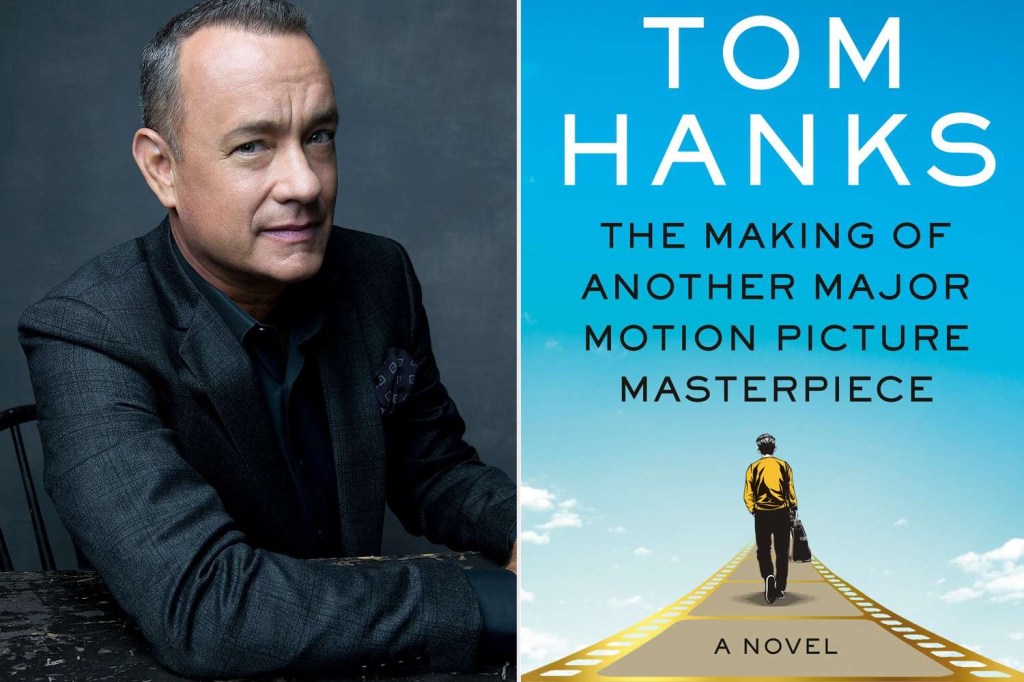
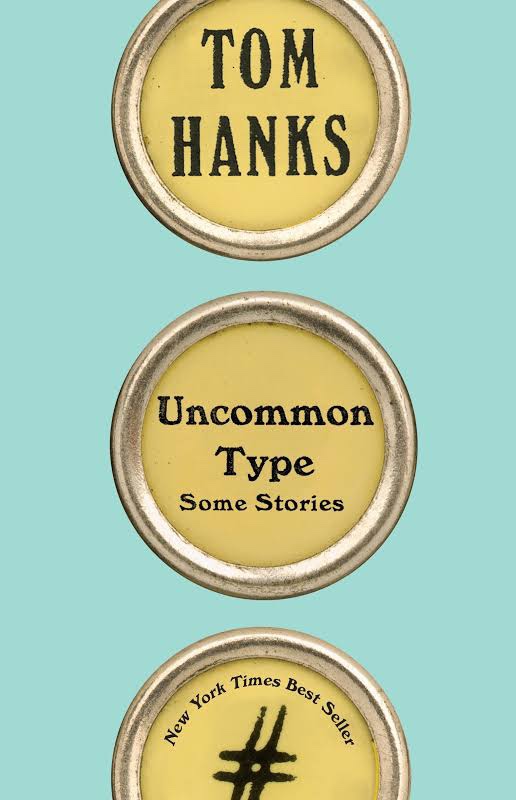
Is there anything Tom Hanks cannot do? Add novelist to his list of accomplishments. This actually his second book of fiction; his first was a book of short stories.
Tom Hanks: The Making of Another Major Motion Picture Masterpiece (2023, Alfred A. Knopt) must have taken Hanks years to write, I’m just guessing, given his busy career, and the length of this book (417 pages). “I wrote in between films, I wrote wherever I was, I wrote on planes, I wrote at home, I wrote on vacation, I wrote in hotel rooms, I wrote on long weekends when I wasn’t working,” Hanks told the BBC.
The book has an intriguing structure, instead of traditional chapters, it is broken into the major stages of a film’s creation: backstory, source material, development hell, prep, casting, the shoot, post.
Of the sections, source material, was the most intriguing and confusing. What was this about, and why so much detail? This section includes the background story of what would be adapted into the film: past and present, of a family in Lone Butte, with a wondering, screwed-up uncle, Marlon Brando wannabe, and his nephew, who becomes a stoner comic book artist. The book even contains several comic book sections, one, a G.I. flamethrower in WWII, heroic, fighting a conventional was. The second, a G.I. in Vietnam, burning villages and causing mayhem, with a quick military commentary on the comic book hero’s origins in Korea and WWII. Different wars, different generations. Hanks’ talent for sarcasm gives the story an edge. And at the very end, a comic book depicting the characters in the film. Very confusing at first, but wait for it, tied together nicely at the end.
The source material serves to set up the rest of the book, which is the process of turning the characters and their story into a big budget film. There’s no doubt that Hanks knows moving-making. Readers get the lingo, the various jobs supporting the production, an idea of the problems that occur and the craziness that develops on location. Hanks has created a village of sorts as learn about these characters and become engrossed in the business of filmmaking. Hanks comes close to pursuing too many separate character threads and losing track of the story.
Hanks has a nuanced and textured way of writing, delicately descriptive without being showy to prove he is a writer. Hanks knows stories and characters; courtesy of his career as a writer, producer and director. And he’s acted a bit, and won awards, in case you have lived under a rock. Hanks’ sense of humor is always close to breaking through the page. No doubt he has lived or observed the problems and absurdities that are part of this story.
“That the teaser for the movie first shown at Comic-Con had set the Internet on fire was a harbinger of good tidings. Better, still? The new subscribers to the Hawkeye who began paying $7.77 a month just moments after the teaser dropped. Almost 2 million new sign-ups. Do the math: 2 million times $7.77 times 12 is a windfall profit of $186,400,000 a year smack into the Hawkeye’s coffers. With that blizzard, everyone at Dynamo considered themselves geniuses for their wisdom in having Eve Knight join the Agents of Change. Wren now knew two very important things: The movie was damn good different as Ultra movies go, spare, faster (run-ning time: 107 minutes), yet packed with all the eye candy the franchise required. And, forthwith, she would write her own ticket for the next five years, in time to have her own options when Dynamo aged her out of Eve. Somewhere, a girl in the junior-high-school play was to be the next Knightshade the next Wendy Lank.”
– The Making of Another Major Motion Picture Masterpiece
How many experts and celebrities have written novels about their chosen field, expecting to create a first class mystery or riveting drama? Lots, and most of them stink. Jimmy Carter wrote a historical novel with sex and violence. Hillary Clinton co-wrote a political mystery. So did her husband.
Hanks is not the first actor to write about the movie industry. Most Hollywood stories focus on how broken movie people are their demonic values. Hanks doesn’t go that direction, thankfully. For every Carrie Fisher, there are a dozen Pamela Andersons. To write about your own industry is a risk, especially if you are someone as widely known as Hanks. I imagine many people wouldn’t mind if he failed; society is like that. “Hanks, you wrote a turd, stay in your lane!” After directing his second film, Larry Crowne, Hanks took a beating for the underperforming film. Actually, the film is quite good, but the damage was done.
It’s interesting how Hanks made his fictional film a superhero story, based on a very old comic book. Aren’t all films today derivative of comic book characters? To Hanks’ credit, his fictional film has a great deal of humanity and the actors seek to make their characters real.
Hanks’ fictional film must contend with a number of real life issues: firing a lead actor, navigating intimacy in the new Hollywood, stalkers, romance on the film set, streaming vs. theater showing, film vs. digital, and so forth.
Hanks is a fine storyteller, that’s no surprise. A guy who collects and uses old typewriters should know a thing or two about writing.
“Once back, Bill makes the movie all over again. Prep is Diplo-macy. The Shoot is War. Post is the Occupation. He explained that to me long ago, back when I was curious as to how movies were made, which I am not anymore. I’ve seen the process. I can’t say I’m enamored with moviemaking. I never wanted to be inside the glamour dome of show business. But Bill has shown me that the work has a nobility to it, that like my love for science and teaching, curiosity fuels you and passion carries you along. Lose either one and you’re done. The moment you react by rote or settle for ” good enough” is when you’re out of that line of work. I think he is great at admitting what he doesn’t know, trusting that the picture will tell him what needs to be done, and that if he’s lucky he’ll get away with it. He’s a thief, and there is honor among thieves.”
– The Making of Another Major Motion Picture Masterpiece
I liked the book, though the first hundred pages was a slow read. A number of reviewers had mentioned the weight of the detail. Still, it’s a significant achievement. After finishing reading this book, I reflected on my initial review of Larry Crowne. I liked it but did not love it. I’m having a similar feeling of The Making of Another Major Motion Picture Masterpiece.






 Ticket 2 Ride
Leave a comment