
The public never tires of new books on the lives of unique, dynamic influencers like Jacqueline Kennedy Onassis. Bestselling biographer and Kennedy historian J. Randy Taraborrelli, has written an intriguing new book on Jackie O’s self-described three lives.
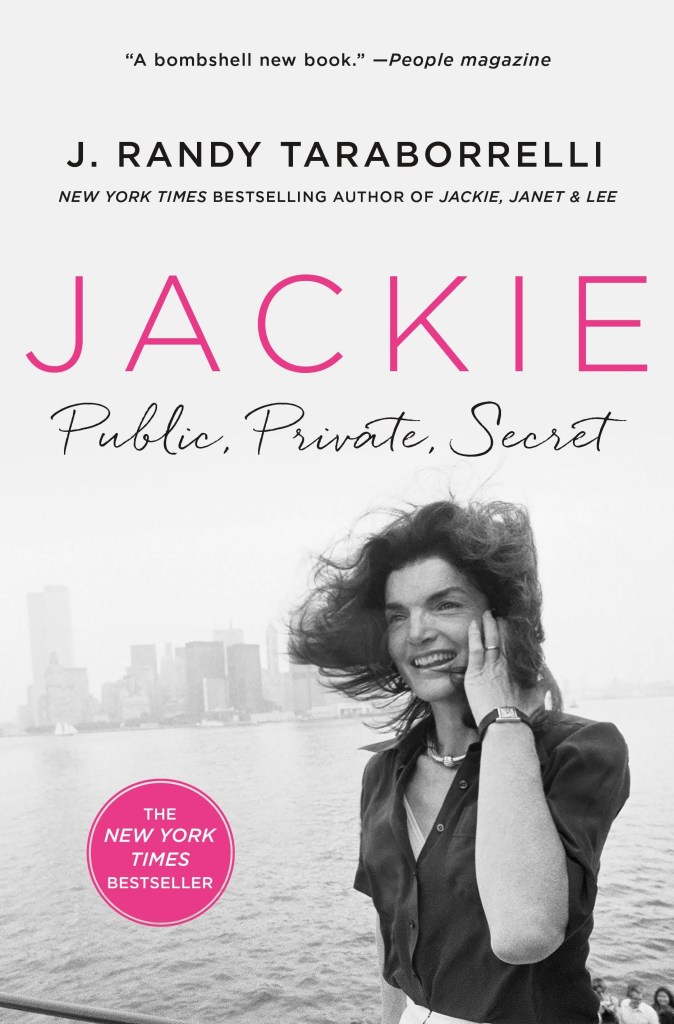
Jackie: Public, Private, Secret (St. Martin’s Press, 2023) goes deep into her life, and those closest to her, to better understand this still intriguing woman. Taraborrelli states in the notes that more than 500 people with knowledge of Jackie were interviewed for the book as part of his research.
There are of course, many books about her, the ones I’ve read: Jacqueline Bouvier Kennedy Onassis: A Life by Donald Spoto; Five Days in November by Clint Hill and Lisa McCubbin; The Kennedy Women: The Saga of an American Family by Laurence Leamer; Mrs. Kennedy and Me: An Intimate Memoir by Clint Hill and Lisa McCubbin; My Travels with Mrs. Kennedy by Clint Hill and Lisa McCubbin.
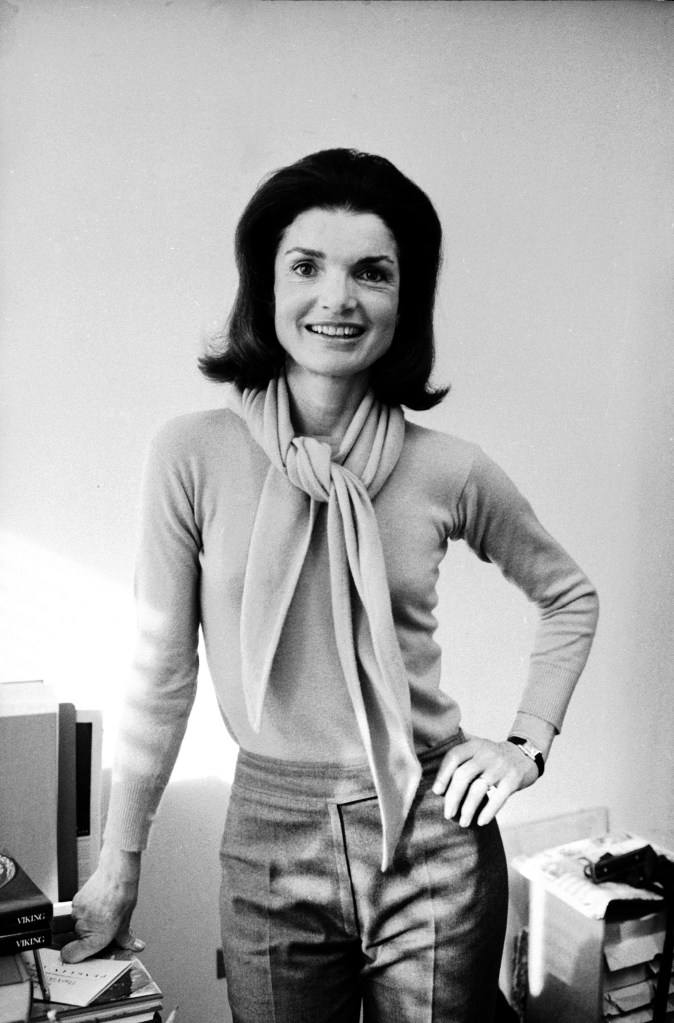
Jackie O. was one of the most famous people of the 20th Century. I was six years old when her husband, President John F. Kennedy was assassinated in Dallas, Texas. She was already famous, a cultural influencer, mysterious and a recognizable face. She also seemed somewhat cursed.
Here is a woman thrust into the limelight as the wife of a rising political star. His election to the presidency puts her on public display and merges her private life with her public life. The world saw those lives shattered by JFK’s assassination. For the rest of her life, she was a private citizen, but the world would continue treating her as if privacy no longer applied to her.

I never understood her marriage to Aristotle Onassis, they seemed so mismatched, yet that’s often how the rich and influential conduct their affairs. Theirs was a negotiated marriage, each party receiving something of value from the other, and the terms of dissolution were negotiated in advance. He got the world’s most famous woman and acceptance into American society and some degree of legitimacy. Onassis had a shady reputation for operating outside the law and was perceived as below her in social class. Jackie needed two things: financial security and physical protection. With Onassis, she got both. What about happiness?
Taraborrelli does not dwell much on Jackie O’s happiness. She no doubt enjoyed her kids, traveling, shopping, her editor jobs, horseback riding, her friends and her homes. What I got out of the book is how much tragedy and disappointment colored her life. The dark clouds of tragedy followed her and reigned over her until the end.
I’m no Jackie O expert, but I have read enough to feel a degree of knowledge about her life and work. Taraborrelli paints a very vivid story of her life and family, although he focuses little on the lives of her children. I have no real sense of their younger lives outside a couple of very short chapters. Taraborrelli has done a great deal of research on Jackie’s family, and has written a book: Jackie, Janet & Lee, about Jackie, her mother Janet and sister Lee. These relationships are fundamentally important to Jackie’s story and can be summarized as highly competitive, volatile, dissonant and self-defining. They were similar in their desperate need for financial security, grudge-holding, abruptly ending relationships and caustic view of being slighted.
Jackie O was a life of contradictions. That’s one of the themes of Taraborrelli’s book. He begins the book as she approached her own death, sick with cancer, she invited a series of friends and family to her apartment, and spent each evening burning letters, cards and other correspondence others had sent to her through the years. She was protecting those who had sent these items, and by burning them, historic or not, none of them could fall into hands of anyone wanting to publish or publicize them. In her life, Jackie was a protector of history and as a book editor, her job was to publish books about people’s lives.
The marriage of Jackie and JFK was a challenging one, their married life covered many times through the years. The differences between them, the fishbowl they lived in, and the affairs all contributed to many ups and downs. Taraborrelli isn’t salacious, his book isn’t The National Enquirer, but there is honesty a lot of ground to cover. According to the book, Jackie considered leaving JFK numerous times, but also felt a strong bond with her husband that weathered the problems. It was said the Jackie’s father and JFK share a lot in common and were the same kind of men.
I don’t know if it’s fair to say that Jackie picked her relationships in part by what she needed and got from it. Besides her two marriages there were numerous men that passed through her life at different times. It appears that she got much stronger at setting terms or boundaries for the men in her life. She could quickly and cleanly end a relationship or downshift it into the friend-zone.
Her marriage to JFK set the tone for her later relationships. Even her coupling with Onassis and her last partner, Maurice Tempelsman, seemed about roles and function, rather than about love and intimacy. She cared for both men, and others before and in-between, but romantic passion was fleeting.
Jackie had a very competitive relationship with sister Lee over numerous men, including JFK and Onassis. Each time, Jackie won. The bitterness and competitiveness must have run deep, as the sisters battled right up to the end. There were many fractured relationships in Jackie’s life, some of which occurred over ridiculously small actions or misunderstandings.
Some of the juiciest stories involve the Kennedy women, although Taraborrelli only writes about a female member of the Kennedy clan when it pertains to something important to Jackie’s story. We learn very little about Kennedy wives except for Rose, the matriarch. She played a significant role in Jackie’s life, and in some ways seemed more motherly than Jackie’s own mother. There was a competitive nature to being a female Kennedy, or any Kennedy.
The sad part of Jackie O’s story is how she never got over Dallas. It haunted her and threatened to define her life until her last breath. So many things reminded her of Dallas, she questioned God because of Dallas, she chose her relationships in no small part because of Dallas.
Miscellaneous things I learned from the book.
Onassis stayed at the White House during the days preceding JFK’s funeral, though he wasn’t permitted to be part of it.
The blood-stained pink suit Jackie wore on November 22, 1963, is kept in a temperature and humidity controlled vault at the National Archives. The pillbox hat she wore is unaccounted for.
Jackie sued to stop publication of William Manchester’s book, Death of a President, considered the preeminent book on the JFK assassination. She dropped the suit after requested sections were omitted. Later, as a book editor, she would be on the other side by convincing celebrities to bare their secrets in print.
Terms of the Kennedy-Onassis marriage: $2m for Jackie, $30k monthly for expenses, trust funds of $1m each for her children, $150k annually upon Onassis’ death. Provided she didn’t go after his other assets.
Upon Onassis’ death, Jackie received $25.5m, $150k annually, her children received $50k each until age 21, then Jackie got the children’s money. She had no other claims against his assets.
Jackie advised her sister-in-law Joan Kennedy, after Ted’s infidelity, to build her own life and not live through her husband. Joan would eventually divorce Ted.
Her first editor job paid her $200 per week. She clearly didn’t take the job for money; what she received from the Onassis estate gave her the financial security she craved.
Onassis chose what they would have for dinner, after which she was dismissed while he talked business with his guests.
Jackie let go of memories, she didn’t want to live in the past. It was said Dallas changed her view on her own history. Dallas poisoned her life. She got past it, but not over it.
In the late 1970s, Jackie tried to interest Warren Beatty in writing his memoirs. Instead, they had a brief affair, before they both moved on. According to Taraborrelli, by the time she met her future companion Tempelsman, she had lost her interest in sex altogether.
Jackie tried for years before getting Michael Jackson to pen a book. Unfortunately, the book was devoid of any personal information and was definitely not a memoir.
Jackie forbade her daughter to marry Edward Schlossberg, until he confronted Jackie and told her they would elope if Jackie continued her resistance. She respected him for that and approved the marriage.
—
I would recommend this book.


 Ticket 2 Ride
Leave a comment