

Keyboardist Richard Wright of Pink Floyd released several solo albums in his career. His first, Wet Dream, has just been released as a remix by the extraordinary mix-master Steven Wilson of Porcupine Tree. Other remixes done by Wilson include classic albums by Yes, Jethro Tull, Black Sabbath, Van Morrison, XTC, The Who, Tears For Fears, Chic, Guns ‘N’Roses, Roxy Music, Gentle Giant, King Crimson and many more.
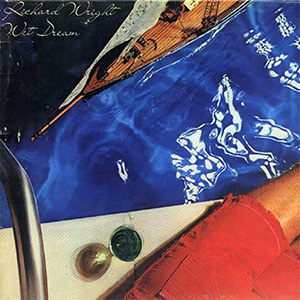
“But here we have an album from the 1970s that has a lot of that DNA… there’s a lot of what you associate with classic Pink Floyd, especially Wish You Were Here,” Wilson said in a recent interview. “The Hammond organ, the slight jazz chords, his voice, it’s all there in this record.”
Wet Dream, the remix, arrived about the same time as Roger Waters’ new, re-imagined version of Pink Floyd’s “Time.” Ironic, because it was Waters who fired Wright from the band during The Wall sessions, after Wet Dream had been released in 1978. Hopefully, the re-release of Wet Dream will not be impacted by Waters’ version of “Time.”
“Wet Dream,” was recorded at Super Bear Studios in France, where Gilmour recorded his first solo album and Pink Floyd would record the upcoming “The Wall.” (Wright recorded his material from Jan. 10, 1978, to Feb. 14.) Wright had been living in Greece at the time.
- “Mediterranean C” instrumental 3:52 Perhaps the most commercial sounding track on the album, a dreamy, ethereal song with great sax and guitar solos.
- “Against the Odds” 3:57 Pensive acoustic guitar and soaring piano, a melancholy vocal; a relationship in disharmony.
- “Cat Cruise” instrumental 5:14 Another instrumental, a jazzy, proggish, heavy on Mel Collins’ sax, then Snowy White’s electric guitar. Slow and meandering in the beginning but gains full sail for and intense two minutes of something that sounds like it might have been intended for Pink Floyd’s Animals.
- “Summer Elegy” 4:53 Another vocal, again of marital unhappiness and lack of direction. The song definitely has direction.
- “Waves” instrumental 4:19 Wright create a plaintive soundscape, of lost at sea. Collins’ sax is a searchlight in the dense fog of longing.
- “Holiday” 6:11 This song could have been on a Genesis album on the last 1970s. Accessible song, just an average one.
- “Mad Yannis Dance” instrumental 3:19 More of a song fragment than a full song.
- “Drop In from the Top” instrumental 3:25 Wright lets loose on keyboards, particularly an electric piano for a swinging instrumental. it has a great groove.
- “Pink’s Song” Juliette Wright 3:28 A gentle melody and vocal, another song of impending loss. The flute by Collins’ is outstanding.
- “Funky Deux” instrumental 4:57 A jazzy vibe, this song is punctuated by thick guitar chords and Wright’s heavy organ. There is plenty of soloing by Collins, White and Wright. This song rocks hard.
All songs were written by Wright except “Pink’s Song, co-written with then wife, Juliette. Wright produced the album himself.
Richard Wright: piano, electric piano, Hammond organ, Oberheim synthesizer, vocals, booklet photography (2023 reissue)
Mel Collins: saxophones (1,3,5,7,10), flute (9)
Snowy White: guitars
Larry Steele: bass guitar
Reg Isidore: drums, percussion
The remix is lovingly released with more artwork than the original LP and the CD version. Wright’s two solo albums have been out of print for a while, so his children, who hand his estate, gave the go-ahead for this project. I hope that his other album, Broken China, also sees refresh.
So, what did Wilson do to warrant a re-release? It’s a lovely album to have available again and in multi-channel Dolby Atmos and 5.1 surround sound available on Blu-ray, although I’m just a simple guy with an uncomplicated sound system. The album has been remixed, not just remastered. Wilson went back to the source tapes and found not only a few musical snippets that did not make the original release. With today’s technology there are tools to change the spacial design, finding buried instruments and vocals and creating a boost for them to heard, not on top of another layer of sound, but to sharpen and allow context in a song never heard before.
Wet Dream did not have a huge musical footprint, although Wright filled the album with sound. With four other musicians, the album wasn’t jam-packed with tons of instruments, sound effects or vocal layers. The vinyl sound was bright and in the foreground. I felt the sound was good to begin with, so I was intrigued by Wilson’s musical surgery. There’s a lot going on in the midrange, like viewing a film in the old CinemaScope, where the picture extends far and wide. The instruments, and vocals, have room to fatten-up their sound and have their own spotlight.
I’ve always love this moody, atmospheric, wistful mix of gentle and sober with funky and jazzy. The songs lack the Pink Floyd bombast, but flourish with gentle swells.






 Ticket 2 Ride
Leave a comment