
“History is the study of people, actions, decisions, interactions and behaviours. It is so compelling a subject because it encapsulates themes which expose the human condition in all of its guises and that resonate throughout time: power, weakness, corruption, tragedy, triumph …” – Historytoday.com
Imagine someone killing Hitler, especially before he invaded Poland in 1939, or even before he published Mein Kampf in 1925 and gaining legions of followers? Where is the way-back machine when we need it?
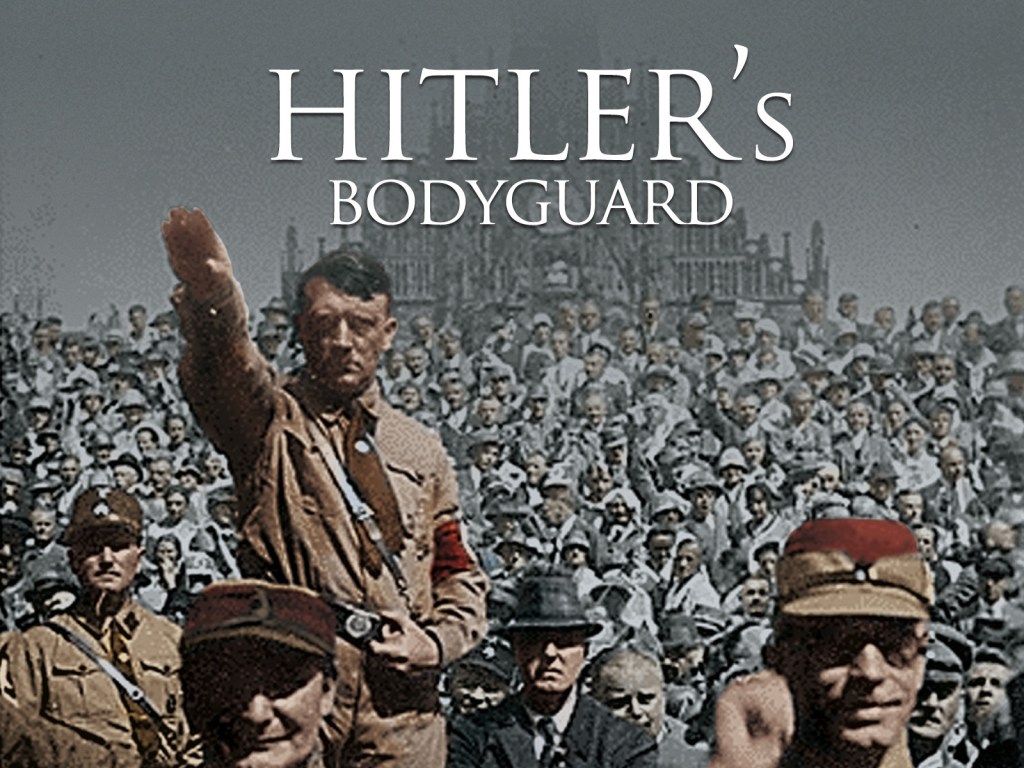
Adolf Hitler avoided or survived at least 40 verified efforts to assassinate him. The security measures in place to protect Hitler were vast and evolved with the increase in risks to him; Hitler was easily the most hated man in the world and responsible for 50 million deaths. Two other things worked in Hitler’s favor: His constant change of plans, travel and sudden variations in routes; and luck.
Hitler was arguably the most evil man in history, and many threats came from German military leadership, plots that did not materialize or attempts that Hitler survived. Russian and British intelligence operatives were able to glean valuable information on Hitler’s headquarters, travel and habits, but did not stage significant operations to kill Hitler, but not from a lack of interest. Hitler’s protection network made external assassination efforts difficult at best, and later in the war, when operations might have been more realistic, it was said that the Allies were better off with Hitler’s poor military planning and mounting defeats, than for his other generals to be in charge.
I studied modern European history in college, especially the Second World War, so I wondered how much this series would have to offer. A lot. This 13-part documentary series now streaming on Prime, Hitler’s Bodyguard, is fascinating and provides a deep-dive into the Hitler’s massive protection system and the many attempts on his life. I also managed to locate Guarding Hitler: The Secret World of the Fuhrer by Mark Felton (2014, Pen & Sword Military), a well-researched book that also delves into the internal and external threats, as well as the establishment of Hitler’s vast, and often, conflicting rings of personal security.

For those interested in military history or WWII, this series is well-produced and offers film I’ve never seen and stories new to me. Nazis and WWII are not for everyone, I certainly understand, yet younger generations have a lesser understanding and connection with this tragic period in our world history. Fifty million people died in this war, and millions more were homeless, wounded and lost entire families. The world was reshaped and forever changed.
The number of people who wanted Hitler removed was significant, including members of his own military and old political foes. In the early 1930s, when Hitler tightened his grip on the total control of the German government and outlawed opposition political parties, there was no longer a way to defeat him by the ballot box. Hitler got what he craved and also realized his enemies would have to kill him to stop him. After murdering 85 known enemies and high-ranking members of the SA Brown Shirts, Hitler eliminated former many allies from a political organization he founded, but could no longer trust. While he removed critics and competitors, he gained many new political enemies. The Night of the Long Knives would cut both ways.
Both the film series and Felton’s book describe how Hitler grew his protection detail from just a few party bully-men into the elaborate groups of specially trained protectors assigned to travel with Hitler and provide security for his various headquarter locations. Counting those who were stationed at his various headquarters, his traveling units, local police units, and those who secured parade routes, tens of thousands were involved in his protection. Still, there were elaborate plots to assassinate Hitler and even singular assassins who came close, but ultimately failed, like the young Swiss student Maurice Bavaud, who stalked Hitler across Germany and was arrested because he lacked train fare.
By no means is this a comprehensive look at the protection services around Adolph Hitler, just the tip of the spear, so to speak.
—
A few interesting facts from the series and book:
Between 1919 and 1922, following World War I, there were 376 political assassinations in Germany, as political groups vied for influence in the weak Weimar Republic. Between 1919 and 1933, 228 Nazi party members were killed in street fights and as Hitler reduced competition in his own drive for singular power.
In 1923, the SA Stosstrupp was formed, specifically to guard Hitler. It grew from 5 to 100 as Hitler’s notoriety grew and violence increased. The SA were the Brownshirts, the bully-boys for the political party.
In 1925, after Hitler got out of prison, for his effort to overthrow the Weimar government, the Schutzstaffel was formed, which was the origin of the SS.
In 1929, Heinrich Himmler took over the Schutzstaffel and the Protection Squad, and began to oust his competitors and enemies.
By 1933, the SS now had 50,000 members. From this group, 117 men were selected for the special protection unit. Originally, a core of 12 ultra-loyal men were selected for Hitler’s personal protection. This would be expanded to over 1,000 as Hitler’s palace guard expanded with Hitler’s own footprint expanded.
In 1934, the Night of Long Knives occurred, in which the SS moved against SA leadership, arresting competitors and murdering 200. Hitler was removing enemies and potential threats.
Multiple agencies guarded and provided protection for Hitler’s headquarters. Although some of these units were directly or indirectly under Himmler, some were not. Himmler would have a long-running battle with members of Hitler’s inner protection unit and others that dared to challenge Himmler. Hitler watched, and seemingly encouraged, the competition and infighting between members of his inner circle. The nebulous reporting relationships also encouraged the ambiguity and silos between units of his protection.
Hitler had a special headquarters train for his travel and carried communications equipment and a security force of 500. The train engine and carriages were armored against attack. Anti-aircraft guns were installed on the trains. At stations, platforms were cleared of all luggage and packages. Police guarded all exits, stairwells. Train technicians in case of emergency repair. A squadron of fighters flew overhead. Any information on journey route or travel details were collected at end of journey.
Hitler used special Mercedes-Benz limousines, armored panels, with bulletproof windows and tires. He also preferred other 3-axel MBs with thicker armor and windows that were used for military parades. Lead cars led the parade, then Hitler’s car was followed by bodyguard cars, then military staff vehicles and then armed escort cars, plus motorcycle outriders. His bodyguard were each armed with two pistols and a machine gun. Members of the SS lined the parade route with every third soldier facing the crowd. Plain clothed police were mixed in with the crowd.
Aside from the vast protection resources assigned to protect Hitler, he knew that unpredictability was an important part of his safety. Hitler changed his plans, timing of meetings, locations of events, and routes to keep his enemies guessing. This unpredictability saved his life many times.
In 1939, prior to Hitler invading Poland, British military attaché to Berlin, Sir Frank Noel Mason-MacFarlane, suggested to PM Chamberlain and Lord Halifax a plan to assassinate Hitler while reviewing troops in celebration of Hitler’s 50th birthday. The plan was rejected out of hand in favor of diplomacy.
Hitler wore a sidearm and his hats were armored with a steel lining.
Gen. Erwin Rommel was selected as commander of the new military bodyguard battalion formed prior to the invasion of Poland.
By 1941, four units from two military branches were providing protection for Hitler.
Hitler was the modern leader to travel by airplane. His plane was built with a parachute seat and escape hatch. The plane had armor cabin plating and bulletproof windows. It also had an assortment of machine guns.
In 1943, a bomb was aboard Hitler’s plane, but failed to explode. It was placed in the unpressurized cargo compartment and the cold temperature caused the precision cap to fail.
A British sniper team was selected to train and infiltrate Hitler’s vacation retreat at Berghoh, but was never activated. The plan was to shoot Hitler where he regularly strolled.
Martin Bormann, Hitler’s private secretary, bought up property around Hitler’s complexes, moving landholders away. Zones were established surrounding the main buildings, guards that checked all visitors, color-coded, signed, stamped and numbered passes. Bomb shelters, underground tunnels. Anti-aircraft guns and flak guns. Camouflaged buildings and fake trees.
The Wolf’s Lair, Hitler’s headquarters in East Prussia had a series of underground bunkers, fake trees and bushes, camouflaged buildings, mine field, army units stationed nearby, anti-aircraft guns. Water supplies were sampled several times daily, deliveries x-rayed, and oxygen tanks were ready in case of poison gas. Food was chemically tested.
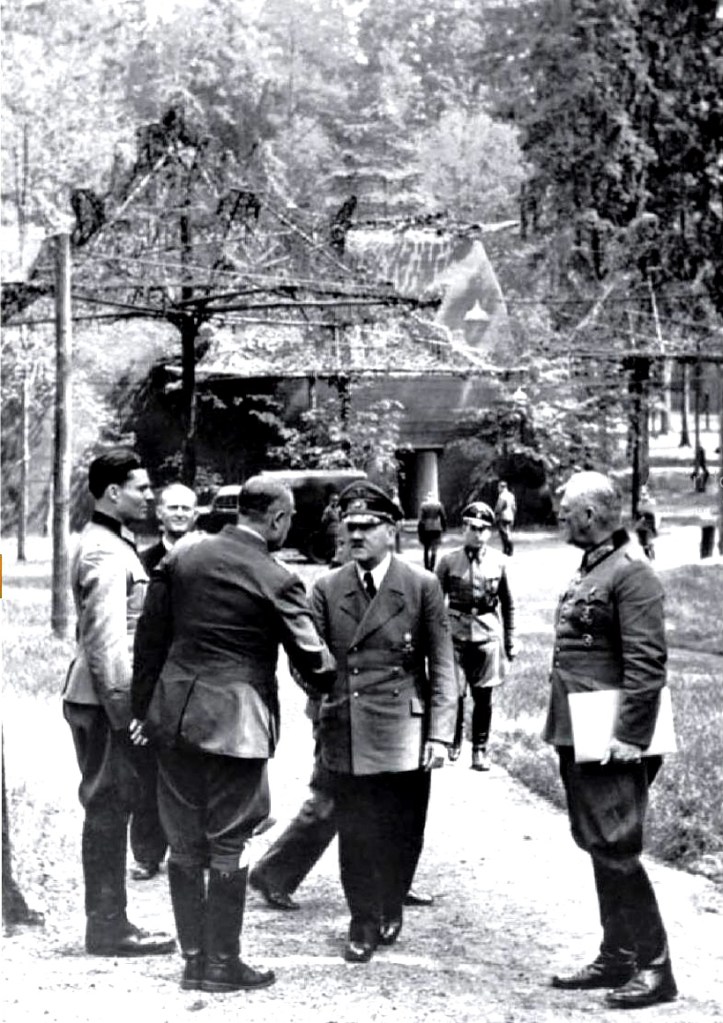
The most famous plot to kill Hitler and take over the government and military: Valkyrie. July 1944, Gen. Claus von Stauffenberg attended a military conference at Wolf’s Lair. Their was already a longstanding order against officers having sidearms in meetings with Hitler, but briefcases were not searched. Von Stauffenberg’s briefcase carried a bomb that exploded under the conference table. Hitler was wounded but not among those killed. The investigation purged many officers from the military. After the attempted assassination, visitors would also have to turn out their pockets. Hitler proclaimed himself “immortal.”
—
Final comments…
If you’ve made it this far, thanks for hanging in there.
Hitler’s security teams invented a variety of security and protection measures. The threats against Hitler were unique at the time, given his place in history.
What strikes me with a note of caution is that the rise of Hitler and fascism took place a century ago, leaving plenty of lessons and warnings. Even though Hitler, Mussolini and the military government of Japan were summarily defeated, authoritarian governments did not go away, in fact, after WWII they have thrived. The lessons and cruelty of the past seem lost, or overlooked, as opportunists and sociopaths convince the misguided and easily influenced, of a better and stronger life under the veil of nationalistic and a return to something better.



 Ticket 2 Ride
Leave a comment