
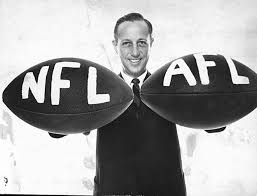
Thank goodness for YouTube. One can find a lot of pop cultural history there, including entire professional football television broadcasts.
There are the games I watched:
Cleveland Browns at Minnesota Vikings for the 1969 NFL Championship and trip to Super Bowl IV against the Kansas City Chiefs.

This was a CBS broadcast with Ray Scott doing the play by play, and Pat Summerall providing pre-game. CBS did something really cool, they put together a film history of the NFL, going back to the origins of the League, some of the film I’d never seen before. The broadcast was posted by quarters, so I only saw the first quarter.

Both teams relied on defense, but Cleveland had the better passing game with Bill Nelson throwing to future hall of famer Paul Warfield. Joe Kapp quarterbacked the Vikings and although he throws were not pretty, he just found ways to win.
Los Angeles Rams at Minnesota Vikings, on 1970 Monday Night Football. A rainy, cold night in Bloomington, players lost traction on the slippery grass and I lost count at the number of fumbles and penalties.

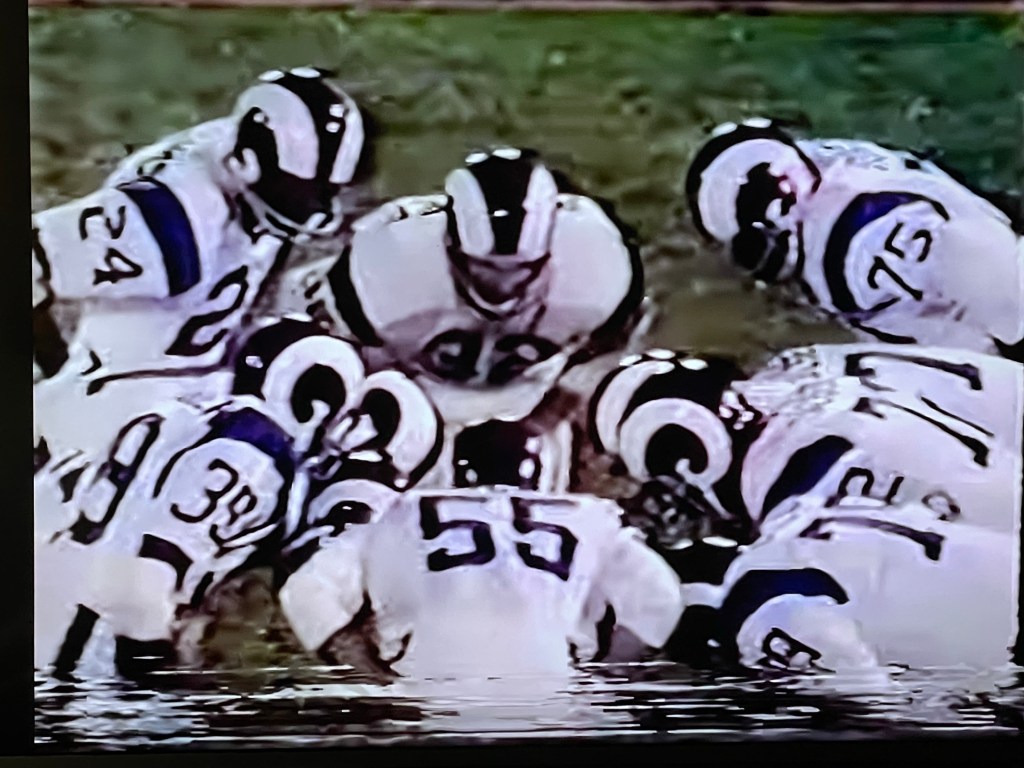
George Allen was coaching the Rams and would soon be out of a job, but not for long. He would take his version of the over-the-hill gang to the Washington Redskins, taking many of his Ram players with him. Gary Cuozzo took over the QB position for the Vikings, but would prove to not be the answer. The Vikings would reacquire Fran Tarkington from the Giants.
St. Louis Cardinals at Detroit Lions, 1970 CBS broadcast. The Lions played at Tiger Stadium. This is a typical game of the era. A grass and dirt field, parts of the field frozen because of the continuous absence of sunlight.

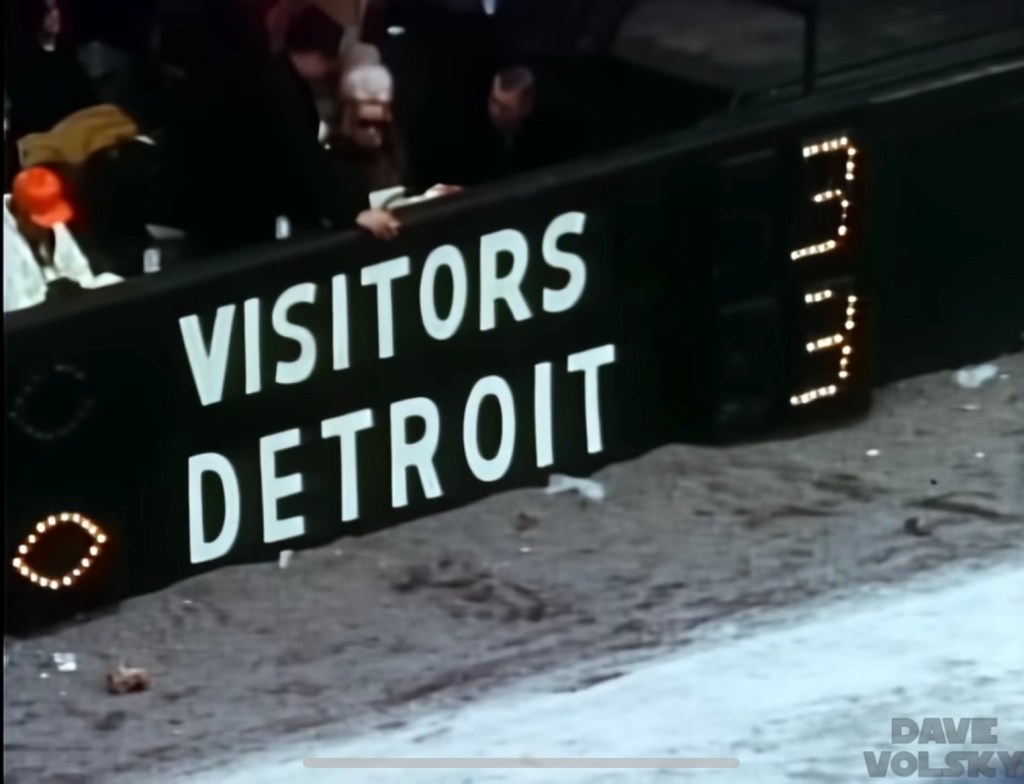
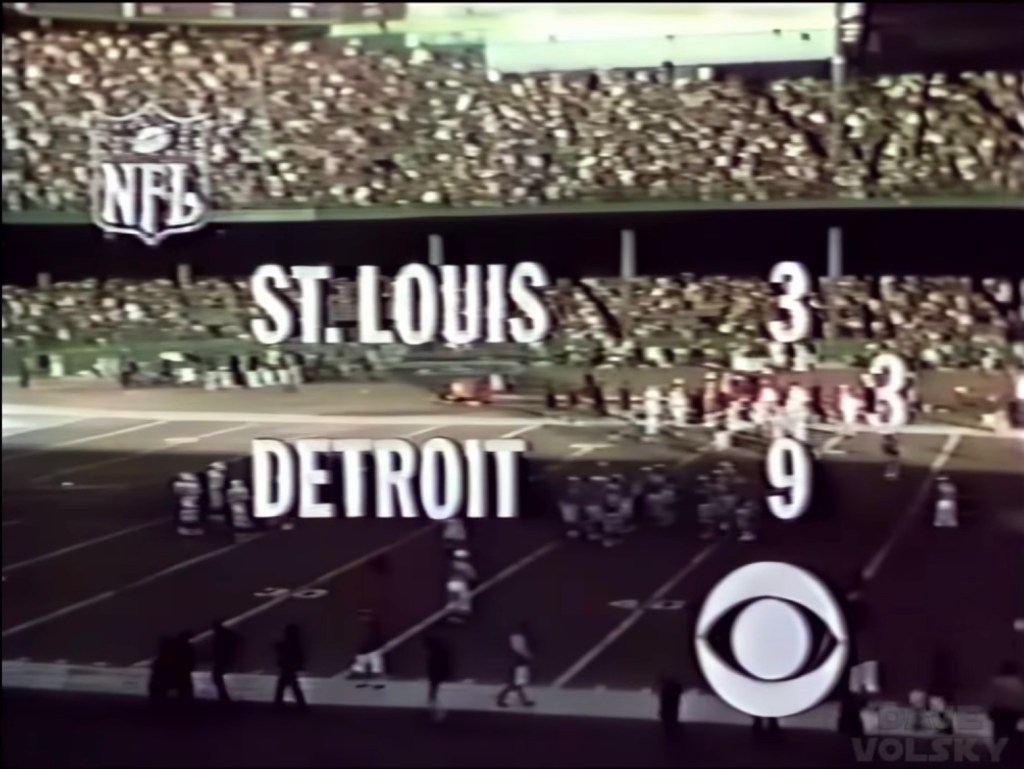
A defensive slug festival between old NFL rivals, which is interesting because these two teams were leading the NFL in offense. One other thing of note: the Cardinals’ punter was reserve defensive back Chuck Lauderrette, who was also the team’s punt and kickoff returner. No teams would do that today.
Detroit Lions at the Dallas Cowboys, 1970 NFC Playoffs. Broadcast on CBS from the Cotton Bowl. Frank Glieber, Frank Gifford and Dick Stockton calling the game. The Lions in the playoffs? Yes, they had a very good year, although the rest of the NFC Central did not. Dallas was making their fifth consecutive year in the playoffs, their defense was outstanding. Detroit’s halfback Mel Farr was playing with a dislocated shoulder, wearing a special harness to keep his arm in the socket. Players don’t do that today.

The Lions had three future Hall of Famers on defense, and two solid running backs in Altie Taylor and Mel Farr, with Heisman Trophy winning rookie Steve Owens in reserve. Dallas featured a rotation of three running backs: Calvin Hill, Walt Garrison and rookie Duane Thomas. On defense, future Hall of Famers Bob Lilly, Mel Renfro, Herb Adderley and Cliff Harris (rookie, reserve). While Dallas QB Craig Morton had a terrible day passing, they ran the ball well and their defense was tremendously effective.
Dallas Cowboys at San Francisco 49ers, 1970 NFC Championship, Kezar Stadium. This game was reconstructed using the CBS visual and KSFO radio, supplemented by NFL Films.

Dallas had an average offense, its passing game was fair at best but the running game was solid. It was the Doomsday Defense that carried the team. Roger Staubach had not yet claimed the QB position. The 49ers had a very good defense and a solid offense. QB John Brodie enjoyed a great year and a strong running game. These were two well-matched teams. Tom Laundry was the Dallas head coach and Dick Nolan the 49ers head coach.

The game was pretty even in the first half, more of a defensive battle. The Cowboys pulled ahead after halftime, they made fewer mistakes and their offensive finally clicked. Brodie did not have one of his better days passing and the Dallas defense played tough. This was the 49ers last game at Kezar, they moved to Candlestick the next season.
New York Jets at Kansas City Chiefs, 1971 Monday Night Football preseason game. What a game this could have been, but Joe Namath suffered a season-ending knee injury against Detroit when he tried to make a tackle on an interception. A taped Cosell interview of Namath played before kickoff. The Jets suffered through another bad season with Namath on the sidelines.
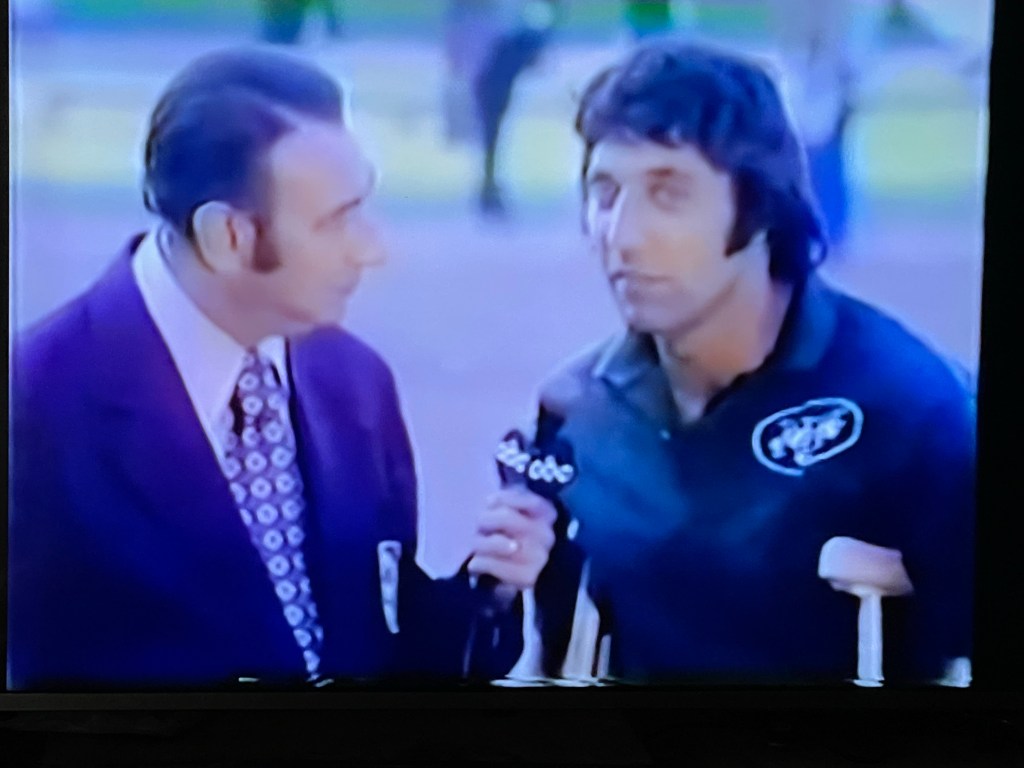
Most of the players from Super Bowls III & IV were still on the Jets and Chiefs, although age would quickly catch up with these two teams. Frank Gifford was new to the MNF team, and his mistakes on this broadcast were many. For a preseason game, this game was played like a regular season game.

At halftime, Cosell narrated a look at some of the NFL rookie class including Jim Plunkett, John Brockington, Archie Manning, Jack Tatum, Dan Pastorini and Lynn Dickey.
Then, the announcers did something kind of interesting, they gave their views on several players who were holding out, traded or had their contracts nullified because they sought more money: Duane Thomas, Joe Kapp, Fran Tarkenton, Jerry LeVias and Roy Jefferson. Cosell, Gifford and Meredith were clearly touting the management line.
Washington Redskins at Los Angeles Rams, on Monday Night Football in 1971. In the second year, MNF was Howard, Dandy Don and Frank.
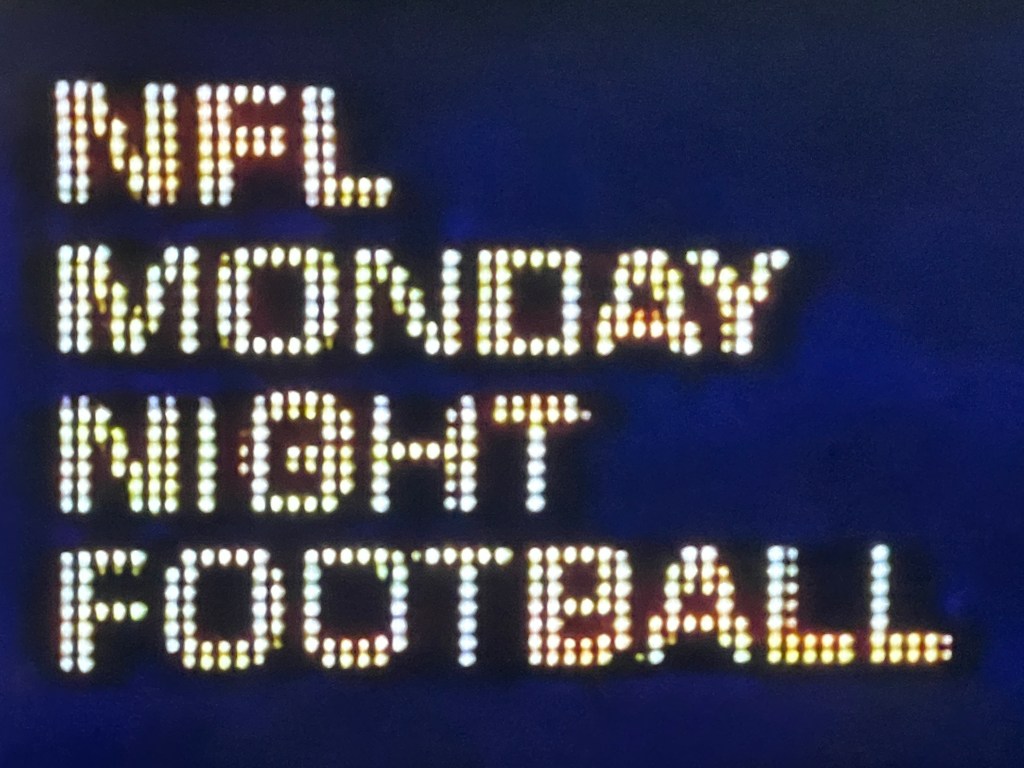
This group changed football broadcasts forever. George Allen was hired by Washington and was looking for payback against his former team. Allen had traded for or signed nine former Rams for his new team. Tommy Prothro, formerly of UCLA, was now coaching the Rams, in this game that had many subtexts.
Los Angeles Rams at San Francisco 49ers on MNF in 1972. Traditional rivals, the 49ers were enjoying a surge in success, while the Rams were having a tough year with Prothro on the hot seat. Roman Gabriel was experiencing arm problems and ineffective, but their running game and defense were tough. Both teams had an ample supply of running backs and ran the ball more than passed. The 49ers had backup Steve Spurrier at quarterback for the injured John Brodie. Thankfully receivers Gene Washington and Ted Kwalick made repeated great passes. Rams head coach Tommy Prothro , known for his unorthodox offensive strategies, unveiled his “zero formation” in this game which divides the offensive line in half to confuse the defense, announcers and fans.
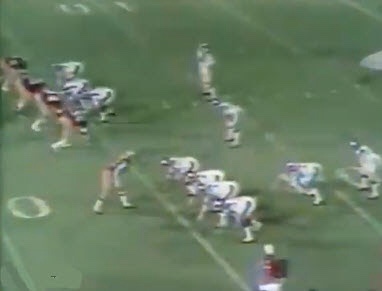
Watch a game that is more than 50 years old? Blurry, old game videotapes? Yes, let me tell you why.
The Broadcast
Monday Night Football was a game-changer for sure. Aside from this crew, announcers were more controlled and rehearsed. Frank Gifford continued to use his old-school style with too much focus on talking like a 1930 radio newsman with flowery talk. Costello and Meredith were fun, their jabs at each other made it seem like a party. Eventually, it got old and Meredith left. Replacements for him did not work, and Meredith eventually returned, for a while. NBC and CBS didn’t try to duplicate the MNF shtick.
Game broadcast had more primitive graphics and much less focus on clock.
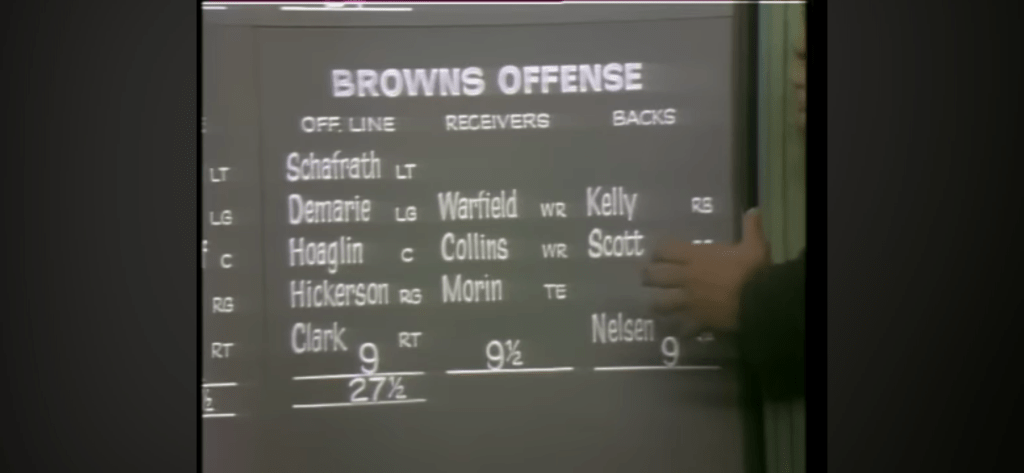
Pre-game segments were more informative and less cartoonish.
Technology was much more basic. Instant replay was available, with split screen replays too, but this was not overused.

There was less halftime over-analysis by former players.
Networks tried out new gizmos and sought to improve the telecast, but they also acted like viewers are not idiots and need to be talked down to.
The Commercials
Watching the commercials from this era is like opening a time capsule on American society. Advertisers were clearly targeting men, although some ads were focused on wives and girlfriends. Commercials were about lifestyle: convenience, fun and youthfulness.
Automotive themed commercials were abundant, highlighting gasoline, spark plugs, tires, batteries and rental cars. Ford and Lincoln-Mercury were big advertisers touting affordability and comfort, in addition to quality. Ford Pintos were introduced to compete with small car imports. They failed to mention the exploding gas tanks.

Cigarette advertising was still legal, so cigarettes and cigars ads were plentiful. Good tasting and cool, definitely necessary for the best lifestyle.
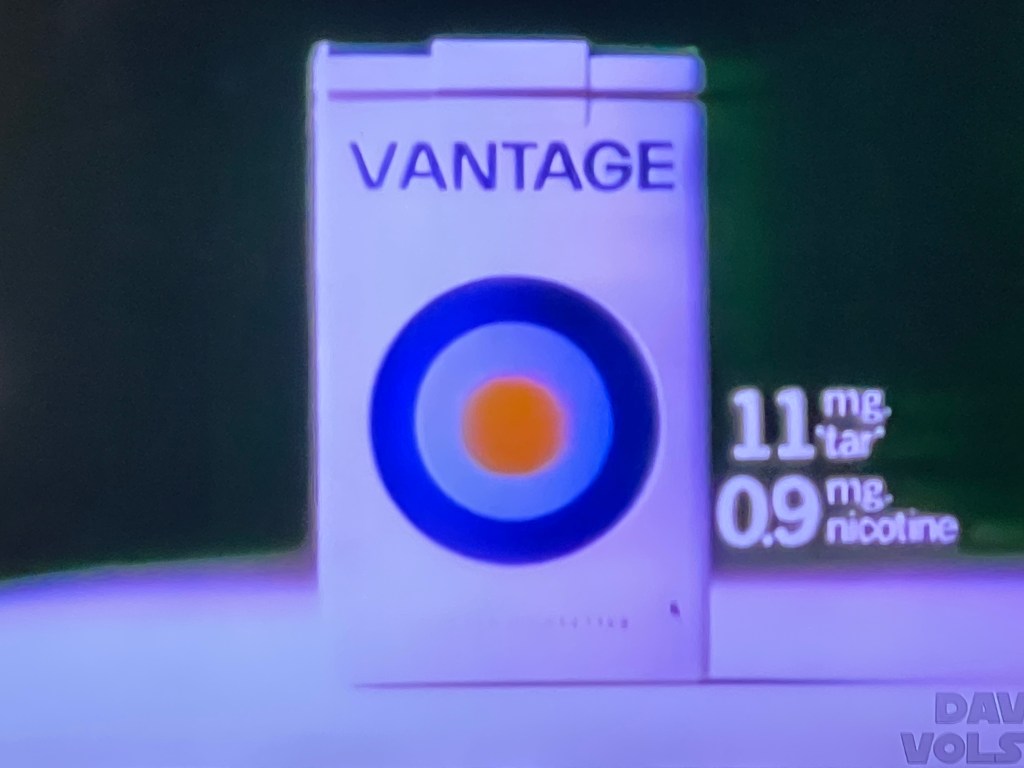

Razor blades, cologne and hair care commercials were aimed at a younger, trendier lifestyle. Brylcream was still pushed by athletes, but “the dry look” was taking over.
Synthetic fabrics were gaining ground for shirts, pants and suits. Comfortable and easy care.
Electronics were still manufactured in America (to some degree), so color televisions and stereo systems headed the consumer push. Television were furniture then.
It’s interesting, many commercials were aimed at selling a company’s reputation and personalized service. Wouldn’t it be nice to get quality and service like that again?
Occasionally, a future star or familiar face pops up in a commercial. Ed Herrmann, Tony Lo Bianco, Tom Selleck, Robert Lansing, Chuck McCann and others. Rod Serling narrated a car commercial. That’s fun to see.
Certainly, the number of commercials were fewer, as broadcast rights were in the millions, not billions as they are today.
The Game
The AFL and NFL officially merged in 1970, becoming one league with two conferences. The merger made the game we see today. Is it a better game? Purists who remember the separate leagues might say no. That’s for another time.
Things I noticed watching these games are interesting, at least to me. In the early 1970s, most teams converted to some type of synthetic surface over a concrete or asphalt base. Ouch. No more muddy fields, but poor drainage made the fields into slip and slides. Carpet burns and injuries increased. Few teams played in football only stadiums, so seating configurations were often wonky. Yes, the Bears played at Wrigley Field and the Giants at Yankee Stadium, until football only venues were built. Stadiums today are nothing like 1970s era stadiums, even Lambeau Field, Arrowhead Stadium and Soldier Field have been renovated.
A few points:
- Two-running back backfields. Both backs blocked when needed.
- Wide receivers in three-point stances.
- Mostly straight-on kickers.
- Goal posts on goal lines.
- No dances or celebrations after exciting plays.
- Many head coaches wearing suits or sport coats on sidelines. Coaches smoking.
- No use of the shotgun formation.
- Less focus on the two-minute period.
- Fewer field goals.
- Most quarterbacks called their own plays.
- On kickoff returns, the number of wedge-blockers were more to form a return.
- Tackling was better then.
- Officials were more animated in showing penalties. This was before the microphone system.
Rules. Defenses had more latitude to hit receivers and quarterbacks without penalty. Receivers could be bumped more often going downfield, and hit while catching passes. The head-slap by defensive linemen was legal. There were penalties called for hard tackling. Leading with the helmet was legal in tackling. Quarterbacks were not protected against hits and tackles. Offensive lineman were penalized 15 yards instead 10 for holding. They also had to keep their hands off the defensive player when blocking.
Teams played six preseason games then and a 14-game regular season. Preseason gave players time to get in game-shape and rookies accustomed to the pro game.
Knee injuries were very common and could be season and career ending. Arthroscopy surgery had not been invented, repair was done the old fashioned way, and recovery time was longer and results varied.
The Players
I know most of the players from 1969-1972, certainly more than today’s teams. It was great fun to watch players like Joe Kapp, Alan Page, Paul Krause, Leroy Kelly, Roman Gabriel, Jack Snow, Deacon Jones, Gene Washington (both of them), Charlie Krueger, Billy Kilmer, Larry Brown, Jack Pardee and many others.
The Purple People Eaters, the Fearsome Foursome, the Monsters of the Midway, and the Over-the-Hill Gang were the best of the colorful names.
These guys had few of the creature comforts of today, and mainly played on grass fields that were slick and muddy when it rained. Warming your hands on a frosty day might be over a flaming bucket. Teams watched their expenditures; ticket prices were reasonable and television contracts were not in the billions of dollars – yet.
Not many of these players had big contracts and most had offseason jobs. Injuries that are routinely repaired, ended careers back then. Teams had 40 man rosters instead of 53 today, so there was less specialization and players might have multiple roles.
Final Thoughts
These are strictly my views and opinions. Watching pro football games was a big thrill for this teenage. I subscribed to weekly magazines for stories and scores. No ESPN or internet then. Pro football has always been a business, but it just seemed more of a game then. Microscopic camera views of plays and challenges didn’t happen then. End zone celebrations were minor and the focus was on the game and the team.
These digitized games on YouTube are great to watch. The quality of most are average, some poor. That’s not a problem, there’s plenty of enjoyment available there. The point of watching year-old games? Well, it’s like listening to music, television shows, books or films from that era for me. Nostalgia? Sure. A part of my history.


 Ticket 2 Ride
Leave a comment