

To see pictures of these colossal vessels grounded and struggling, as a murky, sheen of oil stretches far and wide, still boggles my mind. Beaches and coastline covered in dark, tar-like goo, trapping birds, otters and other wildlife is a painful memory.
These days, when we think of oil spills and environmental contamination, we tend to think pipelines and oil drilling rigs. Fifty years ago the subject was seafaring ships, the super tankers, and the days before the double lined hulls. I haven’t forgotten these tanker disasters, and neither has the Earth.
Amoco Cadiz
Who could possibly forget the greatest tanker oil spills of the 20th Century. When the Amoco Cadiz broke up and crude oil fouled 200 miles of French coastline, it seemed unfathomable to me that such a large modern ship could suffer such a fate. That was in 1978.
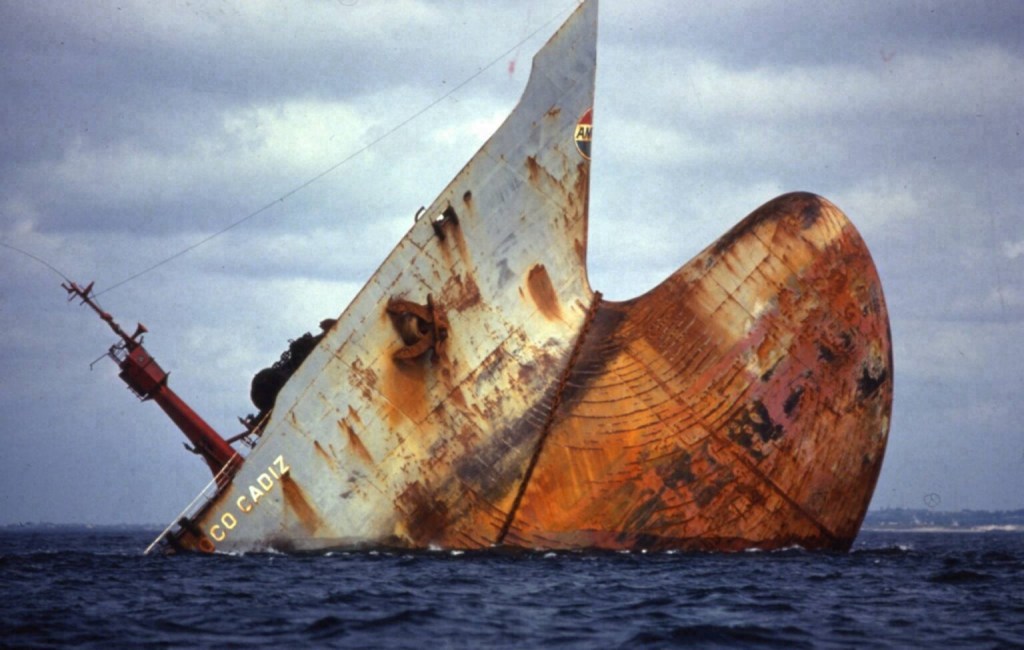
The Amoco Cadiz broke in half, the stern section eventually sank, while the bow was left impaled on underwater rocks, forever sticking up in the air, a reminder of environmental disasters.

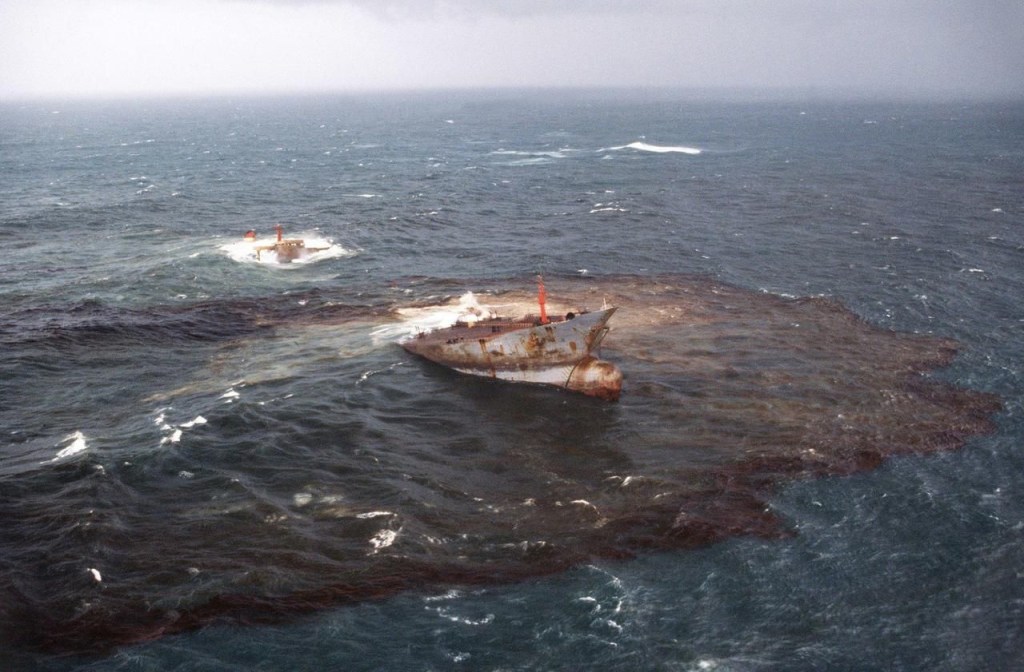
Fast changing weather Inclement weather conditions wrecked the vessel’s steerage equipment preventing the crew from controlling the ship as it moved close to the shore. A German tug boat responded, but the boat captain and the ship’s owners spent hours haggling over the towing fee. Later attempts to tow the ship away from the shore failed as rough seas forced the ship onto the rocks. Ship compartments flooded including the engine room. Before the ship eventually broke up, the rough seas and flooding caused the ship to cleave or crack, releasing oil into the sea. The precarious nature of the grounding and persistent rough weather prevented immediate containment of the spilt oil and also the salvaging of the oil remaining within the broken confines of the tanker. The week following the actual accident, the tanker yet again cleaved, which caused the balance of the entirety of the original oil cargo.

Exxon Valdez
Captain Joseph Hazelwood, many of us remember that name, even if we have to think a moment to identify the source. Answer: The Exxon Valdez and Prince William Sound. March 24, 1989.
The Exxon Valdez was traveling from Valdez Marine Terminal, where it was loaded with crude oil, and was to offload at Long Beach, California. Early in the route, a harbor pilot was to assist in getting the tanker through the Valdez Narrows, which it did without issue. Difficultly arose when the third mate, who was in charge, tried to get the ship clear of ice and back into shipping lanes. The Bligh Reef was not where the third mate anticipated it to be and the tanker ended up grounded on the reef, with 8 of 11 cargo holds punctured and the ship’s integrity compromised.
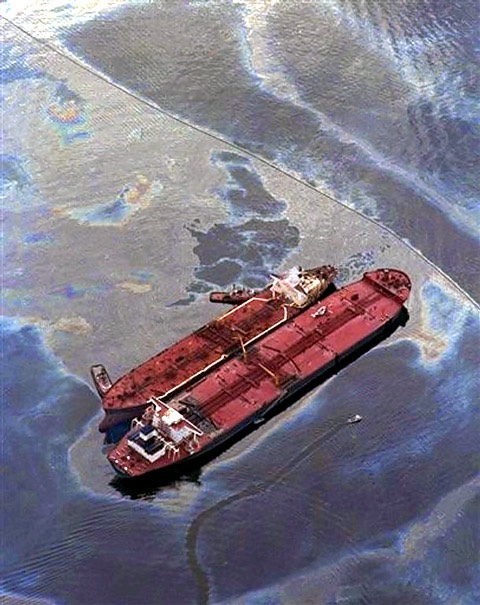
The Exxon Valdez was carrying 53.1 million gallons of crude oil, of which 10.8 million gallons were spilled into the Prince William Sound. This would be the largest spill in U.S. waters until the Deepwater Horizon disaster of 2010.
Sources reported deaths of between 100,000 and 250,000 seabirds, at least 2,800 sea otters, approximately 12 river otters, 300 harbor seals, 247 bald eagles, and 22 orcas, and an unknown number of salmon and herring.
There were found to be numerous factors in the collision with, and grounding on, the Bligh Reef. Failure to install new iceberg monitoring equipment, insufficient supervision, unexpected ice in the water, failure to be in the correct shipping lane, overworked crew, and failure to communicate that the Coast Guard had ceased tracking ships navigating in the reef area. Most of the blame was heaped onto Captain Hazelwood, who had been drinking, but not was on duty. Cleared of most of the charges against him, nonetheless, he was tarred and feathered by implication, even though systems and procedures outside of his purview greatly contributed to this disaster.
Argo Merchant
The Argo Merchant ran aground and sank near Nantucket Island, Massachusetts in December 1976. All 7.7 million gallons of heavy fuel oil were released into the ocean as the ship broke up and sank. The crew was rescued, but harsh sea conditions prevented any efforts to salvage the oil. Ironically, the ship’s captain requested permission to discharge some of the cargo in an attempt to help free the ship from the reef. Permission from the U.S. Coast Guard was denied, and several days later the ship broke in half, spilling the cargo.


The Liberian registered ship had been active since 1953, and according to a shipping database, and the ship had been in “more than a dozen major shipping incidents including two other groundings; once in Indonesia while named Permina Samudra III, and again in Sicily while named Vari; and a collision in Japan.”
Information I found relating to the grounding and sinking, serious issues contributed to the accident: “unqualified crew as helmsmen, a broken gyrocompass, inadequate charts, and an inaccurate radio direction finder.”

According to the Incident News website, “Prevailing currents carried the spilled oil away from the shorelines and beaches of Nantucket.” While no oil was recovered from the ship, at least sea conditions pushed it away from land.
—
What’s Changed
Since the 1970s, a lot. Tankers got bigger, that’s for certain. Demand for oil and natural gas increased. Technology has evolved for navigation and ship operation.
In the wake of maritime disasters like those above, countries took action to improve tanker design, navigation and warning technology, training and experience requirements for crews, improved spill response and other protocols for the transport of oil.
Believe it or not, but than half (52%) of the large oil spills occurred in the 1970s. Despite the increase in oil trading and shipping, the downward trend of tanker spills seems replaced by other types of spills: train shipments, pipeline, oil production, acts of terrorism, etc.

Any oil spill or discharge into the environment is harmful. As marine life is continually threatened, and commercial fishing depletes populations of fish, marine ecosystems are also threatened. The livelihood of small business fishermen can be wiped out by polluted fishing grounds, in addition to the decimation of birds and other wildlife for decades, or permanently.
The role of climate change is still evolving, as some nations continue to push for greater fossil fuel exploration and production, while the demand for greener fuels also is expanding.
We put a dollar value on everything, because that is our modern unit of measure: what it costs us. No matter that Mother Nature is on the run more than ever before.



 Ticket 2 Ride
Leave a comment