
I was never a big fan of Rush, but I respected their great success. Rock memoirs, that’s my thing, so I took a chance on Geddy Lee’s book, and I’m glad I did.
It’s true, many memoirs are rubbish, just sensationalism and a cash grab. I try to stay away from those. Rockstars in general have a reputation for simply talking about their exploits, the number of hotels smashed and blowjobs from groupies, but Rush wasn’t that sort of band, and this isn’t that kind of book.
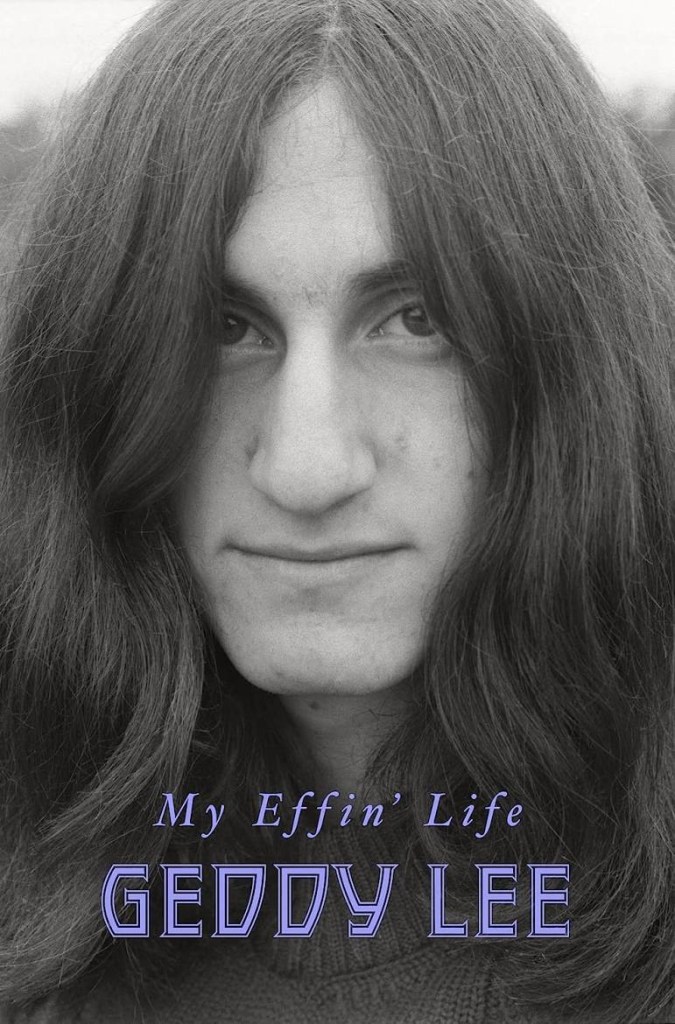
Geddy’s book includes a chapter on his family’s history in Poland, and their subsequent deportation and imprisoned as slave labor by the Nazis. This might be the most impassioned and best-written chapter in the book. Geddy has researched his family’s plight and found original documents used by the Nazis. On the occasion of the 50-year anniversary of the liberation of Bergen-Belsen, Geddy and his siblings accompanied his mother to Germany, then Poland to trace her family roots. The trip had some poignant surprises, both positive and lesser so. This chapter is a must-read, the stories of his mother and father’s camp experiences, and their budding romance (in a death camp!) gives such a personal perspective to the Holocaust.
“We ought to have been in school being groomed to become proper citizens but were pursuing our dream instead. Maybe that’s why for Rush’s entire career, having a drink alone with Alex and Neil after almost every show would be so important; it was a nightly reminder that we’d gotten away with it.”

Geddy’s musical story follows a familiar rock star journey to fame, with fewer Led Zeppelin-type stories of excess and bombastic behavior. Drugs? Sure, even more than I imagined. What’s different, is the absence of sordidness or backbiting. In rock ‘n’ roll, that’s a rarity. Certainly, differences with management existed, bad vibes with a few other bands, and early group lineup changes, but this is not a salacious rock story. Refreshing, actually.
“We had little choice but to tour abroad constantly. It was so hard in those days for Canadian artists to enjoy cross-border recognition…but without the benefit of Top 40 radio exposure we had to play countless gigs south of the border, opening for whoever we could, trying to build a fan base in the Midwest that we hoped would expand to the coasts by word of mouth.”
Rush is a band I’ve never been able to define, maybe in part it accounts for their wide appeal and longevity. Geddy plays up the progressive rock element to the band’s music, but also incorporated the straight rock groove. Whatever they were, they found a niche with their sci-fi and esoteric lyrics, coupled with the complex instrumentation. Somehow they began to find massive radio play without hit singles. “Limelight” and “Tom Sawyer” are two examples. Rush also was quick to integrate and feature the latest in synthesizer technology, building new sounds and grooves. Rush found an audience because they didn’t sound like anyone else, they sidestepped the sound of the moment.
Geddy’s telling of their long climb is an interesting read. They toured relentlessly to build their audience, and somehow kept their home lives from imploding. Well, almost. Constant touring and a focus on his music widened a crack in his marriage, but thankfully, it was addressed before it broke them apart. “The Band was the excuse and it always won out. But it was a ticking time bomb,” Geddy writes.
Another point the reader learns, if they didn’t already know it, is how much respect the band members had for each other, and were a tight, cohesive trio. The 2000’s were a period of long writing and recording processes, extended tours, and then time off. “Everything we’d accomplished after 2002 had to be viewed as a bonus to what was already a terrific and fruitful career,” Geddy writes. The treadmill of their early days was over. These were guys who were now older and nursing ailments, and it took longer to bounce back from tours. There was a growing need for more family time, which Geddy used to repair his marriage.
Then, there was the matter of creating new music. Albums were taking longer to write, record and get the right mix. Every album raised the bar to dizzying heights. “Listening to Clockwork Angels just the other day I was almost shocked to hear how well it hangs together, but back then Neil was the first to hear it,” Geddy reflected. “In essence, that was why he retired: as early as when he’d heard our earliest demos, and again when we all listened to the finished album, he clearly thought, We can’t beat this.”
Drummer Neil Peart began talking retirement. Sadly, within a years, he lost his daughter to a car accident, and his wife from cancer. He would need pause his career, and the band’s. He agreed to return for a shorter, final tour. He was done. Three years later, he would ultimately pass away from brain cancer.

“I felt a tap on my shoulder. I looked back to see that the big guy (Neil) had hopped down to give us a hug after all. Then we all three took our final bow on centre stage. And it was over,” Geddy wrote of the end of the tour. Rush was done; at least this version of the band.
In the years since, Geddy carved out more time for his family and his own interests, but he wasn’t retiring. Now, as his book is out and he’s traveling to promote it and talk to fans, the question returns about whether Rush will reform and hit the road. Alex Lifeson says he won’t tour any longer, even though Paul McCartney and others strongly encouraged he and Geddy to do it. Time will tell.


As I read Geddy’s book, I thought I’d better listen to some Rush to better blend his writing to their music. The only problem was that I don’t own any Rush music. I found a couple of their CDs at the library, and that got me wanting to hear more, so I purchased a two-disc compilation from Amazon. Even though I am familiar with their best-known songs, those only account for a small part of their work. I never anticipated acquiring any Rush music, but I didn’t see reading Geddy’s book.
Life is all about being surprised. My Effin’ Life is a very satisfying read.
4/5
Dedicated to Tommy Johnson, who drove me crazy with playing his Rush albums so many years ago.





 Ticket 2 Ride
Leave a comment