
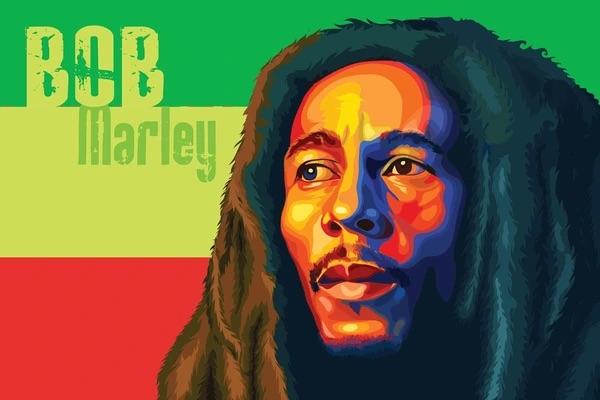
There’s a lot of focus on Bob Marley right now, in large part to the feature film, Bob Marley: One Love, but this blog is not about the film.
Like a lot of people, I wasn’t aware of reggae until Eric Clapton’s version of “I Shot the Sheriff,” which was mostly void of any reggae groove. Unfortunate that a White man was credited with introducing reggae to the rock audience. Many people believed that Clapton wrote the song.
Bob Marley began recording for Island Records in 1972, although he already had an audience, his association with Island would help give him a worldwide fan base, and a steady income stream from his records. Marley, like many young recording artists, saw meager returns from his early work.
The relationship between Marley and Island owner Chris Blackwell was important to both men. Blackwell would be involved in settling Marley’s estate, ten years after Marley’s death and millions of dollars spent on legal fees to sort out the assets, income, claims and beneficiaries. Marley left no will. That’s a story for a different time.
One of the best selling records of all time is Legend, the greatest hits collection of Bob Marley and the Wailers. It’s sold in the tens of millions of copies. You might have one in your collection, right next to The Eagles Greatest Hits (1971-1977), Thriller and Frampton Comes Alive.

Bob Marley was a complicated man, but he lived in a complicated time and place. His personal life, from his early years of living apart from his White father, and his Jamaican mother who lived in America, to the many extramarital relationships and children born to them, his life was anything but normal.
Blackwell said in an interview that Marley was deeply influenced by American R&B music he heard on the radio; that was the music that Blacks in America were drawn to. He said Marley knew he’d have to be influenced by R&B if he hoped to create an audience in America. Blackwell also commented on how Marley’s reggae began to rock harder, that he continued to innovate and incorporate new sounds into his music.
In my mind, reggae is best served live. There are two live albums, each capturing some of the reggae heat and hypnotic beat of the music. Easy Skanking in Boston ’78 (2015) contains some of Marley’s best known songs. Live at the Roxy recorded in May 1976 at the Roxy in L. A., and released in 2003.
More widely known is Live!, an album which was recorded live in concert during July 1975 at the Lyceum Theatre, London.
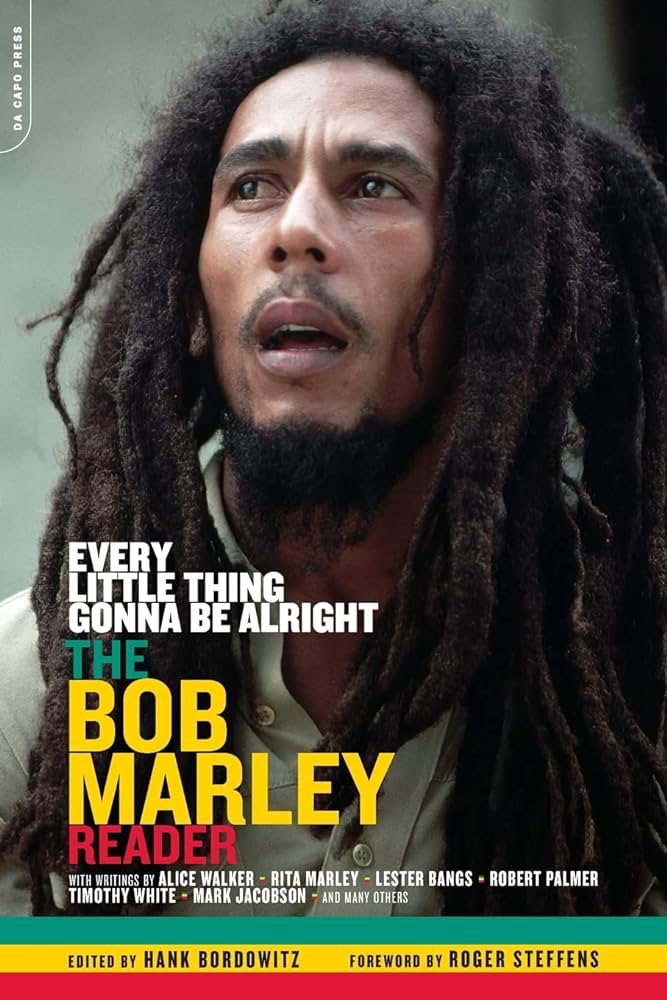
If you want a diverse perspective on Bob Marley, try Every Little Thing Gonna Be Alright, The Bob Marley Reader, edited by Hank Bordowitz contains articles written by a variety of people who interviewed, worked with or knew Marley.
Reggae closer to home
Music with different rhythms has always interested me. Not just a driving beat, but music that unfolds like a flower opening up to share its beauty. Creative beats and complex rhythms are the song’s pulse, and it does have to be a straight 4/4 beat.
Years ago, I frequented a music venue where reggae and ska bands regularly played. The music was intense. Pat’s Blue Riddim Band (later known as the Blue Riddim Band), was a popular regional performer, based in Lawrence, Kansas. Interestingly, the band was made up of all white guys. We spent many sweaty nights dancing to their music.
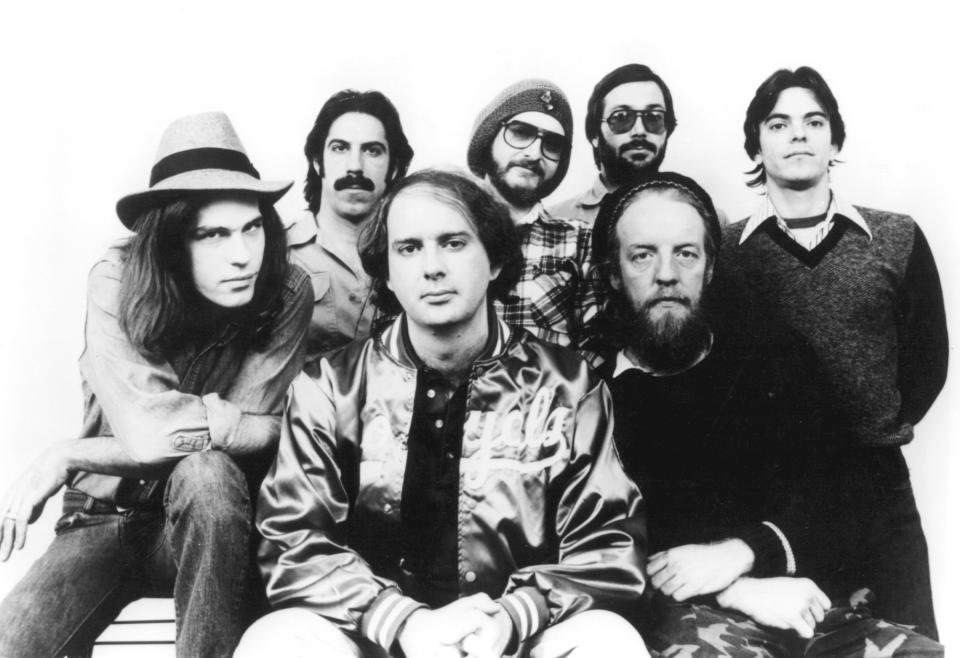
One studio album was released featuring the original lineup.

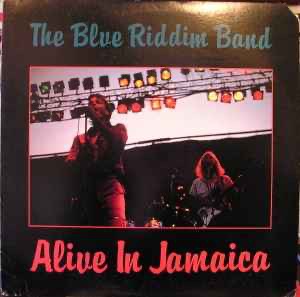
I found a copy of a live album they released of their set at Jamaica’s Reggae Sunsplash festival, which they played at in August 1982.
There were numerous bands that incorporated reggae into their music. The Clash, English Beat, General Public, the Specials, the Police, and Madness were favorites of mine. Was this authentic reggae or just reggae-lite since it was mainly played by white British musicians? Eddie Grant and his “Electric Avenue” sounded like reggae-rock, for English audiences. At the time, I didn’t think too much about it, I just enjoyed and grooved to it. The whole point of music is to blend it, adapt it, rework it, and experiment with it to expand and take it in a new direction. Respect the tradition, enjoy the redefinition.
Reggae was the music of the people, the people who were opposed and fought for their freedom. Music reflected and helped carry the story of proud and defiant people. They had to be defiant against the system and culture that denied opportunity and respect, a system centered on skin tone and discriminated against Rastafarian beliefs. Jamaica was at war with itself and Bob Marley moved to the front line.
Through his music, Marley called for love and unity, not war, but freedom from political and economic enslavement. Reggae was world music and the words were simple and relatable by millions outside of Kingston.
In Lawrence, Kansas, USA, the experiences of Jamaicans, Ethiopians, Angolans, South Africans might have been unrelatable, but we had only to look at our own history to see common struggles of disenfranchised people.





 Ticket 2 Ride
Leave a comment