

It’s been a tough week, two amazing keyboardists of class rock bands, Electric Light Orchestra (ELO) and The Moody Blues, have passed away. It’s impossible to adequately describe the importance of Richard Tandy and Mike Pinder to their respective bands. Here are my recollections, that’s the best I can do.
Richard Tandy
Tandy was the keyboardist and arranger for the Electric Light Orchestra, arguably one of the most successful and influential bands of the 1970s and early 1980s.

ELO formed in 1970 and Tandy joined in 1972, originally as the bass player, before moving over behind the keyboard. Founder Jeff Lynne disbanded ELO in 1986 after a string of multiplatinum albums and hit singles. Tandy was the only one Lynne asked back when ELO regrouped for a later album and live performances.
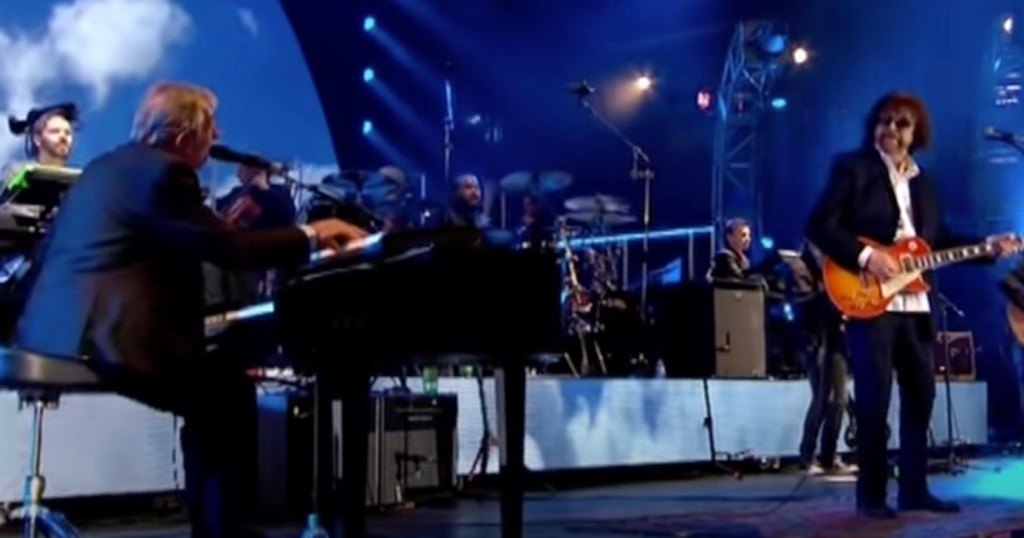
In 1979, Lynne had downsized ELO, jettisoning the string players, who had been essential to establishing ELO’s symphonic sound. Tandy became more central to ELO going forward as he reproduced the string sound of the older period and incorporated more synthesizers into the band’s 1980s sound.
After ELO, Tandy formed his own band and composed music. He worked with Lynne on Lynne’s solo projects and in producing other artists. There are not many interviews with Tandy, who seemed reticent to talk much about the past or provide much information about his own life.
Tandy did his talking through his music, mainly with ELO. Listening to any ELO album starting with Electric Light Orchestra II (1973), you find dynamic, melodically complex musical arrangements, with a definite symphonic quality. The lush arrangements and voicing were dependent on a variety of keyboard instruments and layering of sound textures. Tandy was so important in this process, but seemed comfortable for others to be in the spotlight. Well, Mr. Tandy, take a bow, you have earned it.
Mike Pinder
Pinder was a founding member of the original Moody Blues in 1964, when they were a blues band, and stayed when the band reformed into a progressive rock sound. Pinder was a pioneer with the Mellotron, that machine that played samples of different instruments and projected an ethereal, symphonic, spacey sound. Pinder was one of the early masters of this keyboard instrument and gave the Moodies a unique and other worldly sound.

Pinder left the band in 1978 after the band released Octave, but no longer wanted to tour, as he had remarried and was focused on family life in California. “I left the group to lead a normal life, and I realized that if I put so much energy into writing a song, why not put that same amount of energy into raising a family and holding a marriage together, which is exactly the reason why I decided to give it up,” Pinder told ClassicBands.com.
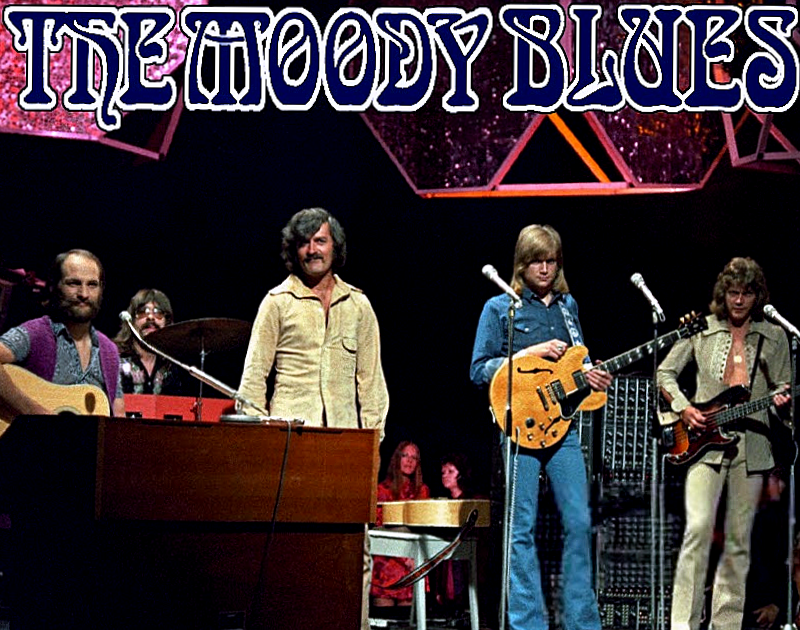
Pinder released several solo albums, but stayed out of the limelight. He joined his former bandmates in 2018 when the Moodies were inducted into the Rock and Roll Hall of Fame.
The band’s debut album, The Magnificent Moodies
(1965), Pinder co-wrote with Denny Laine, “Get Me Go”, “Stop”, “Thank You Baby”, “And My Baby’s Gone” “From the Bottom of My Heart” and “True Story”.
On Days of Future Past, Pinder wrote “Dawn is a Feeling” and co-wrote “Evening”. He also recited two of Graeme Edge’s poems in his distinctive, low voice, “The Day Begins” and “Late Lament”.
Starting with In Search of the Lost Chord (1968), the band’s sound evolved into a tight, cohesive set of songwriters whose styles interlocked like puzzle pieces. Each member contributed songs, and with the involvement of producer Tony Clarke and engineer Derek Varnels, even the most basic arranged songs brought wonderment and insight. More complex and thematic songs pushed the boundaries of lyrical exploration and musical inventiveness. Pinder wrote “The Best Way to Travel” and “Om”. He also recited another Edge poem, “The Word”. The Mellotron is more prevalent on this album.
Next up was On the Threshold of a Dream (1969). Pinder wrote “So Deep Within You”, and the suite of songs, “Have You Heard (part 1)”, “The Voyage” and “Have You Heard (part 2)”. He also co-narrated the opening, “In the Beginning” and “The Dream”.
To Our Children’s Children’s Children (1969) opened with Pinder narrating “Higher and Higher”. He co-wrote “Out and In”, and wrote the trippy “Sun is Still Shining”.
A Question of Balance
(1970) offered just one original Pinder song, “How Is It (We Are Here)” and “Melancholy Man”. He narrated “The Balance” which closes the album.
Every Good Boy Deserves Favour (1971) Pinder wrote “My Song” and co-wrote “The Procession”.
Seventh Sojourn (1972) was the last Moodies album until they regroup in 1978. Pinder wrote two of his best songs for Seventh Sojourn: “Lost in a Lost World” and “When You’re a Free Man”. Pinder introduced a new instrument, the Chamberlin, which advanced the spacey, melancholy sound initiated by the Mellotron.
After a lengthy hiatus, the Moodies regrouped for Octave (1978), the last studio album by this lineup. Pinder contributed “One Step into the Light” which is one of his least consequential songs, but illustrated how fragmented and uninspired this album was. Pinder left after the release of this album.
As a guitarist and keyboardist, Pinder understood the importance of a distinct and memorable melody, and how to enhance an arrangement with atmosphere and texture.
The Moody Blues were never the same after their hiatus and Pinder’s departure. For Pinder, he found peace and tranquility in California with his family, his pursuits and a quieter existence.
Mike Pinder represented the soul in search of meaning and enlightenment that drove the Moodies late 1960s and early 1970s brilliance and musical creativity. As a young person then, listening to the Moodies was like looking at the night sky in wonderment and curiosity. Mike Pinder’s melancholy, low range voice, coupled with his ethereal music and haunting lyrics spoke to me in some kind of code. Being a rock star was not enough for Pinder, it served to pose questions and expose a void that led to a different life. A life that had meaning, happiness and fulfillment. Thank you, Mike Pinder. Godspeed on your journey.





 Ticket 2 Ride
Leave a comment