

This is part two of my look back at the 1950s. I mention David Halberstam’s The Fifties (1993) in my first blog post, now I focus on this deeply absorbing book. Be sure to check out my part one of my series: Born in the 50s.
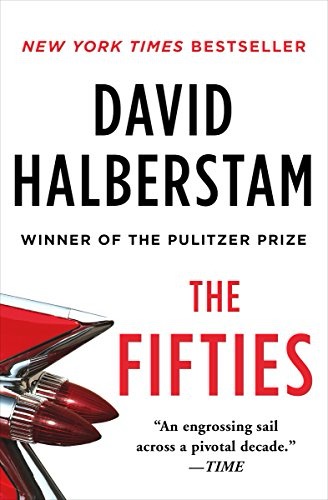
Halberstam tells a variety of stories about the decade through the lives of many people who carved their mark on history. I have to admit, Halberstam digs much deeper than my previous knowledge, with clarity and connection; events and egos could have led to the world’s destruction as Americans enjoyed their new ranch house in the suburbs and Milton Berle in a dress on television.
Halberstam writes: “One reason that Americans as a people became nostalgic about the fifties was not so much that life was better in the fifties (though in some ways it was), but because at the time it had been portrayed so idyllically on television.”
Television is a frequent subject in his book, its real impact is only discernible decades later. It was the television images of the era that remained so remarkably sharp in people’s memories, often fresher than memories of real life. “Television reflected a world of warm-hearted, sensitive, tolerant Americans, a world devoid of anger and meanness of spirit and, of course, failure,” Halberstam writes.
What’s absent in this idyllic view of the 1950s were a number of less than idyllic reality. Among them, the successful test of the hydrogen bomb, the proxy war in Korea, the concept of “massive retaliation” to keep enemies in check, the colonial war in Vietnam, segregation and Jim Crow, high personal and corporate taxes, white flight, lack of gender equality, much higher mortality rates for cancers, heart disease and diabetes, and a much lower life expectancy for all Americans born in 1950 than in 2019 (a 16 year difference).
Here are a few of the most significant events that Halberstam writes about in his book.
- “…families with more than five thousand dollars in annual earnings after taxes-was increasing at the rate of 1.1 million a year, Fortune noted.”
- “By the end of 1956 there were 16.6 million such families in the country, and by 1959, in the rather cautious projections of Fortune’s editors, there would be 20 million such families-virtually half the families in America. Fortune hailed ‘an economy of abundance’ never seen before in any country in the world.
- “The speed with which television’s power ascended awed even those who prophesied it: In 1949, Madison Avenue’s total television billings were $12.3 million; the next year, it jumped to $40.8 million; and the year after that, it jumped to $128 million. Television, of course, could do what radio never could, for it was visual.”
- “The power that Betty Furness had as a commercial symbol for Westinghouse was a reflection of the growing power of television as a vehicle for advertising and also of the growing power of advertising in American life. For the fifties was a decade that revolutionized Madison Avenue.”
- “The number of American conservatives raged against the Soviet successes in Eastern Europe, but for all the territory swept up by the Red Army, the Americans, by getting the German scientists, had pulled off a major coup. In 1945, the Germans were far ahead of other nations in rocket developments, the Soviets were second, with a significant pool of talent, and the Americans, having diverted much of their scientific resources to developing nuclear weapons, were a poor third. But getting von Braun and his colleagues instantly made the Americans competitive. Rocketry was his life.”
- “September 1959. As far as Detroit executives were concerned, it was just in time, for the low end of the market had been consistently growing over the past decade and could no longer be ignored. In 1958, some 379,000 imported cars were sold in America; added to the growing sales of the little American Nash Rambler, the compacts now accounted for about 12 percent of the market.”
- “The first and most jarring of these images was of angry mobs of white rednecks, pure hatred contorting their faces, as they assaulted the nine young black students who dared to integrate Little Rock Central High. The second and almost equally chilling image came a few weeks later, showing the same black children entering the same school under the protection of elite U.S. Army paratroopers. The anger and hatred that had been smoldering just beneath the surface in the South since the enactment of Brown v. Board of Education had finally exploded, and now because of television, the whole nation and soon the whole world could watch America at war with itself.”
- “By rough estimates, 49.3 million motor vehicles were registered when the decade began, 73.8 when it ended; by some estimates, an average of 4.5 million cars, many of them that might have stayed on the road in a less prosperous economy, were scrapped annually. That means as many as 68 to 70 million cars, ever larger, ever heavier, ever more expensive, were sold, and General Motors sold virtually half of them.”
- “We did not pause to understand why a peasant army had defeated a powerful Western army. Anyone who tried to talk about why the other side had won was vulnerable to charges of being soft on Communism. We had to see the struggle in Vietnam through the prism of the Cold War and had, in effect, already begun the process of making a commitment to a small, artificial country where the other side held complete title to nationalism. We thought the war in Indochina was over; the other side knew it had just begun.”
- “…first identified by Dulles in January 1954, was the doctrine of “massive retaliation.” (What Dulles actually said was that local defense measures would now be replaced throughout the world “by the further deterrence of massive retaliatory power.”) That meant we would react instantaneously, to even the smallest provocation, with nuclear weapons; therefore, an enemy would not dare launch a first strike.”
- “The Democrats were furious. George Ball, then a young Stevenson speechwriter, said the Republican crisis was that they had all the money but no real candidate. “Faced with this dilemma they have invented a new kind of campaign-conceived not by men who want us to face the crucial issues of this crucial day, but by the high-power hucksters of Madison Avenue.” Marya Mannes, writing in the liberal Reporter, had mocked this new marriage of Madison Avenue with the American political system”
- “Stevenson hated the idea of using advertising with the political process. “This is the worst thing I’ve ever heard of,” he told Lou Cowan (a CBS executive on loan to the campaign) when he heard of the Eisenhower spots, “selling the presidency like cereal. Merchandising the presidency. How can you talk seriously about issues with one-minute spots!” Though there were already 17 million television sets in the country, Stevenson essentially refused to recognize the medium.”
- “Starting in 1950 and continuing for the next thirty years, eighteen of the nation’s twenty-five top cities lost population. At the same time, the suburbs gained 60 million people. Some 83 percent of the nation’s growth was to take place in the suburbs.”
Pick any decade and the pluses and minuses are evident. That’s the reality as science, impact on the environment, respect for one another, the impact of laws, and the effect of societal customs, all shape and put their make on life. Somehow, the 1950s appears neon glowing, squeaky clean and morally upright – but that’s only veneer.
David Halberstam (1934-2007), was historian and journalist, a writer of 22 books, was awarded a Pulitzer Prize in 1964 for international reporting.
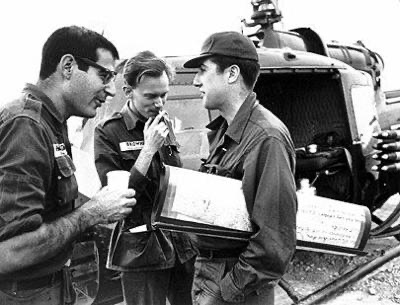
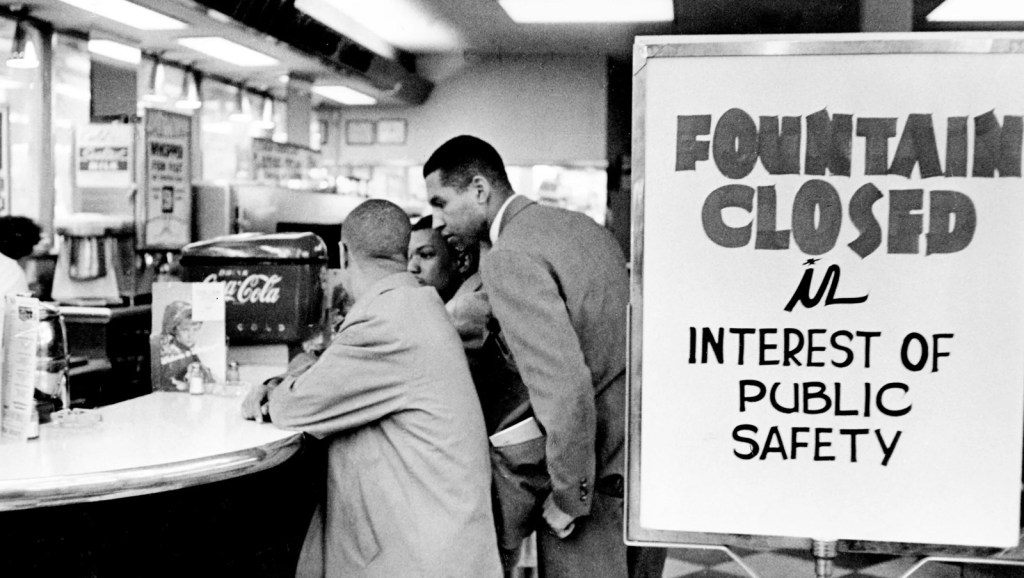
In the 1960s, Halberstam covered civil rights in the South and then Vietnam. His books were best sellers, as he was both storyteller and analyst, unearthing the history we thought we knew, but his stories seemed to reveal truths that somehow reporters seemed to have only partially exhumed. Halberstam was not sensational, he was thorough. He wrote of war, segregation, governmental malfeasance, the Cold War, politics, big business, the American Dream and even sports. Few writers had the scope and depth of field that Halberstam possessed. His untimely death in a 2007 car crash silenced one of the most respected writers of his generation.



 Ticket 2 Ride
Leave a comment