

Funny, I’d never heard of this film, or I had purged any memory of it.
The Satan Bug has everything going for it, well, except for the low-budget title, an undercooked script, clunky acting, and lackluster direction. But, here’s why it should have been a much better film.
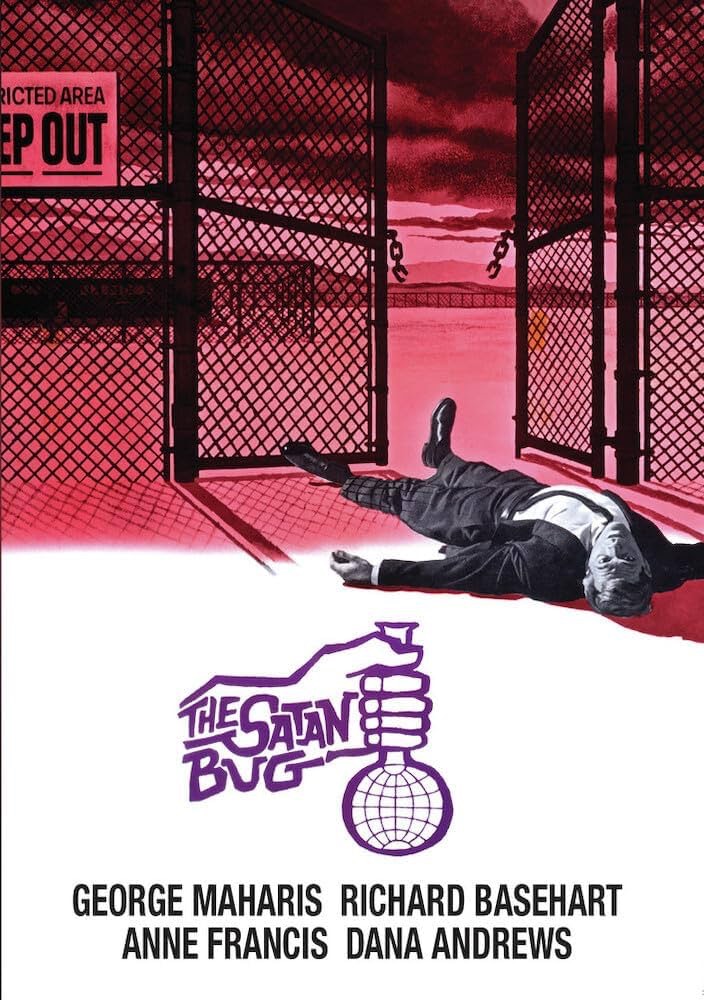
What’s it about?
The film is about a secret government facility in the desert that develops biowarfare weapons. What could go wrong? Well, a large batch of a virus so deadly that it could render Earth lifeless, is stolen. It’s called, the Satan Bug. The search is on to find the culprits and recovery virus before it is unleashed on major cities.
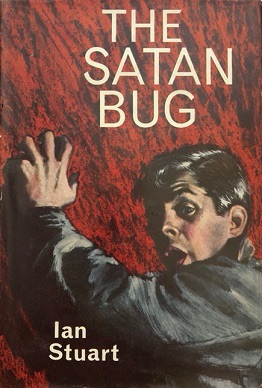
The source material is an Alistair MacLean book (written under the name Ian Stuart), adapted for the screen by two-time Academy Award winner Edward Anhalt (Becket, The Young Lions, Panic in the Streets, Jeremiah Johnson) and writer/director/novelist James Clavell (The Fly, To Sir With Love, Shōgun, Noble House, Tai-Pan). Both, exceptional storytellers
MacLean is still regarded as one of the biggest selling authors of all time. His books are of mystery, intrigue and adventure, many of which have filmed.
Those who made the film…
John Sturges was hired to produce and direct The Satan Bug. Sturges began as a film editor in the 1930s and worked his way through the trenches to direct. That’s not just a cliche, Sturges edited and directed training films and documentaries during WWII. His later credits include: Bad Day at Black Rock, The Magnificent Seven, The Great Escape, Hour of the Gun, Ice Station Zebra and Joe Kidd. Sturges directed some very big films, often for Mirisch.
The Mirisch Corporation, was probably the most successful independent producer of films, is the maker of this film. A sampling of Mirisch films: including Some Like It Hot (1959), The Horse Soldiers (1959), The Apartment (1960), The Magnificent Seven (1960), West Side Story (1961), Follow That Dream (1962 with Elvis Presley), The Great Escape (1963), The Pink Panther (1963), Hawaii (1966), In the Heat of the Night (1967), The Thomas Crown Affair (1968), Fiddler on the Roof (1971). The Mirisch brothers knew talent, and developed partnerships with them, making films other studios shied away from. Academy Awards and box office hits resulted.
Now, who would Mirisch and Sturges hire for the lead and supporting roles? This is really an ensemble film, so many of the roles were filled with familiar characters actors, and a few newer faces. Ed Asner (The Mary Tyler Moore Show, Lou Grant) and Frank Sutton (Gomer Pyle, USMC) are two of the villains, along with Richard Basehart (Voyage to the Bottom of the Sea) who leads the virus theft. Other familiar faces are Simon Oakland (Psycho, Bullett), John Larkin (Twelve O’Clock High, The Untouchables, The Edge of Night), John Anderson (Dallas, Perry Mason, Gunsmoke, Here Come the Brides), James Hong (Chinatown, Blade Runner, King Fu Panda, The Sand Pebbles), Henry Beckman (Quincy M.E., Ironside, Here Comes the Brides, Peyton Place), Hari Rhodes (Police Story, The Bold Ones, Daktari, Shock Corridor), and Richard Bull (Little House on the Prairie, Voyage to the Bottom of the Sea, The Andromeda Strain).
If you look closely, you’ll also see Lee Remick, Tol Avery, Russ Bender, James Doohan, Harold Gould and Noam Pitlik in uncredited roles.
The “stars” of the film are George Maharis, Anne Francis, Richard Basehart and Dana Andrews.

George Maharis gained fame from Route 66 before wanting something more, meaning film roles, which consisted of films like The Satan Bug. Maharis should have achieved greater stardom, he had the tools, but the leap to quality feature films alluded him. He’s okay in this film, flashing the occasional spark, but too often allowing the script to sink him.

Anne Francis was given little to do here, the role was essentially as a “girlfriend” and not as a bonafide case solver. Francis was Honey West, a girl detective just a couple of years before this film. She was allowed to show more grit in Sturges’ Bad Day at Black Rock. Sadly, she was wasted in this role.
Richard Basehart plays a heavy, in sort of a dual role. Unfortunately, his character is very two-dimensional, and his death is rather unconvincing. The scenes of Basehart and Maharis’s characters should be philosophically deeper and genuine, as they represent the clash of causes underscoring the film’s message.
Dana Andrews had a robust film career, but now was clearly on the backend of it, where he would play predominantly military officers and appear on television. The man still had talent and name recognition, but was middle-aged and less picky about roles. Andrews is a quality pick for this role and he delivers, but script is not very challenging for his character.
Why didn’t the film succeed?
One must recognize the incredible amount of talent in front of and behind the camera, and a savvy production company. Although the subject of a government created, life-ending virus, is classified as science-fiction, it’s not really. Another five years and The Andromeda Strain would more than prove the subject of a life-ending virus (especially one from deep space) is science possible.
John Sturges was a top filmmaker, but he whiffed on this film. The Satan Bug pales in comparison to the quality of his early 1960s films. Is this the same guy who made The Magnificent Seven and The Great Escape?

The staging in The Satan Bug seems amateurish at times, particularly the action scenes. The use of Asner and Sutton as henchmen is almost comical; they are more bunglers than burglars. Sturges did good in hiring his secondary cast, these folks know how to make the most of their screen time. Unfortunately, Sturges doesn’t give them much help as a director.
The beauty of the desert is evident in all of the exterior photography. The location is definitely not part of the problem.
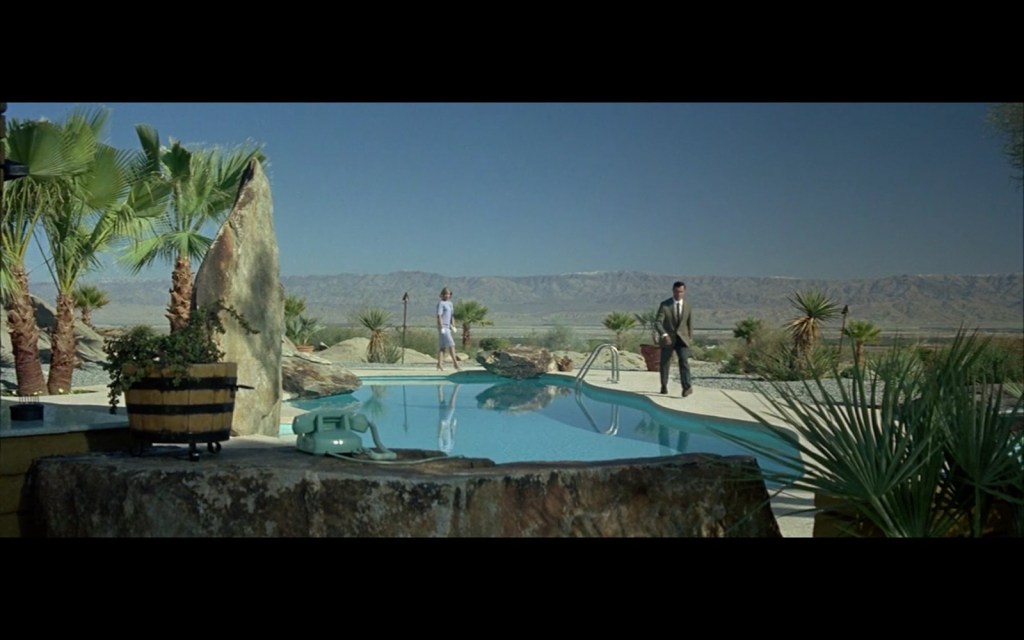

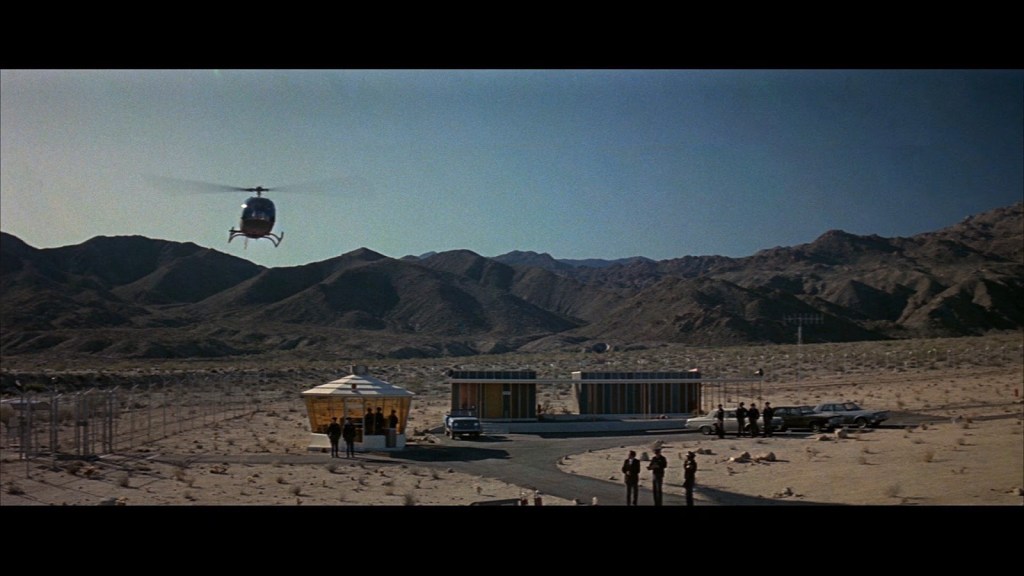
The main problem is the script. Anything Alister MacLean wrote was assumed to be golden and highly desirable for film adaptation. Well, some of his books were better than others. Clavell and Anhalt were veteran screenwriters who knew how to script action stories. What was filmed doesn’t reflect that. The science part of the story is good, the chase part of the story is average at best, the morality of the subject matter comes off as preachy and underwritten. There is not much chemistry between the lead male and female characters as written, and that’s where the audience should be drawn in and hope these characters survive the virus threat.
And in the end…
As a science fiction film, The Satan Bug only goes part of the way, it falls back on being a chase film instead of keeping the tension on the subject matter. Sturges is not Hitchcock. Sturges seems hesitant to fully commit, so the film’s focus meanders. The script talks too much instead of advancing the story through action. Certain story points are disjointed, like the script was edited with garden sheers, making an unrealistic transition in the film to solve a script problem. I’m surprised that Walter Mirisch greenlit the production with such a leaky script. That’s what past success does.
Is The Satan Bug a terrible film? No. Is it a good film? No. It’s a missed opportunity, because the subject matter is important and so much talent produced something below their capabilities.
2/5




 Ticket 2 Ride
Leave a comment