
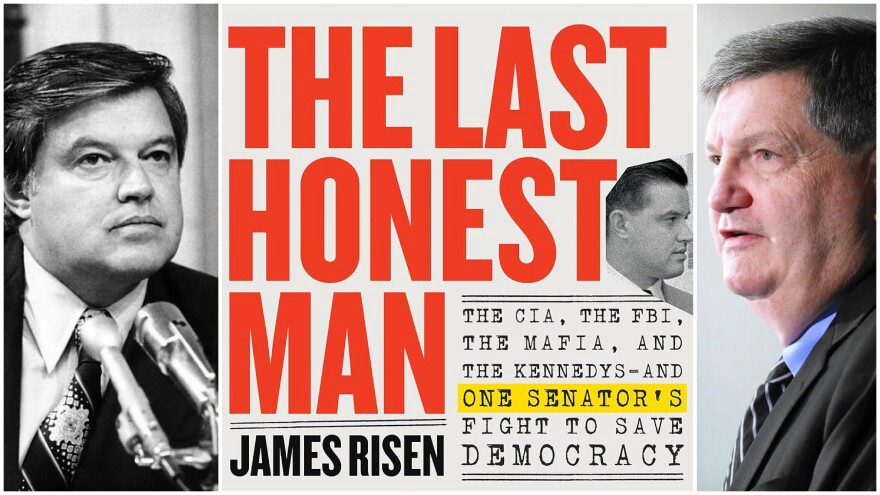
Imagine a politician whose actions did not depend on political party backing or fear of pushback from social media. In the 1970s, America then was not as divided or entrenched as today. James Risen’s new book tells the story of one such politician, who fought for what he believed, putting American ideals ahead of his own career, and paid the price for it.
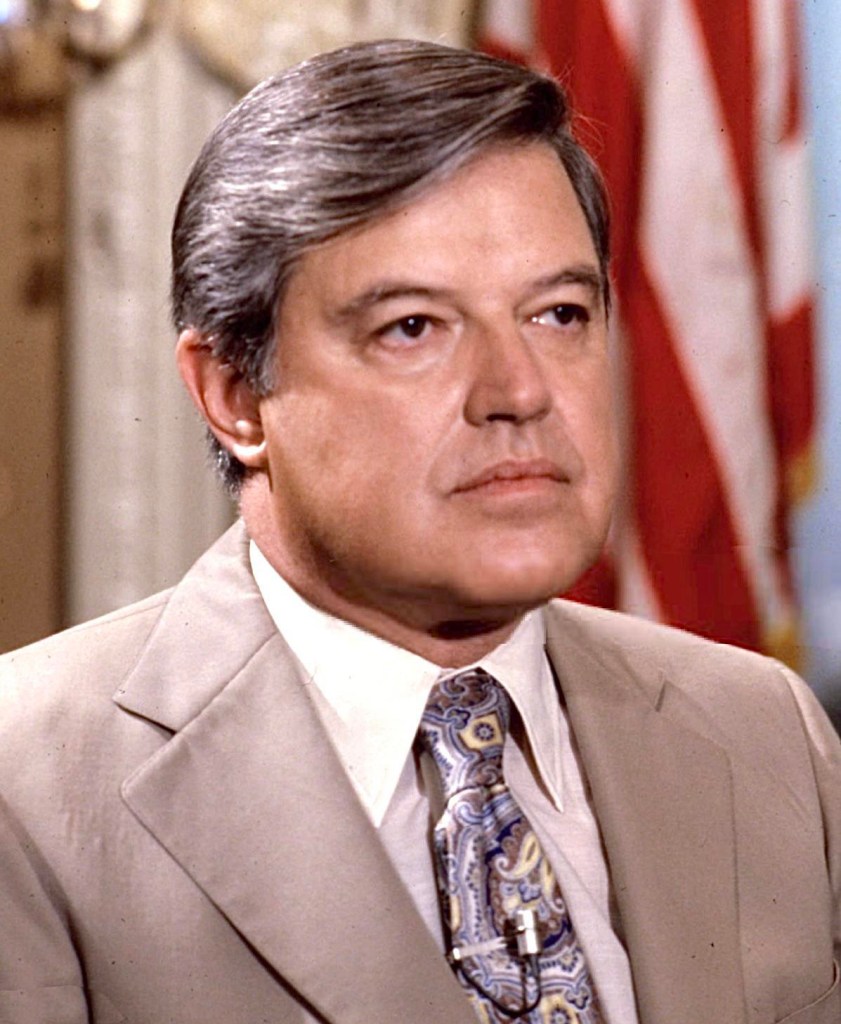
Frank Church was only age 32 when he was elected to the United States Senate representing Idaho. As a member of the U.S. Senate, Church was known for several things: being one of the first members of Congress to actively, and vocally, work against the funding of the Vietnam War; and as chairman of the Church Committee, investigating abuses by the U.S. intelligence agencies. Both earned Church supporters and detractors.
The Last Honest Man: The CIA, the FBI, the Mafia, and the Kennedys―and One Senator’s Fight to Save Democracy (Little, Brown and Company, 2023), is the story of a very independent senator, who worried less about partisan politics and more about following his own road.
Largely forgotten today, Church was enormously influential in both domestic and foreign policy during his time in the Senate, but was one of several Democratic members of Congress swept out of office by the Reagan conservative wave in 1980.
Church wanted to become president, but his campaign never gained any traction in 1976. Jimmy Carter and Church were never close, but politically they helped push each other’s agenda. One of those was the return of the Panama Canal to Panama, which became a 1980 election topic.
James Risen writes that Church was unfairly blamed for the assassination of a CIA agent in Greece, somehow tied to the work of the Church Committee. Further, Church became a target of intelligence agency pushback, claiming that the investigation exposed agency secrets. That, along with Executive Orders banning political assassinations, limiting intelligence gathering techniques, and provisions against spying on Americans, hurt morale of agencies, reduced on-the-ground intelligence gathering, and weakening national security. These accusations would again surface after 9/11, helping to clear the way for expanding national security and intelligence measures.
Boise State Public Radio interviewed author James Risen, who stated: “Ironically, Dick Cheney, who had been his (Church’s) nemesis in the 1970s and who had fought against the Church Committee’s investigations of the CIA when he was vice president, tried to blame Frank Church and the Church Committee for all of the problems that the intelligence community had for failing to detect 9/11.”

Risen: “At first, the Church Committee’s investigation came right after Watergate. And so it was very popular. It was seen as kind of Watergate 2.0. But then towards the end of the investigation, a CIA officer stationed in Athens was assassinated by Greek terrorists. The Ford administration, which was in office at that time, lied to the public and said that it was the fault of the church committee, which was not true. And that really hurt the popularity of the church committee’s work at the very end. And one of the things I do in the book is to reveal the truth about that assassination and what really happened and prove that it had nothing whatsoever to do with the Church Committee.”
Risen, wrote for both The New York Times and Los Angeles Times, and is the author of several books and various articles about intelligence agencies. He is a Pulitzer Prize recipient for his writing about secret domestic eavesdropping by the Bush administration.
Additional thoughts on Frank Church:
Marc Johnson in a column for the Idaho Capital Sun wrote of Church’s legacy: “The CIA engineered assassination attempts against foreign leaders, even enlisting the Mafia to try and kill Fidel Castro. Every president from Eisenhower to Nixon was culpable in these clearly un-American and illegal activities.
“The National Security Agency opened the mail of thousands of Americans and wiretapped countless others.
“Richard Nixon and Henry Kissinger plotted to overthrow the sovereign foreign government of Chile, and to this day both have blood on their hands for the murders of Salvador Allende, the head of Chile’s armed forces and a senior Chilean diplomat who was brazenly assassinated on the streets of Washington, D.C.
“We know these things because of Frank Church.”
My final thoughts:
What’s clear in Risen’s book is that Church’s efforts were foremost a reaction to illegal activities conducted by agencies abroad and at home. Until the Church Committee, there was no Congressional oversight of these agencies engaged in assassinations, unauthorized wiretapping, secret drug experimentation, torture, and toppling other governments. History tells that the Bay of Pigs, Vietnam, Watergate, Iran-Contra, the invasion of Iraq, all included false information, or information withheld from Congress and the public.
Yes, we live in a dangerous and scary world where the governmental agencies struggle to stay ahead of threats and attacks on American lives and interests. It’s a delicate and complicated balance between freedom and authority, privacy and access to personal information, human rights and aggressive interrogations, and the rule of law and executive action.
4/5

 Ticket 2 Ride
Leave a comment