
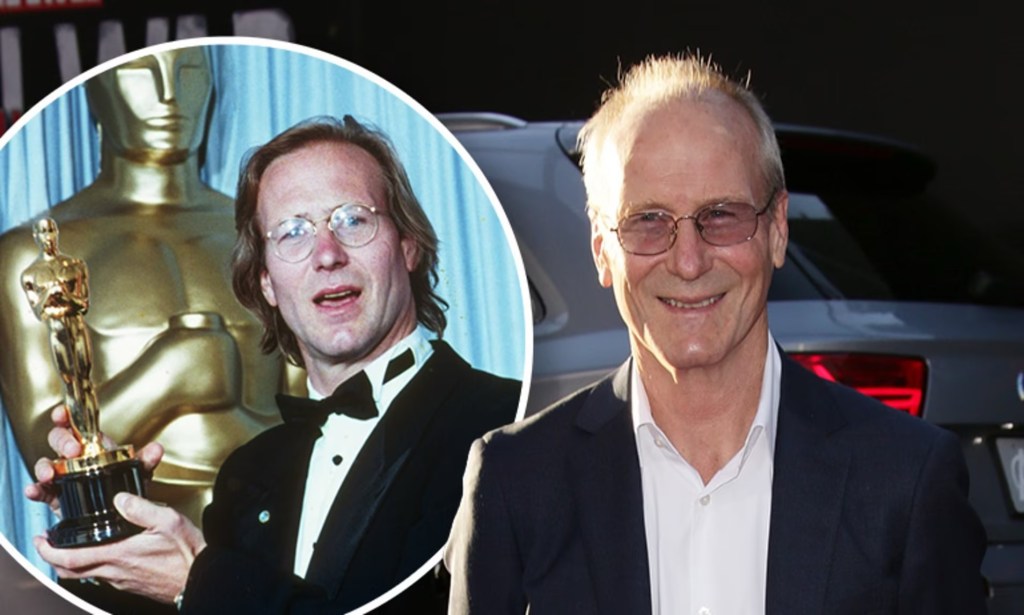
William Hurt was an in-demand actor in the 1980s, definitely A list, a romantic lead, an Oscar winner, and a very bankable star. Hurt seemed drawn to complex characters, especially those with sizable flaws.
Recently, the wife and I watched him in the Billy Bob Thornton series, Goliath, where Hurt played a powerful attorney who used his position to sleep with, and discard, women in his law firm. This role was quite creepy, maybe the least likable character he ever portrayed.
Hurt has played many characters through the years, so it’s possible to recognize a certain type of role he frequented: the remote, self-absorbed, cold and tone deaf man who walked on others’ feelings. Yes, that role; he was a master of that type. When I used the term “go-to-role” it’s not a slight or to demean his acting. Hurt was a very talented actor, who created backstories and dug deeply in his characters. The characters in the following films and television series are not the same, yet they draw from some common personality traits. Each has their own stories and character to be explored.
Altered States (1980)
The partnership of writer Paddy Chayefsky and director Ken Russell was on odd one. Chayefsky was so angry with Russell’s finished film that he removed his name as the writer. Altered States is certainly an ambitious undertaking, blending science, religion and psychoactive drugs. Hurt play Eddie Jessup, a genius researcher who uses a sensory deprivation tank along with a psychoactive drug mixture to access the genetic history of civilization.

Blair Brown plays his researcher wife who he cannot connect with. After a few years together they are splitting up. His quest to find the source of his disbelief in truth and human connection takes him on a frightening regressive journey where he almost doesn’t get back from it. Jessup is a self-centered, detached, work-centric man who finally sees the goodness in his own life slipping away.
Movie Metropolis wrote: “Nevertheless, as I say, it’s fun to sit through, and as an actor Hurt is so good and so sincere, he almost makes it believable.”
Altered States is not for everyone, but the premise is a fascinating one, and Hurt was the deep-thinking, complex type to play the complicated charter.
The Big Chill (1983)
Hurt is part of a great ensemble cast here. Co-written and directed by Lawrence Kasdan, college friends gather for the funeral of one of their own and reexamine their lives, and enjoy a great soundtrack.
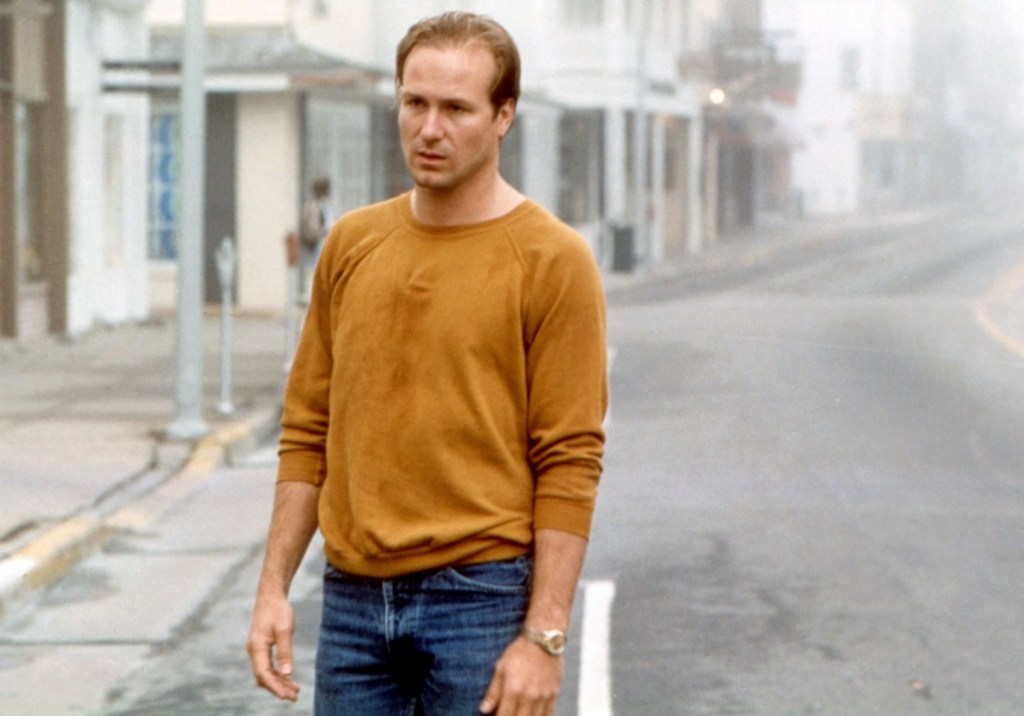
Hurt is the go-his-own-way character, Nick, who has chosen a less constructive path in life. Vietnam left him damaged, but he had a nomadic spirit anyway. He sells and partakes of drugs. He’s quite judgmental of his friends, especially after he is stopped by police and relies on one of his “establishment” friends to vouch for him. Nick doesn’t buy into the introspection of his friends and looking for deep answers, instead just accepting the cold realities of life.
Nick is far from the glamorous role in this ensemble, where Hurt was in the company of other fine actors, but found qualities of a damaged man soften the blunt edges.
Broadcast News (1987)
Perfect casting in James L. Brooks’ TV news story. Hurt’s character has gotten by on his looks and confidence, not his talent or journalistic integrity. He knows he’s lacking, but wants to get better. His character is multidimensional and Hurt plays it superbly.
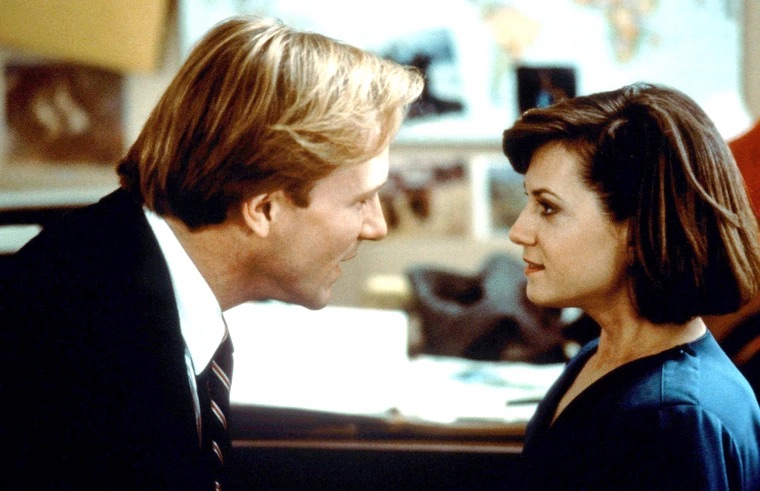
The casting of Hurt, Holly Hunter and Albert Brooks was a home run, these characters play off of each other perfectly. Hurt’s character is not afraid of taking a shortcut, something that neither Brooks or Hunter’s characters will consider. Hurt plays the type of character Robert Redford would play in the early 1970s, but this being the 1980s, greed and shortcuts are rewarded.
The Hollywood Reporter wrote: “Hurt is magnificent. On the surface, Hurt’s role doesn’t seem to be as complex as many he has previously played, but his portrayal is quietly layered. He fits what seem to be contradictory qualities, dumb ambition and decency, into the fabric of a completely drawn character.”
The Accidental Tourist (1988)
Hurt re-teams with writer/director Lawrence Kasdan, and Kathleen Turner from Body Heat. Geena Davis earned an Academy Award for her quirky character, Muriel.
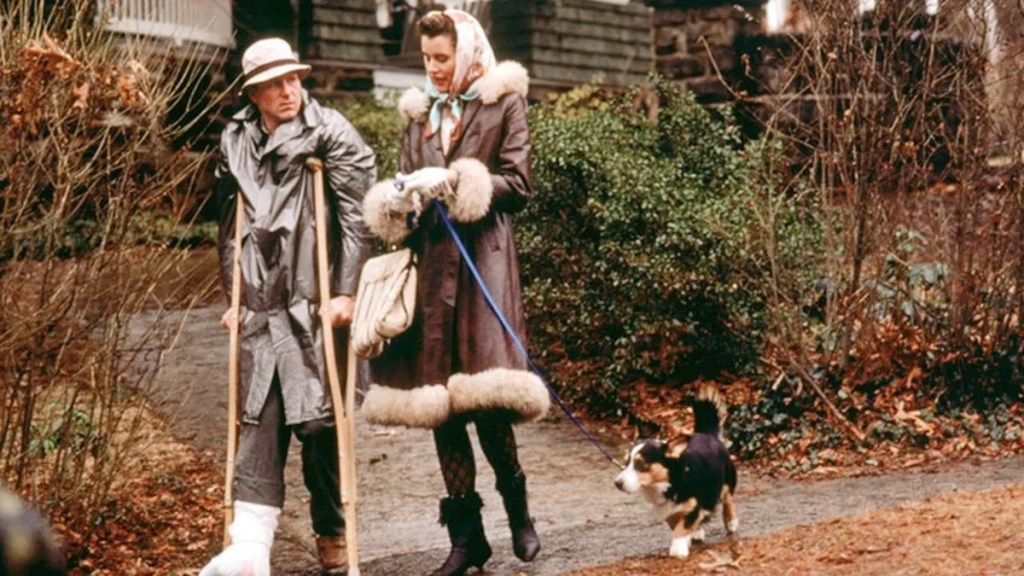
The film has a great cast who light up these eccentric characters, where Hurt oddly seems the most “normal” of the bunch. His character, Macon, is separated from his wife, triggered by the loss of their son in a tragic event, magnifying his sense of remoteness and failure to connect in any deep, meaningful relationship. He’s all surface and no depth, and struggles to keep the aggressive dog trainer, Muriel, from getting too close. It works for a while, but relationships are complicated, and the fear of commitment pushes him back to his ex, who seems safe. He leaves Muriel for his ex, but begins to realize how they have grown away from each other, they no longer fit. Yet strangely, he can see the quirky Muriel as a better partner moving forward.
Critic Roger Ebert said: “What Hurt achieves here seems almost impossible: He is depressed, low-key and intensely private through most of the movie, and yet somehow he wins our sympathy.” He credits Kasdan for knowing how to best use Hurt to gain audience likability.
Matt Brunson of Film Frenzy wrote: “Winding down his run as the premiere leading man of the 80s, William Hurt (in arguably his finest performance) plays Macon Leary, a travel guide writer who withdraws from the world after his son is fatally shot.”
The Doctor (1991)
The story of a successful surgeon who becomes the patient and must understand the frightening and mysterious journey in the healthcare system. It is an eye-opening, humbling and life-changing experience.
Hurt’s doctor, says during a surgery he is performing, to younger doctors looking on, “fix it and get out. I’d rather you cut straight and cared less.” Feelings only get in your way.
The film was directed by Randa Haines, who directed Hurt in Children of a Lesser God. The Doctor has some strong points, but overall I honestly don’t remember much about it.

Roger Ebert at the time said that Haines and Hurt “make it into the story of a specific, flawed, fascinating human being.”
Washington Post reviewer Desson Howell said in his review of the film, “Narcissism aside, Hurt is good at what he does. He’s stirring and affecting.”
I might have to watch it again.
Michael (1996)
I’ve written about Hurt in this film before, I believe he was horribly miscast, as were others in the film. Nora Ephron’s film was a big success, but it’s perhaps her weakest film. Hurt portrays a self-centered magazine writer out to get a story about an angel, played by John Travolta.

Hurt falls for another member of the magazine team, Andie MacDowell, and convinces her he is not the narcissist that in fact he is. In the end, Hurt’s character is supposed to magically have a change of values and again fall for the MacDowell character. He’s totally unbelievable, and it’s comical watching him profess his love for her. A big swing and miss.
The Variety review said: “This strategy (letting the actors act) works for the ever-resourceful Travolta and for a pro like Hurt (who does a deft job of his specialty, playing the surly, crabby hero).
However, the SFGate review wrote: “It’s no fun watching Hurt and MacDowell try to work some magic into a romance that remains as dead on the screen as it must have been on the page.”
Late Bloomers (2011)
Not a traditional narcissistic role, but Hurt’s character is staring down his 60s and turns his back on making any adjustments. His wife (played by Isabella Rossellini) is convinced that she has a neurological condition (turns out she doesn’t), but she’s facing one direction and her husband the opposite direction. His response is to dress hipper, take on an unconventional work project (he’s an architect) spending his evening hours working with a young team, and having a brief affair with one of them. His wife has her own affair, but they both end up back together at the end of the film, undeterred by the other’s infidelity. How European.

Actually the film was made by a French company and takes place in London. Directed and co-written by Julie Gavras, daughter of filmmaker Costa-Gavras, this film attempts more than it can handle, but its heart is in the right place.
Hurt could slide convincingly into mature roles, I believe, because men are more hardwired by then, character flaws are more evident, and accepted for what they are.
Roger Ebert’s review said, “Hurt is detached and has his angular look as usual.”
Goliath (2016-2021)
Speaking of character flaws, Donald Cooperman is wealthy and powerful, and promotes a myth about himself. He keeps his management team somewhat off-balance and a certain air of competition for his favor. Hurt really embraced the cruelty and weirdness of Cooperman, who had no redeeming qualities.
In an interview with Decider, Hurt was discussed how he approached forming the backstory of Donald Cooperman. “I have a thousand and one questions.” And he ( the director) said, ‘Send them to me.’ So I wrote them up, pages and pages of them, and he wrote me back pages of answers and I said, ‘I’m going to use these! My character’s going to come from these answers. This is the life he’s had and that’s what I’m going to play.’ He said, ‘Go ahead.’ So I did.”

Series co-creator David E. Kelley was asked about working with Hurt. Kelley said he was told that Hurt had a lot of questions about the role. Kelley said it turned out that Hurt had a lot of questions that were really more about process (Hurt’s acting process) than about the series. “He’s a professional, who takes a very serious approach to acting.”
—
Final thoughts…
Actors generally like challenging characters. Giving value to flawed characters is a journey rewarded by having an audience connect with that character. Hurt was himself a complex character, at least he appeared so. Talented, yes.
“Acting is building the tip of the iceberg,” Hurt said to the Los Angeles Times in 1994. “You have to build what isn’t seen and then play the tip. Only a little bit of the iceberg is ever seen, but it is massive. That’s sometimes hard to do in American movies, where the philosophy is to show the whole iceberg.”
An iceberg. That’s what William Hurt was, an iceberg.



 Ticket 2 Ride
Leave a comment