
“Why does anyone want to see a picture about a crazy middle-aged dame?” That was Gena Rowlands’ thought about staring in her husband’s film, A Woman Under the Influence.
Rowlands and John Cassavetes would be nominated for many awards for that 1974 film, with Rowlands picking up a Golden Globe for that role. The independent film didn’t make a fortune but it did gross more than six times its production cost. I’d say many people have seen that film over the years.
Gena Rowlands died last year at age 94, after battling a neurological disease in her final years. I was sorting through my collectibles recently and found this beautiful lobby card that Ms. Rowlands autographed for me. I was a fan of her work.
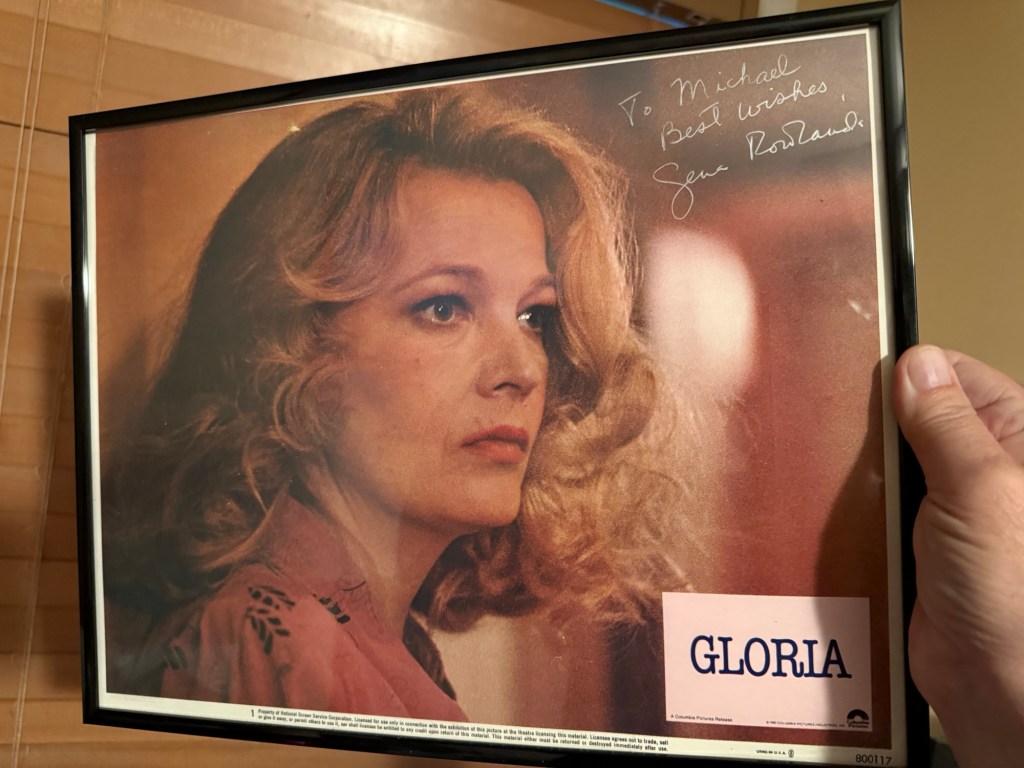
Gena Rowlands was an old time Hollywood star: she represented glamour and grace, and never seemed to behave like a movie star. Rowlands and husband Cassavetes were about acting, not stardom. The money they made from appearing in big films went to finance their independent projects. Cassavetes is one of the pillars of independent film making in the 1960s, the New Hollywood as it was called.
To celebrate Gene Rowlands’ fabulous career, I pulled a few films and one television appearance, watched them and marveled at her incredible talent. She could play anything, including roles other actors couldn’t. Her versatility, and ability to deeply mine her characters, made Gena Rowlands an actor’s actor. At the end of this blog I’ll provide a few observations.
These films and television program are in no particular order, other than when I watched them. She certainly had other masterful roles, but these are a good selection of her work. Enjoy.
Tempest is a beautiful looking film, but Paul Mazursky’s 1982 film, loosely based on Shakespeare’s play, struck me as more of a musical than a film about real people. It tries to be way too smart and mystical than it delivers. Tempest was also an opportunity for Rowlands and Cassavetes to play husband and wife, although their characters separate and take up with other partners.
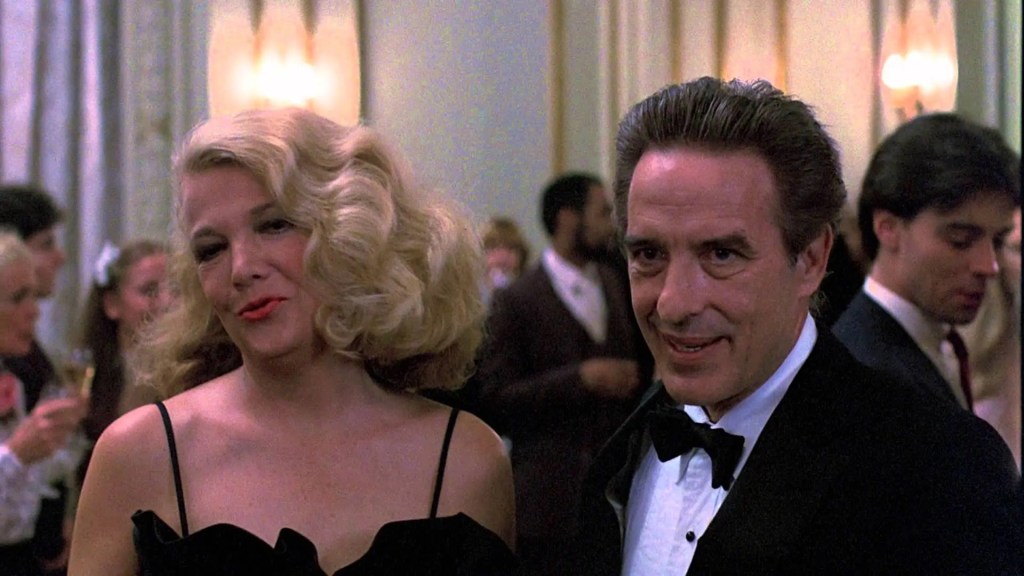
Rowlands’ part while smaller than her husband was also less flashy; yet her scenes were pivotal to the story. She didn’t rage, but her disdain for the circumstances was evident, yet not overplayed. Her character kept her dignity and moved forward; she was her own person, not “owned” by any partner. As the older woman in the love triangle, her beauty ran deep and was more powerful than the impulses of youth.
Tempest is cliched and lacking in originality. It looks good, but beneath the frosting, is just more frosting. It’s light and frothy and won’t fill any artistic hunger. Early performances by Susan Sarandon, Molly Ringwald and Raul Julia are illustrative of their future work. Sadly, Rowlands didn’t have much to do with her character, this was Cassavetes time to shine.
Unhook the Stars (1996), directed and co-written by son Nick Cassavetes, stars Rowlands as a Mildred, widowed mother who is lonely and failing at a relationship with her rebellious daughter, Annie.
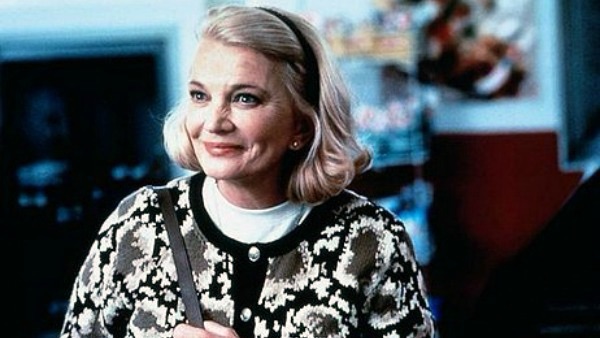
Mildred becomes the babysitter for a neighbor’s boy, J.J., by accident, but it has a profound effect on her as she begins to navigate life on her own. At the same time, her very successful son and wife invite her to San Francisco where they ask her to move there, and then tell her they are expecting, and are really asking her to help take care of their child. She declines, not wanting to accept that responsibility, much to her son’s disappointment.
Returning home, Mildred learns J.J. father has returned, which means that Mildred is no longer needed as a babysitter. J.J. was more than just a job, he was a part of Mildred figuring out her life. She takes this new development hard. This is the story of Mildred becoming truly Mildred, and not being the wife/mother/grandmother that has been expected of her. She flies off to a new adventure and life.
Opening Night (1977) was Rowlands’ moment to shine, although the subject was dark psychological, not exactly commercial material. Cassavetes had a difficult time finding distribution for the film, and when he did, it was ignored by audiences and panned by critics.
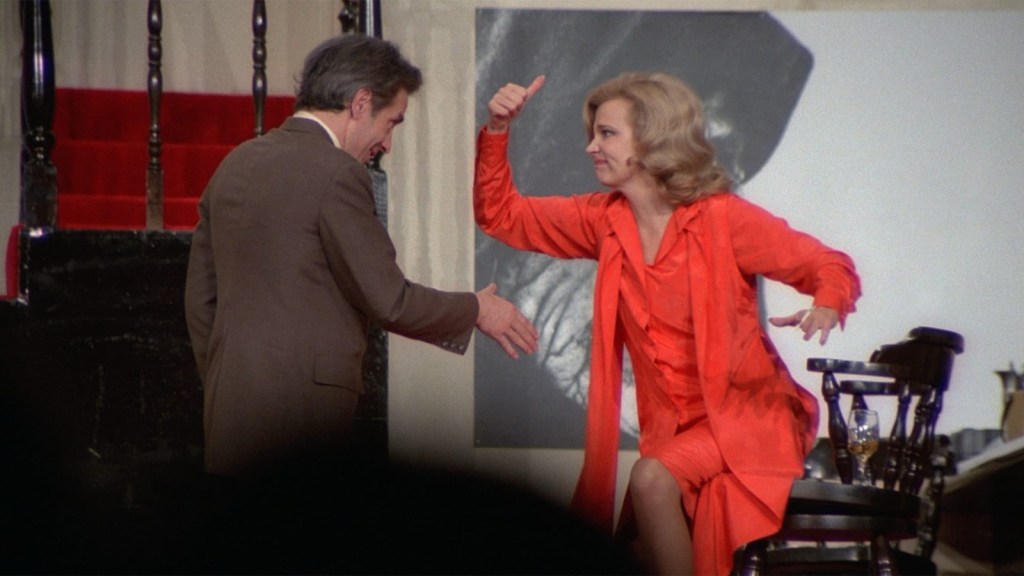
Rowlands plays actress Myrtle Gordon, staring in a play that is running in New Haven, being fine tuned before taking it to Broadway. After a performance, she witnesses a fan struck and killed by a car.
Reacting to the death, Myrtle unravels, having visions of the fan, imaginary interaction with the fan and becomes quite impacted by this woman she only met briefly. In addition, Myrtle begins having problems remembering her lines and staying in character, drinks heavily and falls out with actors and crew. As this escalates, the writer considers replacing her as the play is in trouble as they approach opening night on Broadway.
None of Cassavetes’ films are easy to watch, though this might be the most difficult. Opening Night has a superb cast supporting Rowlands. Cassavetes, Ben Gazarra, Joan Blondell, Zohra Lambert and a number of Cassavetes stock players.
Love Streams (1984) was the last film directed by Cassavetes, and co-stared Rowlands as his sister. Hailed by many critics as an outstanding film, it left me scratching my head. Somewhere in this production is a film that makes sense, but I couldn’t find it. Each of Cassavetes’ films seem to each run two hours and twenty minutes, which this one did. I mention this because the pacing is slow and some sequences do little to advance the story.
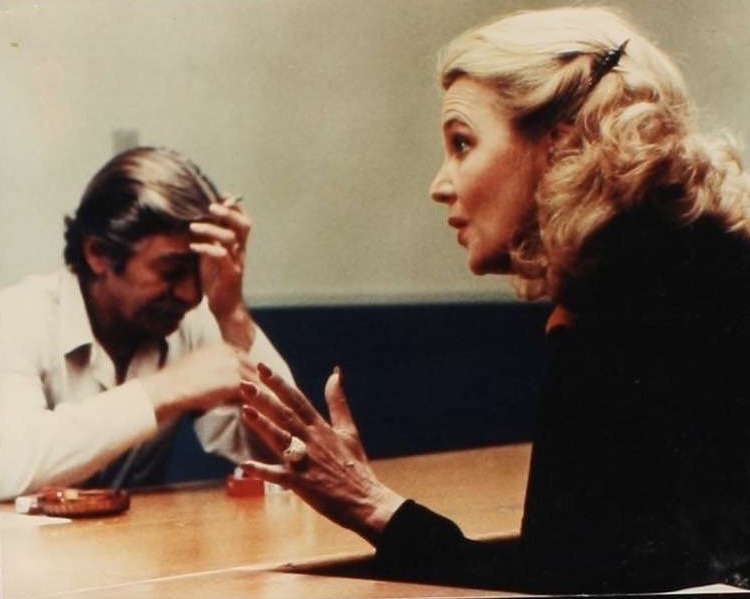
Rowlands plays Sarah, a soon to be divorced woman hanging onto her life as it was, which didn’t make her young daughter or soon to be ex-husband very happy. Sarah lives in a world of happy; she spends her life believing that she brings happiness to others, but she can’t see that she’s failing at her own life. Her post-marriage journey is a challenge, nothing conventional seems to replace what she’s lost. She keeps trying to reconnect with her ex-husband and daughter, because Sarah believes that love has no end, it is a stream that keeps going, forever.
Her brother, Robert, is a successful, but self-absorbed writer. He doesn’t believe in the permanence of love, which is evident by the number of current and past relationships. He seems to start and end relationships like he changes socks. Sarah moves in with Robert, about the time as an ex-wife drops off their son, with who Robert has never developed a relationship.
Robert and Sarah truly care about each other, but they are only partially successful helping the other. Both are quite flawed, but the measure of success is can each move at least a little beyond where they seem stuck in unhealthy patterns of behavior.
Rowlands is more expressive as Sarah as she’s been going back to her most high profile roles in the 1970s. She plays unhinged, but functional, better than any actress. You see her struggle while making others quite uncomfortable.
Gloria (1980) is the kind of film Cassavetes should have been making more of. It’s tough, gritty, character-driven, and less art-focused. Rowlands is spectacular as the title character, a tough broad who gets pulled into protecting a kid who doesn’t want to be with her. He’s streetwise and independent, but he’ll die a horrible death without her. Protecting him puts her squarely in the crosshairs, so she will have to go on the run.
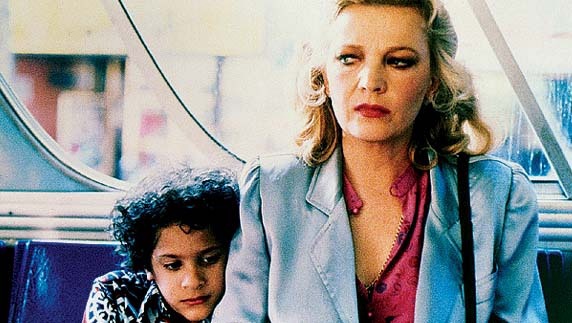
The film, earned Rowlands an Academy Award nomination, but somehow didn’t earn a profit for Columbia Pictures.
Columbo, “Playback” (1975) Rowlands portrayed Elizabeth Van Wick, the wife of the villain who kills her mother. He was head of her family’s electronics company and was running around on his wife. The mother-in-law knew of his infidelities and was forcing him to resign, so he killed her and made it appear as a break-in.

Rowlands’ character, who is in a wheelchair, is a demure wife and seems unaware of her husband’s infidelities, but does sense the friction between him and her mother. This is an unusual role for Rowlands, who normally played strong, independent women. However, there is strength in her character, when she surprises everyone by expressing interest in replacing her mother as head of the company’s board, something her husband scoffs at.
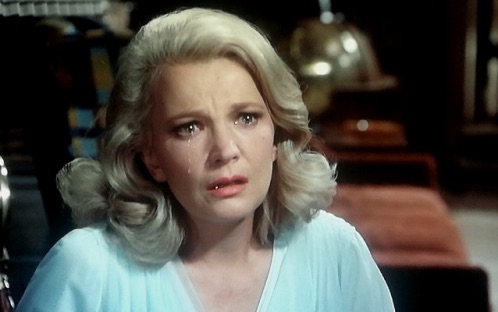
In the end, Columbo has figured out how the villain used technology to cover his tracks, and it comes down to the villain needing an alibi for him – but she won’t lie. As he is led off by Columbo, she is left to morn the situation, because she really did care for him, but she’s lost her mother, and her husband. Peter Falk was good friends with Rowlands and Cassavetes.
A Woman Under the Influence (1974) is story of the mental health breakdown of Mabel, and the impact it has on her family. What accelerates her downward spiral is the sudden cancellation of Mabel and Nick’s date night. She goes to a bar by herself, gets drunk, and is picked up by some guy who she takes home, while her husband is helping repair a broken waterline.
This is prime Cassavetes material: people on the edge of a major distress, and the ripples it creates in the universe. Cassavetes wrote, produced and directed what became one of his best received films.
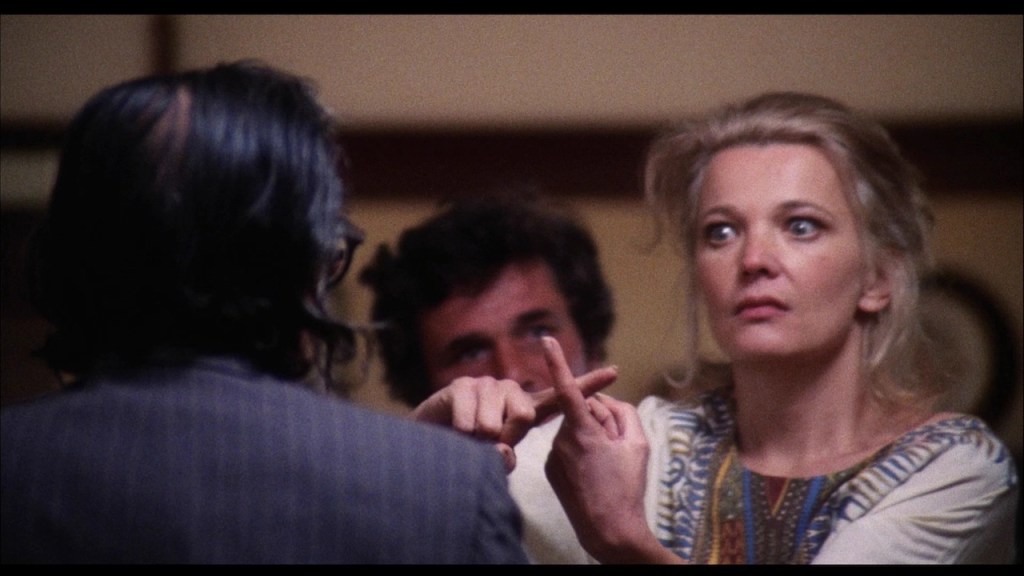
Mabel behavior goes from quirky to unpredictable to concerning to dangerous. Her mental decline is not linear, it’s layered, perplexing to others, and is destroying her family.

Peter Falk plays Nick, who’s baffled at first, quickly defensively and protective of her, then he’s angry. The entire cast is terrific, with some familiar faces and new one actor in Cassavetes’ creative sandbox. These are unsettling portrayals, as Cassavetes shows how an illness ripples through an extended family.
Another Woman (1988) stars Rowlands as Marion Post, a college professor, in Woody Allen’s film about reexamining life and realizing how much you have veered from happiness without knowing it.

Marion overhears a doctor counseling an unhappy woman in the office next door. Her issues catch Marion’s attention, opening up questions, unresolved issues and mistakes made in her own life. This is a role that Rowlands fits comfortably into, and a nice change from tough dames battling for her life.
The Notebook (2004) is a film based on the Nicholas Sparks book and directed by son Nick Cassavetes. With a stellar cast including Ryan Gosling, Rachel McAdams, Joan Allen, Sam Shepard James Garner; Rowland is the present day version of Allie, who is also played by McAdams as a young woman. This is story of young Allie and Noah, who must fight and persevere for their happily ever after.
Rowlands’ Allie is suffering from dementia and resides in an assisted living facility. Garner is the older version of her husband Noah, who is also in the same care facility, but his memory is good. They have spent their lives together, but Allie no longer recognizes him, except briefly, when he reads to her from her journal, the notebook. It is the story of their lives together.

Rowlands in real life would later deal with her own dementia, but here portrays a woman whose memory is missing, except for when it momentarily connects to her past life. Even I shed a tear at the end.
Final thoughts…
Gena Rowlands was a classy lady. She played her share of tough broads, but she also played educated, professional and strong women. Physically, she didn’t seem to change much through the decades, she remained a beauty.
Some of her acting roles took her deeply inside her character’s psyche. Whatever the character, she gave powerful and realistic performances. She could be glamorous, trashy, foul-mouthed, out-of-control, dignified, sexy, and scary.
Later in her career, she played a lot of mothers and grandmothers, adapting to what roles were available, but she worked constantly. Although not her last role, Allie in The Notebook, had to be a difficult role given the subject sad matter. James Garner played her husband, and the two of them clicked wonderfully. Romantic love has no expiration date.

These are just a few of the roles from an incredible acting career.






 Ticket 2 Ride
Leave a comment