
Paris Undercover: A Wartime Story of Courage, Friendship and Betrayal (2025, Ballentine) by Matthew Goodman.
Two single women, one an American, the other a Brit living in Paris, both caught up in occupied France during the Second World War. They were part of a network getting soldiers out of France, and they paid dearly for it.
Goodman writes, “these early groups were operating blindly, with little guidance from British intelligence.” Further,” most civilian-aided escapes terminated at the demarcation line, an assessment of the escape reports suggests that Bonnefous was one of the first civilians to attempt to create an escape organization stretching from Paris to Marseille.” Everyone knew that the Nazis had a large network of French informers.
Goodman paints a picture of not only psychological gloom, but combines the physical with growing despair. “Paris, as they waited anxiously for the Germans to arrive, people began to notice a terrible silence: The smoke from the oil depots, full of thousands of tons of burning naphtha, had killed the birds in the trees; it would be the first June without birdsong.”
I had never heard of these women, or the terrible turn the story would take, even after one of them was released by the Nazis and made it safely to America. That’s where the story gets even more unsettling. Knowing just enough of their story, made me want to delve into this incredible situation, even though at times I found it had to continue onward.
Goodman’s book is rich in detail; his description of France after its fall, and life under the Nazis, paints a picture so vivid, the reader can physically feel the danger. I’ve read hundreds, perhaps thousands of books, and without a doubt this was the toughest book to get through.
Unsettling does not come close to the how this story, particularly the 40-plus months that Kate, the Brit, spent being tortured, starved, beaten, dehumanized, and marched in subzero weather for weeks. All the while, she lived under a death sentence, the Gestapo toying with whether it would be carried out. And yet, there’s more to this story.
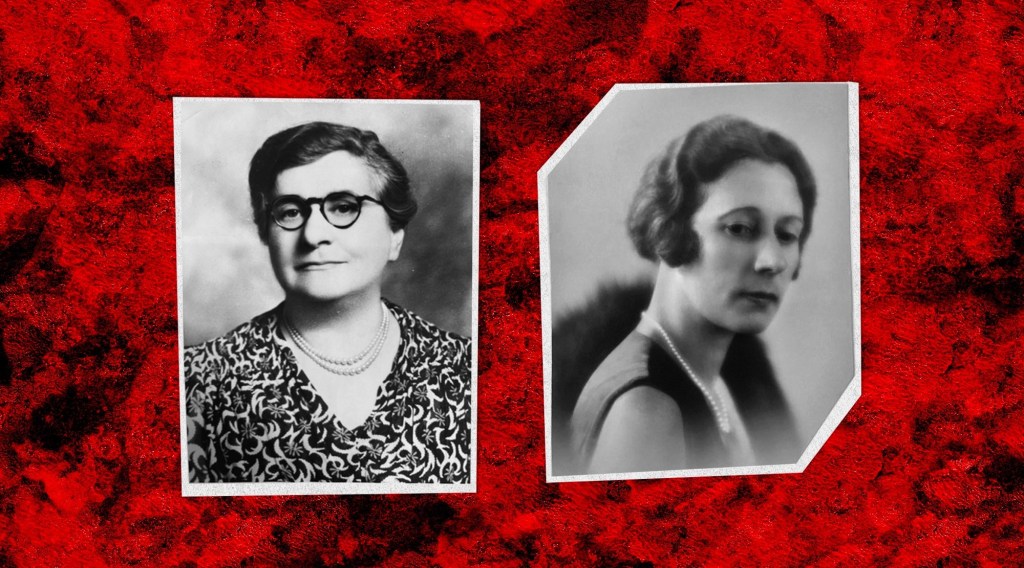
Kate Bonnefous and Etta Shiber happened into assisting British and French soldiers escape to safety. Kate was predominantly the organizer, helping set up an escape network reaching over 1,000 miles, from one tip of France to the other. They are credited with as many as 40 escapees getting out of France before their network collapsed and both were arrested.
From interviews, diaries, published accounts, government records, newspapers, personal correspondence and items, Goodman digs incredibly deep into these women’s experiences, and those persons who were also a part of this incredible story.
Etta was an American, the first person arrested, tried and sentenced to death for her crimes against the Reich. Kate was British, married to a Frenchman, and deeply committed to not only the network, but cutting phone lines and whatever she could do against the Nazis. Even though she was more deeply involved than the older Etta, there is a very specific reason Kate’s imprisonment was longer and treatment more severe than Etta’s.
Without giving away the ending, Etta was released after 14 months, swapped for a German spy captured in America. The Gestapo doubled-down on Kate after a book was published about Etta and Kate. From this book, the Nazis learned that Etta and Kate rescued 120 instead of the 40 they admitted to, which meant the network must have been larger and more people complicit in these actions. The Gestapo tortured Kate nearly to death, but Kate couldn’t reveal any more information, but the 120 number was untrue. The book publisher made it up, along with some other details. Names were changed before publication, but Kate was easily identified. The co-author of the book, Paris Underground? Etta Shiber.

Before their arrests, Etta and Kate had left Paris, to find solace away from the war, but it would find them.
“In the following days, they felt themselves living in a kind of no-man’s-land, not of space but of time-the brief span between French and German rule. Entirely enclosed by that high wall, the town seemed like the setting of a medieval fairy tale; almost always there was the sense of waiting for something to happen. Guérande had no local newspaper and its telephones were not functioning, which further deepened their sense of seclusion. They had little information other than the sure knowledge that the German army was coming ever closer, would continue rolling westward until it had reached the sea.”
“By 1944 more than four hundred Nacht und Nebel prisoners are being held in Jauer, most of them French and Belgian, with a scattering of other nationalities. They are teachers, nurses, scientists, factory workers, artists, poets, nuns.”
When the Nazis moved the prison away from the Russian advance: “ragged line of more than one thousand women moves slowly through the darkened streets of Jauer; many have blankets wrapped around their hends like monks’ cowls.“
Kate’s imprisonment read like a Medieval jail. Torture, starvation and mental isolation. “Kate Bonnefous is in the hands of the Soviet army for three weeks; later, she will say that she would rather have been a prisoner of the Germans for another six months.” The Nazis were brutal, but liberation by Russian soldiers was hell on earth. Kate’s story of survival, and life after the war, is truly unbelievable, but indeed true.
Goodman is a bestselling author, with four other books: The City Game: Triumph, Scandal, and a Legendary Basketball Team (Ballantine, 2019); Eighty Days: Nellie Bly and Elizabeth Bisland’s History-Making Race Around the World (Ballantine, 2013); The Sun and the Moon: Hoaxers, Showmen, Dueling Journalists, and Lunar Man-Bats in Nineteenth-Century New York (Basic Books, 2008); and Jewish Food: The World at Table (HarperCollins, 2005). I haven’t read any of his other books, but i will look for them.






 Ticket 2 Ride
Leave a comment