

I was mystified by actress Glenda Jackson. Unconventional, would be a word I would use, along with passionate, talented and scary.
In 2026, The Guardian interviewed her as she returned to acting from politics. Interviewer Simon Hattenstone wrote this as an introduction: She was beautiful (all bobbed hair, high cheekbones and flushed lips), with astonishing diction and an unfeasible capacity for depicting cruelty. Nobody did scorn quite like Jackson. She could emasculate a leading man from 100 paces. Hattenstone told her it’s what people think of her. “I’ve never understood the fear thing,” she responded.
She died almost two years ago at age 87, having resumed her acting career following 23 years as a Member of Parliament. She was driven and accomplished, in not one career, but two. She received two Academy Awards, three Emmy Awards, a Tony Award, a Golden Globe and BAFTA Awards.

That icy, tough persona did in fact come in handy, particularly in new role as MP. “Anything I could have done that was legal to get Margaret Thatcher and her government out, I was prepared to have a go at.” She has said that she was offered roles throughout her time in the Commons, but “nine out of ten were rubbish”. She said she turned down the role of M in the Bond films, which went to Dame Judi Dench instead. She told The Times that the role was boring.
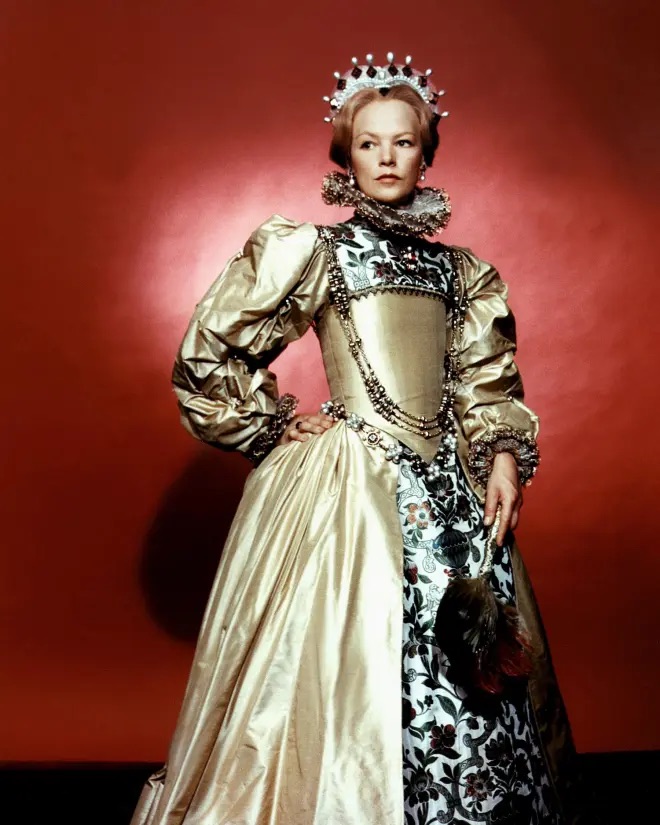
Below are a few films and her highly regarded BBC role as Elizabeth R, that I believe is a fair snapshot of her acting career covering role before and after her MP service.
Women in Love (1970) an adaptation of D.H. Lawrence’s novel, staring Alan Bates, Glenda Jackson Jennie Linden and Oliver Reed. Directed by Ken Russell (The Devils, Tommy).

I listened to the commentary by writer/producer Larry Kramer, who said that Jackson received a new hairstyle for the film and make-over. Jackson’s acting talents were never in question, but she didn’t fit the vision for the character in Lawrence’s novel. Director Russell was not impressed with her at first, but seeing her work changed his mind. While Jackson might not have radiated fashion magazine type beauty, her aura certainly did.
In an interview with The Sunday Times in 2022, she said, “My looks were never the plus,” she says. “But in acting it’s other people, in a curious way, who say whether you look right or wrong. But I thought, ‘My God, I looked very good here.’ But it was a long time ago.”
Sisters Ursula (Linden) and Gudrun Brangwen (Jackson) wed Rupert Birkin (Bates) and Gerald Crich (Reed). Highly sexualized context, bawdy, raunchy, behavior of the British upper class. how two couples explore their relationships. Jackson earned an Academy Award as Actress in a Lead Role.
Bates and Reed wrestling nude in front of the fire is quite risqué, some exercise in male bonding. The sexual content and male and female nudity is a bit shocking for 1970. The philosophical love and traditional relationship talk carries a bit much, but it was Lawrence and 1920s morality, through a 1970s lens.
The Music Lovers (1970)

Ken Russell again directs Jackson in a period piece. Richard Chamberlain is the Russian composer Pyotr Tchaikovsky, and Jackson is his wife, though a prisoner of her own mental health. Russell is known for being able to expose what’s in the head of his characters, and he certainly does it with Jackson’s Nina.

Elizabeth R (1971) A six-part BBC television series of 90 minute plays. Broadcast in the U.S. on PBS in 1972. The series won an Emmy Award and Glenda Jackson won two Emmy Awards.
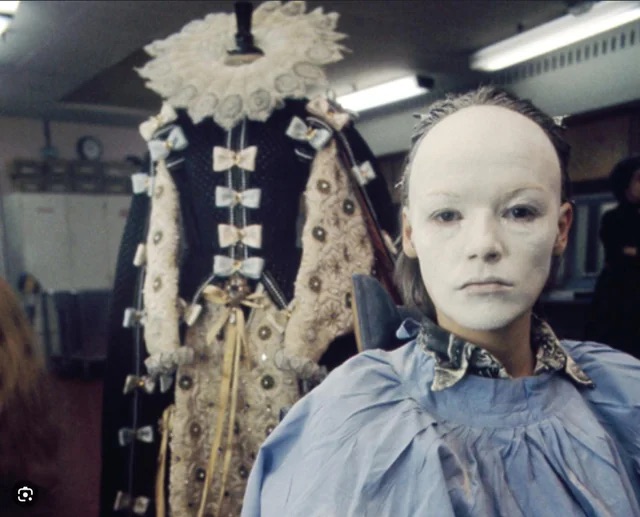
Elizabeth I was Queen of England and Ireland from 17 November 1558 until her death in 1603. She was the only surviving child of Henry VIII and his second wife, Anne Boleyn. In this role, her character aged from 16 to 69.
This is as close as I ever came to seeing her onstage. These performances were filmed (or rather video taped) on sets and edited for broadcast. These performances cast is up to this lengthy challenge and Jackson plays Elizabeth through a variety of personal professional challenges, although they are intertwined.
Sunday Bloody Sunday (1971)
Jackson plays Alex Greville, a partner in a love triangle. Also starring Peter Finch and Murray Head, and stylistically directed by John Schlesinger (Far From the Madding Crowd, Midnight Cowboy).
The film is frank in its subject matter and nudity. Jackson’s character is older than her boyfriend, with kids and less ordered; Finch is older, a physician with a more providential, quieter life.

Schlesinger’s camera is quite expressive and creative. The use of the telephone message service that threads these relationships together is quite interesting. Schlesinger says a lot with his camera about the moods of the relationships.

These characters are quite muted emotionally, unsure of how to express what they want in the limited nature of their relationships. Jackson and Finch’s characters seem to want more, but it seems very unrealistic.
A Touch of Class (1973) was the first teaming of Jackson and George Segal in a “romantic comedy”, which was about two people trying to have a relationship, but never quite getting it right. Jackson is commanding in this role, very much the straight man to Segal’s wackiness.
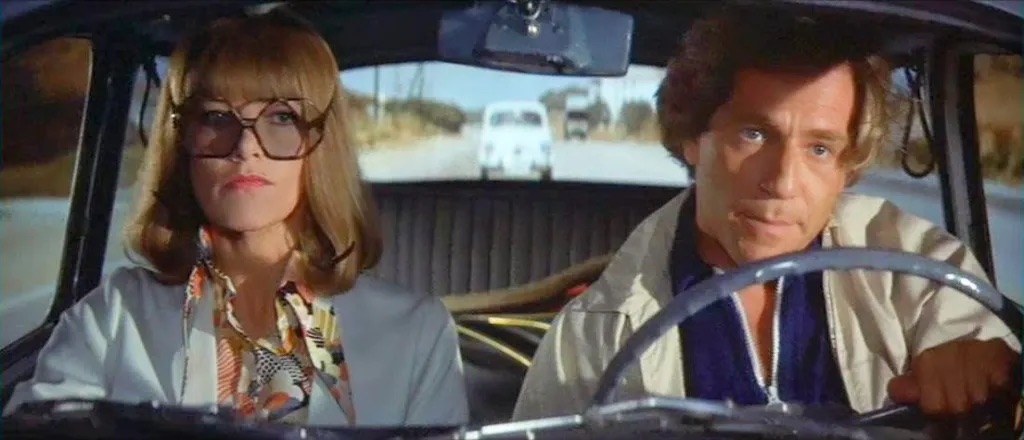

Written by Jack Rose and Melvin Frank, and directed by Frank, the film was both a commercial and critical success. Jackson was awarded her second Academy Award for this role. Both Jackson and Segal were awarded Golden Globes. Interesting that Jackson should reap those major awards for a comedy instead of a serious drama or the portrayal of a classic character. Perhaps it was her tough, scary side that was rewarded. Segal deserved every positive notice he received by playing opposite Jackson in this film.
The Romantic Englishwoman (1975) paired Jackson with Michael Caine, and Helmut Berger in a sly story of a man and wife and the mysterious young man they let into their lives. Directed by Joseph Losey, and adapted by Tom Stoppard and Thomas Wiseman, based on Wiseman’s novel. This is a very slowly moving character study, taking a lot of patience to cross the finish line.

Jackson and Caine work well together, they balance each other’s temperament. Jackson bares her soul, as well as her body.
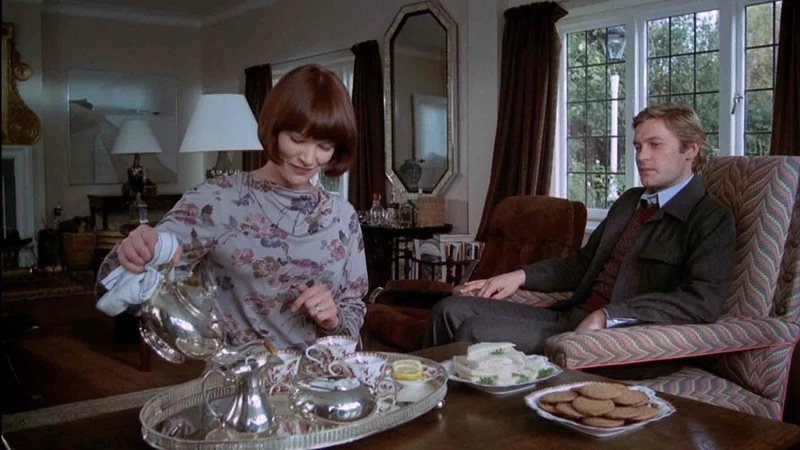
Will Jackson and Burger’s characters have an affair? They seem to be pushed into it by her husband, and then it leads to unfortunate circumstances. The reviews I read pointed to a very different film than the one I saw. Jackson’s character was confusing and difficult to believe. Whatever merit this film revealed to others, totally escaped me.
Hopscotch (1980) is the second of her pairings with Walter Matthau, this time in an espionage film. Again, Jackson is the straight man to a male star. This light and frothy film required no heavy lifting on Jackson’s part, yet continues to showcase her in lighter, more commercial fair.
I don’t picture these two characters together in a relationship, personality wise, they are quite different. Putting believability aside, you can imagine them having fun together. Directed by Ronald Neame,

Hopscotch is purely entertainment, and that’s enough.
Skipping ahead to Jackson’s return to acting.
Elizabeth Is Missing (2019) is a tough film to watch. Jackson plays Maud, a woman with dementia, which is becoming increasingly advanced and difficult for those around her. We are introduced to Maud’s best friend, Elizabeth, who vanishes from Maud’s life. Maud, who is convinced that something bad has happened to her friend, even though she cannot get anyone else to believe her.

Jackson, frail and completely believable as a woman trying to hang onto her rapidly disappearing memory. Always full of fire, delivers a frightfully realistic performance, your heart aches at her confusion and anger, a life disappearing before your eyes. Based on a real story, the plot interweaves the disappearance of Maud’s sister from many decades before, as Maud overlaps them and still mourns for her sister amidst the struggle to learn of Elizabeth.
The entire cast is wonderful, and the script carries the viewer along as the story takes on a more complex human journey.
The Great Escaper (2023) stares Jackson and Michael Caine in a film based on the true story of 90-year-old British World War II Royal Navy veteran who “broke out” of his nursing home to attend the 70th anniversary D-Day commemorations in France in June 2014.

I have not seen this film, as it’s unavailable at the current time. PBS Masterpiece has acquired the broadcast rights and intends to stream it later this year.
This was Jackson’s final film.




 Ticket 2 Ride
Leave a comment