
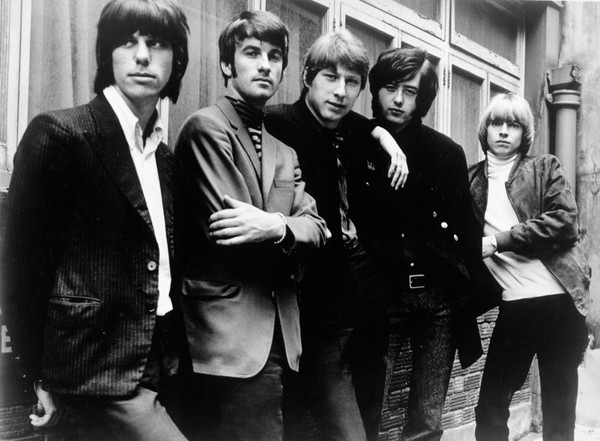

The Yardbirds: the Most Blueswailing Futuristic Way-out Heavy Beat Sound by Peter Stanfield (2025, Reaktion Books Ltd) is quite a mouthful. This book is guaranteed to give you more than you’ll ever need to know about the state of the blues and the British version of it in the early 1960s, and how American blues, and the new amalgamation, rhythm and blues, was embraced by British groups like The Yardbirds.
After reading this book, I must admit, the synthesis of American blues into British rock ‘n’ roll is a complex one. A lot of bands embraced it, and tried working songs into their live sets, but there were other musical styles at play. One group of bands blended skiffle and folk, with a dash of American R&B, which gave birth to the Beatles, Hollies, The Kinks, Gerry and the Pacemakers, The Dave Clark Five, and other pop-flavored groups. The Everly Brothers was a model, as was Buddy Holly. Another group of bands were more serious about the blues, where harder-edged, blues groups came about. John Mayall, Alexis Korner, Blues Incorporated, the Graham Bond Organization, Long John Baldry, Cyril Davies, Peter Green, The Animals, The Rolling Stones, The Moody Blues (the original lineup), Spencer Davis Group, The Yardbirds to name a few. These two branches of bands were not mutually exclusive; styles blended, crossed-over, evolved and morphed into psychedelia, progressive rock, British Blues and other shades of rock. No two bands sounded quite the same, and that’s a great thing.
What isn’t often remarked is how many musicians associated with the blues were also jazz players. Jazz has a great influence on the blues, there’s a lot of crossover. In jazz clubs in England, the blues were welcome. Jazz, like blues, was an expansive pallet, and lended itself to improvisation and exploration. Follow the career of Jeff Beck and you’ll see this is true.
Stanfield has an encyclopedic understanding of the different musical influences and innovators at work in the 1960s as skiffle, blues, and rhythm and blues coexisted. Much of the nearly 400 pages is devoted to discussing the Yardbirds’ musical style, compared and contrasted to the prevailing sound of rock ‘n’ roll in the mid 1960s. What you won’t get is a straight biography of The Yardbirds, or members of the band, in fact, you may be quite frustrated by all of the other musical history.
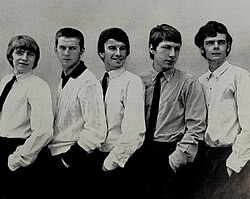
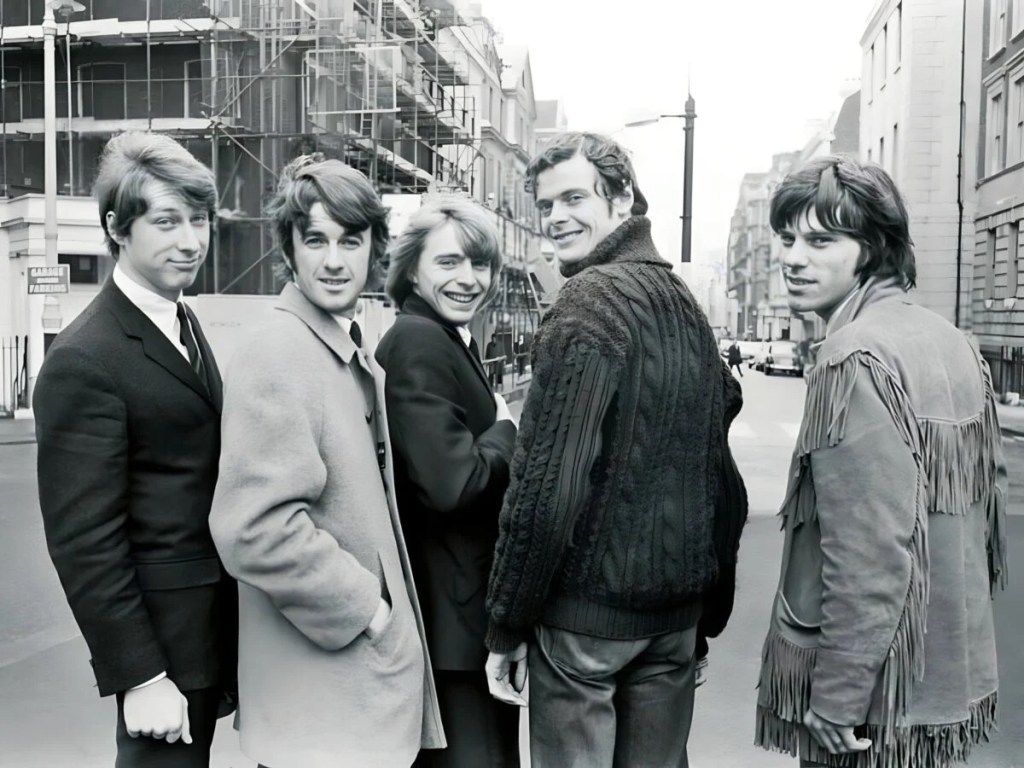
The Yardbirds were formed in 1963, the original members were Keith Relf (vocals), Paul Samwell-Smith (bass), Jim McCarty (drums), Chris Dreja (rhythm guitar) and Top Topham (lead guitar). No, Eric Clapton would not replace Topham until later in the year. For the next couple of years, The Yardbirds would play the blues.
Clapton would depart after “artistic” differences, when the bad released a pop tune “For Your Love”, and he would join John Mayall’s Bluesbreakers. Clapton would leave after one album and form Cream with Jack Bruce and Ginger Baker. Clapton never stayed anywhere very long, after a couple of years he would leave Cream for Blind Faith, then join Delanie and Bonnie, then briefly front Derek and the Dominos, then go solo. Clapton said later: “I’m tired of being called a specialist musician. People thought the Cream was going to be a blues band, but it’s not. It’s a pop group really.” Clapton and others would want a “purist relationship” with the blues, while they also sought pop success.
Stanfield makes it clear that while the blues fulfilled an artistic desire, it didn’t sell records or lead to playing large arenas. Even tours of America weren’t profitable, in part because the Yardbirds’ recording output was sparse. Stanfield writes: “…the Yardbirds’ catalogue, but it’s meagre pickings from a band who should have been delivering in the studio the promises made by their live shows.” I’ve been listening to The Yardbirds’ recordings and the early records, and especially their live recordings, are not very good. The sound quality is mediocre, and the band’s self-penned songs are sketchy at best. It is no surprise that producers looked elsewhere for material. “For Your Love” was written by Graham Goldman (future 10cc member).
Clapton was replaced by Jeff Beck, who went on to change The Yardbirds’ sound. “Surprisingly enough, our stage sound is less commercial than it was. We used to play, really, commercial R&B. Now Jeff is starting electronic sounds. Personally I don’t find these sounds artistic, but Jeff is so fantastic – and the best at it in the country,” Samwell-Smith said. Primarily playing blues covers might have given them more recognizable songs to the audience, but it did not build their following, or strengthen their own songwriting.
A quote from Relf noted the musical change: “Sonny Boy Williamson called us that (blueswailing). It stuck. But now we’re not playing under the shadow of the Negro anymore, we have developed our own style. I don’t consciously try to sing like a Negro, although I did in the early days. We have a lot of way-out sounds that we now use, like feedback and cross rhythms… A twelve-bar blues is great but not time and time again!” That’s an interesting remark, perhaps not one someone would make today, but in the context of the times…
Beck gave The Yardbirds more versatile with Beck, who used the guitar to create what he called “pop experimentalism.’ The Beatles or The Kinks might have first used feedback, but Beck harnessed it, and exploited the sounds of the guitar using multiple amplifiers, bending the sound, and making use of new devices like the wah-wah” pedal.
Another Relf quote about the band’s evolving sound: “It’s important…… to be able to play your instrument to its limit. Many expert musicians who are brilliant technically wouldn’t play like us or do the sort of things we do with our instruments to create emotion – like prolonged feedback, for instance. But I’m sure they’d appreciate what we are experimenting with and trying to achieve. We are applying the principles of free form improvisation and extemporization to pop music. I feel we’ve left behind R&B school that we used to belong to. We just use R&B numbers – and a lot of others too – as raw material for our experiments.”
The Animals had a take on this, which they shared with Beat Instrumental: “Music today is a funny thing… Today it is called Rhythm and Blues. Yet, the same music of four or five years ago was called Rock ‘n’ Roll. I’m not sure if any group play R&B really? R&B is just blues with a beat,” said Alan Price, The Animals’ keyboard player.
The second Yardbirds’ album was called, Having a Rave Up. What’s a “rave up”? The LA weekly music paper The BEAT explained: “To ‘rave’ is to be really excited about something, to really pour your heart and soul – mostly soul – into something, to really break it up and have a great time?”
Later, rave up was replaced by “freak out”, courtesy of Frank Zappa. According to Beck, it was trying to get music to create the experience of an LSD trip, understanding that it wasn’t the same thing, but it was worth trying to get there.
Beck’s approach was tagged as “electronic”, when he attempted to explain: “The original concept of our music was just to play what was inside us, and the best way of putting it overall was by making ‘electronic’ sounds.” Other terms used included “abstract expressionism’ or ‘futuristic rock ‘n’ roll.” Relf added: “We started with the usual sort of folk blues stuff. Then the numbers started to take on their own feelings. The solos got longer, became more abstract.”
This lineup produced their only album of all original material, Roger the Engineer (1966) or Over Under Sideways Down or just plain Yardbirds. Whatever the name, the album was produced by Samwell-Smith and manager Simon Napier-Bell. While the material is uneven, the sound quality is better, Beck is featured on all the tracks.
Samwell-Smith left the band, tired of the touring, and transitioned to producer. He became a very successful record producer, working with Cat Stevens, Carly Simon, Renaissance, Jethro Tull, Chris de Burgh and many others, in addition to working for film scores.
Samwell-Smith’s bass duties were taken by new member Jimmy Page, who knew Beck. It wasn’t long before Dreja took over the bass and Page moved to guitar. That line up didn’t last long as Beck was fired for a variety of reasons and the band continued as a quartet, with Page handling most of the guitar duties. Beck fronted his own band that included Rod Stewart and Ron Wood.
Page expanded what Beck had started, milking the guitar for unearthly sounds and riffs. He started using the cello bow on his guitar. As a quartet, Page took charge of the band’s direction and musical style, but by 1968, The Yardbirds were about to split the band into two camps. Relf and McCarty wanted to pursue more of a folk direction, and would form the band Renaissance. Page and Dreja were interested in continuing with the heavier blues-rock. Dreja would following his growing interest in photography.
Stanfield says that Page intended to supplement the heavy beat sound with a singer who could also play keyboards, specifically a mellotron. Page explained: “The whole idea is to get a new sort of collage of sound that is not the sound normally associated with a rock ‘n’ roll group. But, it will still have a beat backing… The mellotron will be there to give added interest, but the guitar will still be featured.” Page would recruit different musicians to fulfill his dream. He used The New Yardbirds name initially before they settled on Led Zeppelin. You may have heard of these guys.
McCarty and Dreja formed Box of Frogs in the 1980s, releasing two albums with appearances from several former Yardbirds. The Yardbirds would live on as McCarty and Dreja fronted a new version of The Yardbirds, off and on since the early 1990s. Dreja retired due to medical issues.
Which version of The Yardbirds is the best? Well, each lineup certainly has strengths, but also limitations. One band catapulted Eric Clapton, Jeff Beck and Jimmy Page to great future success and easily three of the top five guitarists of all time (my ranking). I’m not a big fan of the Clapton era, a little blues goes a long way for me, and he didn’t want to go into a more accessible style of music – but he would after a brief stay with John Mayall’s band. I would have to say the Beck era of the band was the most influential and dynamic. Unfortunately, that did not translate into a trove of recorded gold. There is some very interesting material, and some guitar sounds that pushed to boundaries. The Beck-Page team was short-lived, and never really reached its potential. The Page years hinted at what he would achieve later. Later Yardbird recordings had a distinctive spaghetti Western flavor, musically and stylistically.
There’s no denying the influence of The Yardbirds, less for their recordings, and more for pushing the musical goalposts, as a sort of bridge between bands that played American blues and what became British blues. That’s what I learned.
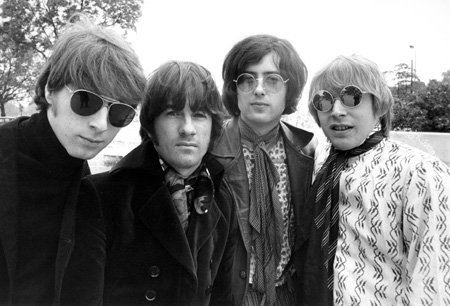
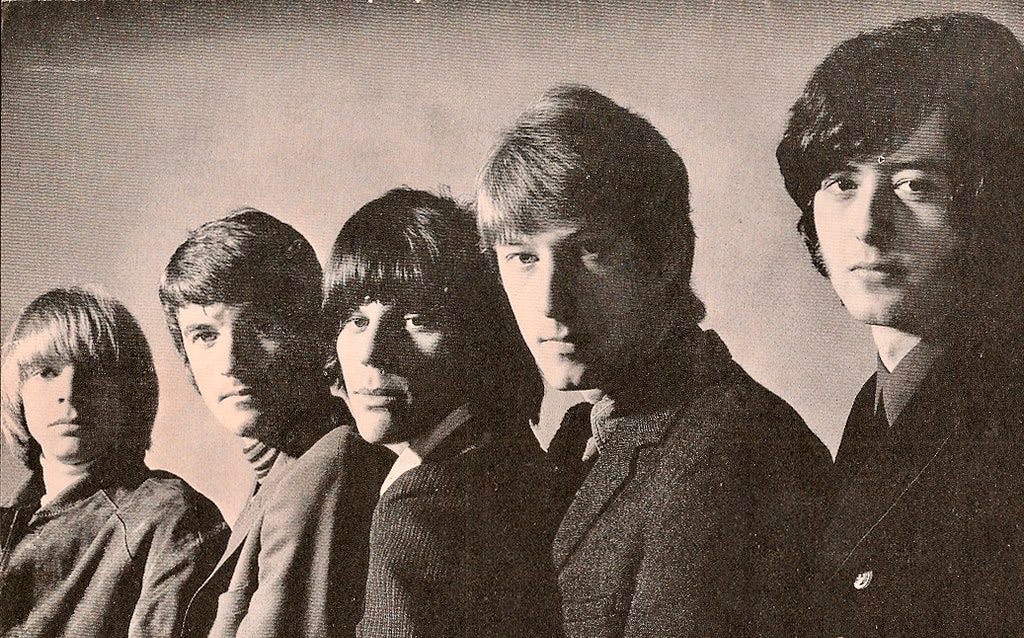
If you want a Yardbirds bio, keep looking, if you want a musical deep-dive of the period, this is good, but long.
 Ticket 2 Ride
Leave a comment