
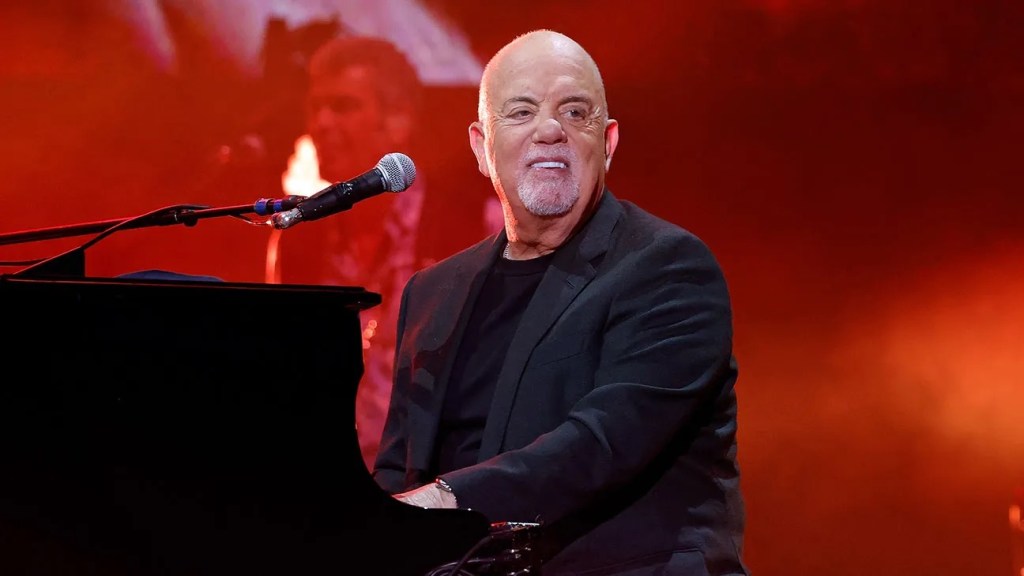
I started off reading Christie Brinkley’s Uptown Girl, then my wife found Billy Joel: The Definitive Biography, which I read, and then I learned of the impending drop of the documentary, And So it Goes. Naturally, I had to combine these two Billy Joel items into one blog – but, easier said than done. While both of these projects were done with the involvement of the subject, they were two different stories of one man. I have a lot of unanswered questions after finishing each. I will say, the book and film were each deeply researched and offered a compelling portrait of the man and artist.
Billy Joel: The Definitive Biography by Fred Schruers (2014, Crown Archetype)
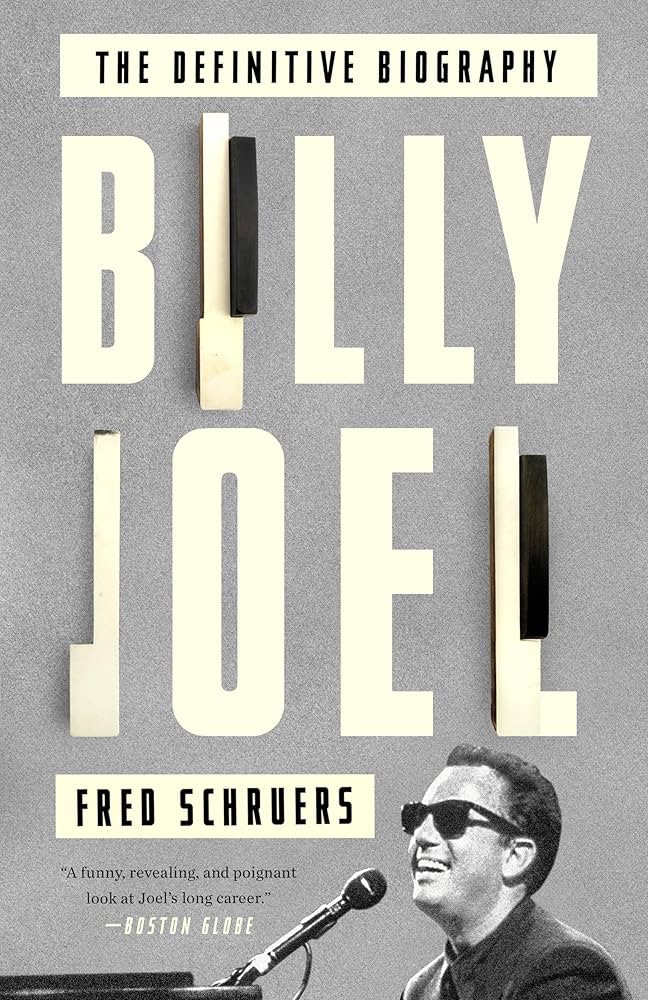
After reading Christie Brinkley’s Uptown Girl, I had more questions than answers about her former husband, so my wife found this Billy Joel bio. I didn’t expect Brinkley’s memoir and this book to closely align, but major points did, however, Schruers provided more depth and wider perspective. Brinkley has her unique vantage point, but does not relate the subtext or the tangential elements in Joel’s life that nor objective dig can. Billy Joel is a very complicated guy, but he’s trusting, loyal and made a lot of bad decisions, for which he’s paid in grief and a lot of money.
Schruers spent several hundred hours interviewing Joel and those in his life, and there is a very detailed accounting of Joel’s touring, real estate transactions and relationships. The book is overly rich in detail, which is one of the complaints. More is not always more.
I would have preferred greater insight into some of Joel’s biggest challenges: women and alcohol. Both gave him problems. Schruers nibbles around the edges of Joel’s first marriage; Elizabeth Weber had a huge influence on Joel, and besides being his manager and having rough few people skills, her appearance in this story seems incomplete. She must not have agreed to be interviewed. Joel’s marriage to Brinkley, which seemed like a fairytale from the outside, largely ended because of his drinking. Schruers mentions the alcohol issues repeatedly, but treads lightly on them. Although Joel went to rehab and battled sobriety for years, it remains a bit of a mystery.
Schruers’ book depended on access to Joel, which is evident in how much Joel is quoted in the book, and the access to others in Joel’s inner circle. I wonder how much a part that played in the tone of the book. If you are looking for a nice overview of Joel’s life, with his participation, this is your ticket. If you want a more critical look at the man, keep looking.
Billy Joel: And So It Goes (film review)

A two-part, five-hour documentary on singer/songwriter Billy Joel premiered on July 18 on HBO Max. The film was directed and produced by Susan Lacy and Jessica Levin, two veteran filmmakers who had great access to Joel, family, friends and record company executives. The film has a lot of producers including Tom Hanks and Sean Hayes, so this film gets the star treatment.
This film has received many reviews, so I won’t repeat what many have already said. One fascinating aspect of seeing this film is how soon I saw if after the bio that I just finished on Joel.
Part 1 naturally covers Joel’s early life, start of his musical career, first marriage, and ends after he and Elizabeth Weber separate, and her brother takes over Joel’s management. Joel has recently had a wreck on his motorcycle, breaking numerous bones and damaging a thumb. This period represents how his life was literally crashing, but his career was soaring. That’s the thing about Billy Joel, he may be down, but the fighter in him gets up and keeps moving forward.
Weber is a key part of part 1 and appears frequently onscreen to tell her side of the story. In the Schruers book, Weber is nowhere to be found, so the story is told without her involvement, and the difference between the book and documentary are huge. She does not come off in a positive light in Schruers’ book, even though she does receive some acknowledgement for the upward arc of Joel’s career, but the stories differ on the end of the marriage and management relationship. There’s no argument that Weber was a tough and direct representative for Joel, and she battled like a street fighter in a male-dominated industry.
Part 2 started with his past accident period, shifting gears to record a more serious album, and taking a stand on his Jewishness. He spoke out on the Charlottesville white supremacist event, and a look back at his family history and the attempt at connectiveness with his dad, who was missing from his life since Joel was a boy.
Enter Christie Brinkley and fatherhood, suddenly great fame, MTV, life in the fishbowl, and dealing with criticism of his albums. While his albums were selling and winning awards, critics complained that he was good at copying the styles of other artists. That criticism stung.
The film continues with the Russia concerts, an opportunity to be the first mainstream, pop performer to play there. What the film omits is how costly and problematic it was for Joel to travel with a large production, a cost he paid for. A bright spot was Joel’s recording session with his idol, Ray Charles.
The next period of Joel’s life focuses on the Frank Weber embezzlement. Finding out he had no money was hard, but the betrayal was crushing. This began a period of rebuilding his finances, and he did that by working – harder. He changed managers, his band, producers and feel into a routine of recording, touring, recording, touring, and repeat. Alcohol becomes a problem, he has several vehicular accidents, and is mired in hurtful publicity.
Rebuilding his finances was costly. His marriage to Brinkley ended, he stopped writing pop songs and he kicked his wounds with drink. He didn’t stop touring, was teaming up with Elton John, off and on, for 16 years. Joel takes a detour into writing and recording classical music. Joel’s father played classical piano, and Joel’s half-brother was an orchestra conductor..
Part 2 also delves into his difficult relationship with his father. Joel tracked down his father in Vienna in the mid 1970s. Over the next several decades he tried growing close to his dad, but the gap never seemed to close. He got to know his half-brother and developed a solid relationship, but up till his dad’s passing, the distance remained, something he never got over. Meanwhile, Joel takes a third wife, but that marriage will be brief. During this period, Joel checks into rehab, another divorce, and a falling out with Elton over Joel’s health (drinking). These were unhappy times for Joel.
The last part of the film moves quickly and covers a lot of ground. Joel has stopped touring and refocused his life. Alexia enters his life. Marriage. Domesticity. A child, then another. A benefit concert stirs interest in performing again. The awards and career recognition comes in, the lengthy residency at Madison Square Garden, and he resumes touring. Billy Joel is at a great place in his life.
The documentary offers incredible access to studio work and particularly a treasure trove of live performances. Bill Joel is definitely one of the best performers of my generation. The film ends before the diagnosis with normal pressure hydrocephalus and his cancellation of concerts.
This film, like Schruers’ book, doesn’t ignore Joel’s mistakes and problems, but they tread lightly, and focus instead on his resilience and drive. Billy Joel is a survivor, and will always be that Long Island kid who found the piano, the perfect pairing.
I highly recommend the documentary, it’s long, but it tells a fascinating story.





 Ticket 2 Ride
Leave a comment