

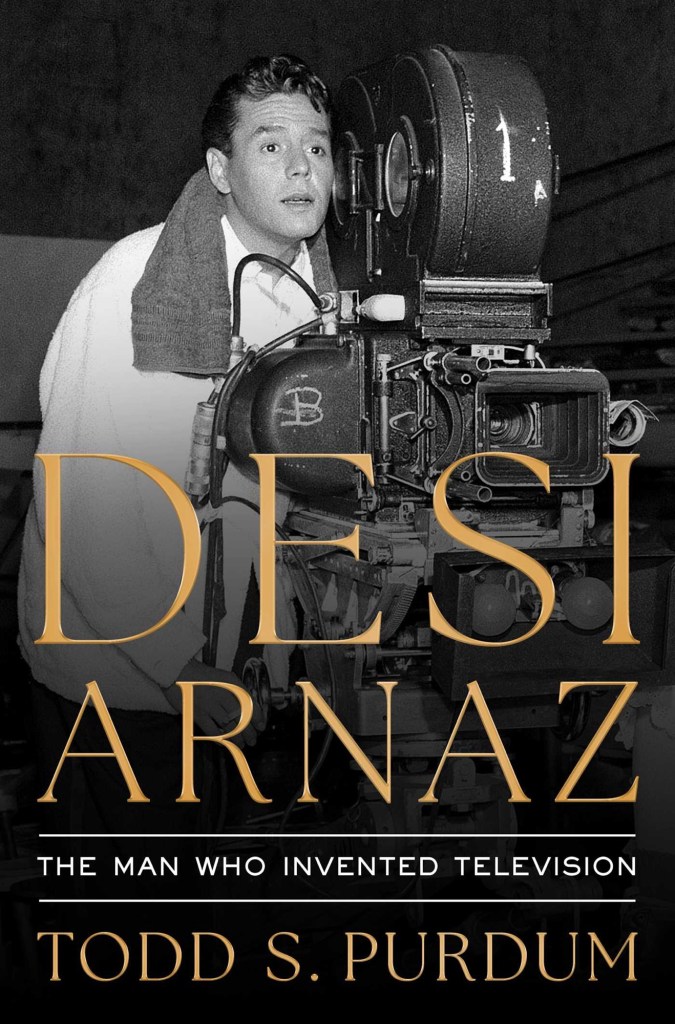
Desi Arnaz was a complicated man. He used his looks and vibrato to get into show biz, but found many roads blocked. He genuinely loved Lucy, but he also loved women in general. He seemed to resent his wife’s popularity and success, and it contributed to his demise. He didn’t invent television, but he created the prototype for the modern situation comedy. He and Lucy built an independent television production powerhouse, then he sold his half after the divorce. Sadly, his career never recovered, and history pushed him aside. A man who created his own breaks and his own demise. Desi Arnaz: The Man Who Invented Television (2025, Simon & Schuster).
For the neophyte of television history, this book will paint a vivid picture of television’s greatest show of the 1950s and the lives of one of Hollywood’s greatest power couples. The basic show of Desi and Lucy has been told many times, so for the educated fan, the value of this book is in the details, which author Todd S. Purdum provides enough of to keep your interest.
Desi was as smart as he was dumb. The story really kicks into overdrive when Desi and Lucy secure their television show on CBS, and Desi takes the wheel. There’s no arguing that Desi had passion and drive, and it only increased as he was underestimated, and aimed tried to outsmart him. Desi’s entire life was a gamble, despite being born into luxury in Cuba. Arriving in America with nothing, it was his natural gifts that got him by. He was a good looking guy, the women noticed, and he noticed back. Even after marrying Lucy, his eye continued to wander, as did the rest of him.
The section on the evolution of I Love Lucy should be required reading for anyone who watches sitcoms – we take for granted the organization, production and technology – none of that was in place when CBS okayed the show. While Desi didn’t do everything himself, he was involved in every facet of the show, as he and Lucy owned fifty percent, and 100 percent of the film negative. Desi pushed for, and helped finance, shooting the show on 35mm film, which turned out to be genius, because up to that time, shows were preserved only as videotaped from monitors, with no sense of an afterlife. Desi integrated a process of editing the film shot from three camera into a simplified endeavor. There was no model for producing televised shows shot before an audience in this format. At the time, shows were broadcast live from a studio from New York, and then low-fi videotapes sent to stations on the West Coast because no transmission system yet existed to get it across the country. That would soon change, but the process Desi used of filming and sending the tapes to individual stations to broadcast ensured quality.

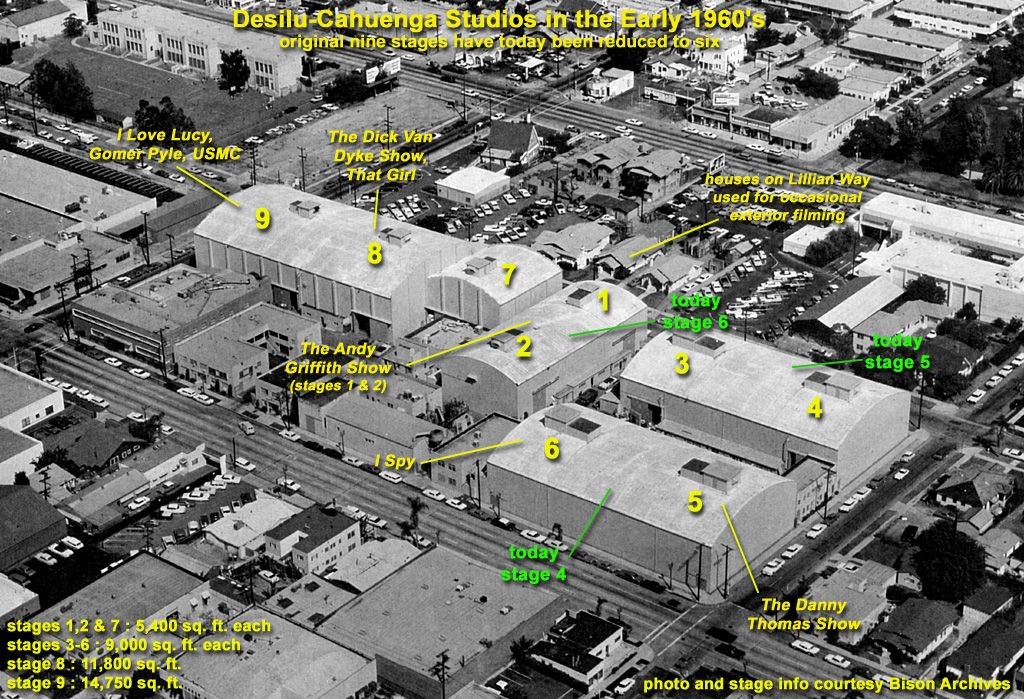
Desi built Desilu into the largest independent studio, with a physical plant larger than most movie studios. He bought the RKO studio which gave his company large production stages in becoming a large landlord for other television series. As the Lucy show went from a weekly half hour show to a monthly hour long format, with bigger production values, Desi made deals for other series expanding the Desilu footprint.

Purdum also explains how as Desi’s success grew, his marriage to Lucy became weaker, and his personal addictions more consuming. Desi emulated the Latin male characteristics of his father and others, where infidelity was acceptable and drinking, his rocket fuel. That Desi chased women constantly was known by everyone, including Lucy, to the point she knew which people supplied him with frequent prostitutes. Purdum writes that with Desi’s daily scheduled alcohol consumption, business needed to be conducted early in the work day. Desi’s decline and life after Lucy was a sad one.
Purdum writes that Hollywood never acknowledged the contributions of Desi Arnaz, and at the same time boastfully took more share of the credit than he deserved. Desi had great ideas, but he also hired the right people who had the talent and the experience to turn those ideas into reality. Hopefully with this book, Desi Arnaz is introduced, successes and failures.
After Lucy and Desi divorced, Lucy bought Desi’s ownership share of Desilu. Until she sold it to Paramount in 1968, Lucy ran the studio, and backed such show as Star Trek, Mission Impossible and Mannix. This story is told in a blog post I wrote: Lucille Ball Television Studio Boss




 Ticket 2 Ride
Leave a comment