


Principally filmed in 1971, and released theatrically in 1972 and 1974, Pink Floyd at Pompeii – MCMLXXII has risen from the vault, to the delight of Floyd fans who wanted a release of the film and the first availability of the soundtrack. The film made its theatrical appearance over the April 24th weekend. I started writing this review then, but paused until I could watch the film again, this time at home on a smaller screen. The limited showing around the world brought in a decent return, and more importantly, allowed viewing of this film in flawless detail.


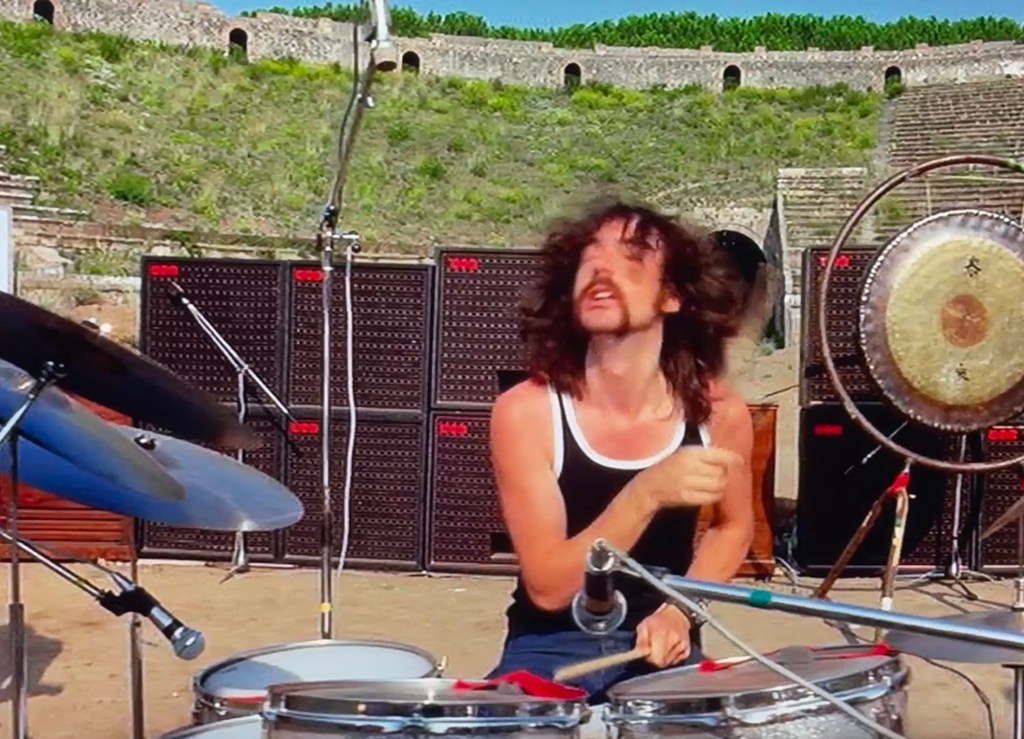
My wife is a huge Pink Floyd fan, but her experience with the band really started with Dark Side of the Moon. My experience began with their earlier work, much of which is presented in this film. “Echoes”, “Careful With That Axe Eugene”, “Set the Controls for the Heart of the Sun” and “One of These Days.” This was labeled the psychedelic, space rock, proggy period before the sculpted and polished genius of Dark Side. I wanted her to see and feel the band prior to how she knew them.
A couple of things. The film has been cleaned up and is presented in 4K resolution, which looks magnificent on the IMAX screen. The clarity and resolution were awesome, the color popped and the sound was clear and vibrant. Directed by Adrian Maben, featuring the band performing in the ancient Roman amphitheater of Pompeii, Italy.



Remix master Steven Wilson digitally remastered and remixed the soundtrack. Wilson, who has both a solo career and a member of PORCUPINE TREE, is also widely known for his remastering and remixing of classic rock albums. He’s worked on albums by Black Sabbath, Gentile Giant, Jethro Tull, King Crimson, Kiss, Marillion, Roxy Music, Tangerine Dream, The Grateful Dead, Tears for Fears, The WHO, Van Morrison, Yes, XTC and others. The words “Steven Wilson Remix” delight audiophiles. Remastering is cleaning up the existing sound of an album using current technology. A remix is getting into the music and vocals and tweaking what you hear, perhaps bringing an instrument forward from the original mix, separating sounds from each other and making adjustments.



The film is part concert, part recording session, part interviews and walking about the moonscape and volcanic mud of Boscoreale. The location photography is exquisite, and in IMAX it’s breathtaking. The tracking shots and widely effective along with the editing gives this film a Kubrick-type feel. The effects of combining images of art and close-ups of the band playing, to create a slightly psychedelic rendering must have been pretty trippy when the film was released. Viewing the film in the context of the times makes this film which contains concert and non-performance sequences one of the best musical films of the era. Instead of going overboard like Led Zeppelin’s The Song Remains the Same, Pink Floyd at Pompeii – MCMLXXII is a film that can be enjoyed without a hangover and you might even want to own a copy for additional viewings.
In 1972, Pink Floyd was still a “band”, this was before Dark Side of the Moon changed everything. I won’t go into the emerging dynamics of the band, but will say that Roger and David look like pals here, rather than opposing forces.

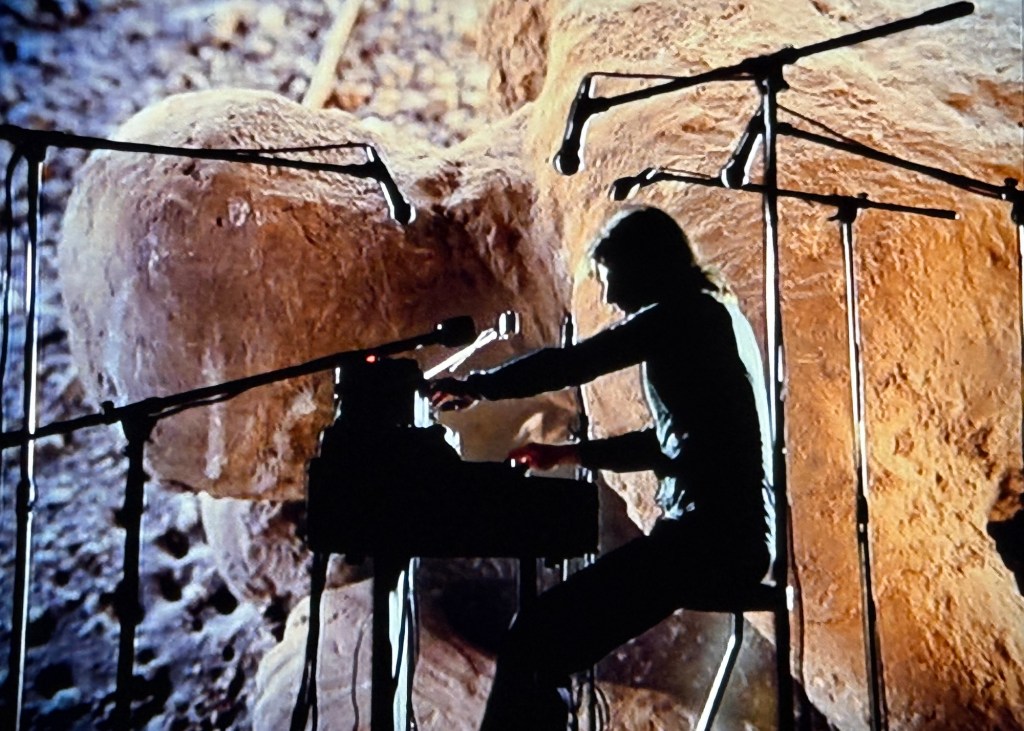
What I enjoy about this film, beyond the incredible music are moments. The snippets of dialogue are revealing. There’s an underlying bite to their humor, worldly, yet a bit naive about the musical universe. Each member of Pink Floyd is seen in their element. Nick Mason is the anchor with his percussion and dynamic style. That might be why the camera loves him. Roger Waters bounds from the large gong to his bass to the recording studio synthesizer, it’s obvious that he thinks on a huge musical canvass. David Gilmour shines on his otherworldly guitar playing; slide, sound efforts, penetrating solos – he does so without the NFL touchdown type theatrics. Richard Wright, still a creative force in the band, spinning beautiful textures, his ethereal vocals and plaintive piano chords, he’s more of a specter than a human band member.
The band wouldn’t stay this “together” much longer. Massive success awaited these four young men right around the corner. This film captures not their greatest music, but the emergence of these four creative musicians from psychedelia into a greater sonic dimension. To look back on this film, one sees the ideas, the passion and the creative tension bubbling mud and gases of Mount Vesuvius.






 Ticket 2 Ride
Leave a comment