

Welcome to the inaugural post for Book Talk Tuesdays. This isn’t my first book review, or my first rodeo. I’ve reviewed tens, maybe hundreds of books through the years, but they will now be filed under Book Talk Tuesday. Look for BTT several times a month.
—
Comedy Samurai: 40 Years of Blood, Guts and Laughter, A Memoir by Larry Charles (2025, Grand Central)
The name Larry Charles may not register. If someone said Seinfeld or Curb Your Enthusiasm, you might think Larry David. But you’d be wrong. Larry Charles did work on both of those series, as did Larry David, and they both also did the short lived late night show Fridays, but they are different people.

Writer, producer, director Larry Charles also has done a variety of projects apart from Larry David. Besides the shows I mentioned, Charles was the showrunner for Mad About You for several seasons, the showrunner for The Entourage, co-wrote the Bob Dylan film Masked and Anonymous, directed the film he co-wrote with Bill Maher, Religulous, directed Borat, Bruno and The Dictator, and has many other projects to his name.
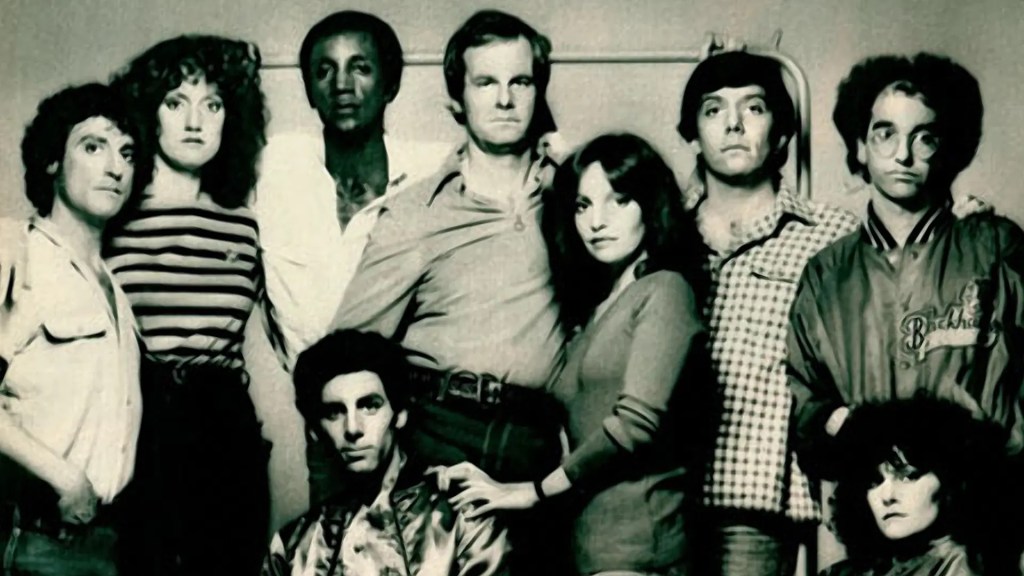
What is a comedy samurai? Someone who goes from project to project to develop, fix or save a film, TV series, stage show or other creative work as a writer, producer or director. Charles was just a phone call away, often joining a series that needed a new story direction, a veteran perspective, or an experience producer. Charles’ film resume consists of some unusual projects. A film collaboration with Bob Dylan that few people have seen, a collaboration with Bill Maher about finding comedy, a film about the hunt for Osama bin Laden that Harvey Weinstein took over and replaced Charles as director, and three films of decreasing success and happiness working with Sasha Baron Cohen.
Comics seem to have unusual stories about how they got started. Charles would writes, “And I would stand in front of the comedy store like a drug dealer and, like, stop comedians that I recognized and go, you want to buy a joke?” Jay Leno bought jokes for $10 each.
His big break was a writer on the SNL type show, Fridays, where he worked with Larry David and Michael Richards. Eventually, he joined Seinfeld in the second season as writer and story editor as the show got its footing and developed a rhythm for some of the most memorable episodes. He stayed through season five.
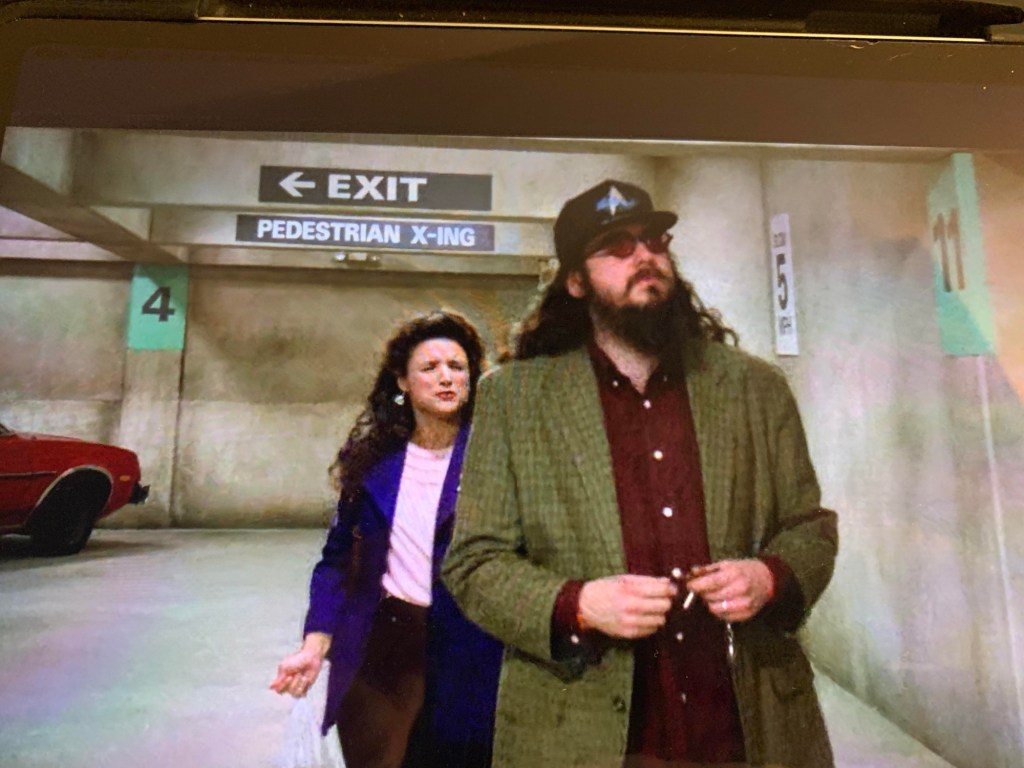
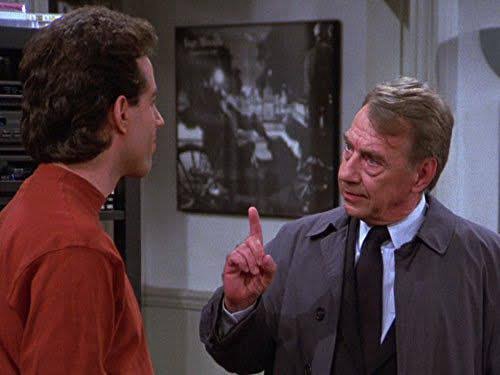
Library cop Lt. Bookman) “Yeah, ’71. That was my first year on the job. Bad year for libraries. Bad year for America – hippies burning library cards, Abbie Hoffman telling everybody to steal books. I don’t judge a man by the length of his hair or the kind of music he listens to – rock was never my bag – but you put on a pair of shoes when you walk into the New York Public Library, fella.” from “The Library” episode of Seinfeld
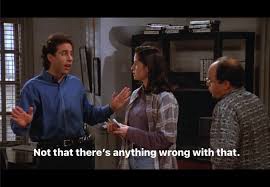
“We’re not gay. Not that there’s anything wrong with that.” – from “The Outing” episode of Seinfeld.
I never watched Entourage, Mad About You or Curb Your Enthusiasm so those chapters didn’t quite have the impact of others. What I did realize was what a strong leader he was in running those shows; there is a lot of responsibility beyond managing scripts and developing story arcs.
What struck me about these jobs was how he didn’t develop any ownership points in them that others did. Seinfeld made a number of people wealthy, but not Charles who earned a paycheck and probably gets the union specified residuals.
I never knew that Charles on two different occasions traveled to the most dangerous countries seeking how comedy is presented in horrible surroundings and situations. That he went to the Middle East, and countries in Africa, where civil war, lawlessness, repression, extreme conditions and danger were all around – is insane. Liberia and Somalia in particular are mentioned in detail, places he and crew filmed people who despite living in the worst of situations, use humor as a means of relief and hope. Amazing stuff.
When I first saw a photo of Charles, I actually thought it was music producer Rick Ruben, each has long hair, long beard and favor sunglasses. Ironically, they were friends. Ruben drifted in and out of Charles’ life, like many other people he writes about in the book. Being a comedy samurai is also a lonely profession in an industry where most “relationships” seem transactional, and disappear when life gets tough or theirs no profit involved. That’s the world that Charles seems know. That’s sad.
What’s also sad is that Charles and David, after being very close for decades, are no longer in touch, the result of a documentary Charles was making about David. What started as just a simple filmed interview of David, grew into an HBO documentary that took on a life of its own, consuming everything in its path, including their relationship.
The book open and closes with Charles’ hear attack, an event that resonates with Charles today, causing him to reflect and take ownership of errors and omissions.
Would I recommend Larry Charles’ book? Absolutely. You don’t have to be a fan of all of his work (which I’m not) to appreciate his story and his observations (which I do).



 Ticket 2 Ride
Leave a comment