

This blog is less about a show or shows, and more about the impact they had on me. TV, film and now, video gaming and the internet, have influence on young minds. The question is really how much, and the role of parents to manage content and use. I’m not going to wade into that thorny debate, what I will write about is my own experience.
In the 1970s, the question was asked: Does viewing of TV or film violence result in harm to viewers? A lot of studies were done, though I’m not sure the question was definitively answered. In the next decades the concern was violent video games. Again, the question was asked. Does viewing or participating in fantasy violence harm the viewer? You tell me.
Way back in the black & white days of television, kids watched a ton of big and small screen violence. Back then, there was no blood or graphic deaths, no severed limbs or slo-mo carnage. Yes, there was still a high body count, but weren’t these “bad” people mostly, who had it coming? These were still the days that right was supposed to triumph over wrong before the end credits. Our heroes might come away with an arm wound, but next week they were healthy and into the next adventure.
The internet and video games were just futuristic concepts then. Kids had the family TV, occasional trips to the movie theater, and comic books.
As children of the 1950s and 1960s, what we saw on the screen, was what we wanted to be, or to imagine through play. We wanted the plastic guns and other accessories to aid in our role playing. Our parents were only too happy to send us outside to play, out of their hair – just be home for dinner.
I’ve never been a fan of video games, nor am I a watcher of cartoonish/fantasy super hero violence. But understand, I grew up on war shows, Westerns, secret agents, and cops. When films became more graphically violent at the end of the 1960s, I was not yet a teenager and wasn’t permitted to see those films. Naturally, I was intrigued by the rise of more adult content in mainstream films. As the 1970s brought Dirty Harry, Charles Bronson and even John Wayne into this new reality, the violence was entertaining, to a point, but it was there to also shock and horrify.
The next decades brought an increase in gratuitous violence, with a new group of action heroes, and the infusion of deadly comedic violence. What was real and what was fantasy? Is someone’s death funny? The TV shows I watched absolutely had consequences. To this day, part of evaluation of what I watched on the big and little screen, is about accountability and consequences. I could never imagine a video game that focuses on violence, even pretend violence, putting a child in charge of violent actions, with no consequences, other than winning the game. Certainly times are different.
Meanwhile, back in my childhood, assuming the role of character or character-types for play, was accepted and encouraged if it did not involve messing up the house or getting on mom’s nerves. Don’t make her pop another Valium.
The films I was exposed to then were no worse than what you saw on a Tuesday night on your console TV. I probably absorbed as much or more than the typical child of action-crime-Western shows on TV. I loved the genres and the stories. Sixty years later, here I am writing about those experiences.
Four fictional characters of the 1960s: A private investigator, a secret agent and an Army squad leader fighting Nazis, and a cowboy. Not super heroes, just adventurous stories, and the fantasies of young boys. We couldn’t be these characters, we just wanted to pretend to be them, at least in our own minds.
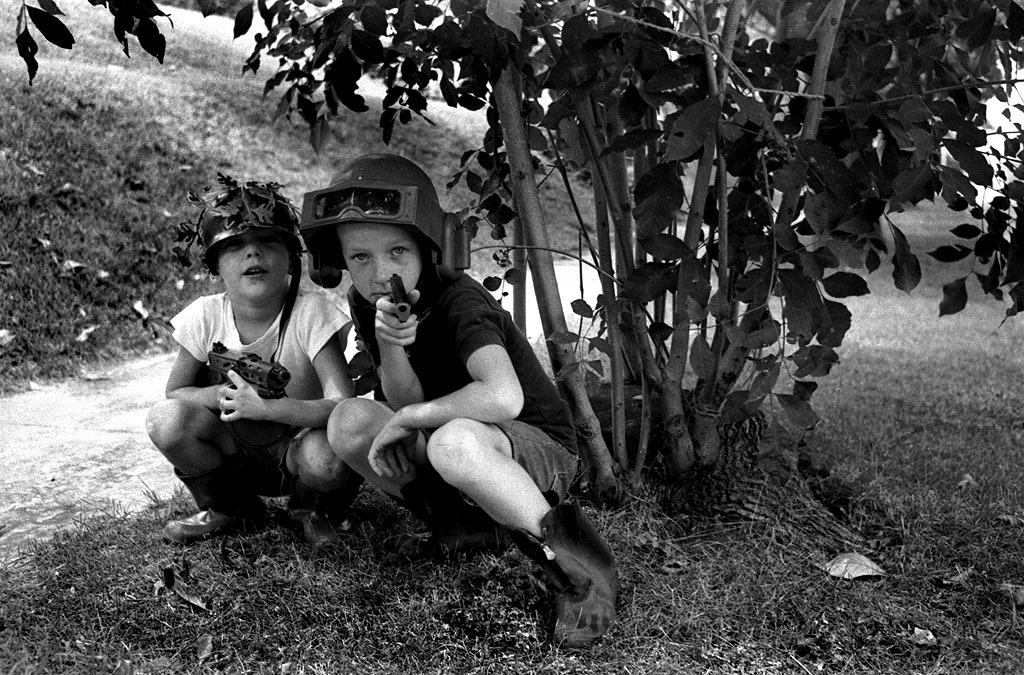
Toting a plastic, but realistic looking pistol or machine gun, and pretending to capture a hill or move stealthily around the neighborhood or set up a lookout station in a tree, didn’t lead me to being a hunter or even collecting guns. I don’t even play video games or watch today’s horror films or the cartoonish vigilante gorefests that are popular on streaming services.
To be a kid in the 1960s, TV was ripe with guns, cases to solve and bad guys to crush. Who needed super heroes, our TV heroes were “mortal”, at least to us, which made patrolling the neighborhood seem more real, even though we knew it was just play. That’s the important thing: even though it was make-believe, right and wrong, and consequences still exist.
So, what were these shows?
The Detective – Joe Mannix: In the late 1960s, there was only one TV detective, the rest were cops. It wasn’t until James Garner’s Rockford that another private dick entered the fray.
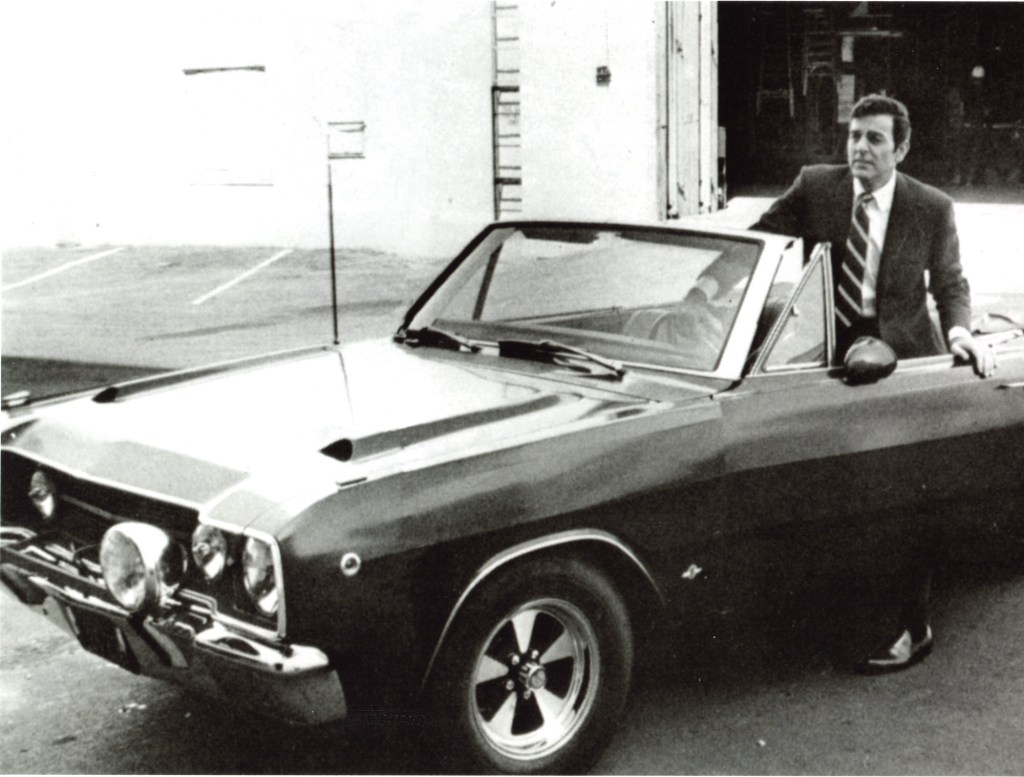
Mannix drove cool cars and lived in a swanky pad, upstairs from his office. He dressed in stylish clothes, nixing the suit for sport coats and loud neckties. Mannix was confident and cool, but didn’t have the swagger or cockiness of the movie P.I.’s. He wasn’t hardboiled or world weary like the typical private eye. Mannix was classy, but he was down to earth.
Mannix preferred to solve his cases through good detective work, but he operated in a world of murder, blackmail, dishonesty and powerful people. Fighting and gunplay were involved each week, but it was inevitable to those on the other side of the case.
Mannix was rock solid about right and wrong. He knew the difference and if he took your case, he was there till the end.
The Secret Agent – The Man From U.N.C.L.E.: Movie idols didn’t translate to the backyard as cleanly as television characters. James Bond was hands down the biggest action character, but a kid was more likely to pick a Western television character like Matt Dillion, The Rifleman, Daniel Boone, James West, Joe Cartwright, Trampis, Rowdy Yates, Cooper Smith or a variety of other characters. Bond films were off limits for most kids, but a TV spy show, that was a bit campy, but still had action and gadgets, The Man From U.N.C.L.E. was a good replacement.

If you were determined to be a secret agent, The Man From U.N.C.L.E. offered Napoleon Solo or Ilya Kuryakin. In fact, a facsimile of the gun used on the show, complete with attachable scope and shoulder stock were available. I’m not sure if The Girl From U.N.C.L.E. had similar armory.
Television spies were everywhere: The Avengers, The Saint, Get Smart, I Spy, Mission Impossible and The Prisoner. James West was both a secret agent and Western character, in The Wild Wild West. He had plenty of gadgets, daring escapes and fighting.
The 1960s was crowded with spies. Besides the ones I’ve mentioned, there was the Dean Martin Matt Helm flicks, the James Coburn Flint films, Michael Caine’s Harry Palmer films, which ranged from spoofs to hardboiled espionage characters. Casino Royale was loosely based on Ian Fleming’s book, but it violated the only important requirement of a farce – it wasn’t funny.
The film market was flooded with spy fare, mostly aimed at the drive-in and bottom of the bill. Dr. Goldfoot and the Bikini Machine, Bang! Bang! You’re Dead, What’s Up Tiger Lily?, Caprice, Fathom, Salt and Pepper, Kiss the Girls and Make Them Die. There were more serious offerings like The Chairman, A Man Could Get Killed, The Spy Who Came in From the Cold, Ice Station Zebra, with big stars and big budgets.
James Bond and the Sixties Spy Craze by Thom Shubilla (2024) is a must-read for spy fans of the era.
The Man From U.N.C.L.E. was not great TV but a suitable offering for the genre.
The Soldier – Sgt. Chip Saunders: I hate to admit it, but playing war was a boyhood passage in those days. The line between good and evil, just and unjust were much clearer then. The Second World War was only plus or minus 20 years then, and there was a steady diet of television and film war programs. The most handy was a weekly television series called Combat!. The show offered a lot of fighting, but the emphasis was in character-driven stories. The show was led by Sgt. Saunders and Lt. Hanley. Each show alternated between the two, with occasional the two in the same episode.
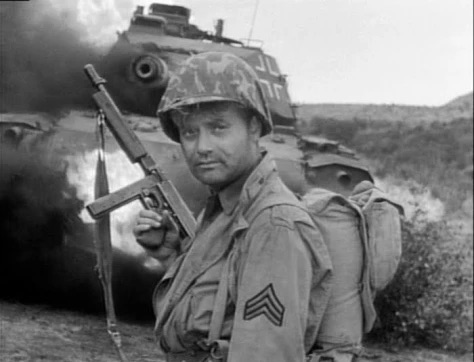
Every kid wanted to be Saunders; he was brave, fair-minded, protective of his men, and human. Saunders was a good leader, that’s one of the things that impressed me. Plus he carried that Thompson machine gun.
One might think that a series about war would be rather basic, advance and keep moving, fight your way to Berlin. Combat! was much deeper and complex than that. War has all kinds of stories and Combat! explored every possibility. It was a lot for a kid to digest, not just the war, but the human elements reflected in the lives of the characters. There was a lot of loss and sacrifice, and happy endings came with a cost. This wasn’t a rah, rah show about American might – it was a big war
The Cowboy – Trampas: Cowboys were the exception. Aside from John Wayne, you weren’t likely to be a character (John Wayne was really the same character in each film), you were a black & white combination of whatever you had seen: Chuck Conners, Steve McQueen, Michael Landon, James Garner, Lee Marvin, Clint Eastwood on the tube or at the drive-in theater.
I can’t leave out cowboys as Westerns were the most popular television and film genre at the time. Any type of story could be fit into a Western because at the core, a Western is a morality tale, dressed up with heroes, villains, action, exploration, the great outdoors, and conflict. Every kid in the neighborhood was a cowboy at one time or another; a right of passage to strap on a six-shooter or carry a rifle, put on a pair of boots and find a hat. Even better if you lived near a wooded area or open field.

Trampas was a cowpoke, a hired hand at Shiloh, where The Virginian oversaw the ranch. As one of the main characters on The Virginian, he would be featured in every third episode or so, and a supporting player in others. He was tall like John Wayne, good-looking like Clint Eastwood, but more affable and more likely to get himself in jams unexpectedly. Trampas had a big heart and a moral compass that all the characters from Shiloh possessed.
—
Thoughts…
I survived television of the 1960s, and the film violence and adult subject matter of the 1970s. My mind was not rotted; I like to think it was expanded and my ability to think, sharpened.
I can remember the days of walking through the woods holding a rifle and having a pistol strapped to my hip. Our platoon was on the lookout for the enemy, wherever they may be hiding. Someone’s mother would call out, it was lunchtime and we scattered to our homes where our mothers served us our rations. Another successful mission completed, the neighborhood was secure, and it would be time to visit the pool down the street.
Life was simpler, and it was a lot easier to recognize the good guys from the bad guys. Is role playing characters with guns and pretend violence harmful to kids? Just because I survived it does mean it’s okay or that a child will grow up to be a gun felon. Love your kids, be involved in their activities, monitor what content they access, and reinforce good values.
Tune in again next week for Throwback Television.






 Ticket 2 Ride
Leave a comment