

The 1960s were full of teenagers on the verge of young adulthood, and the subject of a growing genre of film. Most of these films had teens rebelling against uptight parents and the square establishment. Sex was often lurking in the background. The films ranged from squeaky clean Disney to more salacious fare shown at drive-in theaters. Still, these films were a long way from Porky’s, American Pie, Scream and Halloween.
My point of reference for this blog here is The Impossible Years, a 1968 MGM teen comedy film, which is definitely not Disney, but not The Swinging Cheerleaders either.

This new teen genre has its roots in the 1950s as part as the post-WWII angst that turbocharged film noir, splintered into psychological streams involving fear of aliens, dark Westerns of revenge, sexual repression and rebellious adolescents. Films dared to go deeper than ever before, the prudish 50s may have been Ozzie & Harriet on the surface, but peel away the veneer and discover what Americans faced behind closed doors.
While President Dwight D. Eisenhower wanted you to think America’s biggest struggle was the nuclear arms race, but it was really the threat of the American teenager. Hollywood was ahead of the game and offered up Rebel Without a Cause, Gidget, Tammy, Blackboard Jungle, A Summer Place, and King Creole as films from the youth perspective. Young love, peer pressure, not fitting in, and juvenile delinquency were frequent themes. Producers saw the burgeoning youth market and the drive-in theater as ripe for exploitation.
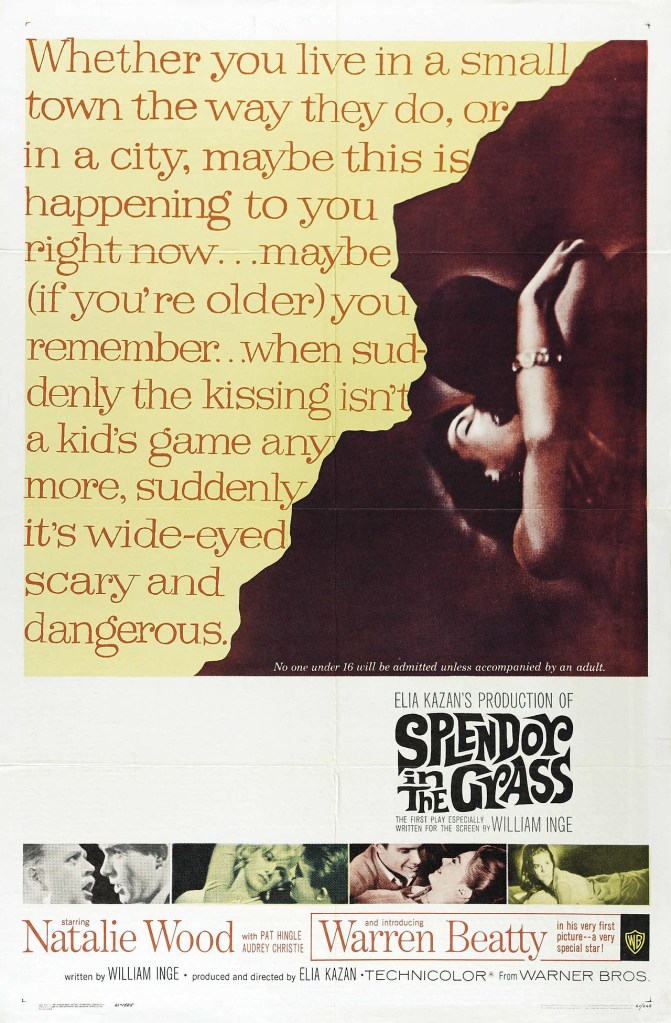
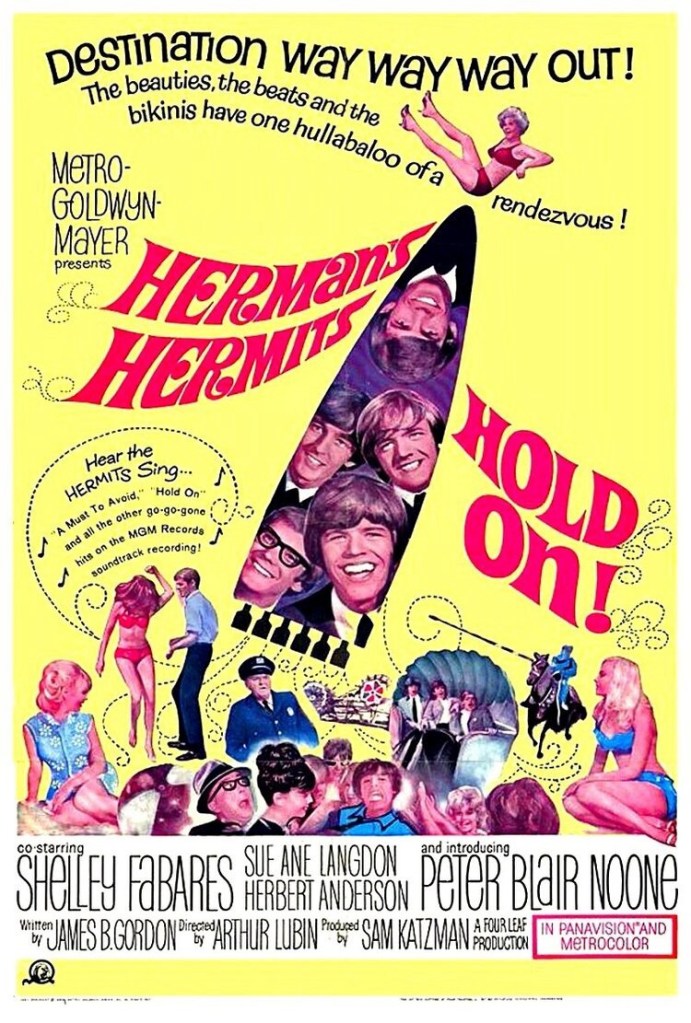


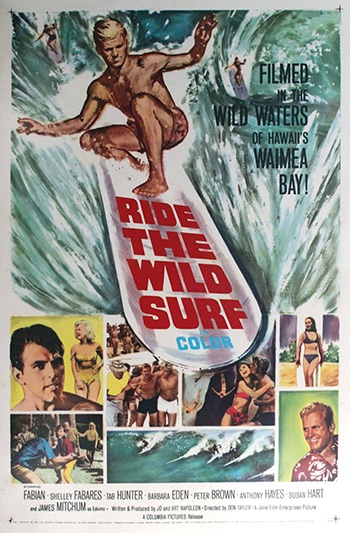

Who were these young actors who became stars? James Dean, Bill Mumy, Warren Beatty, Frankie and Annette, Elvis, Natalie Wood, Kurt Russell, Hayley Mills, Tuesday Weld, Deborah Walley, Patty Duke, Sue Lyon, Troy Donahue, Sandra Dee, Connie Stevens, Tim Considine, Sal Mineo, Brandon de Wilde, Tommy Kirk, James MacArthur, Shelley Fabares, Bobby Darin and others became faces of youth films to start the 1960s. Beaches, surfing, monsters, rock & roll and young love were great subject matter. I mention Sue Lyons, but she was really the outlier here. Lolita was not a film about teenagers, though the subject a teenager who a grown man was obsessed with.
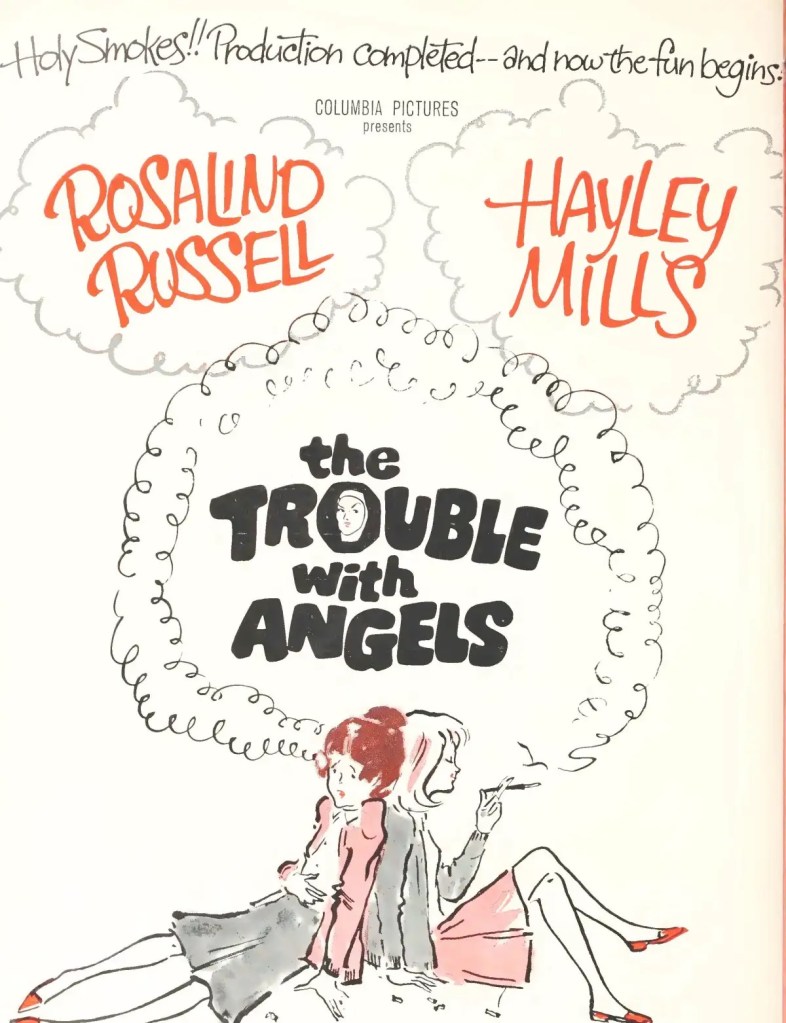

In the 1960s, teens would give adults gray hair and turn their worlds upside down. These weren’t Andy Hardy gee-gosh, “let’s put on a show” type family entertainment stories. Studios wanted a sense of drama, but only to heighten the generational conflict. The plots often revolved around a professor, doctor, executive or psychiatrist writing a book, conducting a sex study, launching a new consumer product or pulling some sort of flimflam, and being derailed by a teen or two. This characteristic wasn’t confined to teen films, but applied to sex comedies of the time. Making fun of psychology, advertising, male ego, law enforcement, or adult authority showed just how threatening the younger generation could be. Parents, and behavioral experts, were on the retreat, and with good reason.
The parents in teen films typically live a traditional, middle class lifestyle, they believe they are open-minded, but aren’t when faced with a problem at home that shows how square and troubled they really are.
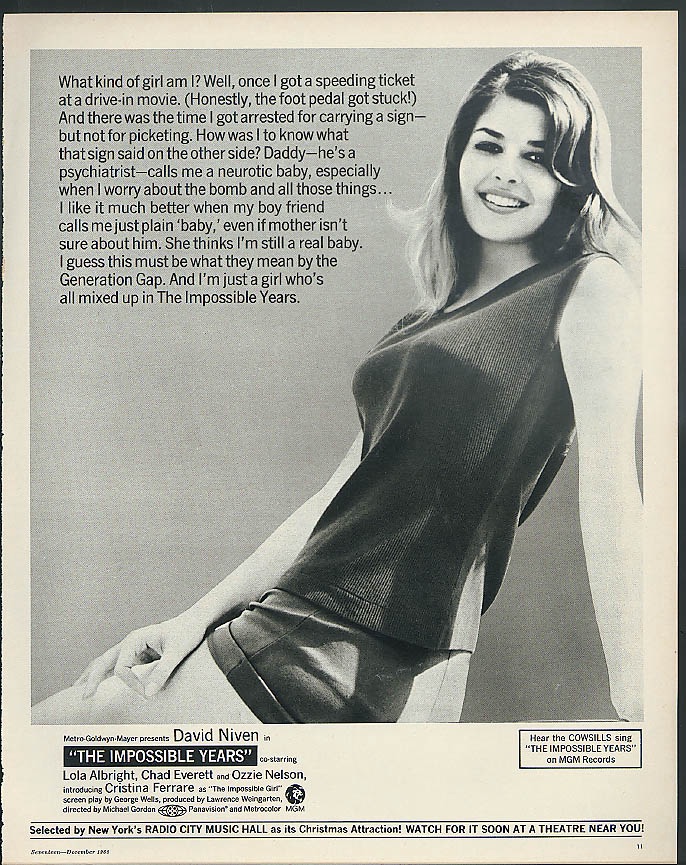
In The Impossible Years (1968), the father (David Niven) is up for a distinguished promotion, but is in trouble of losing it because one of his children’s speech and activities has jeopardized his job and his standing in his profession. For added humor, a precocious, younger child (Darlene Carr), who cracks wise and seems wiser than the parents, offers social commentary, and confirms that the household is out of control and that the parents have a larger problem ahead with daughter number two.
The plots in these films are based on a series of misadventures and misunderstandings, dialed-up hormones, kids who are growing up too fast, and parents who don’t really know their own kids as well as they think. After a buildup of chaos and a huge disagreement, the story culminates in a chase scene, bringing the teen couple together in a fun and zany series of near-misses designed to overcome whatever miscue or conflict that drove the family apart. The chase breathes farce into the story as it literally drives to a climax (pun intended). Nothing like slapstick humor to build the laughs and enthusiasm for a happy ending. The Impossible Years ends with the big chase, and David Niven gets the promotion after all, and his pregnant daughter has actually gotten secretly married, to the father’s junior colleague no less.
The decade started with Gidget Goes Hawaiian, where Gidget loses, but regains her boyfriend, on a dream vacation. Pretty wholesome stuff. By the end of the 1960s, much of the innocence has been burned off, as The Impossible Years, The Graduate, To Sir With Love, Last Summer, Easy Rider, Up the Down Staircase and The Learning Tree incorporated very mature themes.
I don’t consider Lolita to be a teen film, although the teenage Sue Lyon was the focus of middle age James Mason’s lusty pursuit.
Scripting a teen genre film was usually connecting the dots, using template of gags, rock and roll music, a few spicy social observations, mixed with farce to keep it light, and the outlandish finish. This is not intended as great art or film history, just entertainment that earns a few bucks.
A rock & roll title song or soundtrack: Elvis, Dick Dale and surf music, The Beatles, Lulu, Bill Haley and the Comets, Simon & Garfunkel, The Dave Clark Five, Herman’s Hermits, Fats Domino, Chuck Berry, Gene Vincent, Fabian, Frankie Avalon, Chubby Checker, etc.
The father or adult figure in these films is brought to his knees by the younger generation. He’s no match for their energy, trouble, hormones, adventure and rejection of “square” values.
Parents and guardians are portrayed by the likes of James Stewart, Henry Fonda, James Mason, David Niven, Fred MacMurray, Jim Backus, Richard Burton, Bob Hope, Dean Jones, Doris Day, Rod Taylor, Lucille Ball, Rosalind Russell, Shelley Winters and William Schallert; stars who’s careers were fading a bit, yet still had box office allure.
Back in the 1950s, many teen movies consisted of music films like Rock Around the Clock, Shake Rattle and Rock, Don’t Knock the Rock – silly stories, and a lot of music. In the 1960s, beach and surf films used the same formula to get kids to the theaters, particularly the drive-ins, where contests like “battle of the bands” took place.
Walt Disney, producer of family fare, featured Hayley Mills, Tommy Kirk, Kurt Russell as wholesome and fun loving teens into comedies where they were generally smarter than the adults around them. In the back half of the 1960s, more mature themes surfaced, reflecting a more serious outside world and youth culture. Walt steered clear of those themes, and refused to use actors who presented themselves in a questionable manner, like Annette Funicello revealing too much skin a bathing suit, or Tommy Kirk’s private life and habits. Teen films would take a more serious turn in the 1970s.
I first saw The Impossible Years when it was playing in the neighborhood theater. I was in fifth grade, on a double date. Yes, pizza and a movie groovy man. Looking back, that film hasn’t aged well, but I’m surprised by the adult themes that I must have missed at eleven years old. There were enough laughs, physical comedy and smart-aleck remarks that distracted me from anything I wasn’t supposed to hear.




 Ticket 2 Ride
Leave a comment