
The 1960s was about escapism, the supernatural, comic book heroes, space, secret agents and science fiction.

The decade had many outstanding television series and their lasting popularity is such that they continue to air played in syndication around the world. Three of those series – The Beverly Hillbillies, Petticoat Junction and Green Acres – have more than a few creative and casting commonalities. In large part, this linkage is due to the executive producer of all three, Paul Henning, a veteran of television comedy, writing and producing for George Burns and Gracie Allen, Bob Cummings, Fibber McGee and Molly, and many other shows.
Everybody in the world has heard these lyrics:
Come and listen to my story
‘Bout a man named Jed
A poor mountaineer,
Barely kept his family fed.
And then one day
He was shootin’ at some food,
And up through the ground came a-bubblin’ crude. Oil that is, black gold, Texas tea.
And these:
Come ride the litte train
That is rollin’ down the tracks
To the junction
Forget about your cares
It is time to relax
At the junction
Lots of curves, you bet!
Even more, when you get
To the junction
And especially these:
Green Acres is the place to be.
Farm livin’ is the life for me.
Land spreadin’ out so far and wide
Keep Manhattan, just give
me that countryside.
New York is where I’d rather stay.
I get allergic smelling hay.
I just adore a penthouse view.
Dah-ling I love you
but give me Park Avenue.
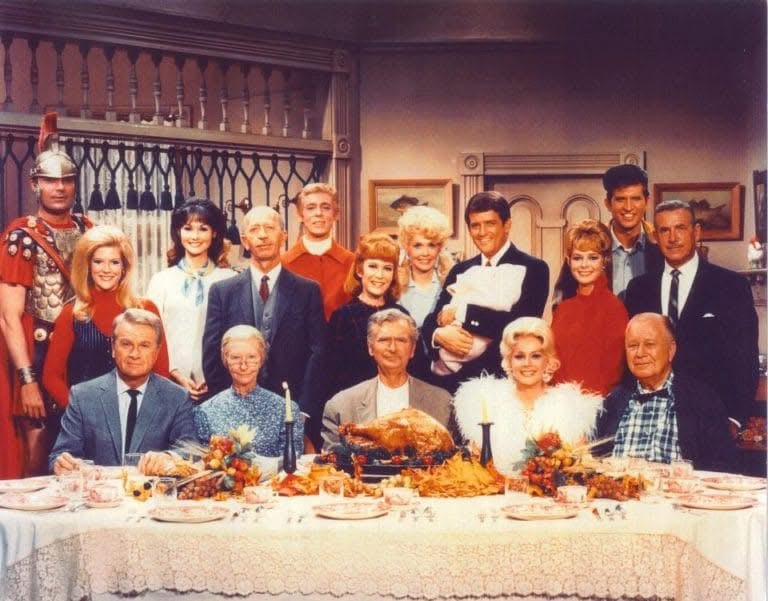
All three series are comedies and revolve around the clash of rural and country cultures, over ways doing things and misinterpretations that result in comical problems. All three series were produced through the Filmways Productions and producer Paul Henning. It was Henning that created The Beverly Hillbillies (and its theme song g) and guided it through its long run. Petticoat Junction was next, based on the memories of Henning’s wife Ruth’s rural family who owned a hotel that was served by an old railroad train. Finally, Green Acres was created by writer/producer Jay Sommers, who worked on the other two series for Henning and who was the creative engine for Green Acres.
In those days there wasn’t much crossover between series, unless one was a spinoff of the original show. Gomer Pyle, as well as Mayberry RFD, were spinoffs of The Andy Griffith Show, which was a semi-spinoff of The Danny Thomas Show.
All three of Henning’s shows vanished in the 1970-71 purge by CBS of any network show that catered to the older, rural demographic. Some of these shows were still performing well in the ratings, but they were not the viewers who could lure more lucrative advertising revenues. Even the successful Doris Day Show was stripped of any remaining down-home elements as her farm connection was completely severed and her family vanished, so that Doris would fully embrace the swinging city life of San Francisco.
The Beverly Hillbillies premiered September 26, 1962, as Jed Clampett and family struck oil and moved to a mansion in Beverly Hills. Jed and kin were fish-out -of-water in their new life, and the subject of con artist attempts and people trying to get the best of them. Jed was somewhat naive, but not foolish and his homespun knowledge of life served him well. The cousin Pearl character, who was nephew Jethro’s mother, was played by actress Bea Benaderet, a longtime TV and radio performer, and a favorite of producer Henning. Henning said one of the reasons he created Petticoat Junction was for her to star in, “she deserved it,” he said. Benaderet had auditioned for the role of Granny in The Beverly Hillbillies, but after Benaderet saw Irene Ryan’s audition, she told Henning that Ryan was Granny. Benaderet would not have to wait long before her turn would come.

The Beverly Hillbillies ran until March 23, 1971, for a total of 274 episodes. Originally filmed in black and white during the first three seasons, while seasons four thru nine are in color.
The show incorporated elements of the 1960s in storylines and characters. The space program, the film industry, secret agents, the peace and love movement, were some of the topics used for stories. Nine seasons was a long time to keep a show creative and viable in changing times. Jed and kin had a great run, but ending the show was time.

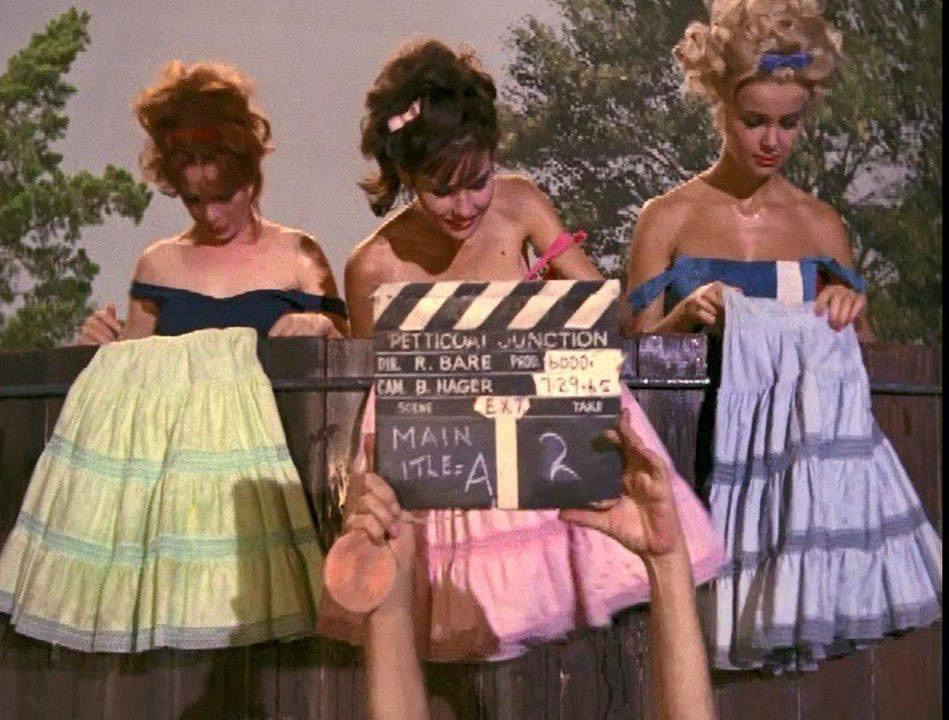
Petticoat Junction premiered September 24, 1963 and run until April 4, 1970, for 222 episodes, of which 74 are in black and white. A widow, Kate Bradley, and her brother Joe Carson, run the Shady Rest Hotel, a Victorian era hotel along the route of the Cannonball Train. Kate has three daughters, all close in age, and they are the subject of many episodes. The iconic opening credits show the daughters in the train engine water tower, with their petticoats draped over the side. Each time there was a casting change, those credits were updated.
Widow Kate ran the hotel on a tight budget, she also that three teenage girls to steer into adulthood. She was the straight character in the show. Uncle Joe was wealthy in get-rich schemes and served as a comedic foil. Quirky Hooterville characters were introduced and figured in the stories.
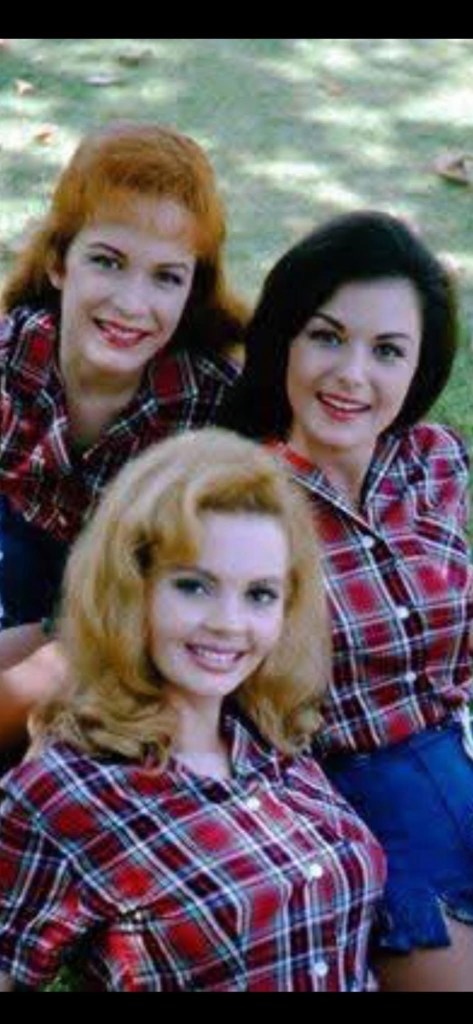
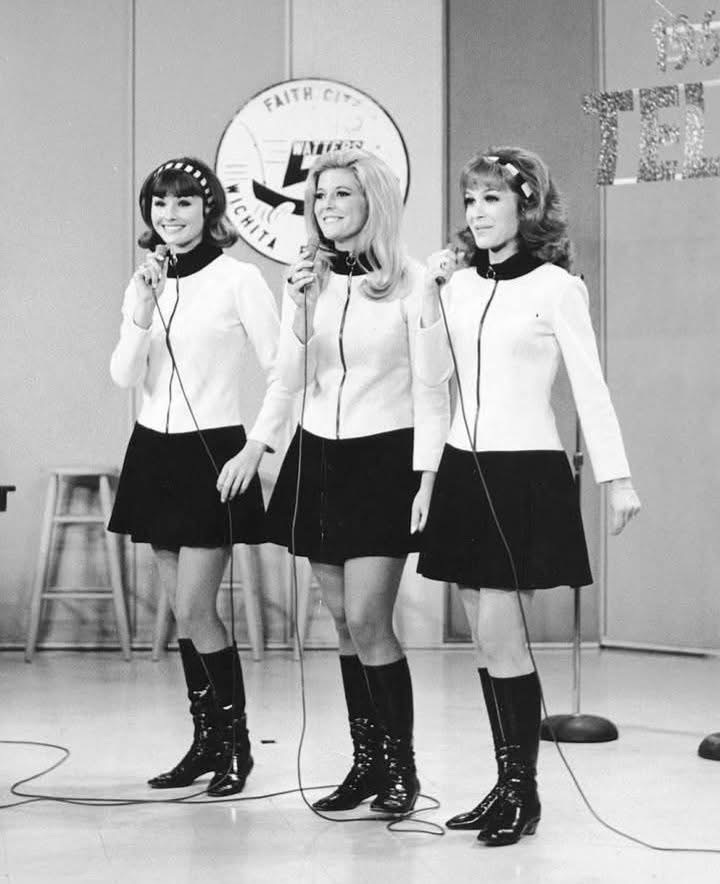


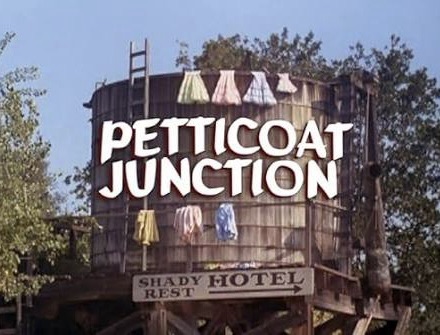
Whereas the cast of The Beverly Hillbillies was very stable during its run, the Petticoat Junction cast changed tremendously, with Edgar Buchanan and Linda Kaye Henning the only regular cast to appear in all seven seasons. Frank Cady as general store proprietor Sam Drucker also appeared in 168 episodes over seven seasons. Sam Drucker was important to the Hooterville universe as appeared regularly on Petticoat Junction and Green Acres (142 episodes), and even The Beverly Hillbillies (10 episodes).
The Bradley girls included Gunilla Hutton, Jeannine Riley and Meredith MacRae as Billy Jo; Pat Woodall and Lori Saunders as Bobbi Jo; and Linda Kaye Henning as Betty Jo. As the show matured, the focus seemed to shift from quirky to old-fashioned, and more in the direction of the Lawrence Welk audience, unlike sister show Green Acres. The early episodes had a freshness in the comedy that turned stale and the writers depended on Betty Jo getting married, a baby, and having her and husband Mike Minor performing songs.

Benederet had finally gotten her starring role, and was the anchor for Petticoat Junction, but succumbed to cancer after a brave battle. Her presence was important to the success of the show, and ratings suffered in her absence.

According to an interview Paul Henning gave, CBS approached him wanting a third show. The network would put it on the schedule without a pilot. Henning told he would executive producer it, while he turned it over to Sommers to create and be the what is now called, the show-runner. Green Acres would be a part of the “Hooterville community” Henning said, using some of the same sets, a few of the actors would crossover, but it would take on a decidedly different vibe from the maturing neighbor, Petticoat Junction. Green Acres was more like The Beverly Hillbillies, with the Douglas’s being the fish-out-of-water, even though Green Acres and Petticoat Junction had more overlap.

All three series had soundstages at General Service Studios (now known as Sunset Las Palmas Studios) in Hollywood, so sharing was easy.
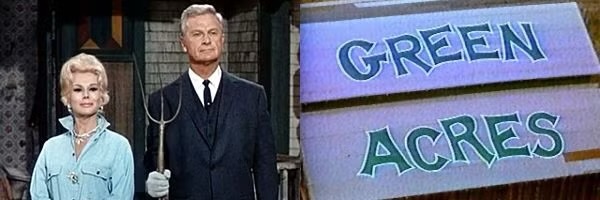
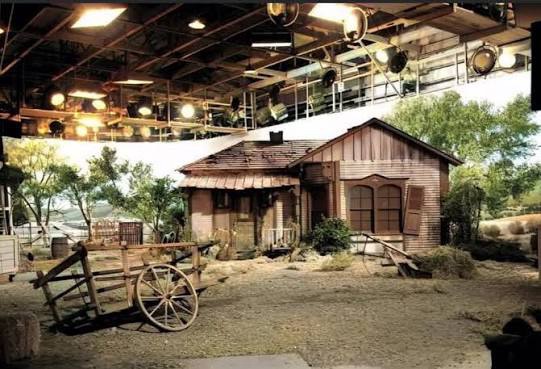
Of the three shows, I found Green Acres to be the least enjoyable as a kid, but as an adult, I find it the most interesting and creative of the three. The reason I was indifferent then, is now why I appreciate the show. Yes, silly. Absurd, a lot of the time. But now, I appreciate more of the humor and how they colored outside the traditional lines of comedy. An easy example is how Sommers and team played with the show’s credits.

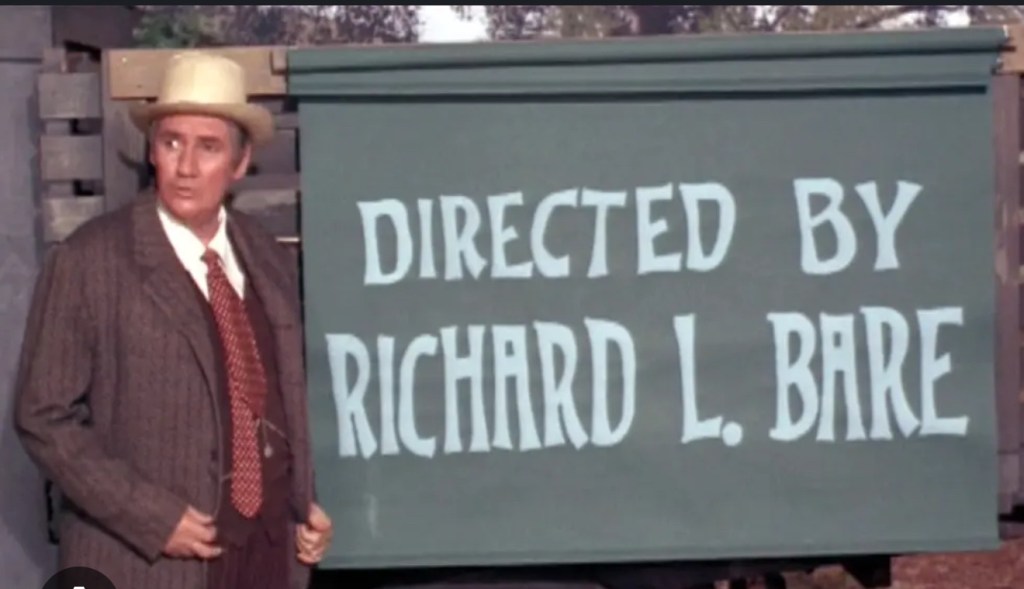


The Hooterville community in Petticoat Junction was funny, but in Green Acres, was like an alternate universe. Oliver Douglas (Albert) was befuddled, annoyed and a main benefactor of the craziness he found on a daily basis. The only other halfway straight character was Sam Drucker. Douglas was used to a certain degree of misunderstanding and confusion from his Hungarian wife Lisa (Gabor), but Hooterville took it to a new level. From the broke down farm to the looney farm agent, the crooked salesman, the incompetent handyman and his sister to the telephone up on the pole to Arnold the pig – this was a crazy place to visit.
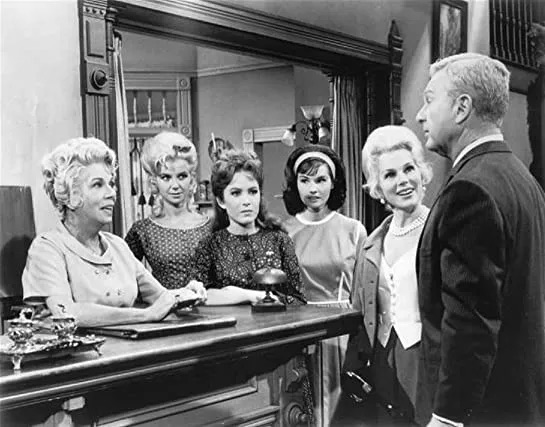
Why are these shows still so popular? Beverly Hills and Hooterville are other worldly and the people who inhabit those locations collide into a series of misunderstandings and culture clashes. These characters are well-meaning and a bit naive but see the world very differently from one another. That’s not something unique to the 1960s. The world is certainly smaller now and somewhat less isolated, but the divisions between cultures remain, although with much less naivety. We enjoy comedic conflict and we can look at these three shows, and others from the same era, and view them as from a different universe. Yet two of these shows were initially drawn from Henning family history.
Love these shows or hate them, they were popular in their day, and forever live in syndication. Jed, Uncle Joe and Arnold the pig are here to stay.





 Ticket 2 Ride
Leave a comment