
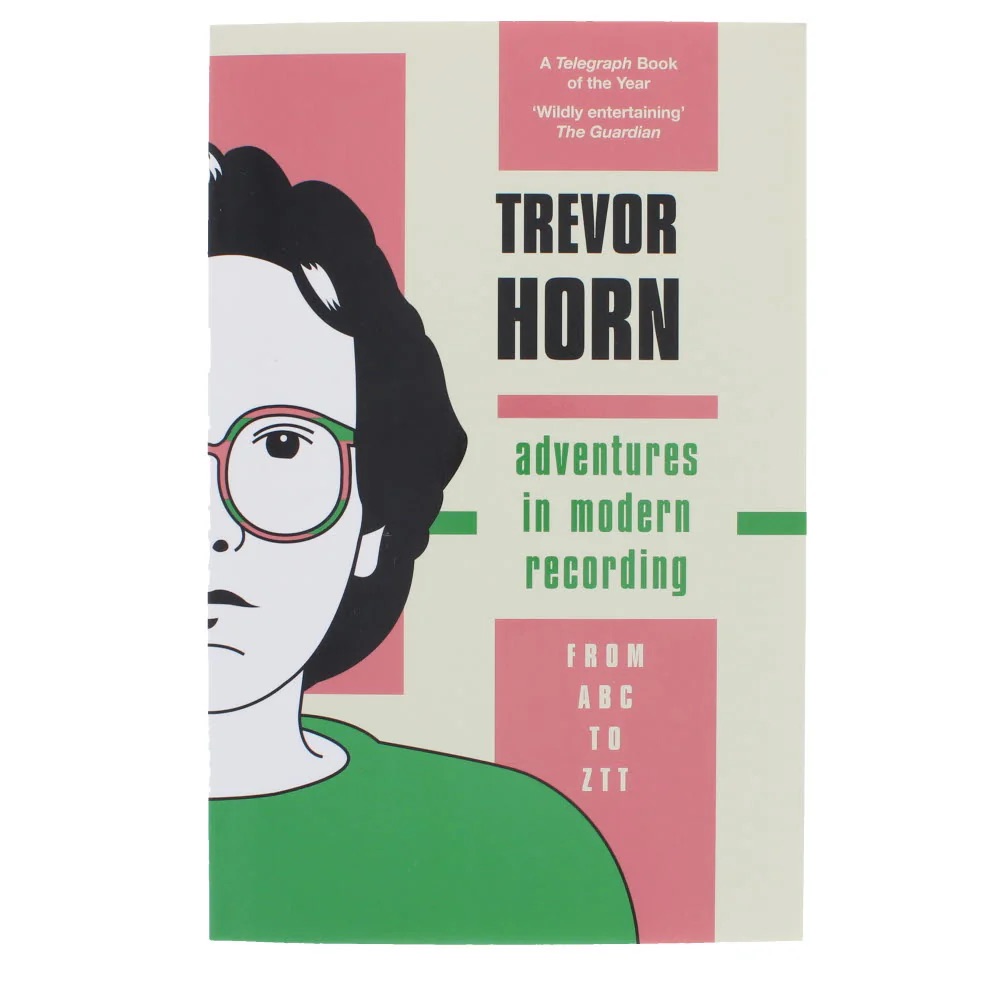
Not everyone knows the name or the face, but your ears know the music he’s made over the past 50 years. Trevor Horn was a member of the Buggles, Yes and Art of Noise, plus his own band, but he may better known from his award-winning production on albums by Seal, Frankie Goes to Hollywood, Grace Jones, Paul McCartney, Simple Minds, Mark Almond, Terry Reid, Cher, Pet Shop Boys, Robbie Williams, Rod Stewart, Tom Jones, Jeff Beck and many others. In addition, he’s worked on many film scores and been a songwriting collaborator for many artists.
Early on, Horn realized his future was behind the recording console so he built and owned recording studios, and with his late wife, own a publishing company and a recording label. More on her, later. There’s not much Horn hasn’t done in the music industry. In his spare time, he had his own band, and played in other bands including Dire Straits Legacy, made up of former Dire Straits band members. He’s won all kinds of awards for his production work, and is still going at it.
Rockstar memoirs run the gamut from excellent to barely worth the ink used in the writing. Most are passable for a nighttime read, and a small percentage are well-written and chocked with witty or keen observations. Horn has written a very entertaining book that talks the nuts and bolts about the music from 1980 forward. The New Wave era upset the musical landscape and ushered in groundbreaking technology that really did kill a lot of radio stars. His chapter on the Fairlight synthesizer is a must read to understand just how revolutionary that device was, and Horn was one of the select few who bought and delved deeply into the potential of the machine, especially the use of sampling sound or music, and using them to create and texture songs. In the early 1980s, this was a huge development. Horn is a smart guy and being at the critical junction of changing music/culture and new technology, he thrived in this new world. Timing is not everything, but it’s very important.

Horn met and married Jill Sinclair, who already owned a recording studio and would partner with Horn to build a small musical empire of companies. She also convinced him to focus on producing, because he’d never make the top echelon as a singer/bassist/band leader, but he could as a producer. Together, they made an enormously successful team, and he credits her with his success.
Personally, I have a love/hate relationship with the music of the 1980s, so I was particularly interested in those chapters of the book, which are quite good.


However, I was somewhat disappointed in his overall writing of his on and off relationship with the prog-rock band Yes. From replacing singer Jon Anderson, to making a record where he pleads with the other band members to bring Anderson back, to walking away from the band and then returning twenty-some years later to produce an album with them again, and recently replacing the lead vocals of former Yes vocalist Benoit David, on the album Fly From Here. I felt shortchanged on the Yes story. While I enjoyed the chapters on his other projects, Yes has been his greatest endeavor. One point that Horn makes clear, creativity often comes from creative friction, but it can burn down relationships.
That was also true of Horn’s association with Frankie Goes to Hollywood, which had one really big album then collapsed under its own internal bickering. Horn more than produced the album, he worked with the “band” to create the songs in the studio and develop their image. Frankie was signed to Horn and Sinclair’s ZTT Records, so they had more than the typical involvement with Frankie than simply getting their sound on tape.
There are successes and failures that Horn writes about, and areas he won’t discuss, especially his wife’s accident and later death. There’s very little focus on his life and personal relationships. At the book’s end, the reader does know a lot about recording production work in an earlier time, including the workarounds and experiments that producers were still doing in the young digital age.
Adventures in Modern Recording – From ABC to ZTT (2022) is not a perfect book, but I do recommend it. Trevor Horn, the guy with the big, funny eyeglasses, with the bass guitar and high voice, was not your typical rock star, although rock stars of the early 1980s were a bit different – but Trevor Horn the producer, found his home and calling building successful records for others.



 Ticket 2 Ride
Leave a comment