
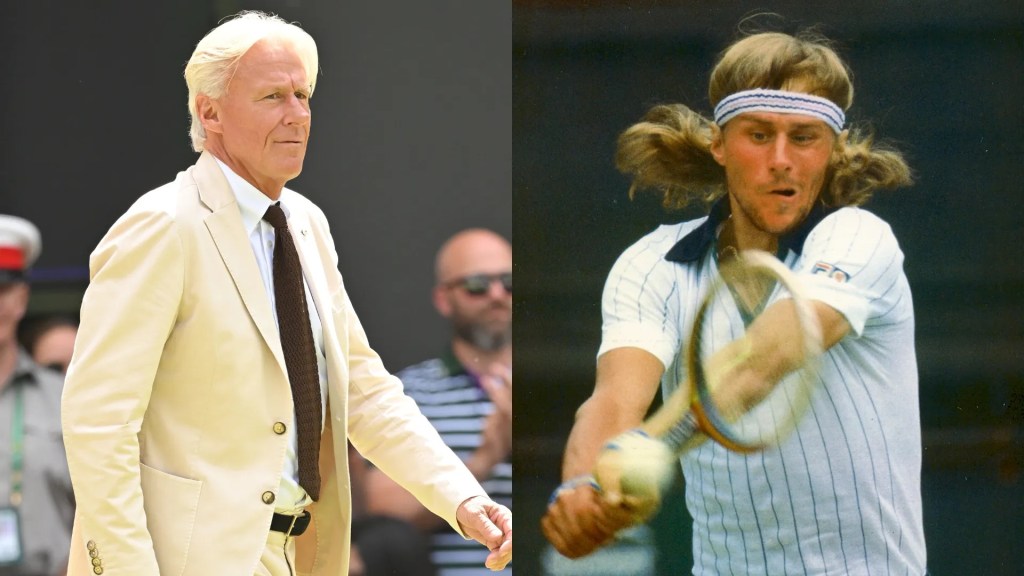
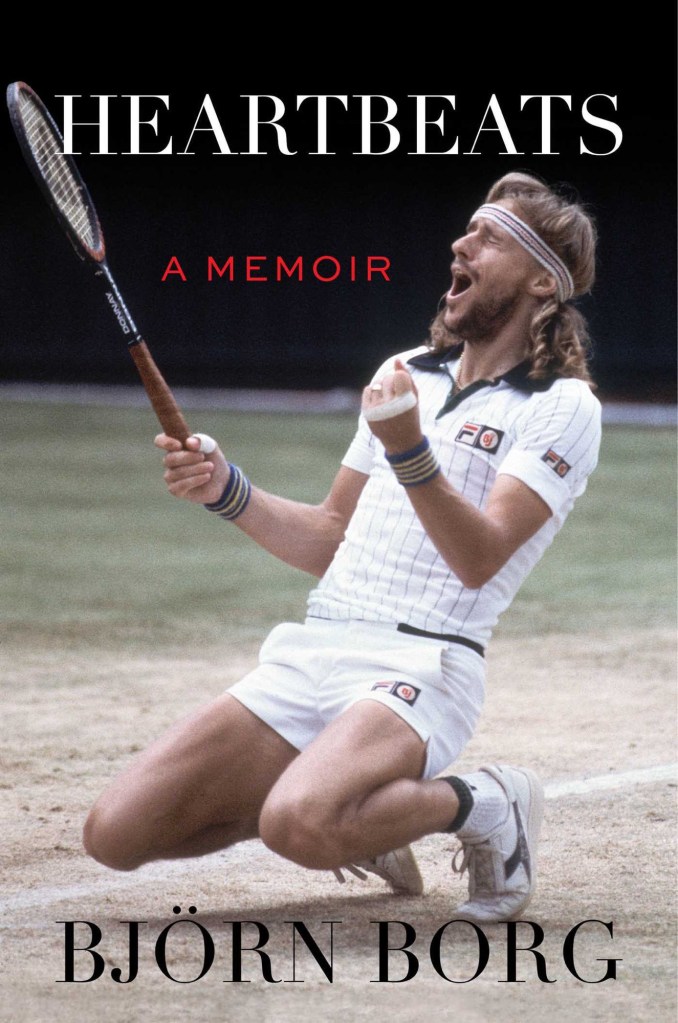
This guy was the best tennis player in the world during the last half of the 1970s. He was amazing in a field of really good players. Swede Bjorn Borg was an enigma. Heartbeats (2025, Diversion Books) tries to shed some light on the man. Interestingly, there were no photos other than the front cover.
Borg had an amazing tennis career, and he retired in his mid 20s. That’s crazy. Did it come too easy or did he just lose his taste for the grind of the tennis tour? He was the number one ranked player for 109 weeks in a row, winning 66 singles titles including six at the French Open and five consecutively at Wimbledon. That’s certainly a career, but retiring at your physical peak creates a definite mystery. Borg was a private guy in a very public career. He didn’t run from the media, but didn’t give them much either. His nickname of “Ice Borg” certainly applied to his seemingly emotionless behavior on the court.
In Heartbeats, Borg takes us through his early tennis development and turning professional at a young age. His rise was amazingly fast. The tournaments, travel, training, tennis friendships, business opportunities, famous people he met – it all blends together in a very matter-of-fact retelling. Borg does not focus on the details of his wins, its very matter-of-fact. The guy was a machine and emotion was not his thing.
What the public wouldn’t know is how life after tennis was a game he hadn’t prepared to navigate. Borg still roamed the globe, partied, received endorsements and took part in exhibition matches. He writes of investing poorly, too much partying, and surrounding himself with the wrong people. Tennis coaching he had, life coaching he did not. What’s telling are the two close calls with death from overdoses of drugs – and despite those warning sirens, there was no intervention after these incidents. He describes his travel with his father home from the hospital, after the second event, amidst total silence. Not one word during the entire trip.
Sadly, Borg had no grounded friends that were not a part of his small inner circle. Certainly, he had business and career advisors, and was exceedingly close to his parents, but he lacked anyone to confide in. Of all the people in his life, no one helped Borg avoid the failed personal relationships, business dealings, career decisions and unhealthy choices. After he retired from the tennis tour, he lost the motivation, structure and discipline that anchored his tennis success. The only tennis friend he stayed close to was Vitas Gerulaitis, who unfortunately died at a young age.
There are references to his tennis contemporaries like Jimmy Connors, John McEnroe, Guillermo Vilas and Ilie Năstase. Not many stories unfortunately. Here’s one:
“During the game against Roy (Emerson), I felt annoyed and frustrated because I couldn’t get the game to flow at all. It didn’t help that one of the ball boys was completely useless and couldn’t throw the ball to me properly. How hard could it be? Later on, I found out that that annoying ball boy was none other than John McEnroe.”
Borg was an a great influence to maybe hundreds of thousands of young tennis players, myself included. I learned my backhand by watching him on TV.
“The racket was way too heavy for me so I had to use both hands for backhand and forehand. You could say that’s when I developed my unusual playing style. Later, my coaches tried to get me to let go of my left hand and change my grip. But I didn’t care what they said, I just played the way that felt right to me. That’s how I ended up with a two-handed backhand.”
I wish there had been more revelations like these, but there aren’t. Borg will remain a mystery, at least by his own voice.




 Ticket 2 Ride
Leave a comment