
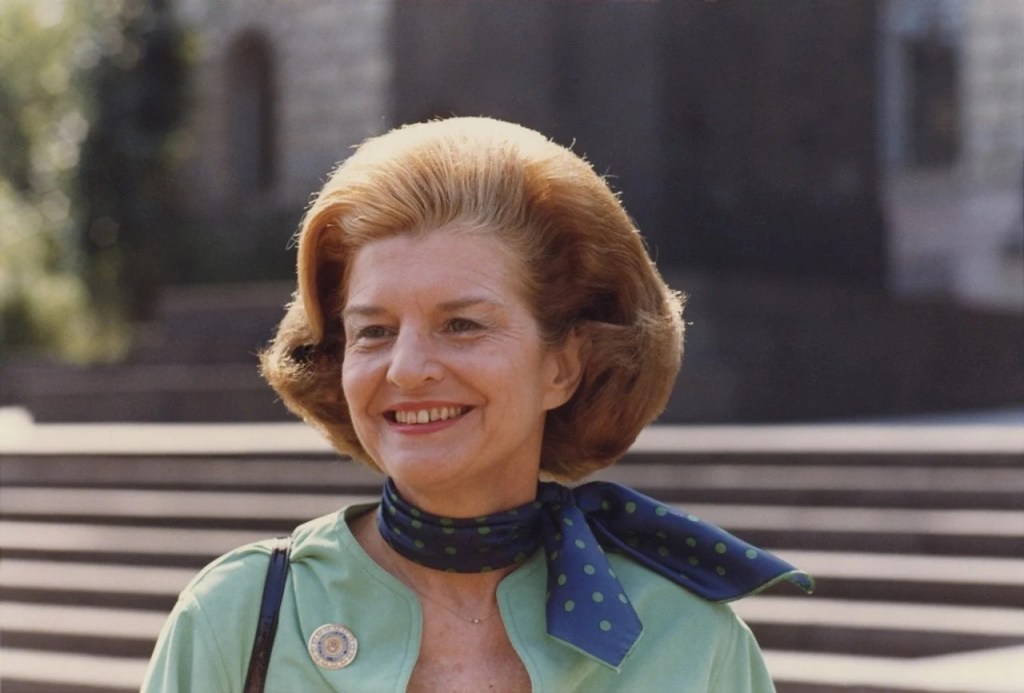
Betty Ford. Hey, isn’t that the name of a famous rehab facility? Well, yes it is. And for others, Betty Ford was the wife of Michigan Congressman Gerald R. Ford, who was selected as Vice President and then ascended to become the 38th President of the United States after Richard Nixon’s resignation.
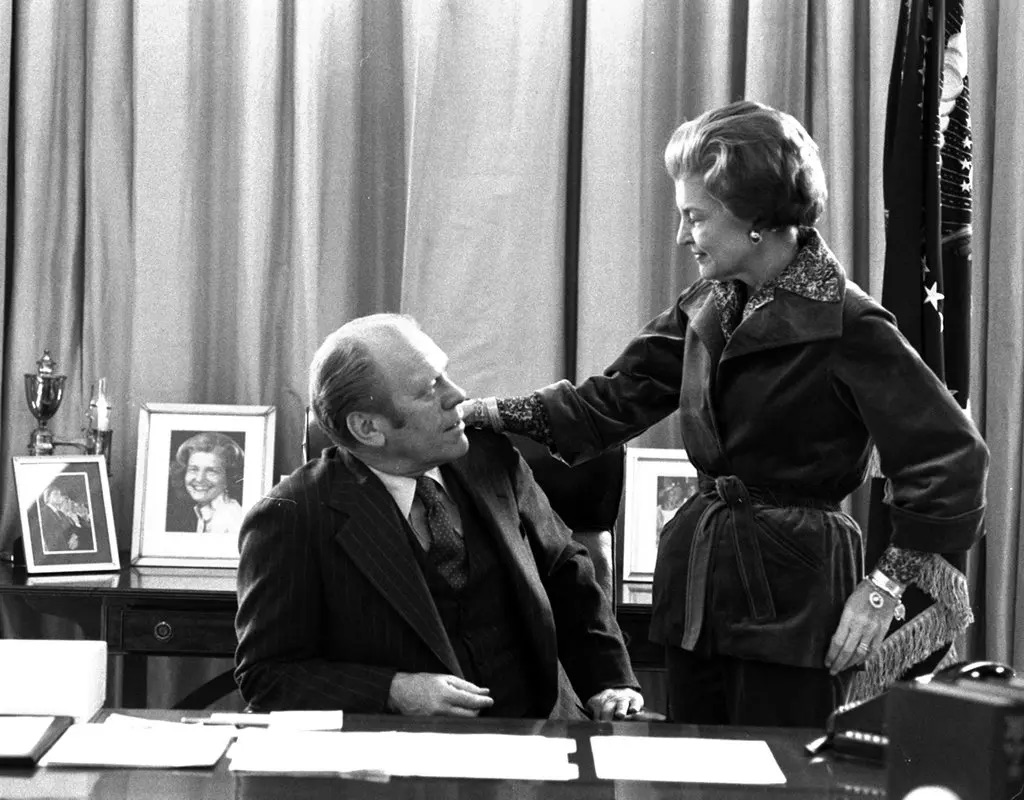
She was indeed a founder of the alcohol and drug rehab center in 1982, which bore her name. It is now called the Hazelten Betty Ford Center, after its merger with the renown Hazelten Center.
Betty Ford was quite a gal, and I mean that with great respect. As the wife of a busy Congressman, she was also busy with four kids while he traveled and worked long hours; and every two years he ran for reelection, while moving up the leadership of the House of Representatives. When Ford became President, Ms. Ford’s life changed too. Suddenly, she was in the spotlight, and what she did and said was news. First Ladies are newsworthy.
“Okay, I’ll move to the White House,” Ms. Ford said at the time. “(I’ll) do the best I can, and if they don’t like it, they can kick me out, but they can’t make me somebody I’m not.”
So, who was Betty Ford? She was certainly no wallflower, she led an active life as a fashion model before marriage and became a supportive and resourceful partner for a rising, young Congressman. But those years in the background, when Ford was in front of cameras and invited all over the world, no one had really asked what she thought or thanked her for her work on his campaigns or his success. She had accepted the role and had thrived at being mom, dad, campaign support, den mother, PTA member and many other roles. In those days, the career of many women were being wives and mothers.
In the early 1970s, medical detection and treatment for breast cancer was nowhere like it is today. During a routine medical checkup, Ms. Ford was told they had found a lump. Imagine her reaction. Bravely, she had a mastectomy, and then the world knew about it. What could have been a source of embarrassment, in addition to the weight of the disease, she used the situation, not for pity, but to bring breast cancer out of the whisper into the conversation for women’s health. “Even before I was able to get up,” she recalled, “I lay in bed and watched television and saw on the news shows lines of women queued up to go in for breast examinations because of what had happened to me.”
Cancer cells were found in three of her lymph nodes. She wrote in her book, “…women with cancer cells in one or more lymph nodes had only a 50 percent chance of surviving five years, and three out of four women were dead within ten years.”
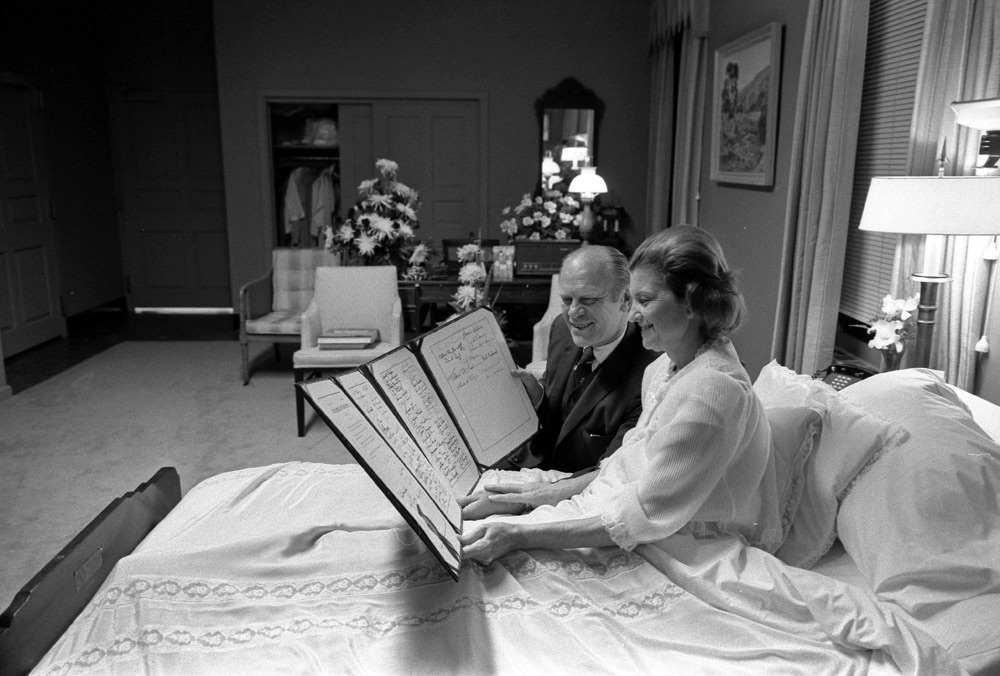
“Too many women are so afraid of breast cancer that they endanger their lives,” Ford said in remarks to the American Cancer Society Nov. 7, 1975. “These fears of being ‘less’ of a woman are very real, and it is very important to talk about the emotional side effects honestly. They must come out into the open.”
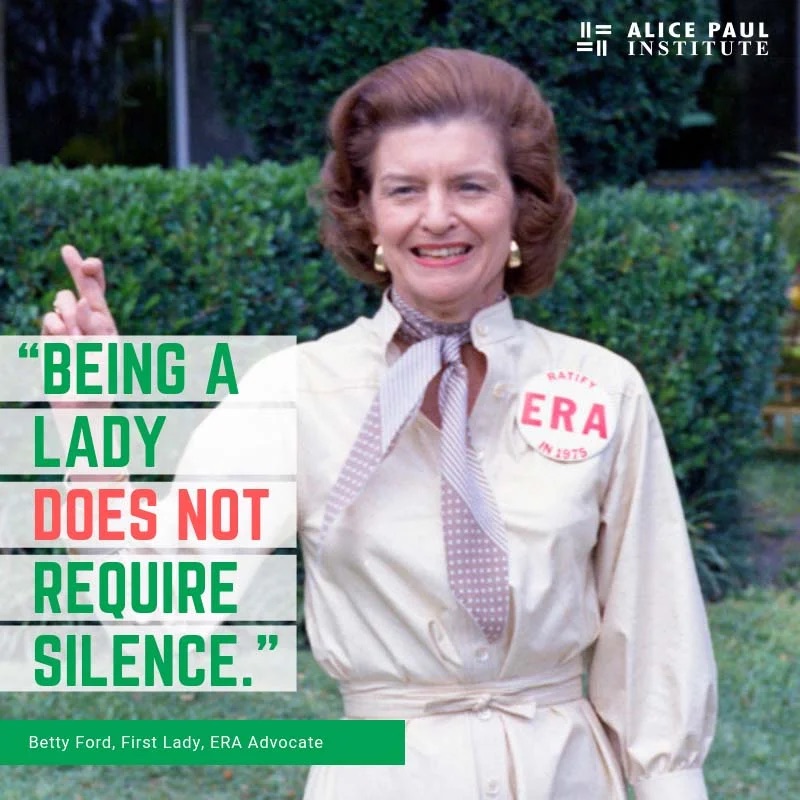
First Lady Betty Ford now had a voice and she used it. In 1975, American society and culture was changing. Women were speaking out and fighting for their rights and freedoms. The Equal Rights Amendment was in play and Ms. Ford was a vocal supporter, even though it wasn’t popular with many Republicans. Ms. Ford was asked questions by reporters about sexual freedom, gender roles and other thorny questions.
Betty Ford didn’t just lend her name to an issue or cause. She was all in. She had experienced addiction, but she had a lot to learn about it, especially how it affected women and how they lived with it. Here’s what she wrote about it: “Most of the treatment centers across the country had been geared to men. Men were the ones who came forth, admitted they were alcoholics. They went into treatment-their bosses sent them, or they sent themselves-because they found their ability to make a living threatened, whereas women drank at home, hidden and protected by their families. They didn’t find their way to treatment.”
Betty Ford helped change how treatment centers were set up, which were geared towards men, who had been the main patients. to include and once again, helped to bring the subject of addiction for women, out in the open for change to occur. Forty years ago, Betty Ford began talking about how alcoholism affected women, and there were noticeable differences from how men handled their drinking, and how society viewed, or didn’t see, women who were struggling with it. Walls of silence and ignorance fell down.
In her first book, Ms. Ford describes the long journey into pills for her pinched nerve that never seemed to stop hurting. She describes the long practice of social drinking that slowly morphed into a few drinks before dinner, and then after dinner, mixed with a variety of pills prescribed. These were the days before we understood how it all reacts together. Her family noticed, and learned to hide from her behavior and growing resentments. Then came an intervention, a relatively new strategy, and she was blindsided and hurt by what everyone said, including her husband. As hard as that was to hear, she didn’t run. While acknowledging and accepting her addictions would take time, she went to treatment and grew through the experience. Then came talking about it, and knowing it would reflect on her husband, but he stood behind her. That’s courage and love.
And one more thing. When the AIDS epidemic appeared, many influential people were silent, or reinforced a negative image to the disease. Elizabeth Taylor became involved in fundraising and bringing this disease out of the darkness. One of the people she called was Betty Ford. “She stepped forward and promised to be there when others refused,” Taylor said. Lisa McCubbin-Hill said in her book that it was known that Betty Ford had quite a few gay friends and she hated how the gay community was stigmatized.
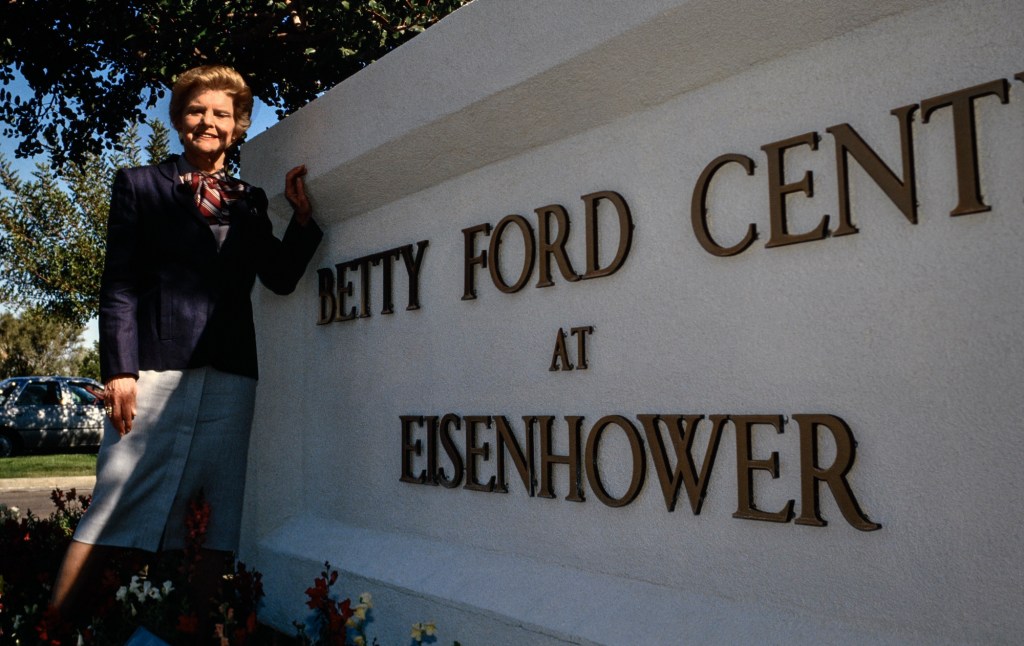
In 1991, President George H. W. Bush chose Betty Ford to receive the Presidential Medal of Freedom. Eight years later, President Bill Clinton presented the Congressional Gold Medal jointly to Gerald and Betty Ford.
President Clinton’s words to Ms. Ford that day: “Perhaps no first lady in our history, with the possible exception of Eleanor Roosevelt, has touched so many of us in such a personal way. Because I lost my mother to breast cancer, Betty Ford is a heroine to me. Because my family has been victimized by alcoholism, and I know what it’s like to see good, fine people stare into the abyss of their own personal despair, I will be forever grateful to the Betty Ford Center, and for the millions of other people whose lives have literally been turned around and often saved… You gave us a gift, and we thank you.”
When President Ford passed away, his body lay in the Capitol rotunda as thousands of people gathered, waiting hours in line to pay their respects. The Ford children, on behalf of the Ford family, took shifts to greet each person who entered the rotunda. I recall watching that on television, impressed by the kindness and sense of duty by the Ford family to help a grieving nation, in their own time of loss.
Betty Ford might not make the shortlist of best First Ladies, although she’s high on my list. When I think of people in a role like that, character, integrity and resilience are important qualities. It’s an unelected job, but it wields great influence. Betty Ford had those qualities, and unexpectedly became an advocate for substance abuse treatment and recovery, and for women’s health issues.
There are two good sources on the life and influence of Betty Ford.
Betty Ford: The Times of My Life (1978, HarperCollins), Betty Ford: First Lady, Women’s Advocate, Survivor, Trailblazer (2018, Gallery Books) by Lisa McCubbin-Hill.


 Ticket 2 Ride
Leave a comment