
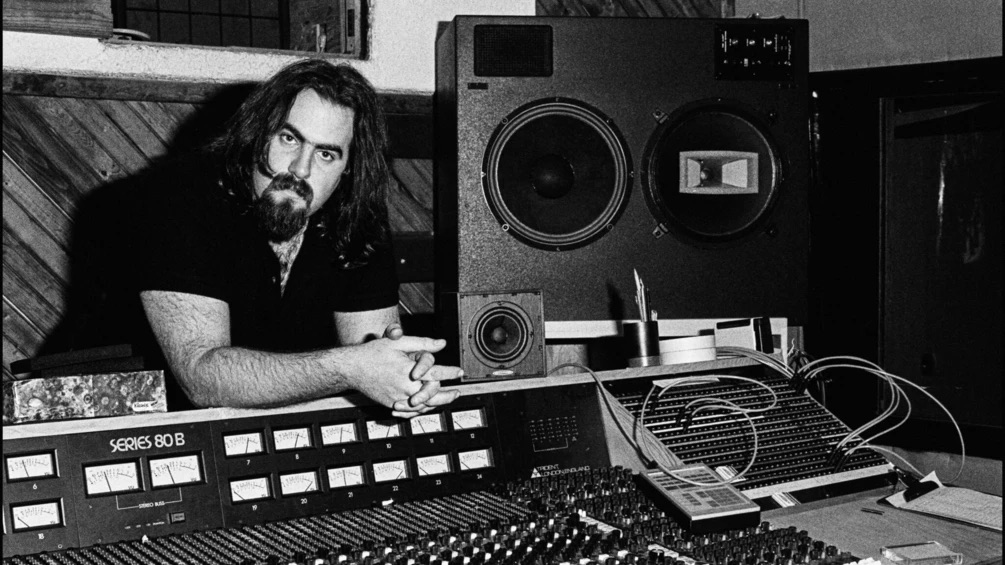
Arthur Baker is a renown music producer with an impressive resume of artists. I know him more as a recording remixer, taking songs and stylizing them with beats, rhythms, additional vocals and instruments, echo and other groovy effects. Remixing records is more of an art than a science. Baker came from being a DJ, providing music for parties and then starting creating his own danceable songs. He was part of a new craze in music that began with disco and evolved into dance-pop, electronic pop, house, club mixes, techno and a handful of other terms for pulsating electronic beats and funky bass lines.
Billboard even had a chart for electronic dance music. Baker worked with various musicians to write grooves or samples that could be used to build a dance track around. Baker charted a few of his own compositions, created his own record label, and developed a following, which afforded the opportunity to mix other artists songs, and provide musical pieces for films. This techno pop would provide a welcome vehicle for rap, hip-hop and other genres, and could be created in a garage or basement instead of expensive studios.
I first learned of Baker from his work with Daryl Hall & John Oates, New Order, Pet Shop Boys and Bruce Springsteen. Yes, there were dance remixes of Bruce Springsteen songs.
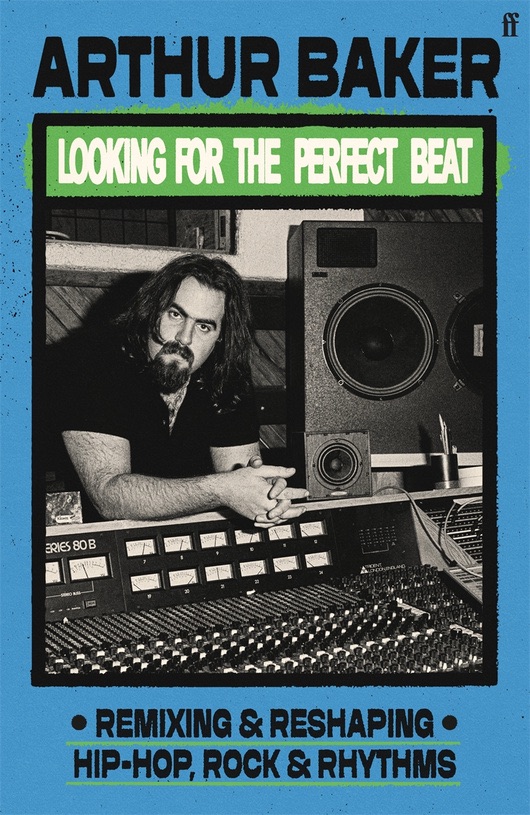
Arthur Baker: Looking for the Perfect Beat, Remixing & Reshaping Hip-Hop, Rock & Rhythms (2025, Faber)
When I think of mixers of 1980s era, the names of Baker, Shep Pettibone, Trevor Horn, Gorgio Morroder, Stephen Hague, come to mind. As I mentioned, Baker was contacted by artists, managers and record label executives with work offers. Some of the stories in the book include:
Jeff Beck, who was trying to finish his album Flash (1986). Beck recorded “Gets Us in the End” which written by Baker and his wife Tina B. Baker produced “Escape” which was awarded the 1986 Grammy for Best Rock Instrumental Performance.
Baker “worked” with Bob Dylan on the album Empire Burlesque, but the production was simply credited to Dylan. Baker’s description of working with Dylan is a good read.
Baker spent time with several the Rolling Stones. He was hired to remix “Too Much Blood” for the Stones’ Undercover album. Mick Jagger asked him to help finish “Just Another Night” on his debut solo album. Jagger didn’t use Baker’s mix and remixed it elsewhere. Baker spent considerable time with Keith Richard and Ronnie Wood.
Baker worked with Daryl Hall and Ms Diana Ross on the recording of “Swept Away.” His involvement with Hall & Oates on the album Big Bam Boom was more complicated, too many “producers” on the project as invited by manager Tommy Mottola, who was also Baker’s manager.
The story of the recording of Steven Van Zandt’s “Sun City” protest song and album is definitely a good read.
Asked by Warners to remix “Big Love” by Fleetwood Mac, it became a sensitive project. Baker sampled Stevie Nicks’ vocal and made that the prominent voice on what was clearly a Lindsey Buckingham song.
Baker would cross paths numerous times with Reverend Al Green. Sometimes the result was easy, other times it was more complicated. It seems Reverend Al sometimes had an identity crisis.
Baker was recruited by the wife of the CEO of Warner Bros. to be the musical producer for the documentary on the career of Quincy Jones. Stories include chasing Ray Charles around France to get his vocals on a song, and flying on the Warner corporate jet with Barbra Streisand.
Baker and colleagues wrote a song with Tina Turner in mind. “Whatever You Want” She passed, but several years later it came back around. She recorded it and Baker got to do some remixes for it.
Film soundtracks came and went. His first foray into film was producing music for the film and soundtrack of Beat Street. (1984). Years later, Baker would try to turn the film into a Broadway musical, but after years of negotiating and hitting endless problems, Baker finally abandoned the project.
Among the misses was film project with Jim Carroll and Leonardo DiCaprio, that happened, but without Baker. He spent considerable time trying to attach Iggy Pop to a project that never materialized, but did film a documentary on the revolutionary Roland TR-808 drum machine, but ultimately the film was completed by others. Baker worked on several John Hughes films, but when Hughes asked the record company to create a label for Hughes’ very successful films, they said no.
Baker spent an increasing amount of time working in England. Never one to say no to an interesting idea, Baker opened and then suddenly sold his successful soul food restaurant in London called Harlem. Another successful business venture was owning a group of pool establishments called The Elbow Room, but after a terrible shooting, he sold out.
I was exhausted after finishing the 470 page book. Baker has a great memory for detail. The man has hustled his entire life, and despite the successes, and many failures, still lives a relatively humble life. Give the man credit for endless energy and belief in his diverse ventures. He also believed in the people he worked with, even when he shouldn’t have, he held up his end of the deal. That says a lot about a guy who became successful in a rough business of liars and cutthroats, and fleeting success.
Despite the lengthy read, I know more of what he did, rather than who he was. I don’t know his publishing agreement, but I would have used a third person to add the observations and reflection of Baker that he didn’t include. While his story was very interesting, it could have been a fascinating read.


 Ticket 2 Ride
Leave a comment