
Dire Straits (1978-1993): The Live Recordings. From the first notes of “Sultans of Swing”, back in 1978, we knew this was a different sounding band. These four guys could rock, but we could just as easily get a slower, moodier and very thoughtful piece. There was no category for this band from the UK. One can hear different influences, but to simply call them rock and roll, misses the point. From that first album in 1978 to becoming arguably the most successful band by the mid-1980s, the sky was the limit. They stopped in 1987, Mark Knopfler putting the band in dry dock. In 1990, the band reformed, released another studio album and toured for a couple of years, but it wasn’t the same. Mixed reviews of the album and tour convinced Knopfler that he’d had enough. He didn’t even show up when the band was inducted into the Rock and Roll Hall of Fame, Knopfler was off on a solo career that fit the pace of life he now enjoyed. But we still have the studio albums, and now a complete set of the band’s best live recordings.
*Note* Watch for my upcoming review of John Illsley’ memoir, My Life in Dire Straits.
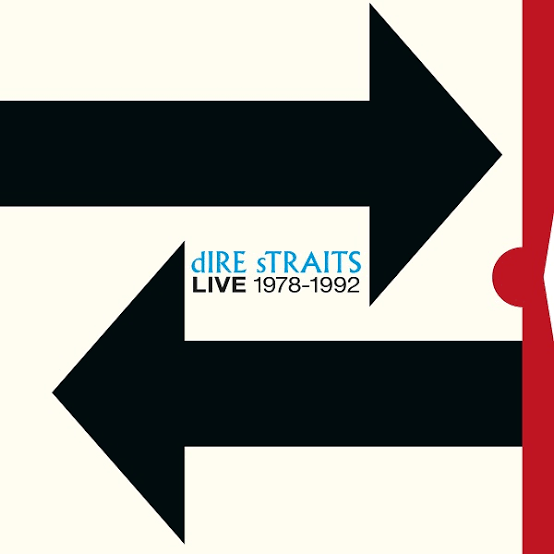
Dire Straits was always a great live band and these recordings show just how good they were. This set features mostly released material, but remastered with additional songs not included on released albums, and material recorded, but never released.
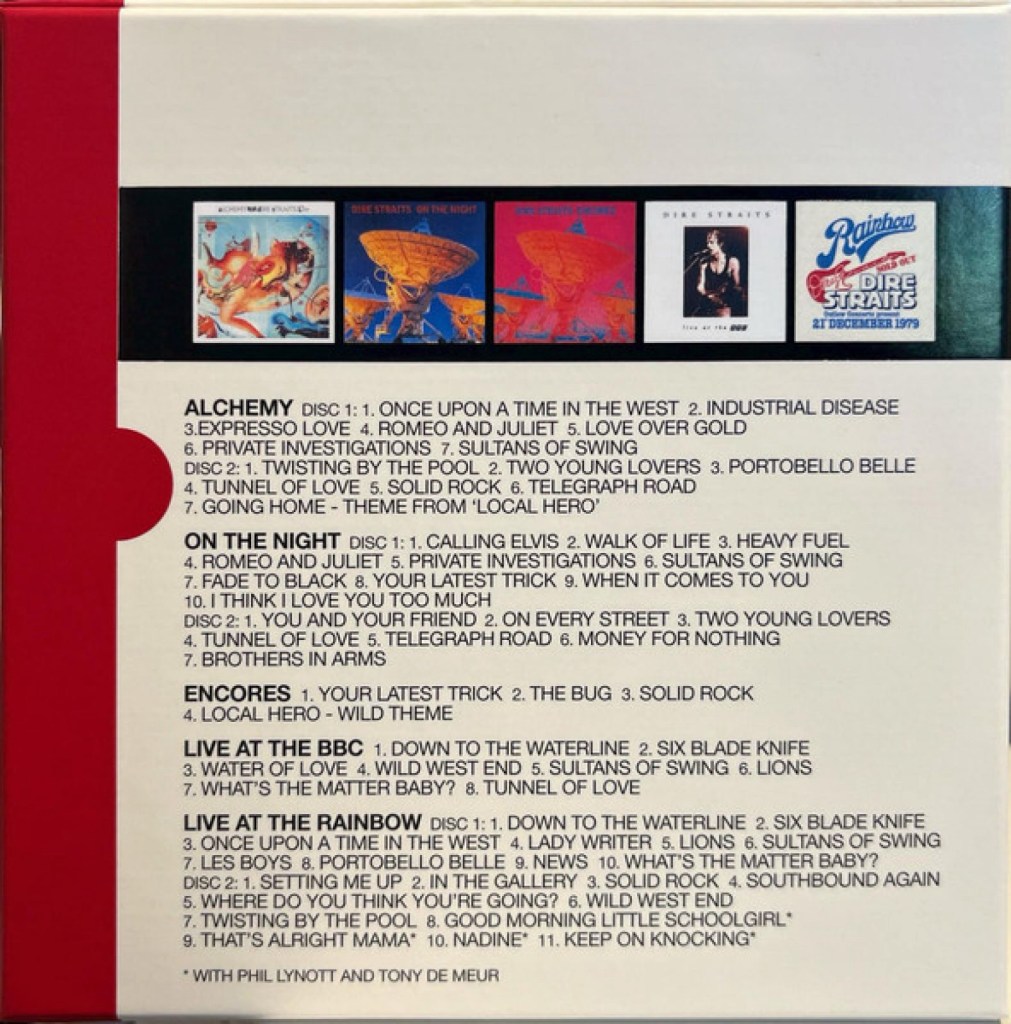
At a glance, the set includes:
Live at the BBC (recorded 1978, released 1995), Live at the Rainbow (recorded 1979, previously unreleased), Alchemy (recorded 1983, released 1984) and On the Night along with the Encores EP (recorded 1992, released 1993)
Let’s take a look at each part of the set.
Alchemy
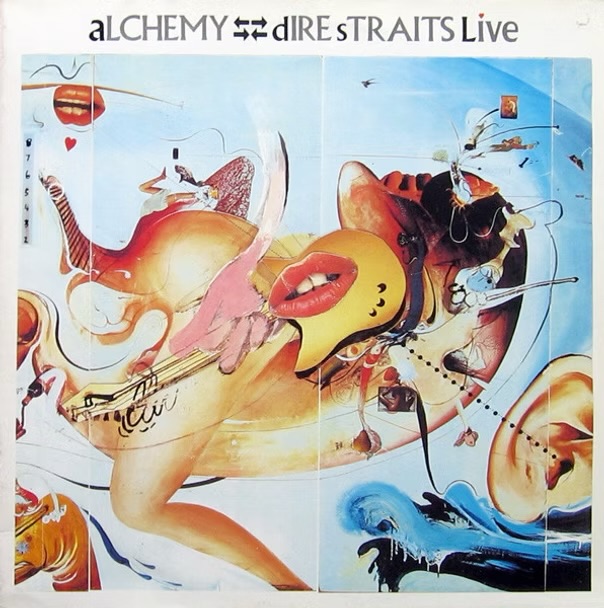
I always thought this album sounded great on vinyl. Recorded at the Hammersmith Odeon in London on 22–23 July 1983, this is a very good representation of their albums and EP releases, but not perfect. “Lady Writer” is an obvious omission, and could be substituted for “Twisting by the Pool.” At this point, Mark Knopfler and John Illsley were the only original members left.
Noticeable are the arrangements of many of the songs. Knopfler takes liberties with his songs, and the results are eerily good. I wonder how his audiences embraced the slower, longer musical passages, in songs that are already moody soundscapes.
“Once Upon a Time in the West” opens the set and clocks in at almost thirteen minutes. The next track, “Industrial Disease”, has an extra long intro before it gets to rockin’. Knopfler keeps his audience waiting, but then moves to “Expresso Love” to keep the flow moving. “Romeo and Juliet” is lovely, as is “Love Over Gold” and “Private Investigations.” Then a long and blistering “Sultans of Swing” closes an almost perfect first disc.
The second disc is satisfying in places, but includes a weaker selection of songs. “Tunnel of Love” is grand in its epic structure, especially here. “Solid Rock” rockin’. “Telegraph Road”
On the Night
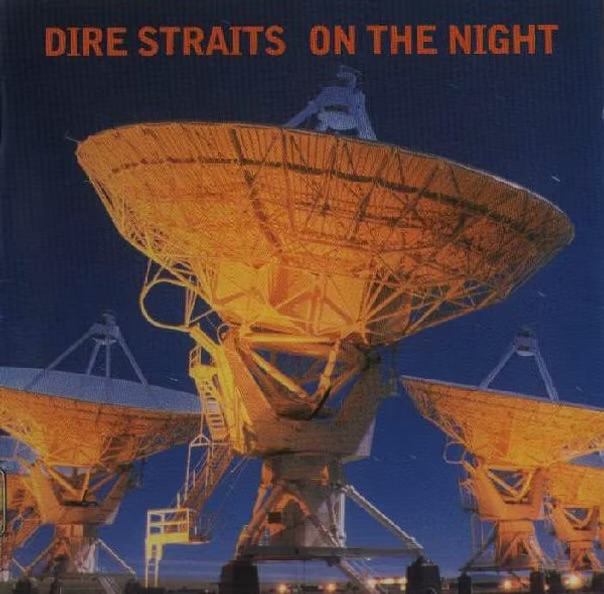
Recorded in 1992, in support of the On Every Street album, released in 1993. This was the last big tour by the band, but it lasted over a year and included 216 shows. On Every Street is represented by seven tracks, which seems a bit excessive. There’s nothing wrong with this album, it focuses more on the later Dire Straits albums. It’s not a greatest hits live album. The band is expanded to include extra guitar and keyboard players, as well as a horn/flute. The musicianship is flawless.
“Romeo and Juliet” is exquisite. “Sultans os Swing”, is a long version of the song is satisfying, but lacks the fire of earlier live versions. “Your Latest Trick” is quite sweet. “Tunnel of Love” is expansive and quite enjoyable. “Telegraph Road” while epic in composition, is a bit of a labor at Al most 15 minutes. It’s still fulfilling. “Money For Nothing” rocks out and gets the crowd going.
The two-plus CD set of the tour includes songs not released from the original set. Completists will be happy, others might feel a few tracks could be deleted.
Encores
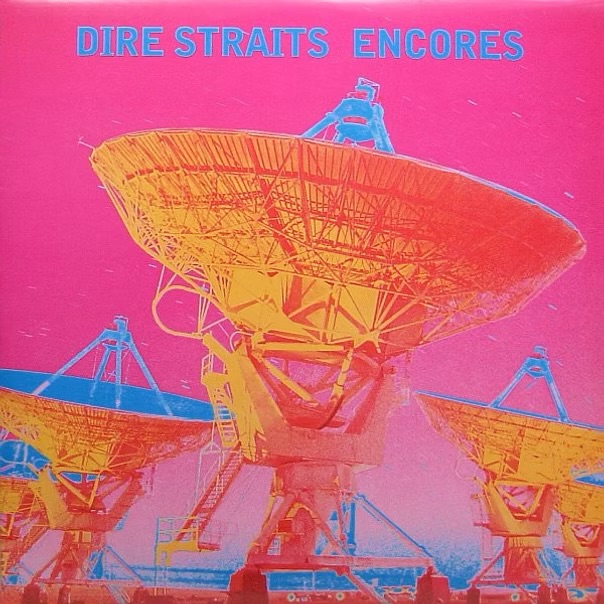
Songs recorded along the tour for On the Night. Only four tracks on this CD. “Your Latest Trick”, which is available on the On the Night as well, is a sterling performance. “Solid Rock” seems cluttered by so many instruments that the nuances in this rocker are difficult to hear. “Local Hero” from Knopfler’s film soundtrack of the same name, is a quiet and gorgeous song.
Live at the BBC
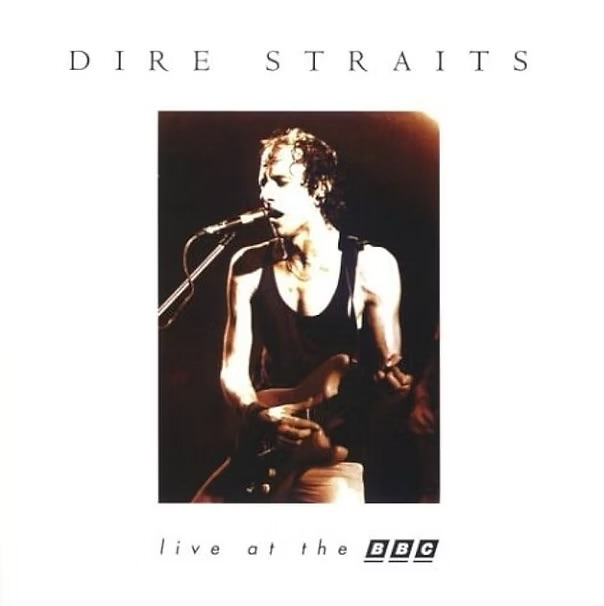
An interesting collection, mostly from 1978, but one track from 1981. This set was released in 1995. This is very early Dire Straits, nothing fancy, just flat-out playing. Everything except “Tunnel of Love” recorded at the Paris Theatre. “Tunnel of Love” from a 1981 broadcast of TV’s The Old Grey Whistle Test.
Knopfler’s guitar was finding its trademark sound. Illsely’s bass is upfront in this recording. I have a new appreciation for “Down To The Waterline” after hearing these early performances. Best live version of “Sultans of Swing.” “What’s the Matter Baby” is an unusual song, not on a studio album and sounds very similar to “Lady Writer.” “Tunnel of Love” has a strange opening and then sounds like the band is still getting comfortable with playing it.
Live at the Rainbow
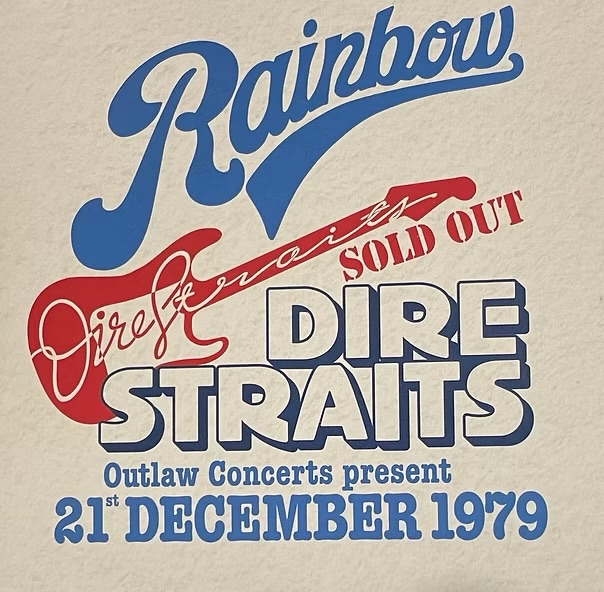
Recorded in December 1979, at the end of a long tour promoting Communique, a mixture of known and unknown songs. Critics called the release of this concert the jewel of the set. This set is notable for a couple of reasons, David Knopfler, brother of band leader Mark Knopfler, would leave the band. As played on this tour, the four-piece band is really tight, and the production, overseen by longtime Dire Straits longterm keyboardist Guy Fletcher, is pristine.
Featuring songs from the band’s first two releases, plus several songs that would appear on Making Movies, these guy play the hell out of these songs. It feels like the concert runs out of gas towards the end, the covers just pad the performance.
Always Mark Knopfler’s band, what you hear is a band. Drummer Pick Withers, bassist John Illsley and guitarist David Knopfler are solid, not flashy, and therefore often overlooked for their contributions to Dire Straits sound.
Mark Knopfler’s voice does sound tired at times, but it’s not his voice that’s critical to enjoying these songs, it’s his guitar playing. Knopfler’s songs, from the earliest point, exhibited a cinematic quality in tone and reach of his ability to translate a vision of mood and internal sense of being to the big screen. His musical scope worked well for films, which Knopfler began scoring with 1983’s Local Hero.



 Ticket 2 Ride
Leave a comment