
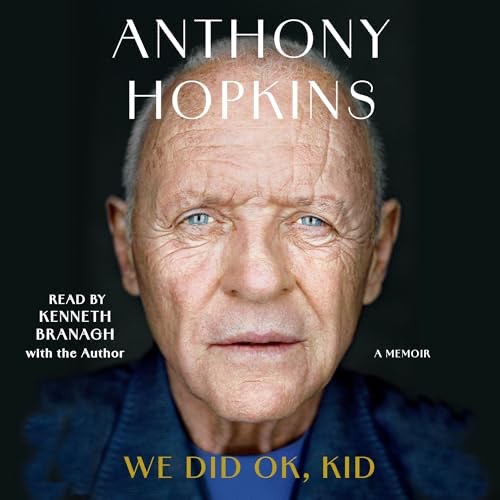
We did okay, kid. That’s an odd title of a memoir. Once you get a couple of chapters in, the meaning is apparent. Young Anthony was a Welsh lad that most people, including Anthony himself, had already written off the kid as headed nowhere in life. “The indelible birthmark stamped into my core is the feeling of never being quite ‘with it.’”
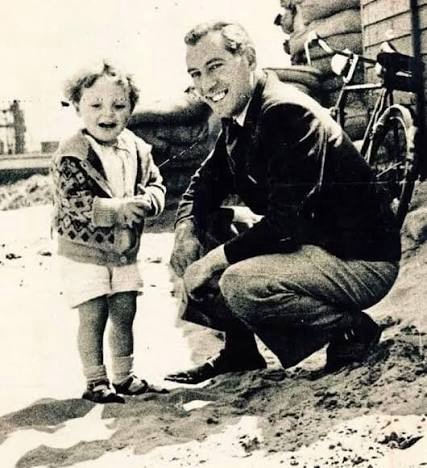
A poor student, uninterested the pursuits of other boys, who seemed to avoid life rather than embrace it, would stumble onto acting, though uncovering his talent would take a moment. There certainly was talent, but it seemed wrapped up in a young man’s difficulty in peeling away his layers of pain, self-loathing, disinterest and alcohol. “I had very few friends and I could turn very nasty.And that’s the ugly side of alcoholism. It brought out a brutal monster side of me. I am not proud of it at all. And I take full responsibility for it because I had no idea what was happening to my unsettled self.”
“Looking back, I take no pride in this. I feel only deep sadness. How many lives are destroyed and damaged by drunks? To think now about how many other people – my costars, the director, the producers, the gaf-fers, my agents — were counting on me to get through that shoot.”
Anthony Hopkins is one of my favorite actors, but I didn’t always feel that way. In fact, I didn’t like him much until Magic (1978) a film he doesn’t even mention in his memoir. Magic was the first film that Hopkins seemed to lift the veil of his emotions and project a personality. I saw him as a theater actor who slummed in film roles when a British accent was needed.
Hopkins found being on the stage and memorizing lines, easy. His first role came as part of a YMCA stage production. “That night, back in that same dark kitchen behind the shop where, on April Fools’ Day, I’d been told I was useless, my mother told me something that I never forgot. ‘Your father cried when you spoke that one line,’ she said. ‘I haven’t seen him like that for years.’”
Years later, Hopkins would recognized something that had bugged him for years: the feeling of unreality, the sense of not being part of his own life. “I lived with a feeling of limbo, of waiting for the next chapter of my life. Perhaps that’s why I had been drawn to the theater. When I was acting, I didn’t have to be me any longer. I could pretend to be another person. Much easier.”
But improving as an actor, unleashing what others saw glimpses of, proved evasive.
“‘You’re the only one speaking at that moment,’ Laurence Olivier said to Hopkins while directing him in a play. ‘That floored me. He was right. In that moment, I alone was speaking on the stage of the National Theatre. For those seconds, I was the star of the show.’”
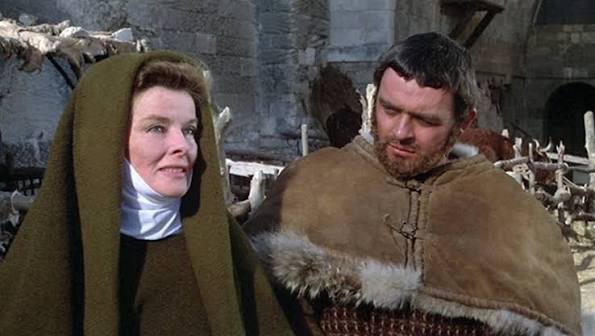
“Be like Spencer Tracy, like Bogart,’ co-star Katherine Hepburn told him during filming of The Lion in Winter. ‘Don’t act. Just be. Just speak the lines. You are it — you are Richard the Lionheart!’ And I thought, That’s right! I’m it! And I held my own.’”
Hopkins is undoubtedly best remembered for his portrayal of Hannibal Lector in The Silence of the Lambs. Of course he was recognized for his portrayal with a Best Actor Academy Award. “The sound I imagined Dracula made in that moment, thirsting for Harker’s blood, was a very particular combination of hissing and slurping. That’s where I got the sound I made with my lips as Hannibal, the one that gets imitated so much. Thank you, Dracula.” The sound was nearly as scary as the eyes.
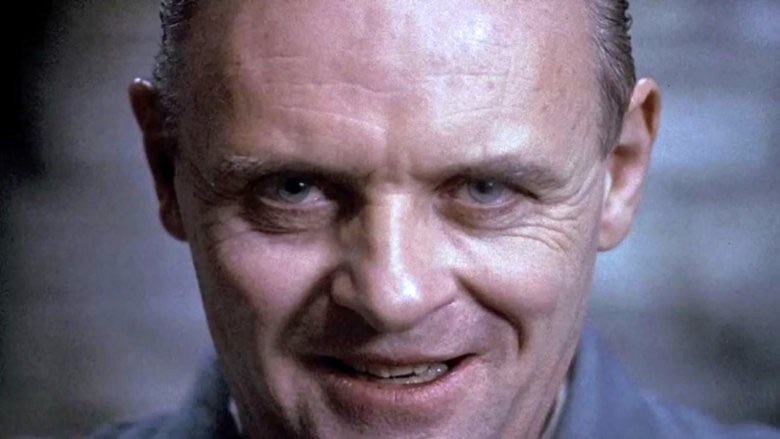
He explained how he imagined Lector to be an eerily quiet man, but intense. “I have the devil in me.We all have the devil in us. I know what scares people. The key is to embody two inner attitudes at the same time that don’t often coexist – he was at once remote and awake.” He would play Lector in two more films, because he knew people were fascinated with the character, as he was.
Hannibal Lector really made Hopkins a major movie star. Yes, he has done quite a few film roles prior to 1991, but the success of this film brought fame, major film roles and nice paychecks. It didn’t make him a better actor, but it seemed to validate the years of hard work and his own acceptance of himself. He couldn’t fully accept his own talent and success, and he certainly couldn’t until he was sober and worked at changing his life.
The middle part of the book goes into great detail of the drinking and failure to own up to his own responsibilities as a husband, a father, a friend and a colleague. He writes of drunken blackouts and appearing on stage in less than professional condition. It was a surprise to him when others told him of those times. He was self-medicating and following the path of his father and many others from his village area and actors he knew. A few months ago, Hopkins recorded an Instagram video talking about his 50 years of sobriety and how drinking nearly killed him.
The one criticism I have is how few of his films he talks about. For whatever reason, I wish he had provided more insights into his films.
Overall, this book was quite enjoyable. Still going strong in his 80s, the kid has done quite well for himself.
 Ticket 2 Ride
Leave a comment