
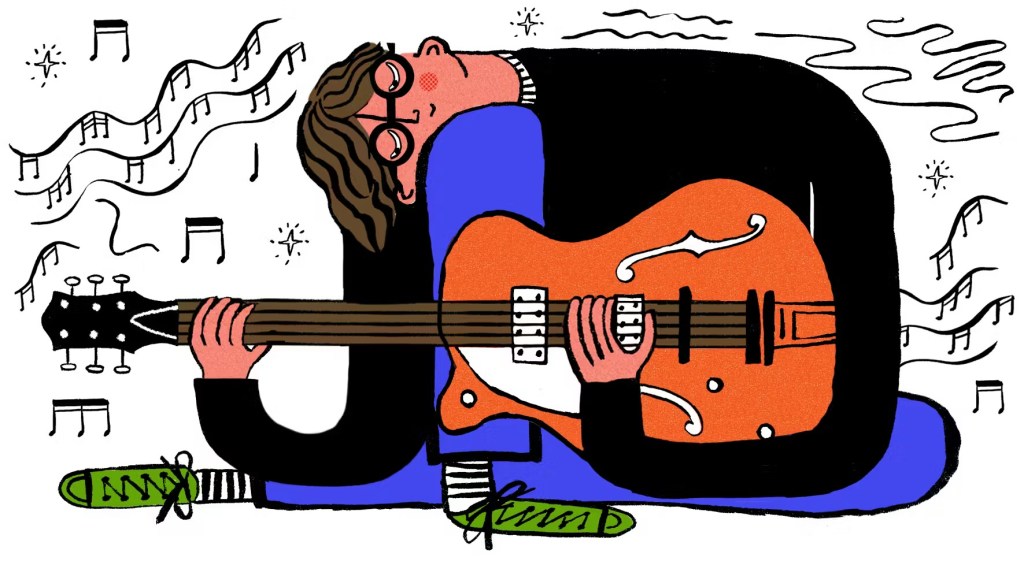
For the past 30-plus years I’ve been enjoying a subgenre of rock called “shoegazing”, without knowing that someone invented a name for it.
From the Eagle newspaper: “The term ‘shoegaze,’ or ‘shoegazing,’ comes from a label that music reviewers gave to bands in this scene. Originally intended to be an insult, the term is meant to describe the performing habits of “shoe-gazing”artists, where band members would stand on stage motionlessly, staring at their shoes — more specifically at their guitar pedals — in deep concentration.” Why were they concentrating so intently? Their music was spacey, ethereal, such an atmospheric wall of sound from effects pedals, that these artists are consumed by it and ignore the audience. This is not my definition, but I know of the music, and now there’s a name for it.
For the sake of this discussion,
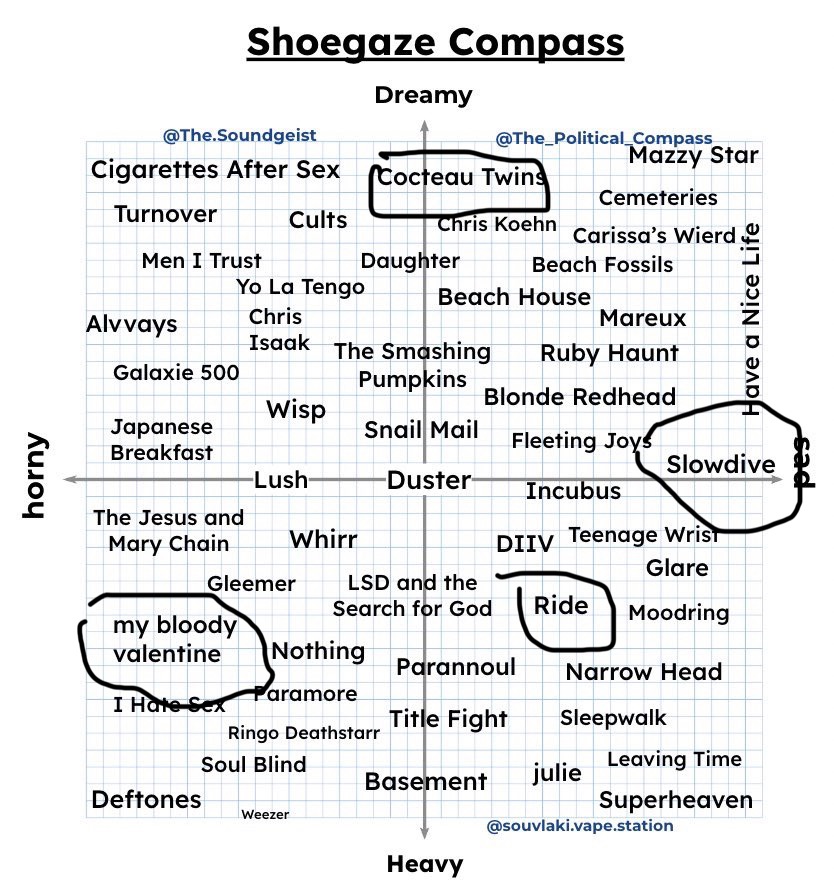
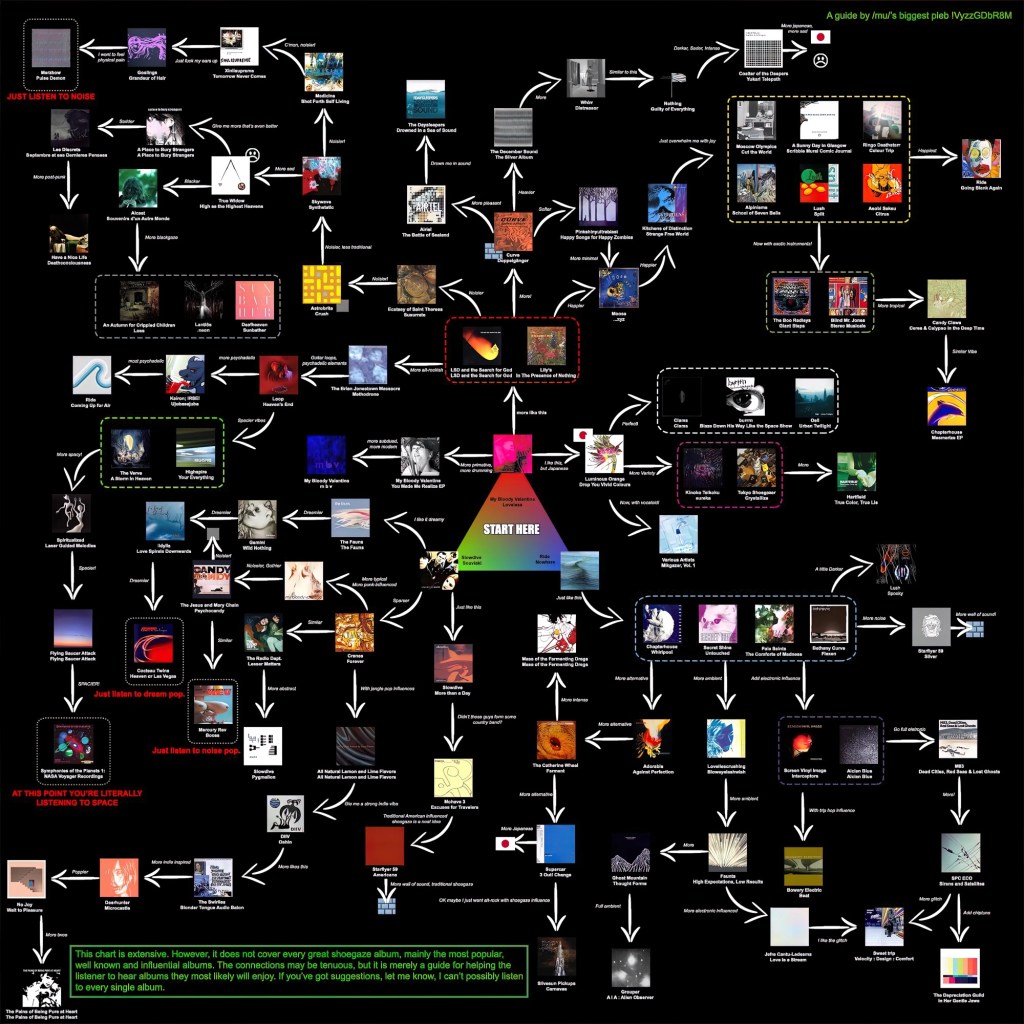
The first band I thought of using this definition is Cocteau Twins, one of my favorite bands. Robin Guthrie, the guitarist from Cocteau Twins is a master of producing swirling, dreamy, ethereal sounds. His solo work, and his music with the late Harold Budd, have been my goal to explore over the past several years. According to the chart above, the Cocteau Twins are “dream pop” which is a subgenre of shoegazing. The Cocteau Twins deserve a deeper dive, in part due to their success and influence, and also because of my love for their music.
When I started digging around about shoegaze, most sources pointed to bands including My Bloody Valentine, Slowgaze and Ride as beacons in the ethereal clouds of sound.
My Bloody Valentine
m b v was the band’s third studio album, released in 2013, and first since their celebrated Loveless (1991). m b v is considered to not be up to the creative grandeur of Loveless, but not yet having heard the previous recording, I’ll look for a copy and post my observations. m b v needed several listens to fully appreciate the uniqueness of this band’s sound. Noisy, distorted and engulfing would be my adjectives to best describe My Bloody Valentine’s sound. Overall, this band is much more to the distorted end of the genre, the sound has a fierceness and raw qualities.
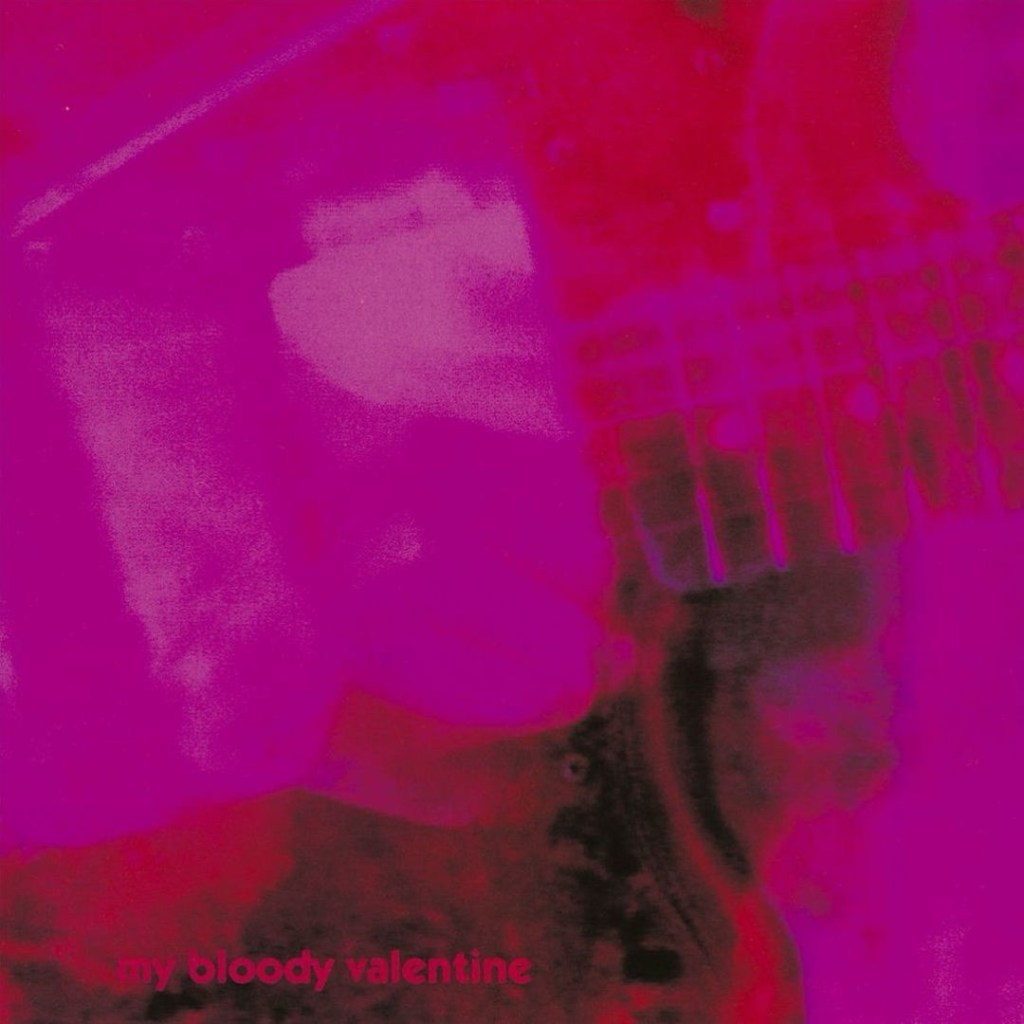
Loveless (1991) is the only My Bloody Valentine album I own. I immediately noticed the wall of sound effect. Would I have purchased this album in 1991? Not likely, I wouldn’t have understood or appreciated it, although I would have felt an undercurrent of something intriguing. Thirty-five years later, I get it. Allmusic wrote this in their 5/5 star review: “Soon” fuses the Valentines’ roaring guitars with a dance-inspired beat, while the symphonic interlude “Touched” suggests an updated take on Fripp and Eno’s pioneering guitar/electronics experiments.” “Sometimes”
A 2012 article from The Guardian described the band this way. “MBV reinvented themselves for Creation as merchants of dreamy pop tunes clothed in juddering noise volcanoes. With Kevin as main songwriter, the channelled feedback eruptions and bent-out-of-shape guitars on Isn’t Anything hung in the air like jet-propelled abstract art, a rootless and seemingly unassailable precipice of pure pop.”
Slowdive
Just for a Day (1991) was Slowdive’s debut, and it does sound very dream-poppy. It was described by Allmusic’s Nitsuh Abebe as “swelling waves of flanged guitars, layers of wispy vocals floating in and out of the mix, and sweet lazy pop songs.” I love this album.
“Spanish Air”, “Erik’s Song” (instrumental) and “The Sandman” are the best tracks.
Souvlaki (1994) was the second full studio album.
“Alison”, “40 Days”, “Souvlaki Space Station”, “When the Sun Hits”
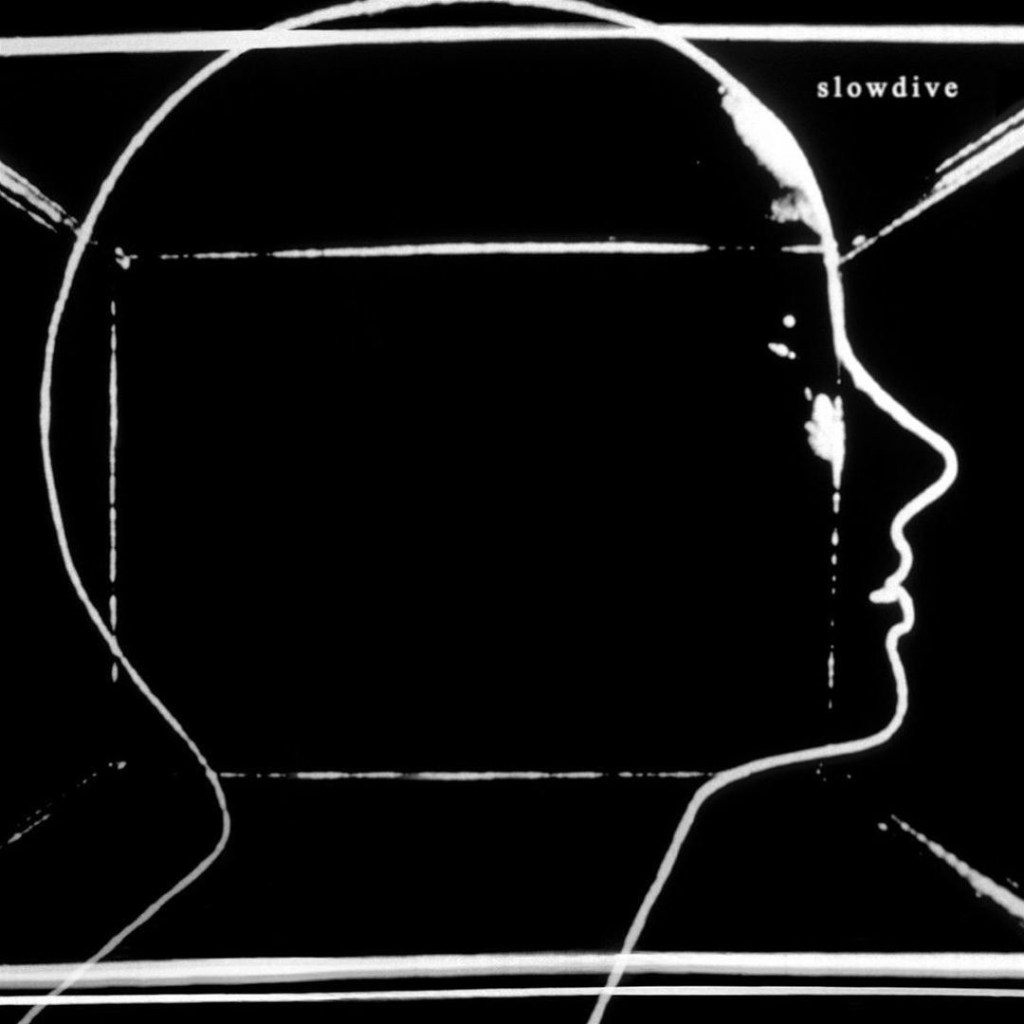
Slowdive (2017) was the band’s first album in 22 years. Critic Tim Sendra wrote: “While the guitars are suitably drowned in FX and let loose to billow like clouds, there are looped samples running through the mix, some of the folky melodies Neil Halstead has been playing on his own come through, Rachel Goswell‘s vocals show much more power (there are a couple times she really belts it out), and there is the occasional bit of sonic trickery courtesy of the record’s mix engineer Chris Coady.”
“Don’t Know Why” is beautiful. So is “Everyone Knows.”
So, the band was evolving, mixing the best elements of their early shoegaze days with a more expansive lens. There is plenty of dream pop in these tracks.
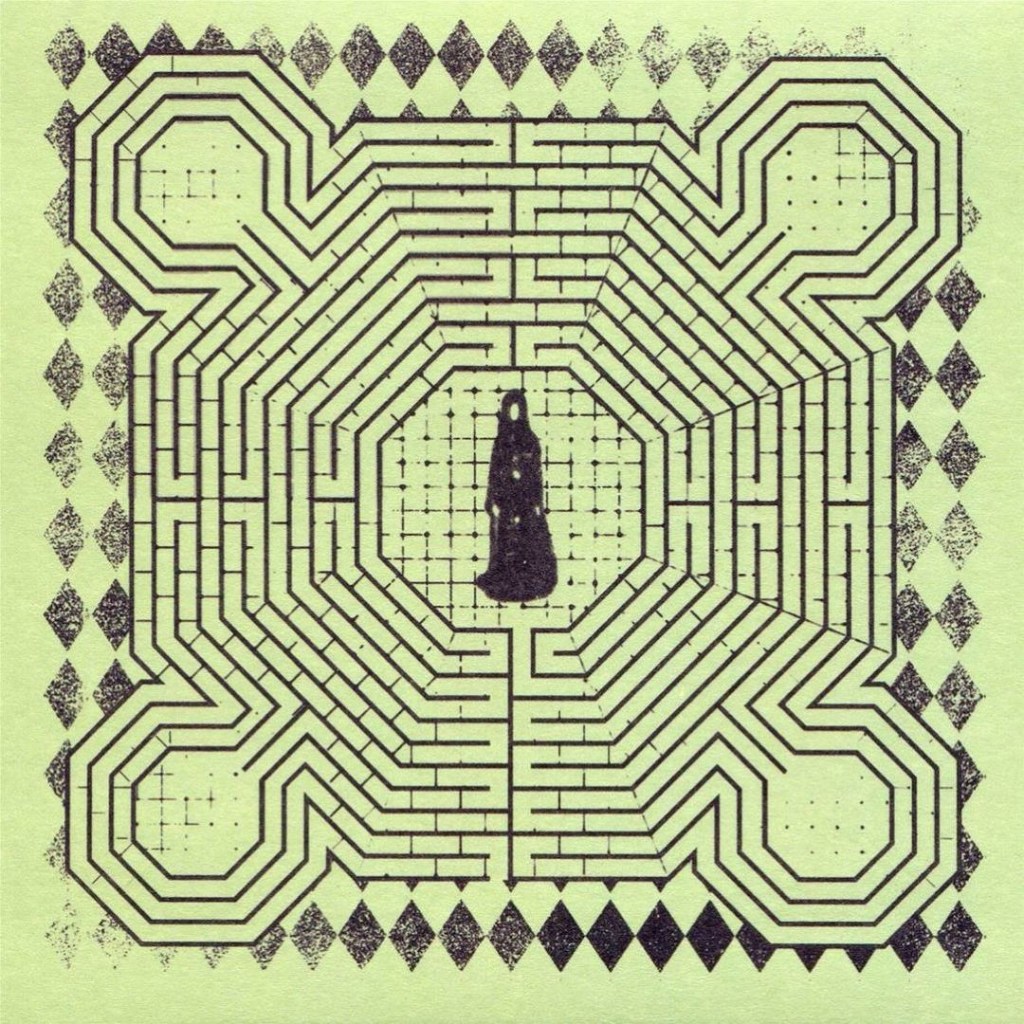
Everything is Alive (2023) is often mellow and dreamy, shimmering guitars and breathy vocals. Reviewer Tim Sendra wrote: “Many of the other songs have a similar feel, balancing the cold electronic tones with warm billows of guitar and placing the subdued, deeply felt vocals at the center of the quiet storm.” This was album number five for Slowdive and the maturity of a band taking a technicolor view of the world. There’s definitely a dreaminess to this album. The band may still be gazing at their shoes, but their much more comfortable and finer quality shoes now.
Ride
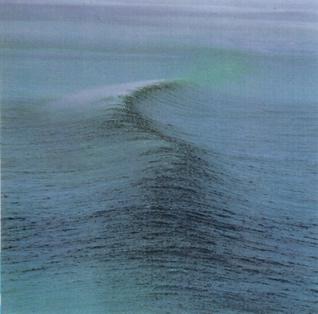
Nowhere (1990) was hailed as a groundbreaking album. Listening to it, I can’t quite grasp the sea change critics noted at the time. It’s raw and noisy, a bit like New Order or The Cure in the 1980s. I detect some swirling guitar, but not on the level of the Cocteau Twins.
The Ride broke up in the 1990s and then reformed in the 2000s. Skip ahead to This is Not a Safe Place (2019) and the band continues to alternate its grungy sound with the smooth, dreamy and shimmering rock as on “Future Love” or “Eternal Recurrence” or “End Game.” This is Not a Safe Place is a very good album, underneath is the hint of rawness, one color in their palette, but this band has widened the scope of their sound. If you were going to listen to one Ride album, this would be it. “In This Room” is an eerie, haunting song or swirling sounds.
Interplay (2024) is a curveball, jumping several decades into the past. Not only do they channel their brashness of the 1990s, they tap into New Order’s synth-pop of the 1980s.




 Ticket 2 Ride
Leave a comment