
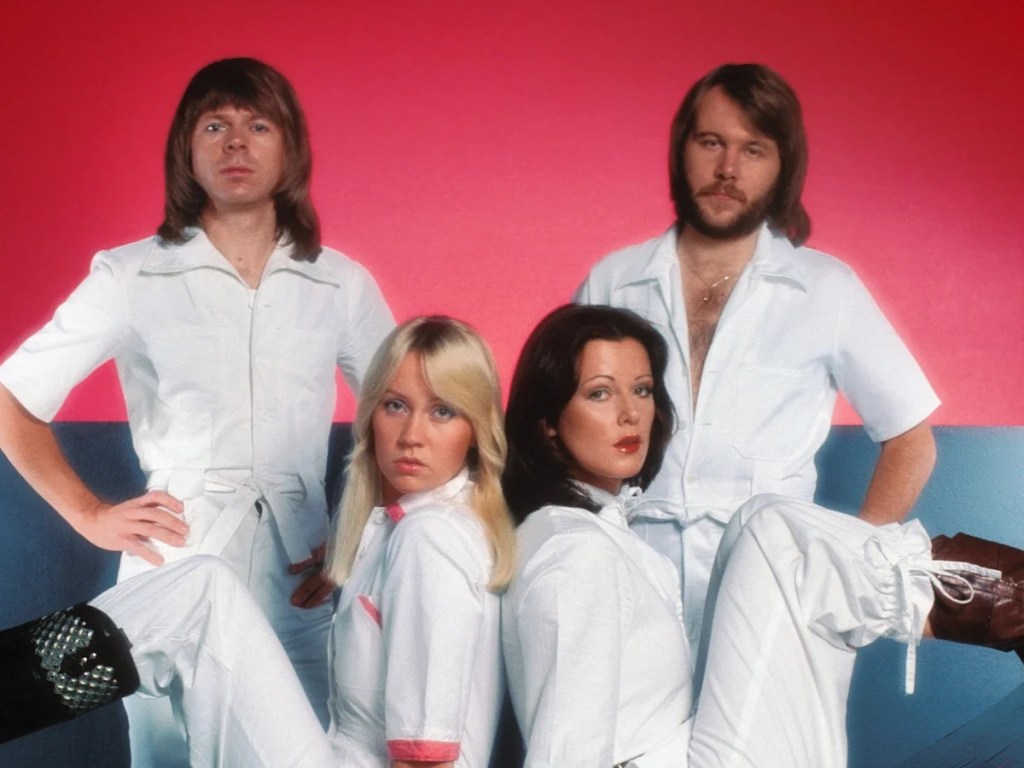
How did I find myself reading a book about ABBA? Mama Mia, what was I thinking? Okay, that was weak. I was browsing ebooks and this one popped up, so I dug in.
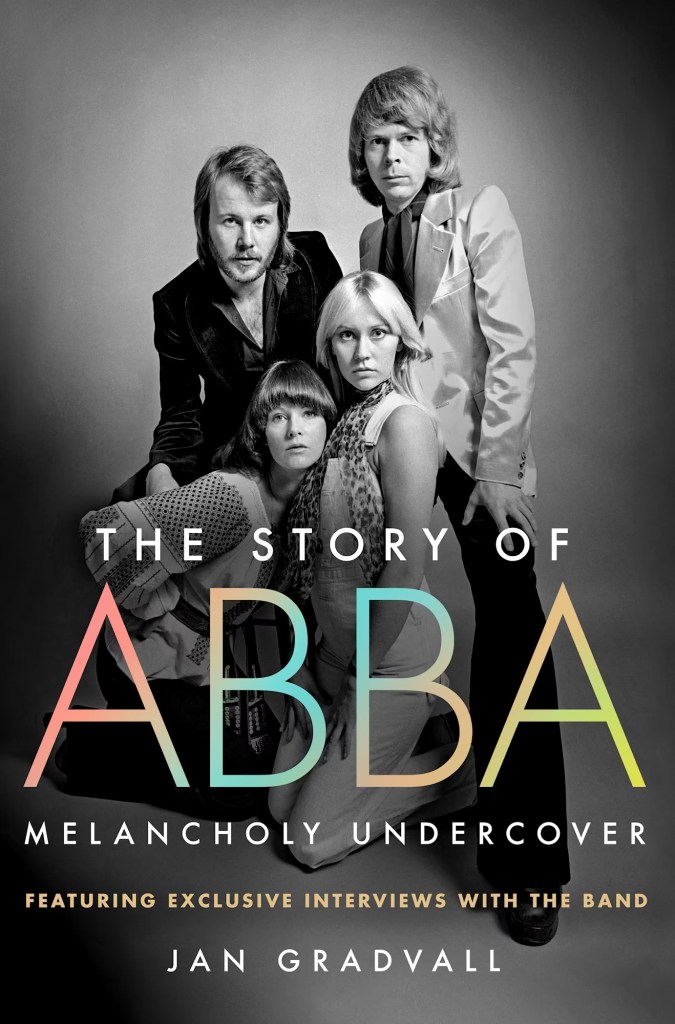
The Story of ABBA: Melancholy Undercover by Jan Gradvall (2025, St. Martin’s Press) is one of the most non-traditional biographies I’ve ever read. When I made it page 100, I just about stopped, and if I had written a review, it would have a negative one. I kept reading, and my view has shifted. Other reviews have mentioned the unusual structure of storytelling, and the fact that Gravall often shifts from the band to other subjects. If you are looking for a straightforward story of ABBA, forget this book. You will likely be confused and frustrated, and tempted to stop.
The Story of ABBA is really about the ABBAverse: the Swedish culture, history, politics and music and influences that shaped the band and their music; and how their music shaped and impacted others. I cannot really explain the structure, but I better understand why the storytelling lens was so wide, yet I never quite got the melancholy part of the title.
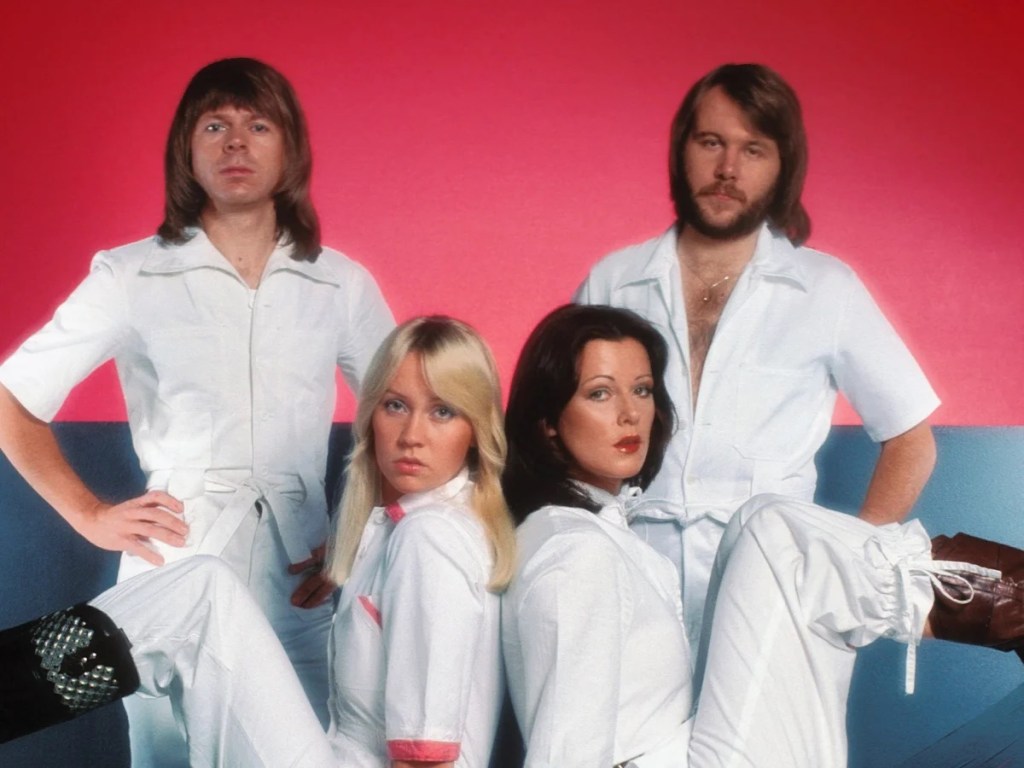
Inside this rather expansive story are some interesting stories of each group member. Included are stories about Benny and Bjorn and their early musical groups, the Hep Boys and the Hootenanny Singers. Frida was born to her to Norwegian mother and German soldier father during WWII; Frida then lived with her grandmother in Sweden until reunited with her mother. Agnetha was a trained pianist and came into the group as the only one who could read music. Avid ABBA fans probably already knew these tidbits.
Perhaps the most meaningful takeaway from the book are the stories of others whose lives were enriched by ABBA’s music. These are more than just casual fan stories, but they are endearing.
Some stories…
According to Benny, Bono invited he and Björn to join U2 on stage when the band performed in Sweden to sing “Dancing Queen” along with the band. So on came the spotlights – completely unannounced to the audience – Benny with a keyboard with Björn on acoustic guitar. Björn says that he thought this was going to be a gag, that U2 planning to make fun of them. They both soon realized it was no gag, it was a celebration. “For the audience it was as if U2 had begun to play the Swedish national anthem, which in a sense they had. Everybody knows the tune and at least substantial parts of the lyrics,” Benny said. “When the music to ‘Dancing Queen’ had died down, the audience continued to sing the refrain on its own,” Benny continued. U2 and Björn and Benny stood silently, just taking it all in. Gradvall describes Bono, turning to Björn and Benny, knelt down as if he were in Wayne’s World and declared, ‘We are not worthy, we are not worthy.’”
In London, a reporter for Today was interviewing Agnetha and asked “How do you feel about Kate and William playing only ABBA songs at the reception after their wedding? How does it feel that Queen Elizabeth loves ‘Dancing Queen’ and has quoted the lyrics?” Agnetha was taken aback. The Royal Family of England likes ABBA!
ABBA donated 50 per cent of all future royalties for their song “Chiquitita” to UNICEF, a share that was adjusted to 100 per cent in 2014, bringing the total to-date to more than 50 million kronor (about £3.7 million).
Glen Matlock, a member of the Sex Pistols, admitted in the book, We All Love Abba, “It has been written so many times that I stole ‘Pretty Vacant’ from Abba, but that’s not entirely true. What happened when I wrote the song was that I had the lyrics and the melody but realised something was missing. The song needed some kind of riff.’” ABBA was a riff band?.
“Hung Up’ Up” was one of Madonna’s all time hits. She borrowed from an ABBA song written by Björn and Benny. The cost: royalties and credits as songwriters. Half to Madonna and Price, half to Björn and Benny.
Stikkan Anderson was ABBA’s longtime manager, and bought Benny and Björn’s shares to ABBA music rights. Benny and Björn felt that ABBA’s popularity had passed in the 1980s. Anderson, who sold the catalog, used the money to create the Polar Music Prize in 1989, wanting the prize to become the musical equivalent of the Nobel Prize. In 2011 the award went to Patti Smith, who Myers writes “was visibly emotional during the entire ceremony. Patti Smith, who loves crime fiction, was able to stay collected – just barely – when the person who read the motivation for the award turned out to be her favourite Swedish author, Henning Mankell. She was also able to hold back tears – barely – when she received the statue from King Carl XVI Gustaf.”
In 2018, the Polar Music Prize was presented to the Afghanistan National Institute of Music in Kabul. “Ahmad Sarmast founded the institute in 2010, where children, especially young girls, could learn to play instruments. The repertoire consisted of both classical Western music as well as traditional Afghan folk music. To punish him for this the Taliban attempted to assassinate Sarmast several times.”
Charlie Teo is a world renowned surgeon, but he’s also known for something else: he listens to ABBA while performing surgeries. Teo is known for taking on cases that other doctors have rejected.
Partial list of movies with ABBA music: The Adventures of Priscilla, Queen of the Desert, Muriel’s Wedding, Greed, And Then We Danced, Three Billboards Outside of Ebbing Missouri, The Martian, Night at the Museum: Secret of the Tomb, Get Smart, Man of the House, I Now Pronounce You Chuck and Larry, Johnny English, Miss Congeniality, Summer of Sam and of course, Mamma Mia!
On Broadway in New York City Mamma Mia! played for fourteen years, 65 million tickets worldwide. The two Mamma Mia films earned a worldwide box office of over $1B.
Released in 1992, ABBA Gold would sell 5.8 million copies in the U.S. and a total of 30 million copies worldwide.
Who said that ABBA was forgotten?



 Ticket 2 Ride
Leave a comment