
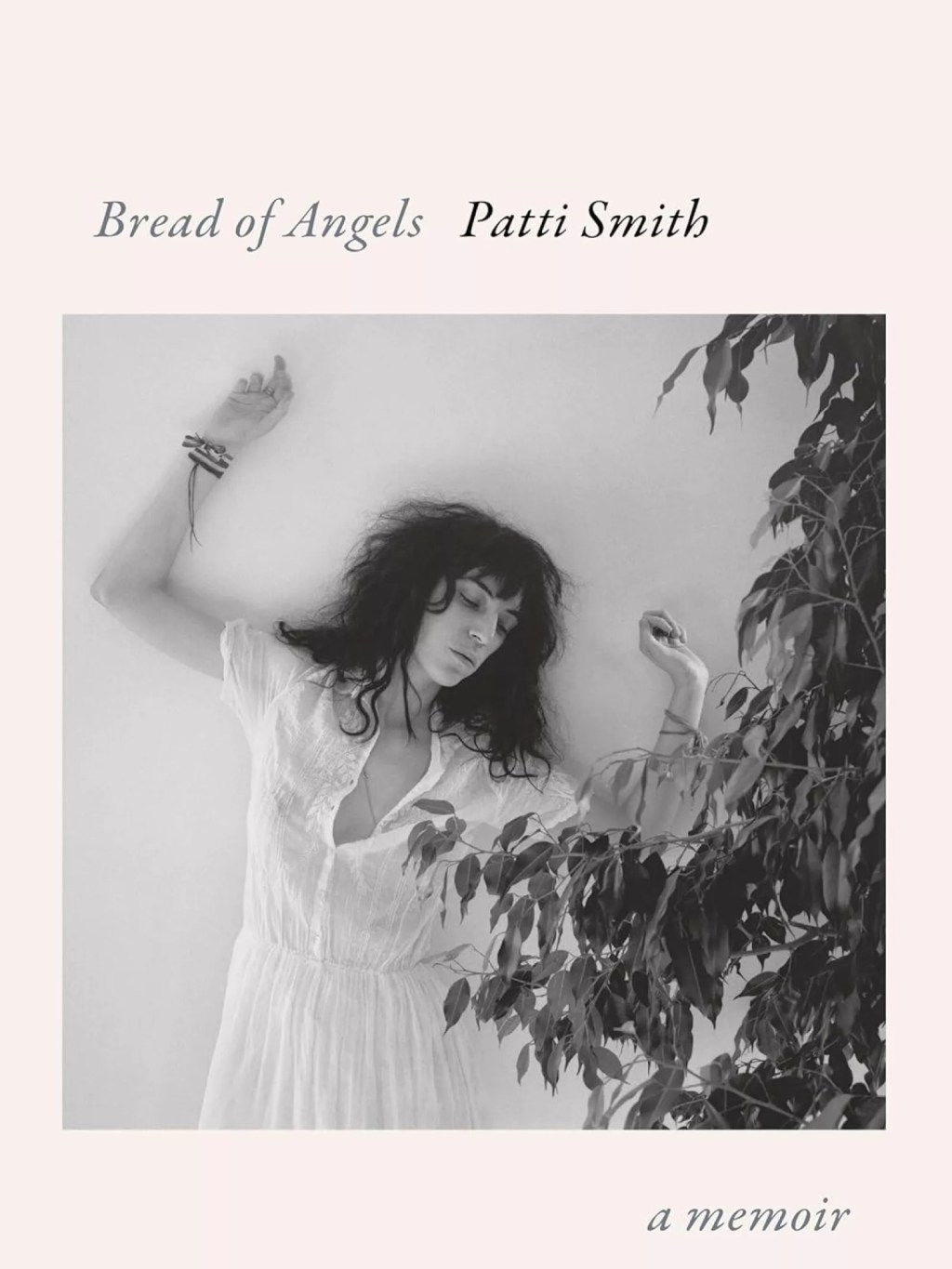
Patti Smith is a very eclectic writer, who has earned awards and recognition for her writing and social activism. I’m guessing that she’s identified primarily as a punk rock singer from the 1970’s, but clearly, her life is much more than that. Her latest book, Bread of Angels is her story that reveals a lot, but feels incomplete.
Bread of Angels: A Memoir (2025, Random House).
Bread of Angels is not her first book of stories and pictures of Smith’s life. Just Kids (2010) is of her long relationship with photographer Robert Mapplethorpe. A Book of Days (2018) is a collection of photographs in which she explores her journey and experiences using each day of the calendar. She certainly is a unique storyteller.
Smith credits her mother for fueling her artistic journey. “She did her best to rein me in and yet unwittingly provided me with the handbooks of flight. First Silver Pennies, then Diego Rivera, and later Another Side of Bob Dylan.”
On Smith’s sixteenth birthday, her mother gave her a copy of The Fabulous Life of Diego Rivera. “I had never read the biography of an artist and its effect on me was also profound, struck by arrows, though hardly poisonous. I followed his worldly adventures and his many phases, what he learned and discarded from Picasso, his engagement with political turmoil, and the heritage and personality of his native country.”
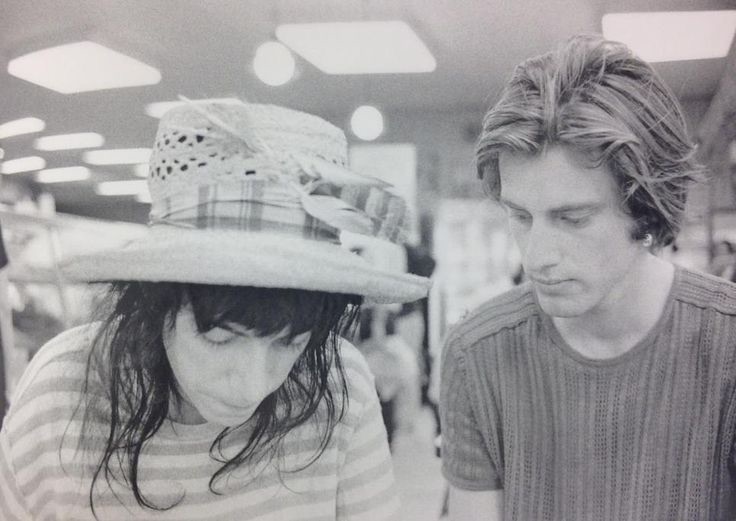
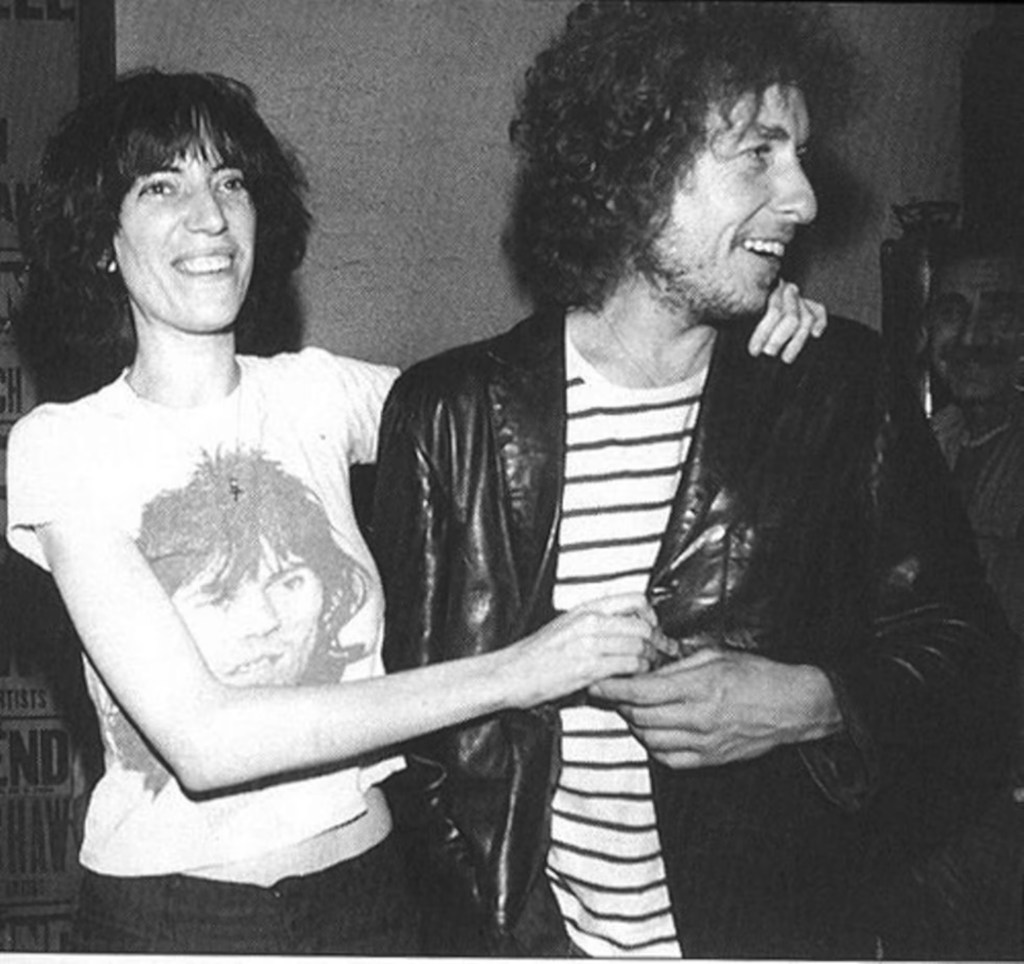
The Bob Dylan record was found in a drugstore sale bin. Her mother thought Dylan’s lyrics would be of interest to her daughter. Dylan’s words “reinvented the sacred had of poetry,” Smith writes. Bob Dylan became a friend and nearly included Smith in his famous Rolling Thunder Revue.
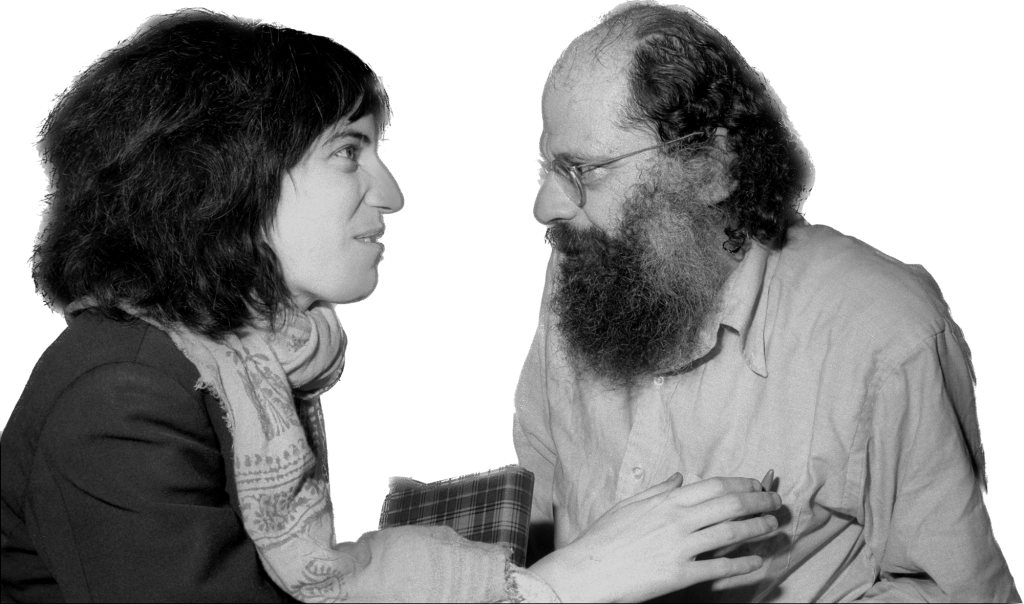
In popular culture, Patti Smith is linked to her musical career of the 1970’s, but she is more comfortable being known as an artist. Her art spans multiple genres, with music being only a part of her artistic palette. From an early age, Smith became a hungry reader, her mind turned on by books that open her world to poetry, philosophy and questions about life. Those books and albums from her mother fed her curiosity and hunger for knowledge. Smith’s mind now engaged, turned this energy into writing, a creative highway she would travel the rest of her life. “The angels served a new portion; I discovered [French poet] Arthur Rimbaud.” She was drawn to Jim Carroll, Allen Ginsberg, Sam Shepard, Bob Dylan, William Burroughs, Susan Sontag and many others, and eventually becoming friends with them all. Her relationship with Shepard, in which she co-wrote a play, was complicated and also intimate.
“And then it struck me: Everything was a potential poem.”
The tragedies in her life are significant, but she’s resilient, that’s for sure. The book places the most emphasis on her early years and skips or condenses later periods in her life. At times the feels like a journey of loss and illness. As a child she had more than her share of illnesses: TB, scarlet fever, measles, mumps, and chicken pox and the A (H2N2) virus during the Asian flu pandemic. Then at 19, she became pregnant and put the baby up for adoption. That event was important in her decision to leave New Jersey for New York City in 1967.
At age 20, Patti Smith began the journey of becoming Patti Smith. This book is largely about how that journey shaped the artist and passionate social figure. Even the period of her life living in Michigan, with her husband and children, after leaving music and out of the spotlight, was important to the next phase of Patti Smith.
Arriving in NYC with no money, homeless and no initial prospects, life was challenging but she embraced the street culture, and eventually found a job at a bookstore and later hooked up with Mapplethorpe. Her bohemian world opened up to writers, artists, poets and musicians. Writing poetry led to reading poetry on stage, then with Lenny Kaye backing her on guitar and soon she had a band. Performing at the iconic CBGB club, that helped launch many careers was where the band found their sound. The arc of her performing her poetry to the jelling of her band and then having record executives interested in signing her all seemed like it happened quickly, but that’s part of Smith’s use of condensation.
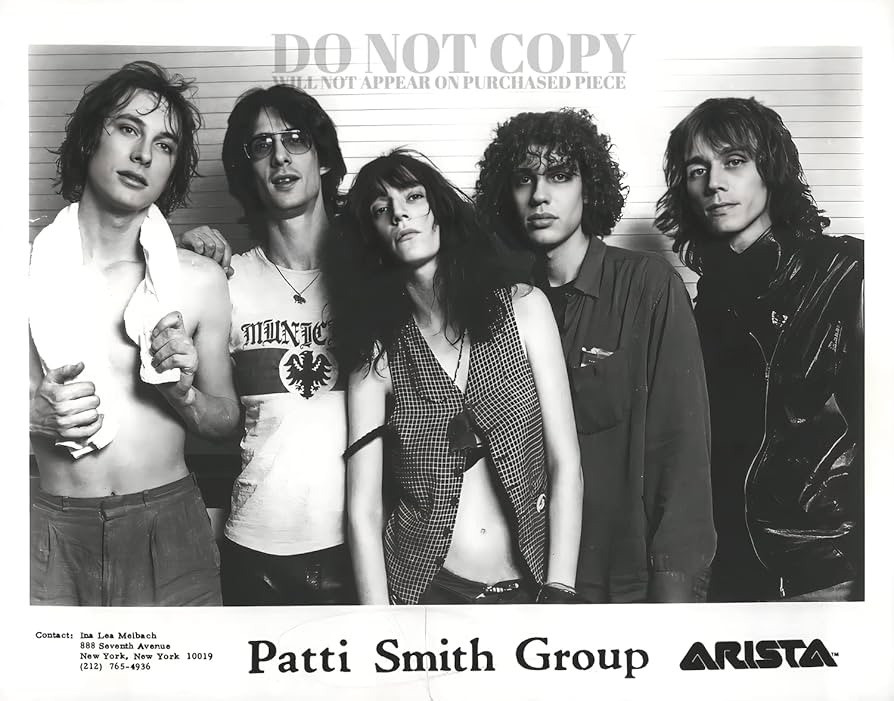
To recognize the end of the Vietnam War (1975), activist Cora Weiss and Phil Ochs, organized The War Is Over, a free celebration in Central Park. On May of that year, thousands of people turned out to hear Harry Belafonte, Joan Baez, Bella Abzug, and Paul Simon. “We had never performed to such a huge crowd yet looking out at the sea of people I felt strangely in command. It was now our generation’s duty to rekindle the fiery spirit of our cultural revolution.” That’s a very important realization because Smith’s generation was angry, distrustful and didn’t care about stupid rules. Her generation wore boots, torn jeans and t-shirts.
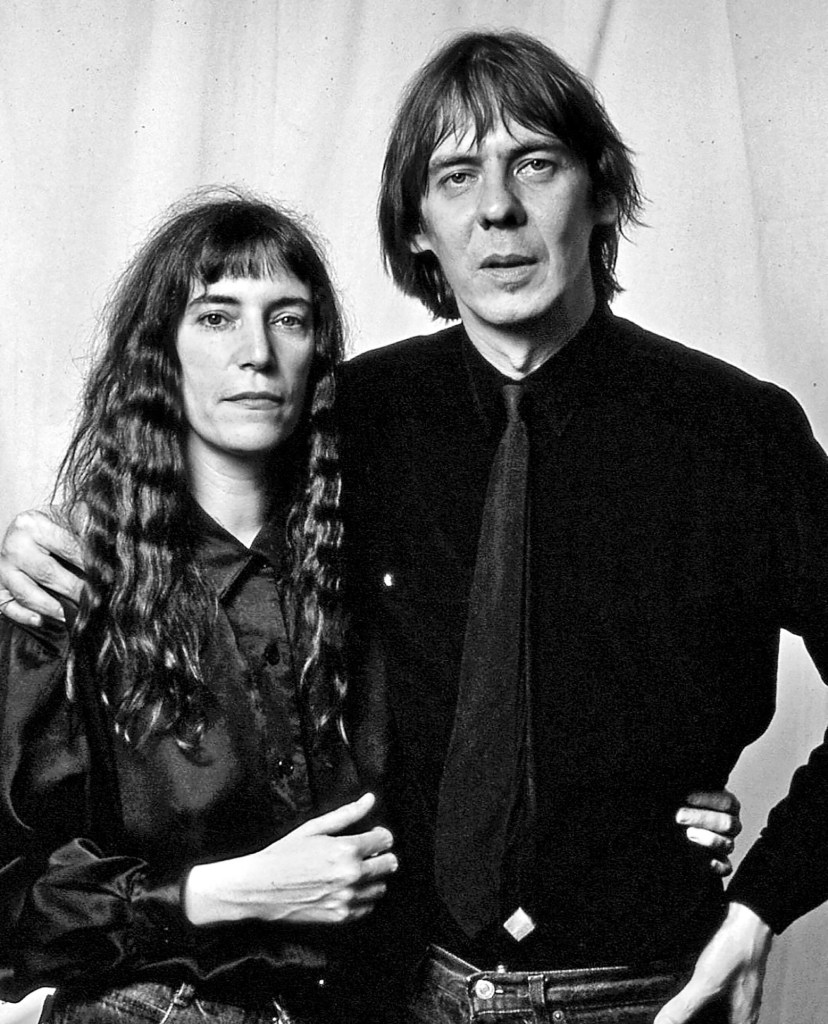
Smith writes about her discomfort with fame, but that’s the flip-side of success. She fought with her record label over lyrics, song titles and album art. She stuck to her guns, but it’s obvious she traded some measure of success for retaining her integrity.
She was invited on American Bandstand to promote “Because the Night”, on the condition that she lip-synched the song. Dick Clark promised great success if she agreed, but she declined. She felt it was not authentic to lip-synch. The song was only became a moderate hit.
Her song “Dancing Barefoot” contained a word that Arista Records begged her to change but again, she held her ground, the lyric remained, and “Dancing Barefoot” received little airplay in America.
At the height of her popularity, she largely walked away from her music career in 1980 to form a life with her future husband, Fred “Sonic” Smith, former guitarist with the iconic Detroit rock group MC5. That union produced two children and seemed the happiest and most grounded period of her life. Fred Smith died in 1984 after a long illness and left her to rebuild her life.
Smith would see family members, including her parents and brother die. AIDS took a number of her friends, former lovers Mapplethorpe and Sam Shepard passed, and she became a widow in her mid 40s.
Smith spent a lot of time figuring out her life. “Everything that happens years before we are born sets the stage for our existence. How happy I am that the throw of dice, from so far afield, begat the circumstance for me to be born.” She would figure out a mystery that had poked at her for many years.
“I admired my mother’s silence; she knew I favored my father, and instead of resenting this, she shielded me from the fact that he had not fathered me,” Smith writes. “And so, we came to express gratitude for my mother’s postwar misadventure.
“My sister and I had to reconcile the fact that we were only half-sisters. For a time, it made us unconsolably sad, but Linda, ever wise, told me that she had a sudden epiphany. She reminded me that the person she loved, being me, was only that person because she was conceived by my mother and Sidney, that I would not exist had it not been for him.”
Smith pack a lot of her life and her travels into Bread of Angels. She’s lived a life worth the read, despite leaving much to the imagination, but that was her choice. What to unpack and what to keep to herself.
From the publisher:
“In the final pages, we meet Smith on the road again, the vagabond who travels to commune with herself, who lives to write and writes to live.”

 Ticket 2 Ride
Leave a comment