
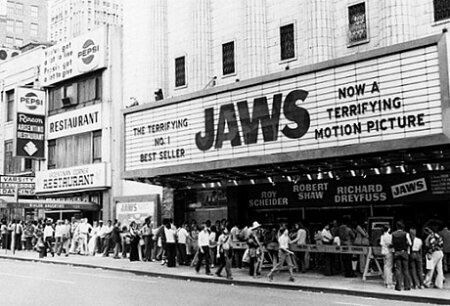
The decade of the 1970s saw a new, fresh wave of film directors step behind the camera. Younger, more hip audiences wanted films, and film style that aligned with their tastes and changing social mores. A number of film school grads, and young writers were more than willing to step up.
Some say, it started with Warren Beatty’s Bonnie and Clyde, then solidified with Easy Rider, The Last Picture Show, Midnight Cowboy, M*A*S*H and others. Welcome to the new Hollywood.
A number of these men and women had great success, changing the medium and writing a very significant chapter in film history. Sadly, many of these filmmakers flamed out in later years, some barely surviving the decade with much clout remaining. Studios opened their bank vaults, gave these young Turks great control, and turned a blind eye to the influx of drugs and other excesses.
The directors below, I placed in several groups. There are the film school and nouveau artists, “the young Turks” as I call them, like Spielberg, Bogdanovich, Lucas, Scorsese and others; and the working filmmakers who moved up and became successful in the new cinema like Pollack, Lumet, Hill, Pakula, Edwards, etc., while the elder statesmen were having a tough go and wrapping their careers.
Hollywood noticed the youth market. A lot of films aimed at this audience went into production. These were not your Disney teen comedies. Even the wacky Frankie and Annette beach films grew up. Subject matter became more mature, even for films aimed at adults, and then there were adult films, which I have written about in other blogs.
It’s ironic, kids wanted to be more like adults so their films incorporated more “grown-up” subject matter: sex, politics, relationships, the meaning of life, violence. Adults wanted to be hipper, more adventurous, less constrained by social convention, sex.
At the beginning of the decade, studios saw the big profits from smaller films. They wouldn’t abandon big budget films, although studios were saddled with big, bloated films that ate away at their profits, while it became too expensive to maintain backlots, soundstages, wardrobe and prop departments, relics of a bygone era that was no longer sustainable. MGM is a prime example, liquidating their history and selling backlots that became high-priced commercial and business development. Desilu Productions sold to Paramount, as the studios got deeper and deeper into television production to pay the bills.
The New Generation
Mostly, these are young film directors, but there are a couple of exceptions, television veterans who came to directing late, but fit in perfectly with the younger Turks. This group cut their teeth in the new cinema of the 1970s and owned it. Some of them are still applying their craft and are the old guard now, the foundation for younger generations. Their gifts to modern cinema are indescribable.
William Friedkin (The Exorcist, The French Connection) Retired
Francis Ford Coppola (The Godfather, Apocalypse Now) Occasionally working
Steven Spielberg (Jaws, Close Encounters of the Third Kind) Still working
George Lucas (American Graffiti, Star Wars) Retired
Michael Cimino (Thunderbolt & Lightfoot, The Deer Hunter) Deceased
Peter Bogdanovich (The Last Picture Show, What’s Up Doc?) Deceased
Hal Ashby (Harold and Maude, Shampoo) Deceased
John Milius (The Wind and the Lion, Dillinger) Retired
Robert Benton (Bad Company, The Late Show) Occasionally working
John Carpenter (Halloween, The Thing) Occasionally working
John Schlesinger (Midnight Cowboy, Marathon Man) Deceased
Woody Allen (Annie Hall, Bananas) Still working
Colin Higgins (Silver Streak [writer], Foul Play) Deceased
James Bridges (The Paper Chase, The China Syndrome) Deceased
Martin Scorsese (Mean Streets, Taxi Driver) Still working
Brian de Palma (Phantom of the Paradise, Carrie) Occasionally working
Michael Ritchie (The Candidate, Bad News Bears) Deceased
Phillip Kaufman (The Great Northfield Minnesota Raid, Invasion of the Body Snatchers) Occasionally working
Bob Rafelson (Five Easy Pieces, The King of Marvin Gardens) Deceased
Ron Howard (Grand Theft Auto, Cotton Candy) Still working
Terrence Malick (Badlands, Days of Heaven) Still working
Bob Fosse (Cabaret, Lenny) Deceased
David Cronenberg (Crimes of the Future, Rabid)
Mel Brooks (Blazing Saddles, Young Frankenstein) Retired
Carl Reiner (Oh, God!, The Jerk) Deceased
John Cassavettes (Husbands, A Woman Under the Influence) Deceased
John Landis (The Kentucky Fried Movie, Animal House) Still working
Ridley Scott (The Duelists, Alien) Still working

Transitional Filmmakers
Filmmakers active in the 1960s, in film, television or stage. Brought up in the studio system or immigrated from another country. Most of these folks would go on to highly successful film careers in Hollywood.
Milos Forman (The Fireman’s Ball, One Flew Over the Cuckoo’s Nest)
Richard Donner (The Omen, Superman)
Roman Polanski (Rosemary’s Baby, Chinatown)
Sidney Poitier (Uptown Saturday Night, Buck and the Preacher)
Mike Nichols (Who’s Afraid of Virginia Wolff?, The Graduate)
Elaine May (A New Leaf, The Heartbreak Kid)
Warren Beatty (Bonnie and Clyde [producer], Heaven Can Wait)
John Boorman (Point Blank, Hell in the Pacific)
Clint Eastwood (Play Misty for Me, High Plains Drifter)
George Roy Hill (Butch Cassidy and the Sundance Kid, The Sting)
Paul Mazursky (Bob & Carol & Ted & Alice, Blume in Love)
Alan J. Pakula (Up the Down Staircase [produced], Klute)
Robert Altman (Combat!, M*A*S*H)
Sam Peckinpah (Ride the High Country, The Wild Bunch)
Sydney Pollack (This Property is Condemned, They Shoot Horses Don’t They?)
Michael Winner (Chato’s Land, The Mechanic)
Veteran Directors
There were many directors whose careers began in the 1950s, usually in television and/or making short films. Their feature film opportunities came in the 1960s and they transitioned in the 1970s, still making quality films; a few would even make it farther. This group understood the value of storytelling and were responsible for some of the best contemporary films of their era.
Arthur Hiller (The Americanization of Emily, Love Story)
Richard Lester (A Hard Day’s Night, A Funny Thing Happened on the Way to the Forum)
Irvin Kirshner (A Fine Madness, The Flim-Flam Man)
Stuart Rosenberg (Cool Hand Luke, The April Fools)
Peter Yates (Bullitt, Murphy’s War)
Arthur Penn (The Miracle Worker, Bonnie and Clyde)
Franklin J. Schaffer (Planet of the Apes, Patton)
Lewis Gilbert (Sink the Bismarck!, Alfie)
Norman Jewison (The Cincinnati Kid, In the Heat of the Night)
Stanley Kubrick (Spartacus, 2001: A Space Odyssey)
Robert Aldrich (Flight of the Phoenix, The Dirty Dozen)
Guy Hamilton (Goldfinger, The Battle of Britain)
Sidney Lumet (12 Angry Men, The Pawnbroker)
Blake Edwards (Peter Gunn, The Pink Panther)
Don Siegel (The Killers, Coogan’s Bluff)
Ken Russell (Women in Love, Tommy)
Federico Fellini (Satyricon, Amarcord)
The Old Guard
The “old guard” is said with respect, these filmmakers were responsible for films that changed film and subject matter that broadened the cinematic experience. These bold filmmakers took risks and challenged both audiences and the film industry. They were active in 1970, and a few beyond that.
Joseph Mankiewicz (There Was a Crooked Man, Sleuth)
Robert Wise (The Andromeda Strain, Star Trek: The Motion Picture)
Alfred Hitchcock (Frenzy, Family Plot)
Otto Preminger (Tell Me That You Love Me, Junie Moon, The Human Factor)
Richard Brooks (Bite the Bullet, Looking for Mr. Goodbar)
Howard Hawks (El Dorado, Rio Lobo)
Ingmar Bergman (Cries & Whispers, Scenes from a Marriage)
John Huston (The Life and Times of Judge Roy Bean, The Man Who Would Be King)


 Ticket 2 Ride
Leave a comment