

What’s important about the year 1969 in the career of Burt Reynolds? He made four feature films that were released that year, films that would elevate him from B film actor to B lead film actor. He would move up to lead his own television series, and within a year make several bigger, feature films. An acting career is a series of small steps, hopefully upward.
The films Reynolds made in 1969 were meatier roles and allowed him to display qualities that would soon propel him to the biggest box office star, a talk show darling, and a lengthy film career. Reynolds was no kid, he was 33 that year. He had been in Hollywood for a decade already.
Granted, these three films are not Shakespeare; only one of them was a major film, but they gave Reynolds exposure and let audiences see him as both a light comedy and action film actor. The emphasis on film.
Reynolds had worked his way up from supporting guest roles on television series to guest star roles, and supporting actor in the series Riverboat and Gunsmoke, parts in a few forgettable films, and a starring role in the television series Hawk, even though it lasted less than a season. So, either he take the next step, or he might be stuck as a supporting or feature player. His hair was already thinning, an obvious concern, but it didn’t stop Connery. Still, a decade in television and minor films was a lot. He didn’t want to be Darren McGavin or Dennis Weaver; good actors but not major film actors. The clock was ticking.
Shark – Reynolds stars as Caine, a gunrunner who finds himself stuck in a Sudanese town after losing his cargo. As luck would have it, a woman hires him to retrieve cargo from a sunken ship. Seems like a way out of his problems. The ship has others wanting the cargo and it is located in shark-infested waters.
Samuel Fuller was hired to write and direct this low budget project. Barry Sullivan and Arthur Kennedy co-star. A stuntman was killed by a shark during filming. A lot of controversy surrounds this film. Fuller quit the production and sought to have his name removed from it.
Apparently, the film was shot in 1967 and not released until 1969. It was based on the book, His Bones Are Coral, by Willam Cannin. The film was originally called Caine!, but changed to Shark! to take advantage of the obvious, and the upcoming Jaws.
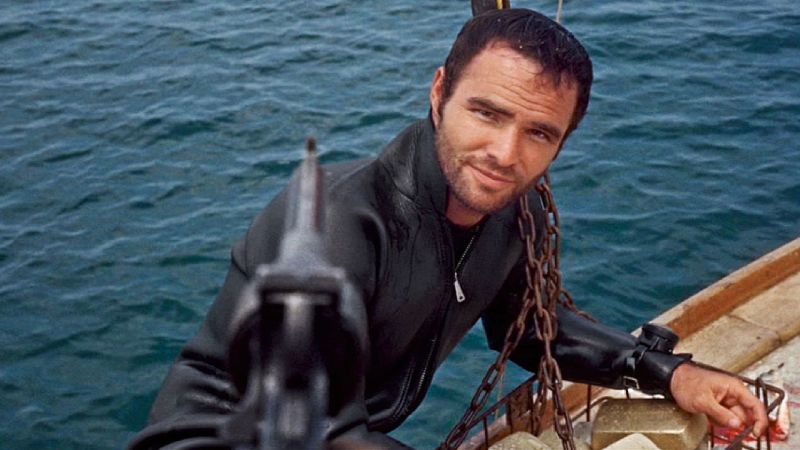
Lost in all of this is a gritty and witty performance by Reynolds. Too bad Reynolds and Fuller never worked together again. I think Reynolds rises to the occasion when a film is in trouble, looking to inject a bit of personality into a character where it was not written.


Impasse – Apparently, this film was made in 1968, but the release was delayed and then released as Reynolds’ star was rising. He plays part of a group of treasure hunters looking for gold in the Philippines, where they were stationed during the war. There is nothing remarkable about this film, other than giving Reynolds a chance to star in a film. The fact that it was intended for television should clue you in that it was inexpensively made, and helmed by a television director, Richard Benedict. The cast includes Anne Francis (Honey West) and Jeff Corey (True Grit, Butch Cassidy and the Sundance Kid).


100 Rifles – Reynolds is really a co-star in this film, playing second fiddle to Jim Brown and Raquel Welch. These two generated most of the publicity for the film as they had a torrid love scene, which was something big for 1969. Reynolds plays Yaqui Joe, a half-Yaqui, half-white bank robber, who is pursued by Sheriff Lyedecker (Jim Brown). He used the money to purchase 100 rifles to fight a corrupt Mexican general.
Reynolds had played ethnic types before, which was typical in Hollywood. Quint, his character in Gunsmoke, a half-Comanche blacksmith. His character had to constantly fight against discrimination. In Hawk, he played John Hawk, a full-blooded Iroquoiswho worked in New York City as a special detective for the city’s District Attorney’s office. Again, his character face discrimination, even from his own colleagues. In Navajo Joe, Reynolds plays a Native American warrior seeks revenge on the gang of scalp-hunters-turned-bank robbers who massacred his tribe. Reynolds had dark looks and features that were taken as Native American, but his background was Anglo.
This was a big production ($3.9m budget), producer Marvin Schwartz released the film through 20th Century Fox, and was directed by writer/director Tom Gries (The Rat Patrol, Will Penny). Brown was still a hot actor and Welch was on the rise. The cast included Eric Braeden, Dan O”Herlihy and Fernando Lamas.

“I play a half breed but… I send it up”, said Reynolds at the time to the Chicago Tribune. “I make it seem like the other ‘half’ of the guy is from Alabama. I play it nasty, dirty, funky. I look like a Christmas tree – wrist bands, arm bands. At the beginning I even wore these funky spurs.”

Roger Ebert in reviewing this film said at the time: “Brown and Reynolds are good together; Brown has a cool, humorous charm and Reynolds plays to it like the other half of a vaudeville team.”
Sam Whiskey – The most Burt Reynolds type-role of his early films, aside from Shamus (1972). A silly Western mystery about three guys hired to retrieve gold on a sunken riverboat. Reynolds gets to be suave, funny and get into a few fights. He’s an engaging rascal, not overly bright or brave, but that’s part of the appeal. Reynolds would modify this persona for his upcoming good ole boys characters. Although he shows off his muscular physique, it is really his charm and goofiness that define this role for him.

Sam Whiskey as a good cast: Angie Dickinson, Ossie Davis and Chet Walker star along side Reynolds, who portrays the title character. This is a lower budget film, you can see the economy used in the production, very generic scenes, tight scene composition and artistic photography to cover the lack of resources. Efficient direction by journeyman director Arnold Laven, who helmed a lot of television. Dickinson appeared topless, briefly, which gave gave the film a moment of sensationalism.
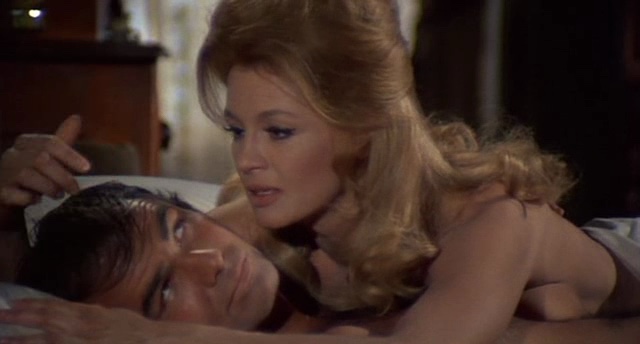

It would have helped if Sam Whiskey or 100 Rifles had been hits, but they accomplished something else, Reynolds got seen, and held his own with brighter stars.
The next two years afforded some big breaks. Dan August was another television series, but it was better. Yes, he made Skullduggery and Run, Simon, Run – those were in the pipeline. Then came Fuzz (studio release), Deliverance (major hit), and Everything You Always Wanted to Know About Sex (Woody Allen directed).
Each year was a small step, but each one moved him closer to film stardom.




 Ticket 2 Ride
Leave a comment