

With the start of the NFL season, Turner Classic Movies featured the film, Paper Lion (1968). More than half a century ago, magazine writer and editor George Plimpton tried his hand at a variety of professional sports to give an insider’s view of the sport.

Twice he tried professional football, first with the Detroit Lions (1963) and then with the Baltimore Colts (1971). His stint with the Lions resulted in the book (1966) and the highly fictionalized film, Paper Lion. As the last string quarterback of the Lions, Plimpton did go to training camp and ran a few plays in an intra-squad scrimmage. With the Colts, Plimpton actually got into a preseason game, and it was recorded as a television special.

In the 1968 film, Alan Alda played the Harvard educated Plimpton. Slight, gangly and somewhat uncoordinated, Plimpton was portrayed as a cross between Hawkeye Pierce and Woody Allen. In real life, Plimpton did not get picked on like Alda’s character, and had a cooler resolve and a slower burn. Paper Lion, even after Hollywoodizing the truth, is not a bad film, in fact, it’s quite entertaining.

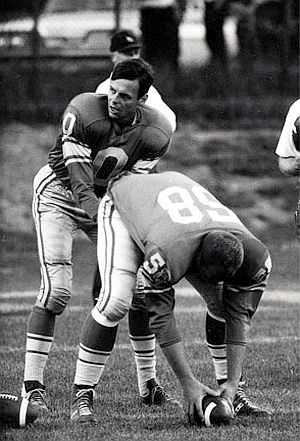
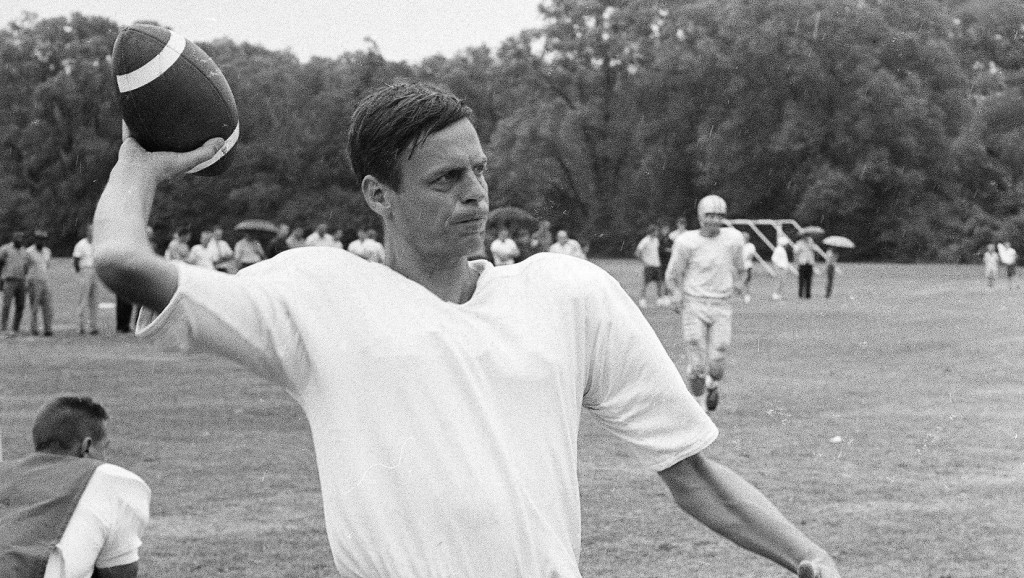
Fifty-five years later, the differences between the NFL then and now, are huge. It’s fun to look back when pro football was less a business and much more of a game. In the film, Lions offensive lineman John Gordy asks Plimpton why they should risk their careers for a stunt by a guy off the street. Fair question. However, it was Gordy that helped convince the real Plimpton that a book about a novice player in the pros would be a hit.
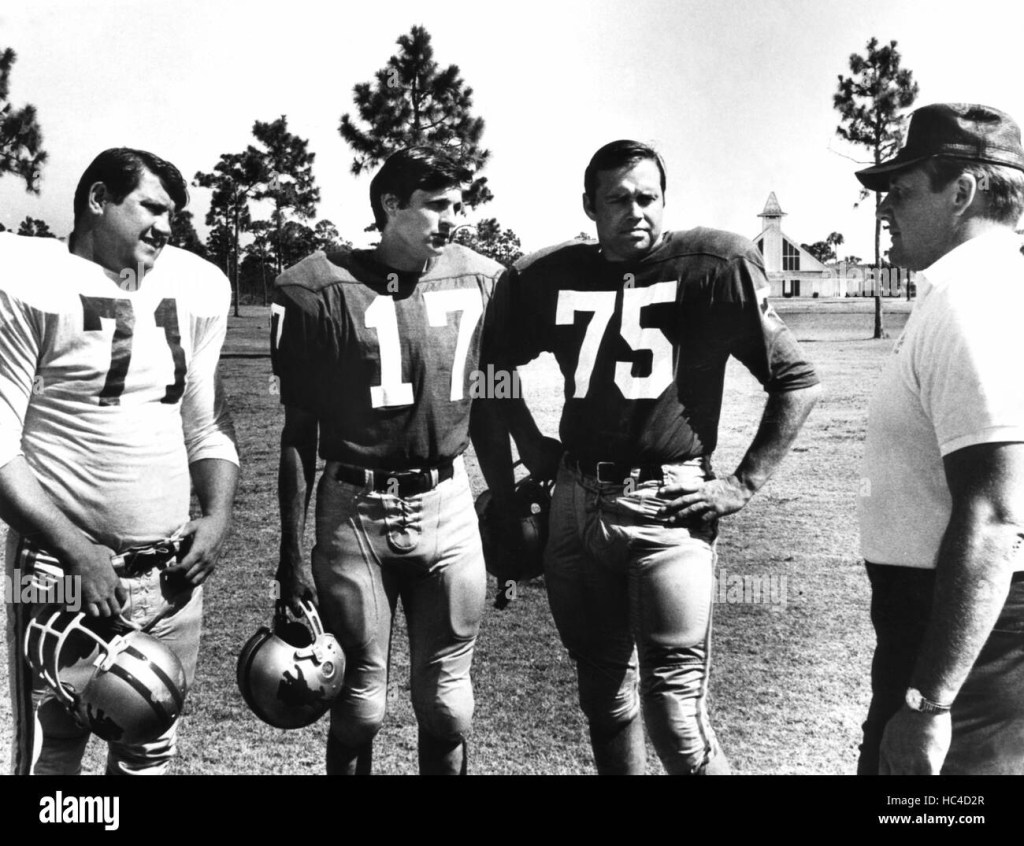
In the late 1969s, the top professional players were earning between $50k and $80k, with linemen earning far below that. Like other professional sports, the average player worked a regular job in the offseason to make ends meet. Gordy, who was president of the players association, helped negotiate the first collective bargaining agreement between players and owners in 1969. The minimum salary for veterans was $10k, with players earning $50 for each preseason game. That’s right, $50 for a preseason game, a game in which an injury could cost that player their career.
In the 1960s, training camp was for getting into shape; there were no offseason team fitness programs or required camps. It was totally up to the player to arrive at camp ready to compete to make the team. In his book, Plimpton tells of a young offensive lineman from a small college who was trying to lose weight while to gain skill, but was too weak to gain any traction and was an early cut.
The Lions training camp looked like my junior high school football camp, the equipment and facilities were spartan. Head coach Joe Schmidt was hilarious listing the various fines from everything from being late to a meal to having a woman in your dormitory room. Watching game film was watching real film, grainy, and sometimes out of focus. That reminds me of a story about Baltimore Colts receiver Raymond Berry, regarded as the best receiver of his era, who was asked about his wife’s cooking as a young player. Pretty average he responded, but she really knew how to operate a film projector.
Plimpton (age 36) was in the Lions’ camp in 1963, when they held camp at tiny Cranbrook, a boys prep school, near Brookfield Hills, north of Detroit. NFL training facilities are obviously quite fancy and fortified with the best health, strength, nutrition and medical care available. The head coach was George Wilson, who would later be the first head coach of the expansion Miami Dolphins. Wilson was old school, but thought Plimpton’s idea was interesting, but quickly drew the line and wouldn’t hesitate to send Plimpton home. Very quickly, Plimpton’s basic quarterback skills, or lack of, became woefully apparent. At the first practice, Plimpton needed coaching on taking a snap from center, and his cover was blown. A few players had figured it out, but now it was out in the open. In the film, the pretense is kept up for awhile for dramatic/comedic purpose, and it set the stage for Gordy and Alex Karras to confront him.
The star of the film was defensive tackle Karras, who showed what a natural he was in front of the camera. Gregarious, wisecracking and genuine. It’s no surprise that he had a very successful career as an actor, and was eventually enshrined in the Pro Football Hall of Fame. The thing is, Karras had been suspended for the entire season for betting on football, so he was not present, but he looms large in 1960s Lions football.

Joe Schmidt is the head coach in 1968, playing himself in the film. In 1963, Schmidt was the team leader, a veteran starting linebacker, understated, but controlled and firm.
The film’s score is by Roger Kellaway, a jazz pianist/arranger who wrote for film and television, in addition to producing his own albums and guesting on many others. The relaxed, jazz vibe underscores the Plimpton character in the film, it defines his cultured, well-bred Manhattan lifestyle. This a sports film that is not really a sports film. There’s upbeat orchestral music during the football scenes, but the sophisticated jazz lurks in the background. Pro football with class.
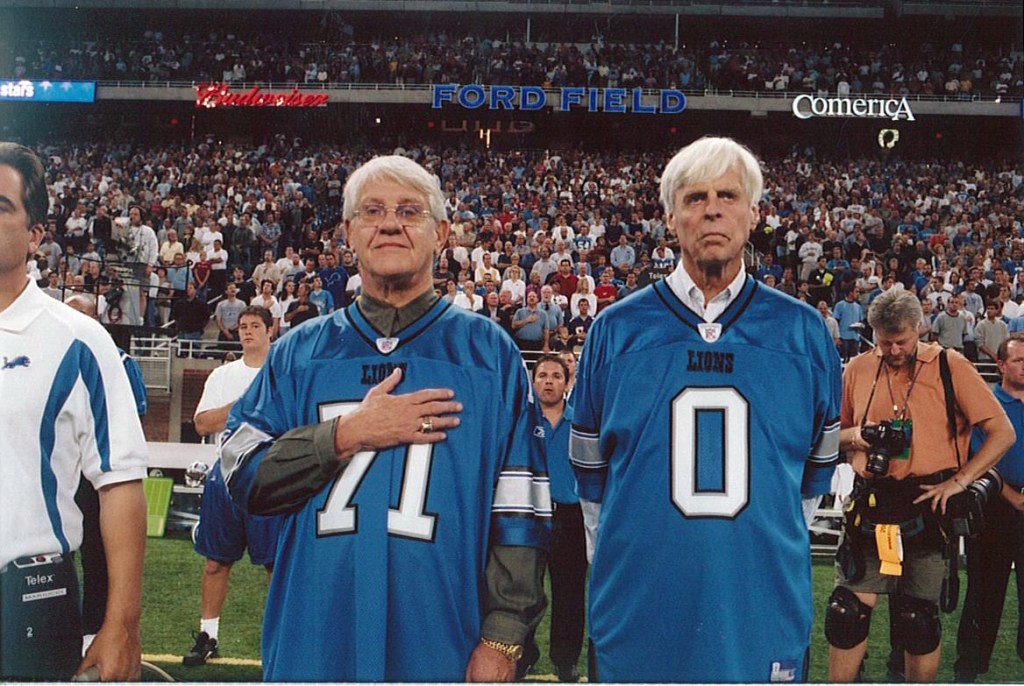
Plimpton lived in a time when the NFL was still establishing itself; and even had serious competition from that other pro football league. Sixty years ago, an NFL franchise was worth a few million dollars. Today, franchises sell for a few billion dollars each. Baseball was the national pastime then; now, are you ready for some football?!
The average football fan had to really work to find in-depth news on their favorite team, and the casual fan had a steep leaving curve. Newspapers and magazines were a huge part in publicizing the game. In the early 1960s, the NFL started thinking creatively on how to appeal to the casual and potential fan. Walter Cronkite helped by showing a feature on his primetime documentary series on New York Giants middle linebacker Sam Huff. “The Violent World of Sam Huff” This program profiled the man and his violent football world, and it was a big hit (pun intended). The NFL also was smart enough to contract with filmmaker Ed Sabol to film game highlights from all over the field and use slow motion, dramatic music and inventive editing to showcase what viewers usually missed during a typical football game. NFL Films was born.
Race relations is a minor point in Plimpton’s book, although it was a huge issue in America at the time, and of course it carried over into sports. In 1962, the Washington Redskins was the last NFL team to sign Black players, under threat from the federal government (the team leased D.C. Stadium, owned by the federal government). Plimpton touches carefully, but does talk about the difficulties of being a Black football player. I looked up the racial statistics for the NFL and you can see the results below. In 60 years the chart has flipped. In the book, defensive end Roger Brown and future Hall of Famer Dick “Night Train” Lane are two Lions players Plimpton spends considerable time discussing not just football, but life away from the game. In the film, there is little time or focus on getting the players as people, which is a shame.
Harvard study of NFL draft racial composition 2023

Could Plimpton’s rouse work today? No. Plimpton was known in the sporting world, mainly as a writer. One Lions player, linebacker Wayne Walker, had read one of Plimpton’s books, so he saw through Plimpton’s take cover story. Think about it. In the early 1960s, there were beat writers around the Lions training camp, and the occasional film crew, but the NFL did not have a problem keeping the media away. The NFL was not the media whore it is today with Hard Knocks, NFL Films, ESPN, TMZ, local and regional sports reporters, podcasters, internet bloggers, even the NFL Network is a 24/7 information source.
The NFL of 1963 is nothing like the sport today. Opinions differ on whether it is better now, but the game is more a big business, that much is not in question. It’s really a matter of trade offs, at least it is for those of us long enough in the tooth to remember the old days.
If you haven’t seen this film, it’s worth looking for, if nothing else, an early Alan Alda acting role.
[If you enjoyed this blog, consider “liking” it and subscribing to my blog. Thanks for stopping by.]


 Ticket 2 Ride
Leave a comment