

I really didn’t know what to think about this album. I’ve listened to it a few times and checked out a number of reviews, including from several folks I respect, but I’m still baffled by this album.
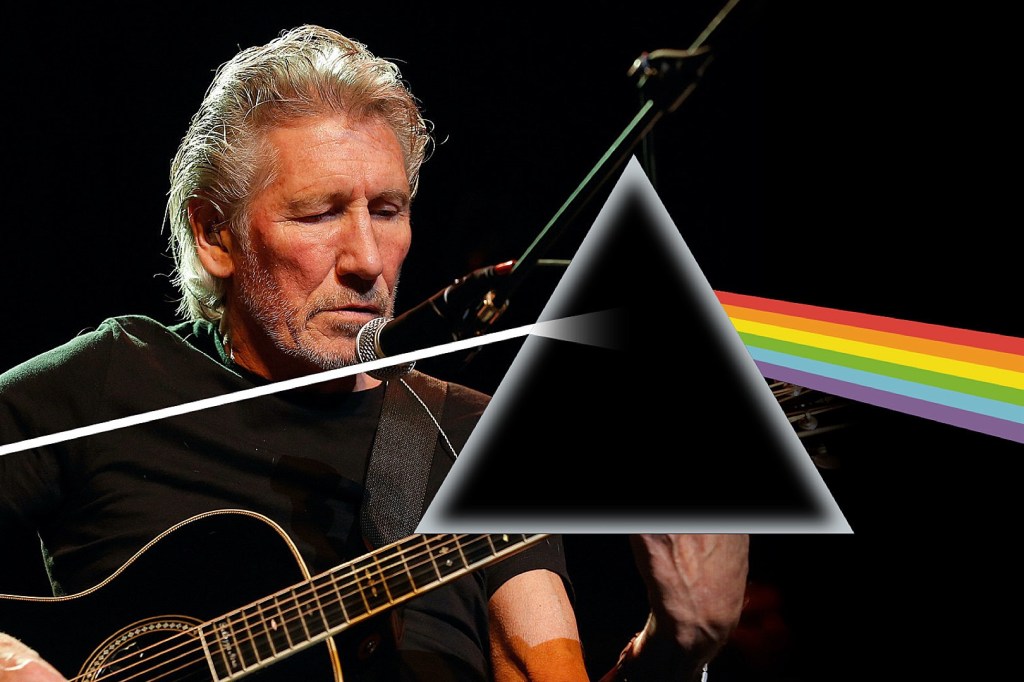
Reviewing a reimagined recording of the songs on Dark Side of the Moon is a strange task. Rerecording Dark Side of the Moon is like painting a new version of the Mona Lisa. Why? I get it that because Roger Waters wrote many of the songs on Dark Side of the Moon that he feels entitled to re-record the album from his current point of view. Certainly he has that right, and can reinterpret it accordingly. But that doesn’t mean his reworking is comparable to the original. It’s easy to dismiss Waters’ version as the grumpy old man version. I just hope we don’t get a Paul McCartney reimagined version of Sgt. Pepper’s Lonely Hearts Club Band, or Robert Plant’s reimagined Led Zeppelin IV.
Waters did not write or develop the original Dark Side of the Moon by himself or in a vacuum. The contributions of David Gilmour, Nick Mason, Richard Wright, Claire Tory and Alan Parsons are essential to the album’s success and legacy.
Dark Side of the Moon is certainly more than a collection of songs and instrumentals tracks, and it’s more than a thematic album, it’s a complex layering of musical themes that are interconnected and enhance one other. Waters focuses on the lyrical connectivity, expanding it with additional lyrics and sound effects, giving it more of a radio-play production, rather than a groundbreaking progressive rock album. I was expecting Orson Welles and his Mercury Players to be credited on the CD jacket as theater production.
Waters does not recreate Dark Side of the Moon, rather he redraws it, changing the shape, colors and style. His album and the original share very little in common. Each song has faint musical cues, as the arrangements are substantially different than the original album, and he has new lyrics for instrumental sections from the original album. Vocally, Waters mostly talks the lyrics, like Rex Harrison did with My Fair Lady. Waters does some singing, but remember, this is the gravely voice of an 80-year old. People age and lose vocal ability, I get that.
Redux is designed to be heard in its entirety for full effect. Either read along or listen a few times to absorb the story. The original album certainly was a unique sonic experience, but it could be separated into songs or several groups of songs if desired.
Waters’ version of “Us and Them” has the strongest resemblance to the original and most like a song you’d like to listen to again, for pleasure. “Time” is also reasonably good, in an easy listening kind of way. Much of this album sounds like a Waters’ stream of consciousness put to music. Waters is known for pontificating on a variety of subjects from war to governmental corruption to economic manipulation. Here he embellishes the original lyrics with a more personal recitation. Music should be enjoyable to listen to, Redux was a challenge.
I will say, the musical arrangements are interesting, there are string and keyboard textures that bring out the ache and poignancy tucked inside the music. “Time” is difficult to screw up; this version is so relaxed and lethargic that it wouldn’t qualify for elevator music. That doesn’t mean it’s terrible, just much less fulfilling than the original version.
Redux is certainly a personal statement for Waters. As an artistic accomplishment, it has merit, but it fails to connect with me. Recall that after Jim Morrison died, the other three Doors took tapes of Morrison reciting his poetry and set it to new music. An American Prayer, it was called. Redux reminds me of that album. It was a curiosity, and while it had some moments, it was not a resounding coda to the band. With Dark Side of the Moon, Redux only intensifies my reverence for the original.
2.5/5




 Ticket 2 Ride
Leave a reply to Shibuya Confidential Cancel reply