
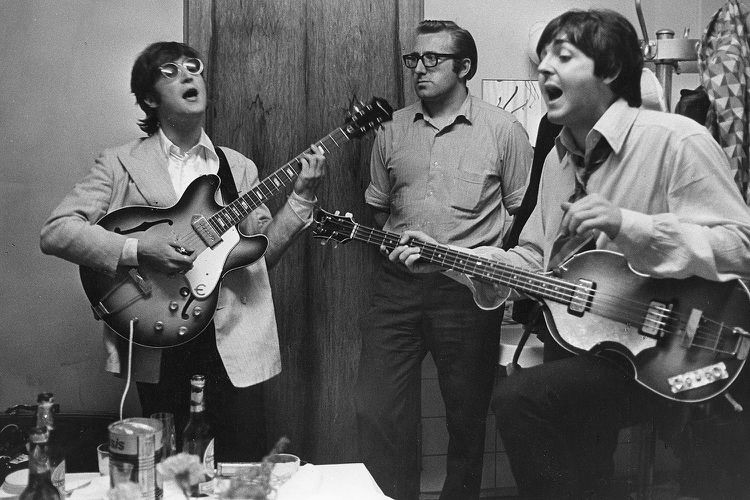
Mal Evans was closer to the Beatles than anyone. He joined them as their roadie, back when the Beatles traveled by van to their gigs and served as their driver and hauled the band’s equipment. His large, bear like-size was somewhat misleading as most people who knew him called him a cuddly bear. He was perfectly suited to be ringside as the Beatles made history.

Evans kept journals, photographs and memorabilia of his days with the Beatles. He intended to publish his memoirs, had secured a publisher and at work on a draft. Unfortunately, he was tragically killed by the Los Angeles Police Department in 1976 while answering a domestic situation. By that time, Evans life was in shreds: estranged from his wife and kids, a substance abuse problem, directionless and depressed.
Skip forward a few years and his journals, memoir draft and other materials were headed for a dumpster in New York City, when a stranger helped rescue them. That’s an incredible story in itself, with Yoko Ono of all people playing a key role. Living the Beatles Legend (2023, Dyst) is not his memoirs, but Evans’ materials were helpful in Kenneth Womack’s book. The Mal Evans version of his life may someday be published; for now, Living the Beatles Legend, is the most complete story of Evans’ life, and his inside view of the Beatles. This is a terrific read.
Much of this book shares the story of Beatlemania, from the beginning of fame in England, to America and the dissolution of their legal partnership a decade later. Evans lived it, and the line between his life, and that of the Beatles, became blurry. Described as an affable and sweet man that everyone loved, he battled self-esteem issues, and his self-medication only compounded his problems. Married with two kids in England, he abandoned them for life in America or traveling with the Beatles.
Neil Aspinall was with the Beatles even longer than Evans. Aspinall left the roadie duties to Evans and took on more of an administrative and logistical role with the band. He found his niche and survived the breakup, the Allen Klein years, the various legal battles, and worked on the Beatles Anthology. Evans continued to work for the Beatles even after the touring stopped, and tried his hand at guiding artists signed to Apple Records – the primary recipient being the band Badfinger, producing some tracks on their early albums. The Badfinger story was equally tragic.
Everyone liked “Mal,” which made him perfect for the job with the Beatles. Fame had built a bubble around the Beatles; they were tight with each other, and only allowed Aspinall and Evans inside until later on. Even manager Brian Epstein and producer George Martin weren’t on the inside. Eventually, Beatle wives joined, but those six were together since the Cavern days and endured Beatlemania, the press, and everyone who wanted to touch their fame. Evans was both a friend and an employee, available to the Beatles 24/7. The book quotes a number of people in the Beatles sphere (not bubble) who saw how loyal and supportive Evans was to the Beatles, and how much they depended on him.
Mal Evans was far more than their roadie, he was their Jack-of-all-trades, personal assistant. Evans not only looked after their equipment, he organized trips, worked with art directors and photographers, accompanied the Beatles on trips, solved technical issues during performances, carried their joints, and screened their women (for after hours hookups) on tours. Evans even moved in with Paul McCartney for a time, helped him scout locations for the Magical Mystery Tour film, and according to sources, helped McCartney on several songs (without credit or royalties).
“For Mal, being in close proximity to the Beatles’ special brand of stardom trumped the joys and commitments of family. And with nary an exception, when it came to the Beatles versus his family, the Beatles won the sweepstakes every time.”
The book is a sad journey through Evans’ dreams and relationships, all of which seem tarnished by his commitment to always put the Beatles first. Despite his efforts and opportunities, Evans never quite seemed to shed the “roadie” label. The Beatles locked onto his loyalty and deference; any producer or songwriter efforts were downplayed and not rewarded. In a sense, Evans died a bit with each failure, taking umbrage behind his pleasant, helpful disposition.
“When Fran (his girlfriend in L.A.) met the roadie, she had been immediately struck, like everyone, by his larger-than-life presence. ‘But inside, he was just a child,’ she recalled, ‘he had no self-esteem.’ It didn’t take a therapist to realize that “when the Beatles split up, he lost his identity.”
Kenneth Womack has written an engaging and well-researched story of Mal Evans’ life. It’s a tragic tale, but a very revealing look inside the Beatles’ world. A lot of books have been written about the Beatles and the central characters in their fame. The story of Mal Evans is a crucial addition to the Beatles story.
Womack is no stranger to Beatle books. He has written a number of Beatles-related book: John Lennon 1980: The Last Days in the Life (2020), Solid State: The Story of Abbey Road and the End of the Beatles (2019) and a two-volume biography on Beatles producer George Martin, Maximum Volume (2017) and Sound Pictures (2018).
4.7/5






 Ticket 2 Ride
Leave a reply to christiansmusicmusings Cancel reply