

For whatever reason Steven Spielberg decided not to direct this installment of Indiana Jones, he made the decision. This film is a pale retread of better Indiana Jones films, and piling every cliche and trick into the script does not make it better. I found it difficult to stay interested and invested in this film, despite even throwing the proverbial kitchen sink into the screenplay.
An appealing film, has characters the viewer cares about, or least develops an emotional connection with (hero or villain). In this film, it’s a challenge to care about any of the characters, even old Indy. The script is credited to director James Mangold, David Koepp, Jeremy “Jez” Butterworth and John-Henry Butterworth. Who knows how many script doctors also worked on it. Too many cooks huddled around the kitchen sink. It wasn’t smart, scary or funny, and it sure wasn’t a homage to the original film.
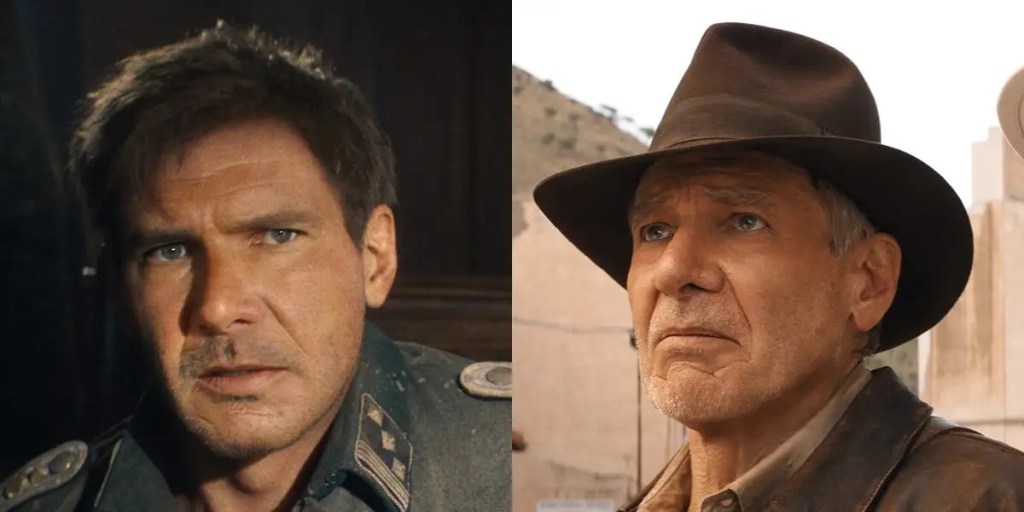
Harrison Ford tries, but he’s a caricature of Indy. I hate to say that, but he had weak and unbelievable material. Much has been written about the use of de-aging technology to make Ford appear 40 years younger in a flashback section of the film. The visual technology is courtesy of Industrial Light and Magic and is called ILM FaceSwap. Here’s an article about its use in this film. The technology was the most effective thing in the film.
Phoebe Waller-Bridge, who plays his goddaughter and partner in finding the Archimedes’ Dial, is an uninteresting character. She’s a fine actress, but the character and performance are bland, particularly compared to previous Indy film characters. Nazi scientist Jürgen Voller, played by the excellent Mads Mikkelsen, is the most effective performance in the film. He sinks his teeth into playing a Nazi, even wearing a Hitler haircut.
There’s really little effort at character development to the film; and Indy suffers the most because of it. What we are told, early in the film, is that his wife Marion has filed for divorce after their son is killed in Vietnam. That’s quite impactful, but it’s not mentioned again, until the end.
Mangold (Copland, Walk the Line, Ford v Ferrari) is a fine director, but this film is a whiff. There is nothing particularly inventive or magical in this film. That’s what audiences want and expect in such a franchise as this.
In the beginning of the film, Indy is still teaching and his personal life is a mess. At the end of the film, his life is miraculously pulled back together, at least in one respect. The 140 minutes of film in between those points is an entirely different film, a fantasy stuck in the middle of some harsh reality. I’m trying not to give away the plot, but it’s even unbelievable for an Indiana Jones film. I would rather have had a film that focused on Indy honestly getting his life back, then some silly Back to the Future plot device. Sorry fans, but the legacy of Indiana Jones deserves better.
2/5




 Ticket 2 Ride
Leave a comment