

Gene Siskel and Roger Ebert popularized reviewing movies for a mass audience. This was way before the internet and ahead of the proliferation of cable television, these two newspaper movie reviewers were competitors in Chicago. According to author Singer, Siskel and Ebert were naturally competitive people, but once they started working together they were competitive about virtually everything.

Sneak Previews was a PBS program, produced in Chicago and shown on local PBS stations across the country. Matt Singer traces their individual stories, and the grand success of their journey through syndication and ultimately to their untimely deaths.
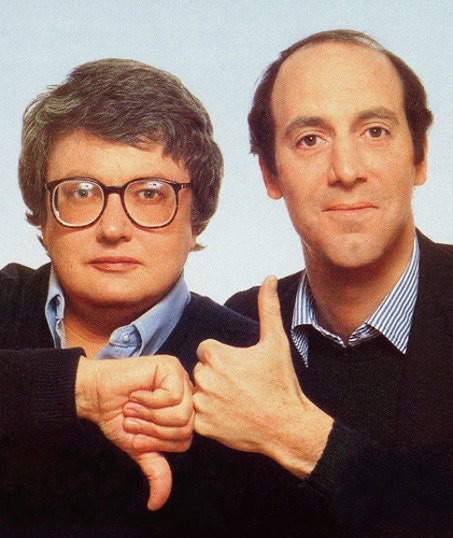
Opposable Thumbs: How Siskel & Ebert Changed Movies Forever (2023, Putnam) is a thorough dive into the Siskel and Ebert collaboration. They were friends, at least in the beginning, and according to Singer never lost that competitive behavior. When they appeared on Saturday Night Live, they counted each other’s lines and words in the script. Ebert needed a cushion on the set so he was the same height as Siskel sitting down; then Siskel wanted a cushion. When they appeared on talk shows, it was a coin flip to decide who sat next to the host. On plane travel, they wouldn’t sit together, but each wanted the best seat. One could not get something the other did not.
In the beginning, Siskel and Ebert knew of each other, but did not know each other. They were two of four newspaper movie critics in Chicago at the time. Singer points out that film critics were looked upon as esoteric, stuffy and generally preachy. Television film critics were either stodgy or flamboyant, rarely conversational, and it seemed verboten to actually sound like a movie. Siskel and Ebert changed that. Each had comments about a featured film, explained their views, and discussed. They certainly disagreed on many films, and sometimes even disagreed about films they both liked. They talked to each other, backed up their views with examples, used film clips to support the review.
Interestingly, Singer explains that in order to get film clips, they had to borrow reels of a print from a local theater and pay to have clips made. Studios, if they provided promotional clips, were ones they chose, which were generally not ones Siskel and Ebert wanted to use. This process changed as television film critiquing became more popular, studios figured out it was in their best interest to provide film clips.
A fun part of the book was learning about the development of Sneak Previews. Siskel and Ebert were not television personalities and their early shows were awful. The first thing they had to learn was that newspaper and television reviews were totally different. The pacing, language, amount of detail, and deliverance had to be learned.
During their 20-plus years working together, Siskel and Ebert became celebrities, appearing on SNL, The Tonight Show, Later with Bob Costas, Oprah, Nightline and many other talk shows. David Letterman had them as frequent guests as they were game for anything, didn’t have to be prompted to be funny and entertained Dave with their banter. Letterman included them in funny bits, just as SNL had put them in skits when they hosted. They refused to do commercials shilling products, but they had no problem laughing at themselves and appearing in silly comedy skits.
Siskel and Ebert expanded their brand beyond their movie critic show, just as they had moved beyond just being newspaper columnists. Each were very intelligent, had their own distinct personalities and their own philosophical film leanings. The magic happened when they were together; the banter, the energy and pushing each other’s reactions to films – crosstalk, as it was called. Neither knew what the other would say or even if they liked or disliked the film in front of them. It was always a surprise to both of them. Spontaneity was key to their crosstalk. Singer quotes those who worked with the two critics; Siskel and Ebert learned each other’s vocal rhythms and when to inject their responses and how to be succinct in making a point. They weren’t really a team, but their success depended on learning to work together.
It’s incredible how easy it seemed watching them, playing off of each other, like a couple who has been married for years. In reality, these two forceful personalities had to learn each other, and how to fill the limited airspace, not to win the battle, but to be stronger working together, and to be fair to the films being reviewed.
In 1982, Siskel and Ebert left the security of their PBS home and exceeded an offer from the Tribune Company to move to syndication. Commercial television. With the big dollars in profit participation, they jumped. The producers of the PBS show had been looking at syndication too, but not including Siskel and Ebert in the deal, Singer reports. The money Siskel and Ebert made from the Tribune deal was huge.
The move to syndication allowed them to tweak the format ever so slightly, occasionally focusing on a current topic related to movies, and to include the top video tapes in the burgeoning video rental industry. They even started reviewing music videos, as MTV was taking off. Siskel and Ebert even trademarked the saying, “Two Thumbs Up!” as it applies to film critiques. Yes, seriously.
In 1986, they left Tribune for Disney and a considerable raise in money. Renamed, Siskel & Ebert, they continued on until Siskel’s death from cancer in 1999. Siskel’s brain cancer was advanced when diagnosed and died within a year.
Ebert carried on the show with guest critics until Richard Roeper was hired to work with Ebert. In 2002, Ebert was first diagnosed with cancer. In 2006, cancer was discovered in his jaw and that triggered carotid artery burst, and the loss of his voice. Ebert continued to write film reviews, but his television career was over. He kept working, publishing to his website, using a synthetic voice for talk shows and presentations, until his death in 2013
Singer mentions two concerns of Siskel and Ebert as the world of video quickly grew into a huge influence. Movies needed to be watched on the big screen as opposed to the small screen for maximum effect, and music videos would change how feature films would be made. Forty years later, these guys were spot-on.
I was a sophomore in college, and exploring the world of film, when Sneak Previews premiered. I read film theory and the writings of many of the critics listed below, finding most of writing in a language I didn’t get. Frankly, I didn’t really know who they were writing for; maybe each other? Siskel and Ebert pointed me in the direction of many films I would never have heard of, let alone see. Thankfully, the university had a robust program of offering an eclectic mix of features, documentaries and shorts. That was perfect for this film hungry kid.
Looking back, Siskel and Ebert were the bridge between the old time newspaper film critics, and everybody is an Internet movie critic. That’s a bit of wide canyon, but this my blog. In the early 1970s, film critics mostly rooted in New York and L.A., and wrote like academics and film historians, not geared toward Joe and Jane movie-goers. The most notable critics were Pauline Kael (The New Yorker), Andrew Sarris (The Village Voice), Vincent Canby (The New York Times), Manny Farber (The Nation), Judith Crist (New York Magazine), Elliott Stein (Financial Times, The Village Voice), Charles Champlin (The Los Angeles Times), Richard Corliss (Film Comment), Stanley Kauffmann (The New Republic), and Richard Schickel (Life, Time).
The 1970s saw an uptick in film attendance and a new wave of both adult-themed films, and escapist fare. The arrival of Siskel and Ebert to public television came along as arts writers were showing up on the staff of midsized city newspapers, popular magazines and morning television shows.
Gene Siskel and Roger Ebert were perfect for their time. These two movie guys, who loved movies and the emotional connection formed between audience and the big screen, talked honestly and without puffery. Smart, yes. Pretentious, no.
I liked this book, although it seemed repetitive at times and slow in the last third. The revelations from those who knew Siskel and Ebert, especially the tricks and jokes at each other’s expense, are golden.
4/5




 Ticket 2 Ride
Leave a comment