
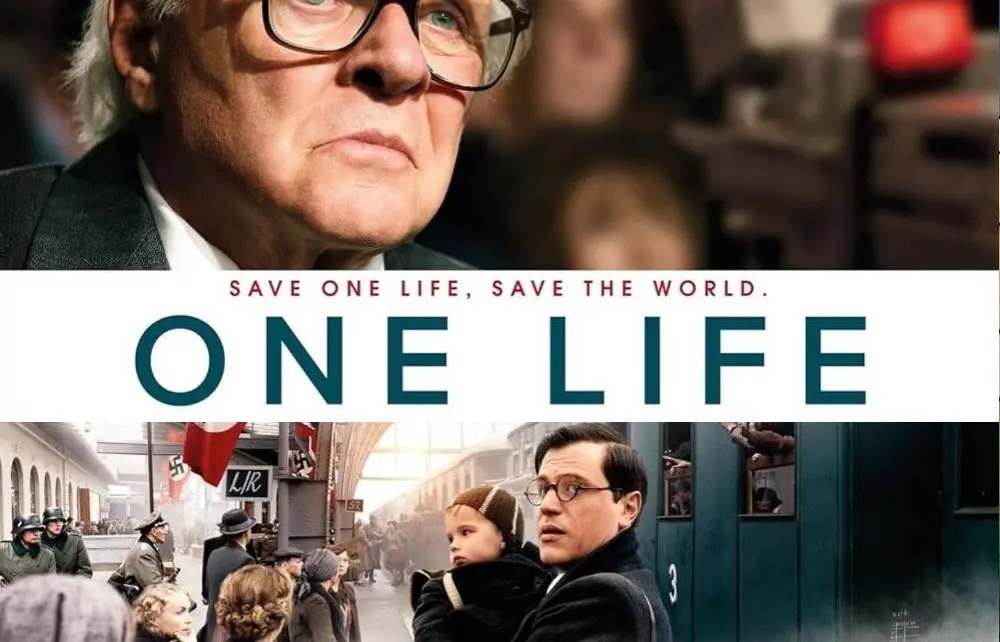
Nicholas “Nicky” Winton was an an unassuming English stockbroker, who in his other life, also engaged in charitable work. As Germany prepared for war in Europe, Winton traveled to Czechoslovakia to assist with relief work. That trip would change his life and the lives of children who were destined for Nazi death camps.
Based on a true story, Winton became determined to get as many children as possible out of Europe to safety. Easy peasy; not so much. The logistical and bureaucratic obstacles were immense, but that only emboldened his efforts. Referred to as the Kindertransports, nine trainloads of predominantly Jewish children were to take them on a dangerous journey (including through Germany) to be placed with an English family until they could be safely reunited with their Czech families. The war made that last part an impossibility. The ninth train was intercepted by German soldiers and those aboard perished in the camps. It was that last part that haunted him.
The film is based on the book, If It’s Not Impossible…The Life of Sir Nicholas Winton by Barbara Winton, Nicky’s daughter.
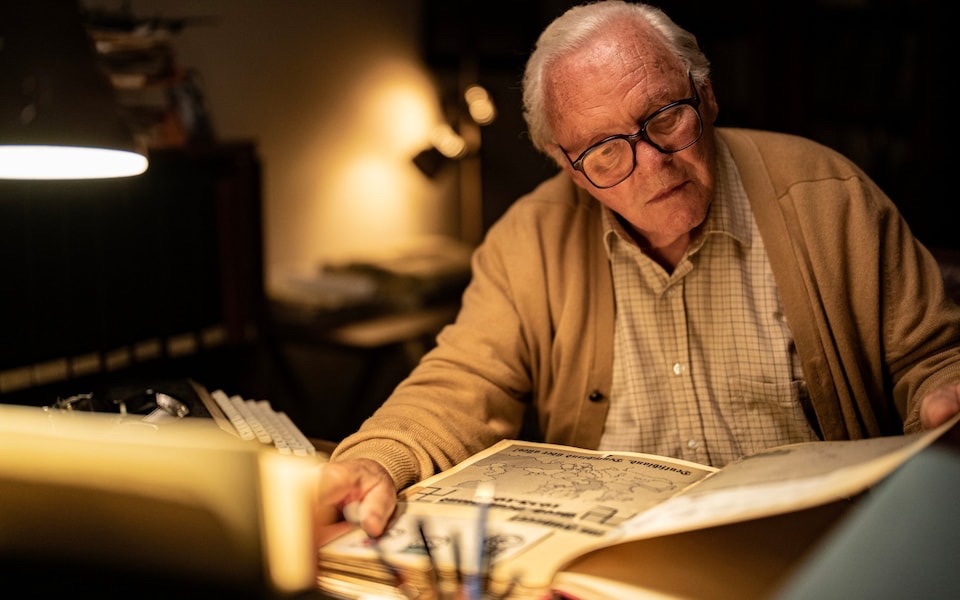
Winton (Anthony Hopkins) reviewing the scrapbook
The film is constructed around two connected stories: Winton as a young man working to rescue the children; and the elderly Winton, who was trying to get closure on the war, as he is about to welcome the birth of his first grandchild. The irony is obvious. As he cleans out his den, burning boxes of his files from his charitable endeavors, he is undecided what to do with a briefcase that contains his Kindertransports scrapbook. So begins his own journey that will reunited with many of the children that he helped to save.
The performances, particularly Anthony Hopkins, are strong and textured. The direction by James Hawes is effective, letting the actors tell the story. His background is British television, and here his economy and focus strongly support this important story.
Time has distanced the Second World War from the remaining souls who survived it. Time has also pushed the War and the Holocaust into the history books. Upward of eighty million people lost their lives in the War, including six million Jews, so 669 children might seem like a small number at face value. Those children grew up and had children and grandchildren as their family tree grew branches.
I found an article written by Matthew Reisz, whose father, film director Karel Reisz, was one of those 669 children. Matthew Reisz offers a mixed review of the film, pointing out what he felt was the filmmakers taking the easy way out and condensing a more complicated story, and overlooking the contributions of others who played important roles in the story.
Nicholas Winton Saved My Father
In the history of the Second World War are stories of courage and humanity; stories we must never forget. Here are a few of those brave and selfless people, who helped many escape the Nazis. Please copy and paste a few of the names into your search engine. Varian Fry, Oscar Schindler, Lois Gunden, Aristides de Sousa Mendes, María Edwards, José Castellanos Contreras, Mary Elmes, Chiune Sugihara, Selahattin Ülkümen, Raoul Wallenberg, Hiram Bingham IV and many others.
A film trailer:
I rate this film 4/5 stars.




 Ticket 2 Ride
Leave a comment