

Award-winning journalist Nikki Meredith began visiting Van Houten and Krenwinkel in prison to discover how they had changed during their incarceration. The more Meredith got to know them, the more she was lured into a deeper dilemma: What compels “normal” people to do unspeakable things? – from Meredith’s website
Charles Manson: a name that still strikes fear and revulsion, 55 years after his crazed mug first hit the news. The 1969 Tate-LaBianca murders gripped the nation in horror and disbelief; news of these brutal crimes and details about Manson and his cult of followers would carry on for the next two years, until Manson and others were convicted – but would never be out of the spotlight.
Think about how optimistic the decade of the 1960s began, or so it seemed. It was exciting to see a new direction in the White House, a country on the move and a feeling of prosperity. Unless you were a person of color or lived in poverty (those are not mutually exclusive), then life might have had a very different feeling. Civil rights legislation, the creation of programs to address poverty, voting rights and other laws and safety nets to provide the public came to be. Advances in science and healthcare improved the quality of life and developed satellite communications, and the space program set a target to get a man to the moon and back. The Beatles, the pill, color TV, the Ford Mustang – wow, take me back! Race riots, the war in Vietnam, assassinations of MLK and RFK, the rise in urban crime. Well, not everything was great. There was the love and peace and humanity of Woodstock. Then the violence and death at Altamont Speedway at a different festival, courtesy of the Hell’s Angels. And then Charles Manson. Thank God the Beatles didn’t breakup. Oh, wait…

The Tate-LaBianca murders as they were called, rocked not only Los Angeles, but the entire country. The investigation, would link those murders, and eventually focus on Charles Manson and several others, who became known as his “family.” Arrests were made and they were tried for the Tate-LaBianca carnage along with several other murders. There was no internet or Court TV during the long trial, but the media was fixated on the both the crimes and the odd behavior of Manson and family members also on trial for the murders. Another Manson family member turned state witness and testified against the others. In the end, Manson and others were convicted and sentenced to death.
In 1972, the California Supreme Court, in a lengthy review, ruled that capital punishment was cruel and unusual punishment and violated the state constitution. Murder convictions against Manson and others were commuted to life in prison. [Van Houten was afforded a retrial in 1976 because her lawyer disappeared during her initial trial.] A bestselling book, Helter Skelter (1974), by prosecuting attorney Vincent Bugliosi and Curt Gentry, was read by millions of people, and who certainly formed an opinion about the three women who took part in and were convicted of the murders: Susan Atkins, Patricia Krenwinkel and Leslie Van Houten.
In Nikki Meredith’s 2018 book (Citadel Press), Monsters, Morality and Murder: The Manson Family and Me, Meredith goes where no one that I’m aware of ventured; a 25-year journey of research into the lives of Atkins, Krenwinkel and Van Houten. This journalist journey had several connecting points with Meredith’s own personal life, which gave Meredith an unusual vantage point.
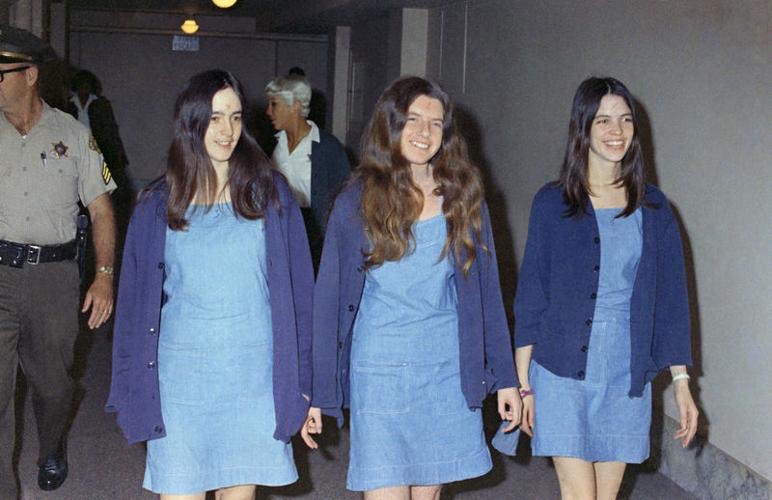
Prosecutor Bugliosi branded Atkins, Krenwinkel and Van Houten as monsters; different from Manson, but the same. Unlike Manson, the three women came from mostly “normal” lives, but were searching for what many kids that age sought in the late 1960s, unfortunately, they were recruited into Manson’s orbit, where their lives changed forever. Meredith attempts to answer the question that many people wondered: how could three “normal” young women take part in one of the most heinous crimes in American history? Were they born monsters who came to live under Charles Manson, or were they systematically broken down and rebuilt under Manson’s powers of brainwashing and psychopathic reinvention? It is highly unusual for women, and women like these, to participate in the horrific murders for which they were convicted.
This was a tough book to read. Revisiting the horror of those murders is not the focus of the book, and I won’t address it here, but you cannot tell the story of any of the participants without talking about the crimes. Even though that was more than five decades ago, time does not lessen the impact of what happened in 1969. Imagine the suffering of the families of the Tate-LaBianca murders each time Manson or one of his “family” members came up for parole (remember, their death sentences were commuted to life sentences in 1972). The victims’ families had to confront the murders and campaign to keep each convicted murderer behind bars.
Charles Manson died in 2017, but even in death, mention of his name conjures up images of pure evil. Even photos of him later in life show that “death stare” and faint swastika he carved onto his forehead. Tex Watson, who had the largest role in the murders, is still in prison. His story behind bars, although not the focus of this book, is a bitter pill to swallow. Susan Atkins, like Watson, became “born-again” and wrote a book in prison. Atkins died of brain cancer in prison in 2009. Patricia Krenwinkel is still in prison, although she was recommended for parole in 2022, but overturned by Gov. Gavin Newson. Leslie Van Houten was paroled in 2023. Although the book ends in 2018, the story did not end. Van Houten was recommended for parole several times, but denied by two governors at the time. In 2023, a court upheld the parole commission’s recommendation and it was not challenged by the governor.

When I first read a thumbnail description of Meredith’s book, I turned away from it. Haven’t we had enough of Charles Manson? Why give any more attention to him or his family? Who cares why these people fell under Manson’s spell?
Much of Meredith’s book revolves around Krenwinkel and Van Houten, mainly Van Housen. Does Meredith answer the question: how did these “normal” kids fall under the spell of Manson, to hunt and brutally murder on his command? Meredith, who attended the Los Angeles area high school with two figures from the Manson universe (assistant prosecutor Stephen Kay, and Manson family “recruiter” Catherine Share) digs deep into the question and whether she succeeds or not is up to debate, but she at least uncovers a better understanding of how young women became cold-blooded murderers.
Despite those who worship Charles Manson for some sick reason, he is a monster, and a stain on humanity. His entire life was about spreading pain and using mind games to chip away at vulnerable people until he could control them. He was a recruiter, a conman who built up his targets and then broke them down until he seized control through unlocking their vulnerabilities.
The entire time she was with Manson, in spite of his sexual relationships with other women, she harbored the fantasy that one day she would have children with him and they would be a family. “He knew how to pay just enough attention to me to keep that fantasy alive.” If he sensed that she was unhappy he’d make love to her or compliment her or make her feel special in some other way. But he also constantly assured her that no one else would ever love her or understand her the way he did. If she ever left him, he’d warn, she’d be dooming herself to a life without love. – Meredith writes of Pat Krenwinkel
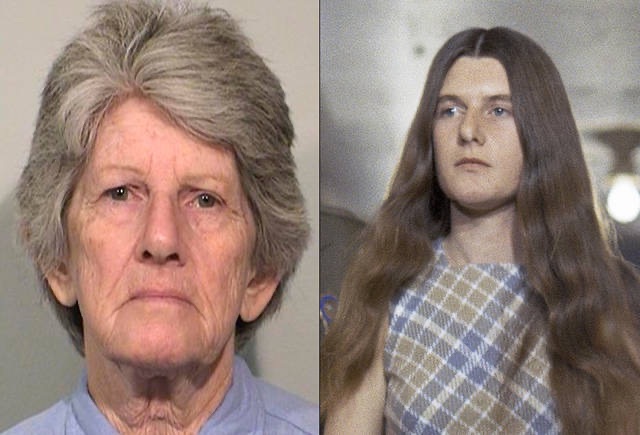
Atkins refused an interview with Meredith, but Krenwinkel and Van Houten accepted. That began a more than 20 year relationship of letters and visitations with both. Meredith also spoke to members of their families where possible. She also read interviews, transcripts of hearings and trials, and spoke to mental health professionals who had studied various members of the Manson family.
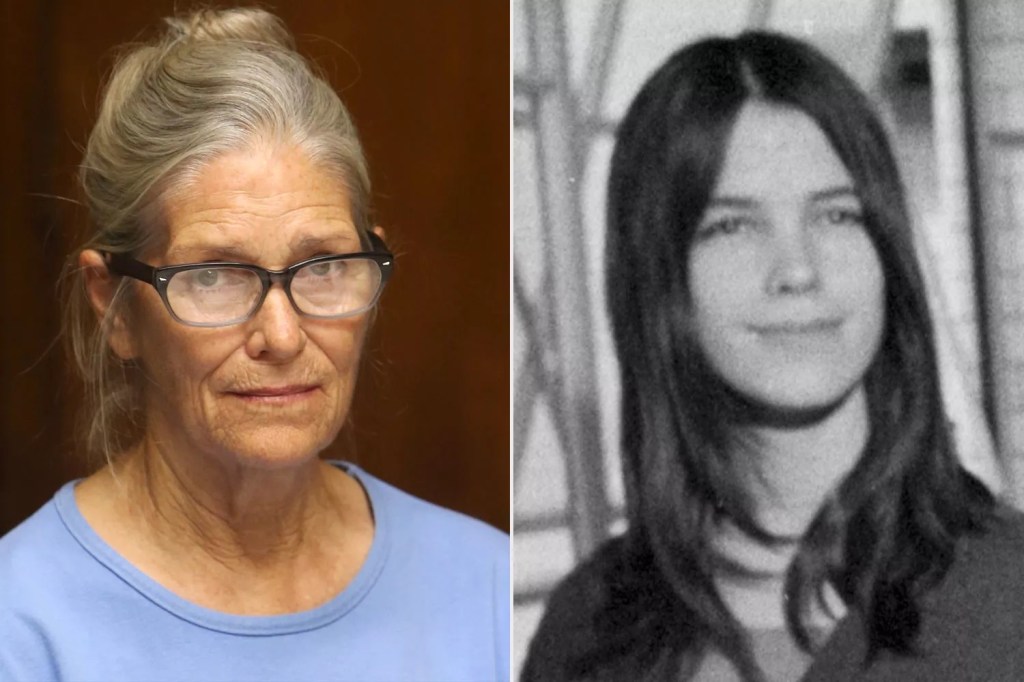
“‘Van (her husband) had survived the war. Life was wonderful,’ Mrs. V. told me (Meredith). “We were living an Ozzie and Harriet existence.’”
Later on, Meredith would find the Van Houten family wasn’t as perfect as Ozzie and Harriet. The Van Houtens would divorce, with him soon remarrying, while Mrs. V. would hold onto the divorce as a deep, open wound. According to Meredith, Mrs. V. held “the ancient divorce for her as her daughter’s involvement in the murders, and then I realized that, in her mind, the two were intimately connected.” Meredith also revealed that Leslie Van Houten had an abortion during the period after she moved out of the house and before Manson showed up in her life. It was only later in prison, that Van Houten forged the relationship with her mother that both realized was missing from their earlier lives.
I have to admit, as interesting as the book was at times, I couldn’t wait to finish it. Charles Manson deserves no more attention, but the evil that occurred because of him is manifested in other forms. Like other manifestations of evil, some want to understand it. Others are good with just punishing it. Tough call.
Meredith, truly wants to understand how people are programmed to kill. She looks at other cases and includes how terrorists and dictators have created killing machines of believers. The subject of programming and fanaticism is such a deep topic, and a scary one.
Here are a few nuggets from the book:
- Identity fusion: members of the Family were the most special people on earth; Manson must always be obeyed.
- With one hand Manson conferred status; with the other he took it away.
- Over and over, Manson presented himself as god-like: Charlie was Jesus.
- When Manson talked about his childhood, they (the “family”) wept for the little boy who was abandoned and abused.
- Manson stripped others of their selves, and promoted the importance of the group. It was everything to be included in the group, and then he introduced the terror of being excluded from the group, as a means of control.
- Manson used drugs, sex, fear of being cast out, the love of being part of his family, the family was special, when the race war started he would protect them, only he had the answers.
Like I said, this was a tough read, due to the subject matter and to a larger degree, the pervasiveness of mind control going on in the world. The Manson saga slowly recedes into history as the few remaining participants are well into their later years. Manson and the murders will never disappear from history, and it shouldn’t. It happened and we should learn from it, even though it can be hard examining the facts and the fears.
4/5






 Ticket 2 Ride
Leave a reply to Mike Miller Cancel reply