

Three intriguing documentaries have found their way onto my viewing screen recently. All three subjects of these film were important figures in the 1960s, and really beyond, for different reasons. I’ll take a look at each film and add my own spin on the significance of these dynamic figures in musical history.
Joan Baez: I Am A Noise

Joan Baez I Am A Noise (2023) – At age 79, Joan Baez was preparing to head out on her final concert tour in 2018. She was not retiring, just closing that chapter on her life. The camera followed her on this tour, which also served as a stage for reflecting on her incredible life.
Neither a conventional biopic nor a traditional concert film, JOAN BAEZ I AM A NOISE is a raw and intimate portrait of the legendary folk singer and activist that shifts back and forth through time as it follows Joan on her final tour and delves into her extraordinary archive, including newly discovered home movies, diaries, artwork, therapy tapes, and audio recordings. – Magnolia Pictures website
This is quite an in-depth look at Baez’s life and career. Her social consciousness, and concerns about life, came at an early age. Influences included her father’s work, travels that showed that people were really the same, the existence of poverty, prejudice toward her Mexican background and dark appearance, sibling rivalry with her sister, her own anxiety at a young age, and then sudden fame.
Baez internalized what she saw and felt, while experiencing musical success and being in the spotlight. All was not right; but what exactly?
“I’m not good at one-on-one relationships, I’m great with one-on-two thousand.” – Joan Baez
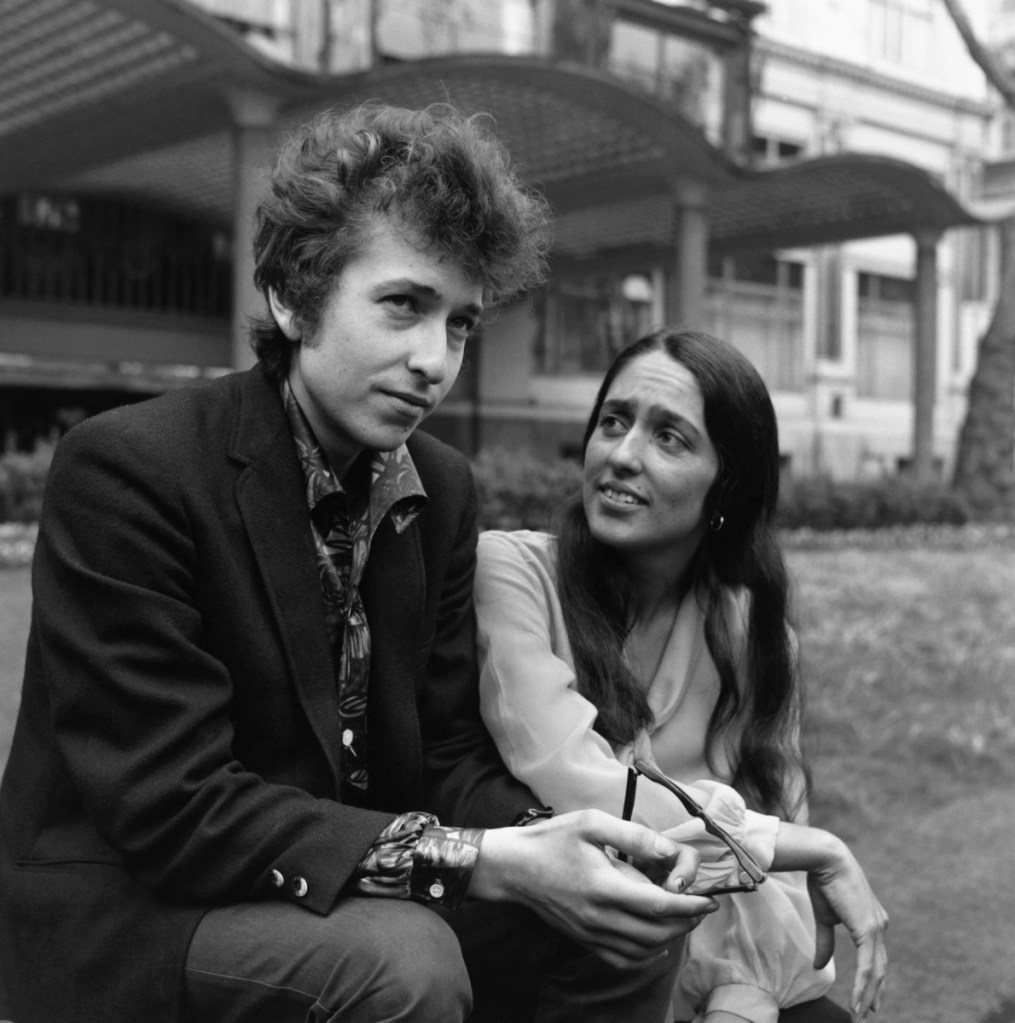
She found love, with another woman, then with Bob Dylan (“I think Dylan broke my heart”). Her social consciousness soared, like her career; but not without some difficulties. The sixties. That led her to David Harris. He was against the war in Vietnam and went to prison for his resistance. She experienced motherhood while Harris was in prison, and along with her own internal demons split them apart. Her son would grow up became a percussionist, and accompanying her on tour.
The unexpected success of her album, Diamonds & Rust in 1974, put her back in the spotlight, for her music, not her activism. Despite her difficult breakup with Dylan years before, Baez joined his Rolling Thunder Revue tour, which she said in the film was fun, but it masked a difficult time in her life. Eight years of drugs and bad choices bottomed out her career.

“I knew there was something monstrous inside that would have to be dealt with.” – Joan Baez
She’s honest and direct about her struggles and missteps. The darkness and unhappiness inside haunted her for decades. Therapy and hypnosis brought forth painful, buried memories. She estranged from parents, for reasons presented in the film. There are scenes of Baez with her aged mother, who is frail, on oxygen and near the end. That’s tough to watch.
There is a fair amount of sadness in the film, but there is joy as Baez lives a life that seems to give her peace and gratitude. There is another part of the film that deals with estrangement from her father, and her mother at the time, over Baez’s claims of abuse by her father, which he denied.
Her vault of film, photographs, recordings, art and performances are essential in telling her story. This collection of material, going all the way back to her beginning, is priceless. As the film presents, and in her own words, Baez knew the key was her voice and her music.
Karen O’Connor, Miri Navasky and Maeve O’Boyle directed this film with Baez’s full involvement. Warts and all, the film follow the threads that form the tapestry that is Joan Baez.
—
The Stones & Brian Jones
Brian Jones was the founder, and in the beginning, the leader, of The Rolling Stones. That will amaze many fans of the band, but it’s fact.
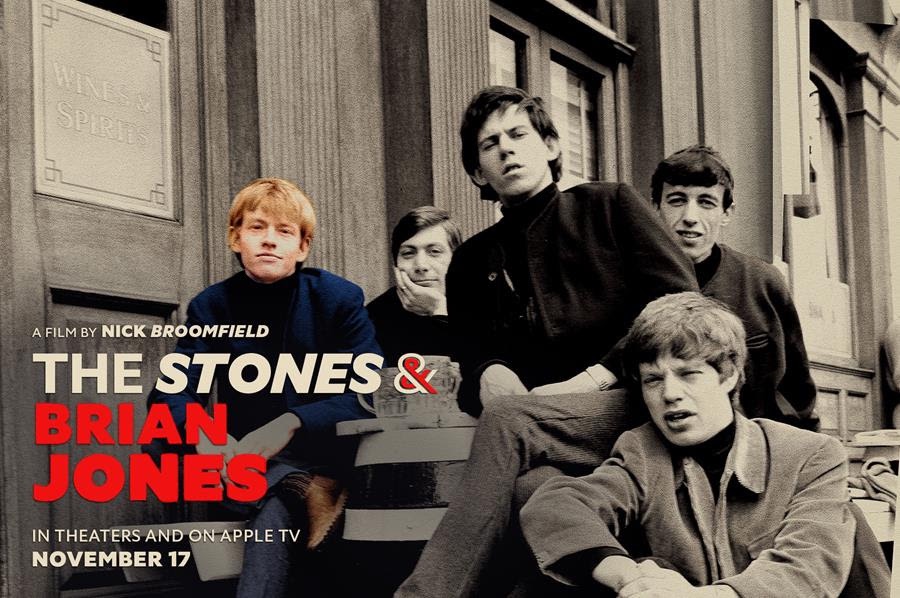
The Stones & Brian Jones tells the story of the years Jones was in the band, of his stardom and later disappointment, and his chaotic and ultimately sad personal life.
The archival film, photos, musical performances and recollections of some of his girlfriends and associates, help to fill in some of the voids in Jones’ life. Those girlfriends are some of the mothers of his children, of which there were six known children when he died at age 27. Jones never married.

One of his girlfriends (and baby mamas) Linda Lawrence, said in the film: “Mick [Jagger] was in awe of Brian. He absolutely loved him. He wanted to be Brian, because Brian had all the girls and all the fan mail.”
The documentary was directed by Nick Broomfield, who had a chance meeting with Jones on a train as a 14 year old in 1963. “That chance meeting with Brian Jones on the train has stayed with me, not least because, back then, he seemed to have everything going for him,” Broomfield told The Guardian. “He was young, charismatic, incredibly gifted, and an integral part of a group that would define the time more than any other apart from the Beatles.”
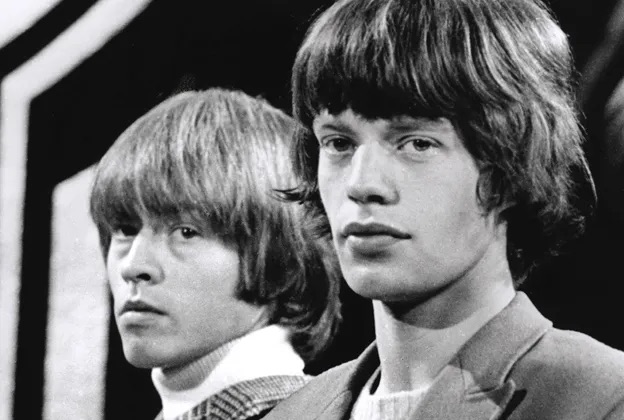
As the Stones’ star rose, and Mick Jagger became the face and leader of the band, Jones’ star faded. His role in the band lessened and his personal turmoil grew.
Jones was in love with American blues and jazz. As presented in the film, he lost interest in school and everything else, except the blues. So he put an ad in the paper for musicians to form his band, which would become The Rolling Stones. Former Stones bassist Bill Wyman is interviewed for the film and credits Jones for popularizing blues in pop music in England. Jones was an incredible musician, picking up and figuring out how to play any instrument. In the film, Wyman plays several early Stones blues recordings and points out Jones’ virtuoso guitar playing.
Despite his musical talent, Jones was not a songwriter, which Jagger and Keith Richards were. They moved the band toward pop and psychedelic music, while Jones was falling deeper into alcohol and drugs. The passing of the focal point from Jones to Jagger happened early on as lead singer Jagger became the face of the band.
Jones was fired from the band that he formed. How sadly ironic is that?
The film ends with Jones’ death in 1969. A letter is read, a revealing note from father to son, the words underscoring Jones’ torment and perhaps the source of his self-esteem issues that others who knew him pointed out.
“My dear Brian, we have had unhappy times and I have been a very poor and intolerant father in so many ways. You grew up in such a different way than I expected you to. I was quite out of my depth… I don’t suppose you will ever forgive me, but all I ask is for just a little of that affection you once had for me. This is a very private and personal note so don’t trouble to reply. Love, Dad.”
—
Phil Spector: Spector
The Showtime documentary, Spector (2022), begins with the Lana Clarkson murder. Ironically, Phil Spector, who had long ago faded from the outside world, had granted a series of interviews just prior to the murder, so his voice is heard throughout the film. The murder investigation and trial are interwoven through this creepy and unnerving story.
Who is Lana Clarkson? She was an actress, who also worked at the House of Blues, where she met Phil Spector on her last hours of her life.

Phil Spector had been famous, but that was a long time ago. The darkness that envelopes Phil Spector’s life was there from the beginning. Spector’s father committed suicide when Spector was a boy, leaving him at the mercy of his mentally abusive mother and sister, who berated him constantly. When Spector’s teenage singing group, The Teddy Bears, went on tour to promote their number one song, his sister went along as their manager. People were frightened of her explosive anger and abusive behavior.
Interviews with music colleagues, Spector’s daughter, and others, quickly point out the tragic and mentally damaging world that Spector was raised in, and how his life spiraled into darkness as an adult. Spector even had to fight his mother in court for access to his own money from The Teddy Bears so he could start a record company. She even berated her son on the witness stand.
“He was his own creation,” said record producer Russ Titleman. Talented, yes. He sought to control everything. Spector states that very fact in the film.
“It was his theater, he had to have control,” said songwriter Jeff Barry. “He demanded attention and he got it. He was the star, not them (the artists).”
Don Randi said, “The things he said to the girls (the singers) was very rude and it bothered me. But they took it because they were getting paid.” Randi, a member of the Wrecking Crew, played many recording sessions for Spector.
Carol Connors, a member of The Teddy Bears, said that Spector had the formula. She heard a song on the car radio that sounded like her, in fact she wasn’t sure. In reality, Spector had used someone else who sang like Connors. “He didn’t need me because he had the formula. I pulled off to the side of the road and cried,” Connor’s said. People were disposable. Especially women.
“He wasn’t treating them as artists. They were tools,” Barry added. The singers and musicians were interchangeable.
Spector got into trouble when he hired Darlene Love to sing lead on “He’s a Rebel,” but credited the single to the Crystals. When the Crystals manager found out, he angrily confronted Spector, threatening him, according to Crystals lead singer LaLa Brooks. She said that’s when Spector began hiring bodyguards.
On the tape, Spector admits that he only felt comfortable in the studio. The music and the songs, those meant the most to him in life. “That’s probably why I didn’t have relationships that lasted,” Spector is heard saying. Nothing competed with his music. The music was what he had full control of the creating and marketing.
By the late 1960s, Spector had moved on to produce The Righteous Brothers and their big hit, “You’ve Lost That Lovin’ Feelin’” but failed to duplicate that success with Ike & Tina Turner with “River Deep, Mountain High.” Spector retreated to his big house.
Then The Beatles and Let It Be came along, followed by solo projects with John Lennon and George Harrison. His hard drinking and paranoid personality would make him unreliable and a more than a bit creepy to be around. His fascination with guns started.
The years following found Spector in his castle on top of the hill. He thought a family would be nice, so he bought some kids. His then-wife, Ronnie (from the Ronettes), had to literally flee in her bare feet to escape her life with him.
Spector did find some fashion of happiness, and sobriety, with a woman who bore him two kids. That fell apart after one of his children suddenly died. The spiraling darkness returned.
The rest of the film focuses on Spector’s brief involvement with Lana Clarkson and the aftermath of her death at Spector’s home.
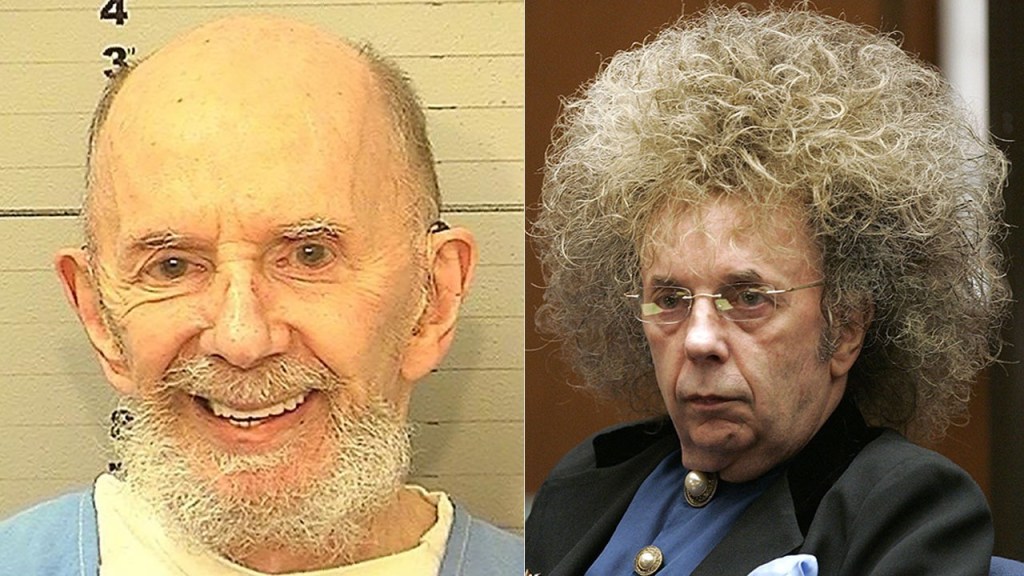
Spector was charged in her death and tried in a heavily sensationalized murder trial. It took two trials to convict him. Already a very sad story, but the saddest part of this story is how Spector, and his defense team, trivialized Lana Clarkson and demeaned her as an unsuccessful actress. Spector gave numerous interviews where he blamed her for ruining his life, making him the victim in this story.
Spector is quite sad, it’s very difficult to watch at times. You see the damage he inflicts on so many others, and how his fame allowed Spector to skate any accountability for how he abused so many people – until Lana Clarkson stumbled into his orbit.
The film, in four parts, is exceptionally well researched and directed. I watched the film twice, because you can miss key details, and it’s an unbelievable story. The film is full of tragedy. As you see, Spector was of a time and place where bad (and crazy) behavior was overlooked or simply accepted.
The work of detectives and prosecutors was essential to finding the truth and finally serving justice. The investigation and trial(s) take up about half of the film. I have only scratched the surface of describing this part of the film. I recommend watching this carefully.



 Ticket 2 Ride
Leave a comment