

Once upon a time, the only commercial-free television was public television. This was back in the rabbit ears and roof antenna days. When cable television brought pay-channels like HBO, it was great to see a movie or program without interruption.
Remember when the cable television channel, AMC, used to be the American Movie Classics? Commercial-free movies. That changed, and then they dumped movies for original programming like The Walking Dead and Breaking Bad, and other stuff. AMC airs commercials and gets paid from your cable subscription. But wait, there is AMC+ if you want commercial free content. That leaves Turner Classic Movies (TMC) as the only commercial-free basic cable movie channel. Yes, I realize TMC cost per subscriber is
Amazon Prime and Netflix have commercial-free programming, sort of. Some of their programming now comes with commercials. Want to avoid it, pay more. You can subscribe to YouTube to get ad-free streaming, or just be patient until you can skip the ads. Even here on WordPress, a free account comes with ads; pay more and be ad-free.
Commercials and ads are a revenue stream for the platform and content creators. I never realized a content creator was a thing. Is that like being an influencer? A brave new world indeed. Monetizing, paywalls and revenue stream.
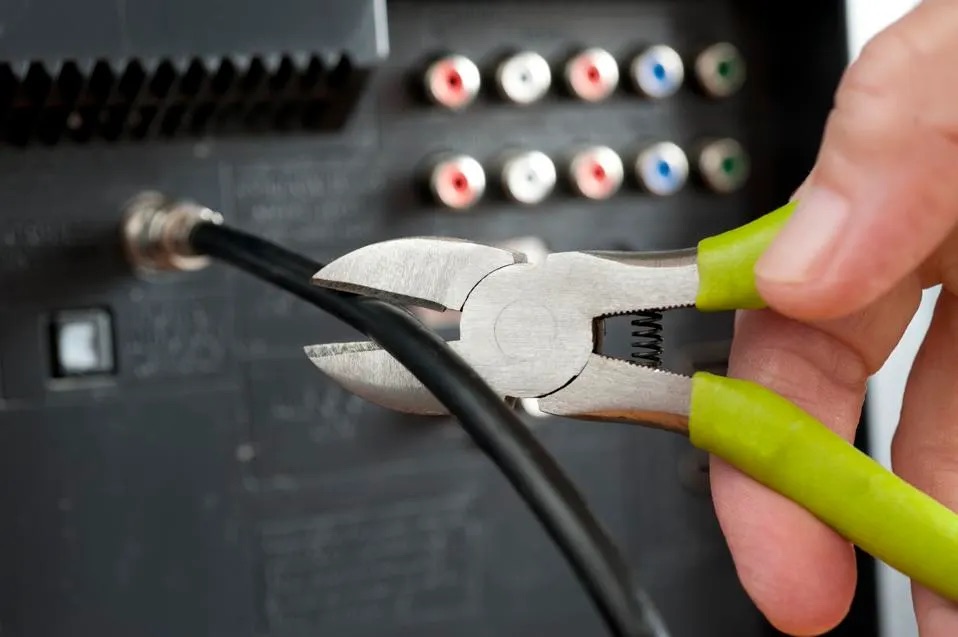
Recently, I cut the cord, canceling my cable television account. I could never envision doing that. Life without television? Unthinkable. When I actually started analyzing my television viewing, it consists mainly of movies and classic television shows from many years ago. Occasionally, sports, but I’m beginning to wean myself of that. I was watching MeTV and FETV for shows like Barney Miller, Emergency! Adam-12, Combat! and a few other classics. To be honest, I have a DVD library with those shows and many others. Why do I even need television? I grew up with it; television is part of my DNA. That being said, trying to figure out what streaming platform to subscribe, at what level, across how many TVs, I need a calculator to compute the cost.

With this internal struggle of television or no television, I reached a compromise. I kept Prime, which has Freevee, ad-sponsored programming of older television series and movies. I also downloaded the Pluto tv app and signed up for free programming. Like Freevee, these are television and movies with ads. With just the cost of Prime, I have access to essentially the programming that I enjoy. Devices like Roku have the apps already loaded to find “free” programming.
There are some new movie releases on Prime, but I’m very selective about the new movies I see. Occasionally, I go to the theater, or I get on the reserve list at the local public library. What about the hot limited series like White Lotus, Virgin River or Succession? My fiance has access to some of those services, so I’m fortunate in that regard.
Here in America, the cable television landscape changed in 1996 with new legislation that essentially deregulated telecommunications, allowing satellite, cable and phone companies to get into each other’s business and provide cable, phone and internet. “It will increase competition and availability. This is good news for the consumer,” the press releases said. Bullshit. This legislation was totally loaded to benefit the telecommunications industry, thanks to the gazillions of dollars spent lobbying Congress. Yes, initially it meant more players in the game, but that quickly changed as the big companies bought the small companies. How many wireless phone companies are there now? Fewer and fewer with mergers. Cable television companies? The same. The biggest are: Xfinity, Spectrum, Cox, Optimum, Mediacom and WOW! But, hold on. If the definition is video providers, then the list includes: Disney (Hulu), Dish, DirectTV, YouTube, Verizon, AT&T and Cable One. The 1996 legislation was also to keep prices in line via competition. Happy shopping!
But I digress. Back to the question about commercials. Do I mind commercials on Freevee or Pluto tv? No. Frankly, I tune out the ads, or grab another beer. What I do mind is if I’m paying for premium content, like new series or movies, then I expect them to be ad-free. If not, I’ll look for my rabbit ear antenna or do rabbit shadow puppets on the wall.
- Cable and satellite TV providers have lost over 20 million US subscribers since 2014.
- Adults ages 18 to 29 are the most prolific cord-cutters.
- 69% also said that cable and satellite TV were too expensive.
- 30% of Americans who currently have cable TV subscriptions say they are likely to cancel.
- Streaming video-on-demand (SVOD) subscriptions will increase by 475 million between 2021 and 2027.
- Ad-supported streaming services are growing faster than subscription-based streaming services.
- The average household cable package costs $217.42 per month.
Sources: YouGov, Pew Research, Statista, Allconnect, eMarketer



 Ticket 2 Ride
Leave a comment