

This is the second book I’ve read on the late film director Stanley Kubrick. The first book was written by his former assistant and jack-of-all-trades Emilio D’Alessandro, which offered a unique view into Kubrick’s work and personal life.

A much better and all-around composite of Kubrick is Kubrick: An Odyssey (Pegasus Books 2024) by Robert P. Kolker and Nathan Abrams. This is not a film criticism overview of Kubrick’s work, but it is an in-depth dive into his film development process, and to some degree his personal life.
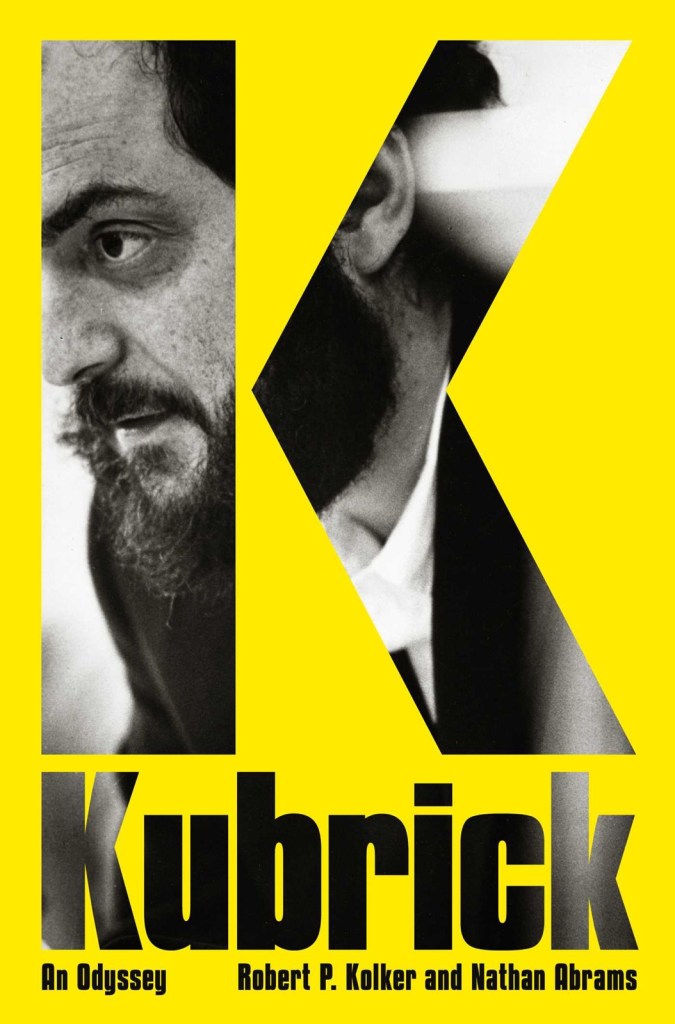
Stanley Kubrick was an incredible film director and visionary, completely absorbed in his art. I didn’t realize he was first a still photographer who worked for Look magazine. He longed to make films, documentary films at first, and later features. Kubrick was a student of film, not formally, but as a lover of movies. He was convinced that he could make better films than the ones he saw in the cheap New York theaters.
His career, was a slow climb from photographer to second unit documentary director to crew member to making his own features. According to Kolker and Abrams, Kubrick had incredible drive to succeed. He borrowed family money, borrowed from banks, shot on city streets without permits, worked around union rules, overpromised, talked and finagled crew members into deferring salaries and friends into volunteering, overusing favors, taking advantage of his wives, and whatever else could get his minuscule budgeted films made.
Kubrick’s journey, from his lesson in operating a 16mm silent camera, to directing and co-writing Paths of Glory for actor/producer Kirk Douglas, is crucial to understanding Kubrick’s filmmaking style. By the time he agreed to work for Douglas, the Kubrick who would make 2001 and Full Metal Jacket was pretty well formed. Kolker and Abrams do their research on Kubrick’s various script ideas, including those that never come to fruition or end up as foundational material for other films.
Paths of Glory remains one of the best films about war, any war. Kubrick strived for realism, and filming in black & white adds to the timeless quality of the story’s foreboding and senseless morality. Based on a true event, the look and feel is one of Kubrick’s best films. Kubrick was a camera and lens guy, often butting heads with his cinematographer, and his actors, as he became notorious for demanding many takes.
Meeting Douglas was critical for Kubrick moving from the B list to work on major features: Paths of Glory and Spartacus. From being buried in debt to attaining the lifestyle and career he sought, Douglas gave him that opportunity, and Kubrick made the most of it. Unfortunately, Kubrick and producing partner James Harris had to buy themselves out of a longterm contract with Douglas to be free to pursue projects they would own. Kubrick was about control: setting up the deal, the screenplay, determining the locations, casting, camera placement, editing, music, publicity – he wanted control of it all. The book goes into great detail of skirmishes with studios, writers, cameramen, score composers, actors, etc. Kubrick trusted his own vision, and as luck would have it, about the time Kubrick started developing Dr. Strangelove, his partnership with Harris ended, along with his film contract. Kubrick had enough clout to negotiated a new deal with Columbia Pictures, who brought the film from Seven Arts. Kubrick was now on his own and was calling the shots on his films.
Lolita had been Kubrick stepping out with sensitive and provocative material. It worked, and Kubrick stepped out much further with Dr. Strangelove. This was a black comedy about thermonuclear warfare, with very heady adult humor. The authors spend very little time on the impact of these films or even what Kubrick thought of them. The book leans heavy on script development and deals, and Kubrick’s life at the time. What the authors give us is fascinating, though very incomplete.
Spartacus was a huge spectacle, and controversial in its own ways, but very little is mentioned aside from battles Kubrick fought off-screen, mainly driven by his insatiable need for control. Dr. Strangelove, ditto.
The story of 2001: A Space Odyssey is worth reading the book, but again, the film’s legacy is barely mentioned. Kubrick produced the film himself, with help from several employees watching the budget and arranging logistics, but this is truly a Kubrick film. Source author, Arthur C. Clarke, was a story collaborator, but he seemed surprised and disappointed by what Kubrick chose, over the story material he rejected. Their relationship, as well as with most other writers, was complicated and ended with frustration.
Kubrick had gotten a good deal with M-G-M, but by the time the 2001 was released, the studio was changing management and adrift in debt. M-G-M would sell their backlot and action off movie memorabilia to stop the hemorrhaging.
The film garnered mostly negative reviews and disappointing box office upon release. Mainstream Hollywood was baffled and predicted a major flop. Word of mouth, young audiences and serious science fiction fans turned a potential disaster into a hit. Kubrick owned 40 percent of the profits, which the authors said set Kubrick and his family for life.
Kubrick’s next film, Napoleon, never got made. Studios wouldn’t back a big scale period film. Kubrick had spent considerable time and money researching the life of Napoleon, pre-production work on authentic costumes and special camera lenses, and scouting locations across Europe. Kubrick was a voracious researcher going into a project; every detail mattered.
Kubrick would be fine, considering the financial tremors in Hollywood. He signed a deal with Warner Bros. that would be his film home for the rest of his career. He permanently moved his family to England, where he would shoot his films. Even the Vietnam war locations of Full Metal Jacket would be filmed in England, with imported trees and vegetation, and from members of the local Vietnamese population.
I never saw Eyes Wide Shut, but the authors often mention this film in relation to each of Kubrick’s early films. Perhaps they meant that Eyes Wide Shut was like a cinematic piece of Velcro catching unused ideas or how his films directly influenced his last film. Eyes Wide Shut was Kubrick’s final film, released after his sudden death. Hoping for it to be the blockbuster that had eluded Kubrick, it was not. The reviews were mixed at best and it did not attract filmgoers.
Eyes Wide Shut seems to me, after reading this book, to have fooled Kubrick and exposed the trappings of his film process. This book details how Kubrick eventually gained full control over every aspect of making a film; every detail managed and known only by him, and no trusted voice of honest feedback.
Kubrick: An Odyssey is a strange journey indeed. A brilliant mind and uncanny focus on cinematic magic, undeniably one of the greatest filmmakers ever. Stanley Kubrick put his heart and soul into his projects, and next to his family, making films was his life. I’ve studied filmmakers all my life and I’ve yet to find another filmmaker who read, researched and prepared for a film project like Kubrick.
Years passed between his films, yet he continually worked on scripts and explored new ideas. The authors spent a considerable amount of time on projects that were not made. The life of Napoleon and the Holocaust were two that he spent years working on. A.I Artificial Intelligence was a film he developed but was passed to Steven Spielberg to make after Kubrick died.
Stanley Kubrick will remain an enigma even with books about his life and films. He was a very private person and he didn’t do interviews.
Kubrick: An Odyssey is more than 600 pages and while I know more about him, I still don’t understand him.


 Ticket 2 Ride
Leave a comment