

“We are hard-wired for repetition, pattern-seeking, and habit formation, so any and all changes to our status quo can trigger a threat response by our amygdala.”
– Britt Frank, The Science of Stuck
A few months into retirement, I realized instead of just shifting gears, I faced a more significant life challenge.
Not knowing what to do, I fell back on my usual response: I’d think about it and see what things needed to change. I had underestimated the transition and the challenges. I also failed to carry forward with commitments I had made to myself. This was a problem of my own making. Sure, I blamed the winter season and the pandemic, but failure to launch was really on me.
What did I need to do? I could not go back in time and start over, nor could I simply unimagine the past several months. After all, some parts of the last few months I did not want to change.
So, where am I going with all of this? Change is an inevitable part of life. Nothing grows without change. Experience is change. New feelings are change. Age is change.
Ever hear these questions?
“You’re stuck in the past.” “Why can’t you let go of (fill in the blank)?” “You said you’d try not to do that again.” “Why do you always (fill in the blank)?”
We are not immune from change; even when we spin a cocoon to hide us from the world, change is waiting. Change is the most fundamental force in life. Life is change. Love is change. Growing is change.
The comfortable nest we build for ourselves comes with a gravitational pull – no extra charge! Like others, I seek control – of my life, events, relationships, and emotional situations.
Yogi Berra famously said, “when you come to a fork in the road, take it.” Which way?
Unlike Kanye West, I like books and I read them. I am constantly searching for knowledge and insight. In the past months I have stumbled across a variety of books I found helpful. The older I get, the less time I have to screw around and be indecisive. A day lived is a day gone. That’s not particularly insightful, just real.
“Be not afraid of going slowly, be afraid of only standing still.”
– Chinese Proverb
Below are some books that address change and the change process. The self-help bookstore section is huge, these are just a few. Some are better than others. We all face the change process at one time or another. When you do, good luck.
The books…
How to Change, by Katy Milkman (2021, Penguin Random House), gave me a lot to think about. I would recommend it for anyone struggling with, or contemplating a change.

In life, rarely do we get a mulligan or a do-over. The thing about a do-over is that we learn (hopefully) from the experience and apply it to future action. A do-over is not a quick ride in the wayback machine. Replaying a golf shot is one thing, no harm, no foul. Say we make a bad choice that has consequences for us or others, we cannot unring the bell.
A reset is a bit different in that we aren’t erasing a past action, we are going forward after standing up what has been knocked over. Life is more about changing course and adapting to experience, and that is much harder than a mulligan.
For most of us, life is represented by the bottom illustration.

A straight, easy path is usually a dream, or that of the prom queen or star athlete. Whether that’s true or not, it’s part of our lexicon. For the rest of us, an occasional detour through The Jerry Springer Show is how we roll.
So, what did I learn from Katy Milkman’s book?
Change begins with a change in behavior. That is pretty simple. Changing your behavior, even a small thing is like casting a rock into the universe causing ripples to flow beyond sight. Change often feels monumental. If you play a game of billiards, having the cue ball hit a solid or striped ball causes it to transfer energy to that other ball and roll across the table. Change is energy: big or small, having an impact on the universe.
Initiating a change can often feel like a fresh start. I do not mean wiping the slate clean or rewriting history, we live with our responsibility and consequences. Change may be resolving or achieving something we have struggled with, but lacking the success we seek. Today, I decide to take a different path or do what I have procrastinated about. Today is different, it is not about the past, it is about moving forward. The biggest obstacle: fear.
Change is scary. Change can also be presumed as needing to be huge and complex actions. We scare ourselves out of future action, we are derailing ourselves before we even take a step. We might have compounded any successful change by loading too high and tight. Success comes from forward movement. Planning too much and you outfox yourself. Milkman says we often pre-plan goals that are too lofty and that we focus primarily on the future-me, to the exclusion of the present-me. Maybe you can start small and start now. When thinking about the future-me, do not forget the present-me.
I am going to do something different. Even though this is a small thing, it is important and I want to feel like it is significant. Milkman suggests tying the change to a specific date, one that has meaning. Doesn’t this add pressure to the change? Maybe, so be reasonable. Maybe it is the first day of the month, or the first day of spring, or trash day (for unloading old memories), or a day you are planning to visit someone.
Sometimes we need prompts or help remembering to turn left instead of always turning right. Or when we are in a particular situation and might want a different outcome. We get locked into routines or behaviors that guide us. There are shortcuts to remembering certain things, like people’s names. Create cues that remind us of what we want to do in certain situations.
Behaviors can be defaults where we do not even consciously think about something, it happens because we are on autopilot. Want to change behavior, establish new actions. Repeat until new action is routine. Defaults make actions more automatic. Change can be difficult because our behavior can be rigid. Habits are routine behavior. We are creatures of habit. There is comfort and predictability in habits. What we do not exercise is flexibility and adaptability.
Since change starts with behavior, why not piggyback new behavior onto existing habits? You make the rules, so why not give new behavior the best opportunity to succeed?
How often do we remember every stumble or missed opportunity? Consciously or subconsciously, they can hang in the air like ghosts. Instead of allowing a negative thought to enter our minds, focus on the positive. Track action and forward progress. Yes, you get a participation trophy for trying, but reward your success. Build on it. Remember it. Reward yourself a guilty pleasure for undertaking a change.

The Science of Stuck, Breaking Through Inertia to Find Your Path Forward (2022), by Britt Frank.
“Procrastination is not laziness.
Procrastination is a form of protection that
keeps you from face-planting into shame. If
you never actually complete that project,
apply for that job, go on that date, or start
that exercise program, you’ll never have to
risk failure and rejection. Whether you want
to get fit, cultivate meaningful connections
with people, start a business, jump into the
dating pool, or bring a creative dream to
fruition, the benefits of staying stuck are
numerous.” – Britt Frank
Frank says that being stuck, is a trauma state, where the brain is focused on survival and shuts down to other activity. She also prescribes activities to “wake up” the brain. I do not embrace some of her explanations, but she is a licensed psychotherapist who has practiced and taught at the University of Kansas (where I attended).
“Curiosity is fuel for the change process
When you can observe your behaviors with
curiosity, it’s easier to see their benefits.
Understanding the function of a behavior is
the key to changing it. We are hard-wired for repetition, pattern-seeking, and habit formation, so any and all changes to our status quo can trigger a threat response by our amygdala.” – Britt Frank
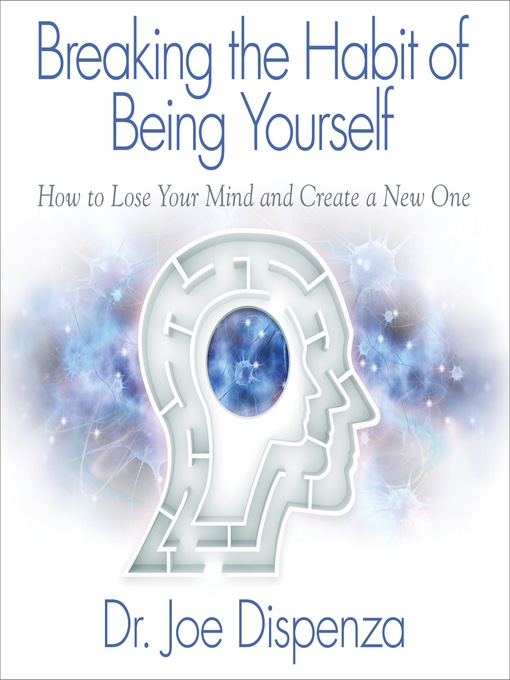
“We wait for crisis, trauma, loss, disease, and tragedy before we get down to looking at who we are, what we are doing, how we are living, what we are feeling, and what we believe or know, in order to embrace true change. Often it takes a worst-case scenario for us to begin making changes that support our health, relationships, career, family, andfuture.” – Breaking the Habit of Being Yourself, by Dr. Joe Dispenza
In other words, when our cheese gets moved, we have no choice, our world is in motion. That’s what we want to avoid. The title of Dispenza’s book is enough to scare you away. Again, the focus is on identifying and breaking unproductive habits. Changing behavior = change.
Decision Time: How to Make the Choices Your Life Depends On (2021) by Laurence Alison and Neil Shortland, who research and teach military decision-making in the U.K.
Inertia, over-thinking, gathering too much information (redundant deliberation). Timing. These are all limiting factors that can hinder or derail us.

“‘Analogical decision-making’ involves analogies between the past events and present to help predict what is likely to happen and decongest a proper solution.” – Alison & Shortland
The truth is that we all hold values, but often we don’t work out which values matter the most. It’s not enough to have worked out simply what matters to us; we also need to have derived a hierarchy of which values matter most.
We overthink a problem and that reinforces stagnation. Alison and Shortland call this decision inertia “redundant deliberation” which results in no action or action designed to fail.
Alison and Shortland discuss values and the importance of identifying “the most sacred values (the principles and rules that you adhere to in the deepest part of yourself) which are your guide to when change is right for you.”

“And reflecting on our past selves also allows us to dream who we want to be next.”
Vivek Shraya, People Change
Vivek Shraya uses her own personal life for the different phases of change and particularly relationships go through. New relationships offer not only new people to interact, bring opportunities to reveal other parts of ourselves.
Shraya says the new friends offer the chance to learn about a new ideology, a new lens to view yourself. “To reveal a different side of yourself,” she said. “My hunger for friendship has been intensified by a desire know the kaleidoscope of my own possibility.”
How do we find ways to grow inside of existing relationships?
“Reinvention shouldn’t just discard the old for the sake of the new. Reinvention should honor the foundation of the past and build upon it.”

Bruce Feiler’s Life is in the Transitions, Mastering Change at Any Age, describes the frequent major disruptions that derail our steady lives.
Our lives play out in steps and events, each action or result takes us rarely in a straight line. What’s over the hill, around the corner or the next day? Certainly we plan, prepared and react, but life can change or impact our intentions, for both positive and negative. A crisis one person is faced with at 40, may hit us at 20, and change our course.
Feiler writes that research has debunked the notion of the midlife crisis in part because generations even disagree about what is midlife. This accepted theory was also tied to each life decade having particular similar and defined highs and lows. Underscoring this notion is Feiler’s major point: lives are not linear, and disruptors occur.
Feiler tallied available data for what he calls disruptors. “For example, we know the number of jobs the average person has (13), the number of moves (11.7), the number of accidents (3). We also know the ratio of people who get married (7 in 10), cheat (1 in 5), get divorced (1 in 5). Half of us will have heart attacks, a quarter of us will become addicts, a third of women will be sexually assaulted, as will a sixth of men. I didn’t even consider the number of diets (55) or financial struggles (1 in 3) because it’s too hard to quantify when these are truly disruptive.”
A lifequake is defined as, “a powerful burst of change in one’s life that that leads to a period of upheaval, transition and renewal.”
According to Feiler’s research, each life is different in how it unwinds and when these lifequakes occur. During any life there are dozens of disruptors, coming and going, but only a few lifequakes, titanic events that reshape lives. A lifequake can literally be life-changing. Feiler found most people he interviewed to have reimagined their lives because of it. Often the trauma of the lifequake freed them to change their lives, to strip away relationships, careers and problems, and re-examine priorities that pulled them into unsatisfactory directions. A lifequake is having our cheese moved like a hockey puck m.
“My definition: A transition is a vital period of adjustment, creativity, and rebirth that helps one find meaning after a major life disruption.”
Feiler goes in to say that transitions are usually lengthy and can last years as a person is rebuilding his/her life. He says transitions are like the mortar between the bricks, the healing and rebuilding process that leads to something truer and healthier. Half our lives are spent in transitions.
The tools are getting through a transition are:
- Accept it
- Mark it
- Shed it
- Create it
- Share it
- Launch it
- Tell it
If I understand Feiler, when a lifequake happens, instinctively we try to navigate and make sense of this period of chaos. We have entered the transition where many things are going on, especially the act of shedding or losing things that make no sense or aren’t healthy for us. Some of this shedding is happening because of the disruptors, other shedding is voluntary as an opportunity to close chapters in order to open new ones.
We shed habits, routines, beliefs, practices, dreams and even people. Feiler likens the process to leaving the cocoon or molting, and assuming a new identity. That’s a lot!
The new skin or form is what we create. This is a critical time for growth. From personal experience, I’ve realized that when you enter this transition, simply going with the flow or playing it safe does not work. Perhaps there is fear or hesitation, that is natural, but the ground under us has given way, we must move forward.
Summary
I found something helpful and wise in each book, but not every book offered the same degree of truth for me. The ability to change your behavior in a positive direction is something many people can’t do by themselves. Most people already know how to change and why change can be helpful. Change is scary and we usually talk ourselves out of it or believing we will fail, and guess what – we fail.
Having our cheese moved can be an important time to change – but not always. We may have to change, and that’s not always a step that makes life better. Planned change is more likely the change that achieves growth. My advice, get some help, a coach or therapist to help guide and encouragement taking the right steps.

I think what Feiler is presenting is what happens to offensive football teams. We prepare, practice and call our best suited plays. The defense reacts and presents challenges, so the quarterback had decisions to make. Continue with the called play, audible or read the defense and execute the called play with new information. Instead of an anticipated gain, it’s a loss of five yards. Eventually the team marches down the field, but is held to a field goal, not a touchdown, but still a score.
I happened upon a book by Craig Groeschel, who has written a number of books appearing on the New York Times bestsellers list. The Power to Change seemed like a good fit for this series.

I didn’t know Groeschel but quickly discovered he’s a well-known pastor and he writes from a spiritual place, of wanting to realize and be the person God created. We’re imperfect mortals and certainly need to master the process of change in order to become a better version of ourself.
First, define your goal. See the outcome and hold yourself accountable.
Rather than try to accomplish your goals, train by putting into practice your goals. Commit to this plan. This takes discipline to do what is important rather than what’s short-term convenience.
Want to change your life? Change your habits. A habit is basically “behavioral autopilot,” Groeschel writes. Make your habits: obvious, attractive, easy, communal and repetitious.
—
So, a lot of questions and salient points. There’s no universal roadmap or checklist to deal with change. Fear and avoid it, or embrace and deal with it.
Now, several years into retirement, I’ve untaken numerous changes, some I didn’t see coming. Admittedly, I’m still struggling a few, and while that’s disappointing, it’s not fatal, and it’s movable. The path to change is like running a high hurdles race. The hurdles are mostly placed there by me.



 Ticket 2 Ride
Leave a comment