
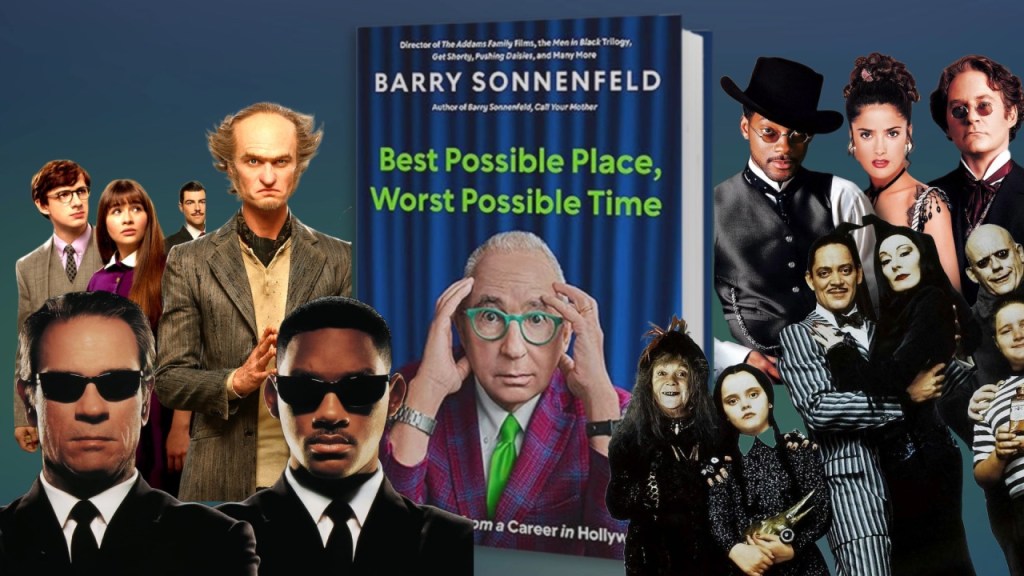
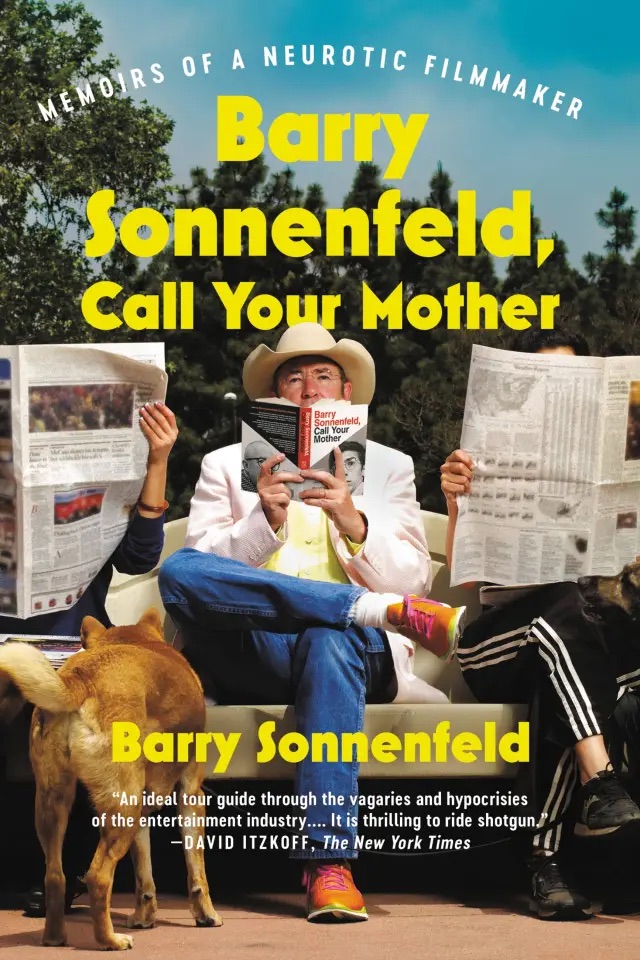
If you haven’t read Barry Sonnenfeld’s first book, Barry Sonnenfeld, Call Your Mother, you should. It’s funny, weird and irreverent.
Sonnenfeld had one of the hottest careers in film, first as a director of photography, and then as a film director. Few filmmakers today have a style, but Sonnenfeld did. Hitchcock on laughing gas, I call it.
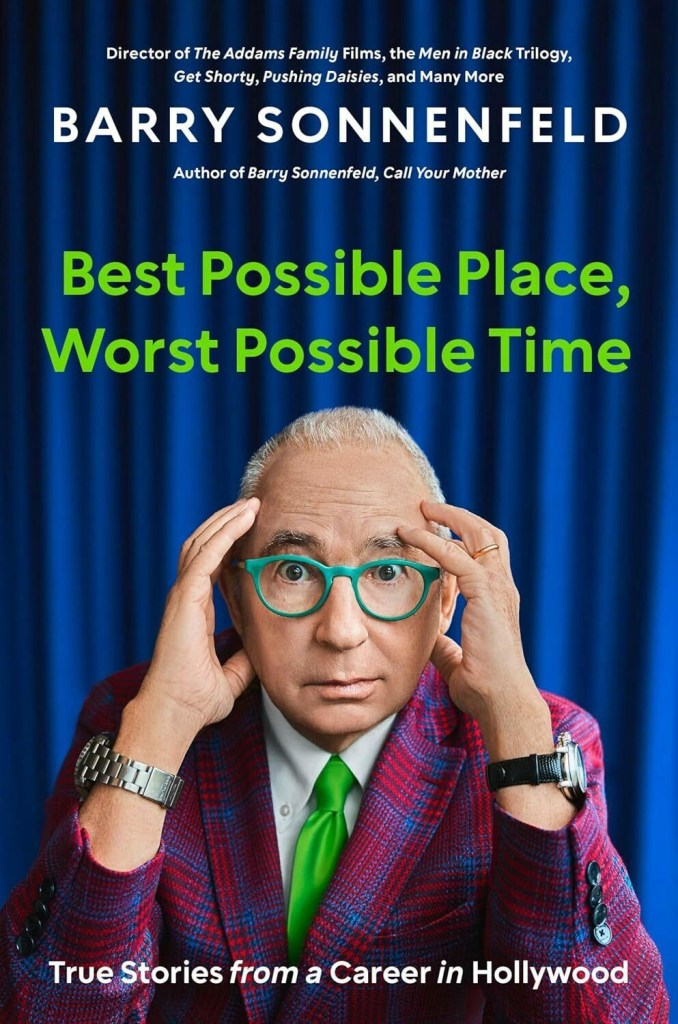
Best Possible Place, Worst Possible Time, True Stories From a Hollywood Career (Hachette Books, 2024) is devoted to his film and television projects, whereas Call Your Mother was mostly about Sonnenfeld’s rather interesting life. He also wrote about several of his films in his first book, but the follow-up is focused primarily on his films.

As a director of photography, you expect Sonnenfeld to be a mostly a visual guy: lenses, lighting, camera movement, etc. What is surprising is how much he focused on storytelling and helping actors enrich their performances, which explains his ascension to the director’s chair.
Here is a passage about working with Meg Ryan on When Harry Met Sally:
“Try as I might, asking her to stop on a certain mark, or to lean on a left or right foot to keep her shadow off another actor, was always hit or miss. This night, I tried a new approach. Instead of asking Meg to hit a certain mark, I changed my request to make it not about my needs, but hers: “Hey Meg. It doesn’t matter where you stop, but if you land right here on this mark, you look fantastic.’ It worked so well it became my new approach, not only with Meg, but all future actors.”
Sonnenfeld’s book is filled with amusing stories of moviemaking, but also the egos, backbiting and lies that are common in Hollywood.
“I’m not proud of this, but when Bud retired, replaced by a lovely man, Cyril Drabinsky, an Orthodox Jew who unfortunately wasn’t able to break through the dreary, lazy Deluxe culture that Bud had created, I threatened to kidnap him on Yom Kippur, tie him to the roof of my car, and drive us to Deluxe where I was going to eat a pork and lobster sandwich while burning down his factory.”
Sonnenfeld’s work, like that of Tim Burton, is easily recognized, it’s campy in a smart way, and daring with the camera.
“Raising Arizona relied on a very self-conscious, intrusive camera. The use of wide angle lenses and rapid camera moves gave us the wacky energy we were after. I used similar techniques on Blood Simple, Phil Joanou’s Three O’Clock High, and Danny DeVito’s Throw Momma from the Train.”
Directing a film must be like captaining a ship in a storm that has been hit an enemy torpedo while some of the crew are mutineers. The directing stories are priceless, like John Travolta that had to read his lines off of cue cards, and Gene Hackman who angrily refused direction.
“In the case of Travolta’s performance in Get Shorty—a performance that won John a Golden Globe-something like a third of the words you hear are from a different audio take than the visual one. There are dozens of on screen “ah”s and “um”s that we removed.”
“‘Stop interrupting!,’ Hackman screams at Sonnenberg. ‘Just listen, God damn it. What is wrong with you? I’m trying to tell you, I could have been so much better, except the entire time I was working on this show, I DIDN’T THINK YOU HAD A FUCKING CLUE.’”
Sonnenfeld’s film career sadly downshifted, primarily due to the bomb that was The Wild Wild West (1999), and continued with some under-performing films like Big Trouble, RV and Men in Black 3. He has worked in television producing series, dabbled in directing commercials and being an author.
Whether you like the Addams Family or Men in Black films, Get Shorty, or his camera work on Misery, Big or Raising Arizona, you have to recognize his brilliance in film presentation, particularly comedy. His books are funny, insightful and delightfully snarky.
5/5



 Ticket 2 Ride
Leave a comment