
Films with a mysterious, politically-tinged subject matter have always held my interest. They can be fictional or based on real events, tense with suspenseful drama, or packed with action and adventure. Comedy, especially satire is definitely in my wheelhouse. Whatever the story: the key factors are well-written and believability. If a world war or the overthrow of a government, base it in the realm of authenticity and originality.
Post-World War II was a new world order, new governments, changing alliances, nuclear threats and the communist scare. In America, a darkness crept into novels and film. Subject matter dealt with more adult themes and peeled away layers of the human psyche.
By the 1960s, stories became darker, more cynical, and exposed human frailties more openly, especially as the field of psychology studied American culture, morality and habits. America was also in a Cold War with the Soviet Union and Communist China, and was involved in real combat in Southeast Asia as it fought “proxy wars” around the globe. In the fictional world, espionage and secret agents were the rage, mixing fiction with the realism of sex, violence and world domination. In truth, governments were collapsing, nuclear weapons were held by a growing number of countries, there were spies inside of governments stealing secrets, and the doomsday clock ticked away. John and Mary Citizen didn’t have a clue what was really happening, nor did they really want to know. Films and pulp novels were there to entertain, stoke the imagination and titillate. Reality would soon become all too real as the evening news brought war, civil rights, assassinations, nuclear annihilation and other fun stuff right into the living room at dinner time. Damn you, Walter Cronkite!
The 1960s also brought us a mixture of good and bad, believable and fantasy, serious and funny, thoughtful and frightening films. The subject matter was pretty wide, with a diversity of Hollywood and foreign productions, B films and big studio movies, entertaining and downright disturbing. You might guffaw at Dr. Strangelove, but feel sick watching Fail Safe, almost the same film.
Is Easy Rider a political film? Or Alice’s Restaurant or John Wayne’s The Undefeated? One can find political elements in many films of other genres. Labels are misleading.
I’m avoiding the political films most associated with the 1960s, The Manchurian Candidate, Torn Curtain, Dr. Strangelove, Fail Safe, The President’s Analyst, The Ipcress File, Advise & Consent, Arabesque, The Best Man, Exodus, Topaz – most of which I’ve already written about (use the search).
The films below are mostly ones I hadn’t seen before, but I watched them all again for this blog. These films all came up in a search for 1960s political films. Enjoy.
—
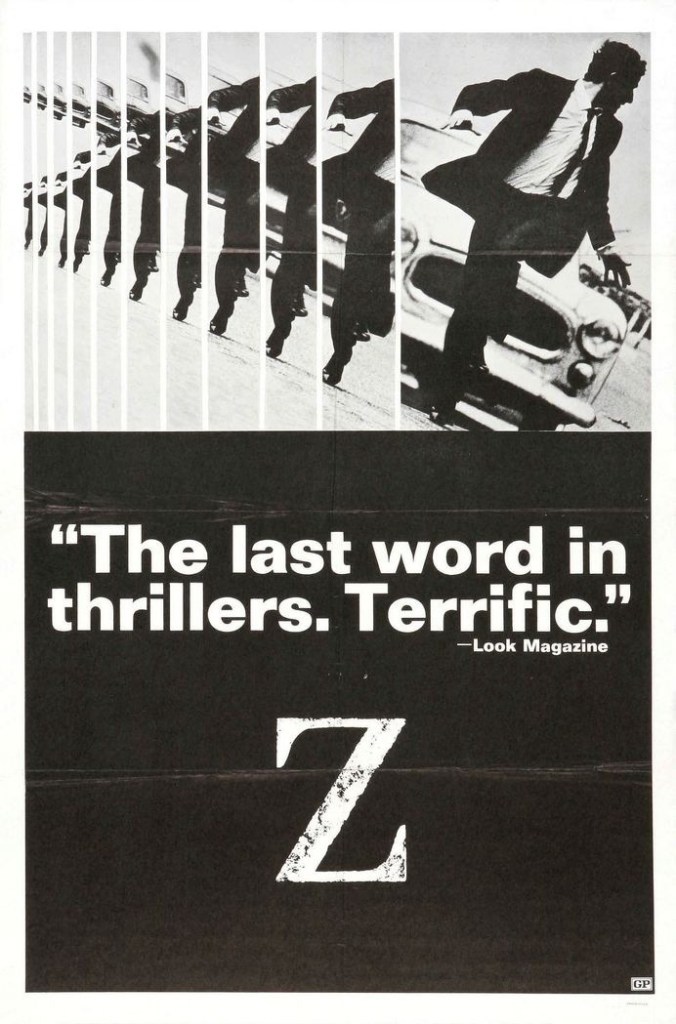
Z
A 1969 film by Costa-Gravas, who also made the critically acclaimed Missing. Z won the Academy Award for Best Foreign Film.
In the film, the situation in Greece is volatile, and the powder keg is lit by a planned rally featuring a leftist speaker. The police and government are intentionally slow-rolling providing any protection for the speaker and his officials. Combatants are awaiting confrontation outside of the place where the speech is held. The mob severely beats a man mistaken as the speaker, while the police do nothing. When the speaker emerges from the rally, he is clubbed in the head and must be taken to the hospital, where after several surgeries, he dies. The government is poised to cover up the premeditated nature of his injury, however a camera man has captured the event on film and pressure the district attorney into investigating the murder.
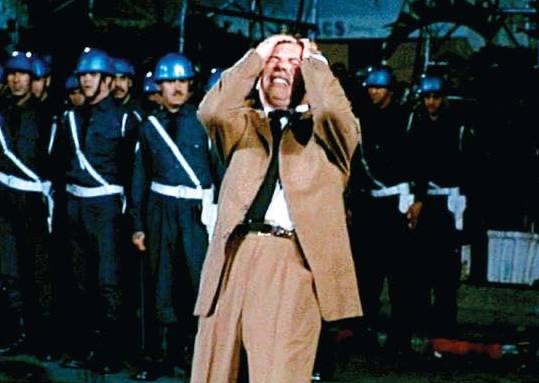
Costa-Gravas clearly conveys the bureaucratic complicity in the murder and efforts to derail the following investigation. The attorney general is warned about pursuing the investigation and is offered a way to shift the blame to the leftists. He refuses and indicts several high ranking government and military leaders, but either the charges are dismissed or they get a slap on the wrist, while the attorney is brought up on charges.
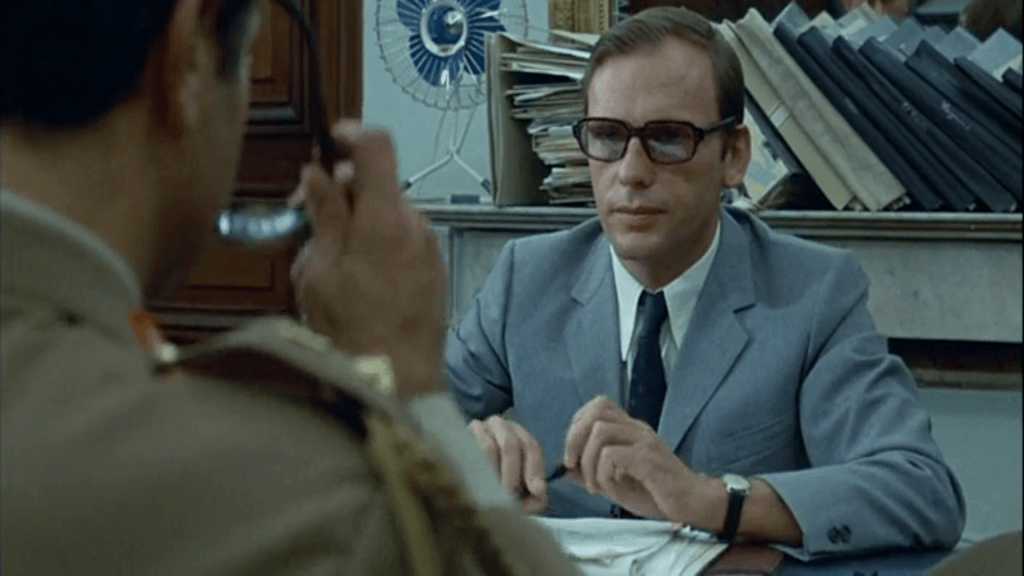
Yves Montand and Irene Pappas have brief roles in the film, but are the big names in the cast and gave the film some star power.
Z is an incredible film. Political violence is a real thing, and the film was based on a real event, Gregorios Lambrakis, a leader of the opposition party in Greece was fatally injured in a “traffic accident.” Corruption is a real thing too, even when the facts spotlight a cover-up, the forces will attempt to quell the light. All these years later we may scoff at the likelihood of a story like this, then read of an actual event covered up by those who don’t want it exposed.
—
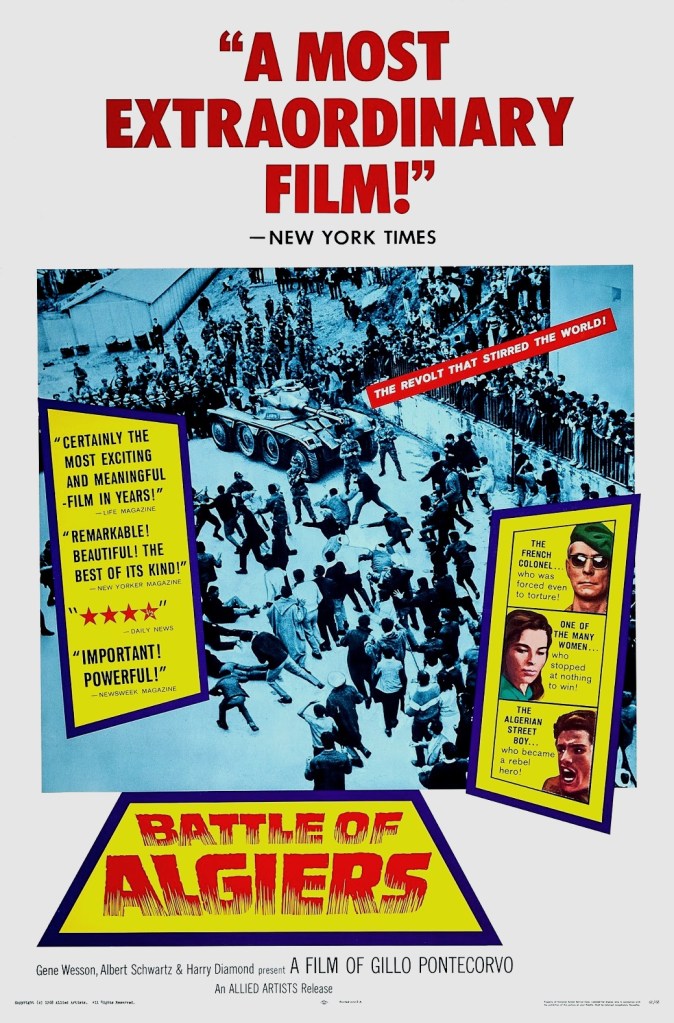
The Battle of Algiers (1966)
One of the most powerful films I’ve ever seen. Algeria was a French colony from 1830to 1962. The Algerian battle for independence was costly and bloody, with many civilians caught in the bomb blasts.
Directed by Gillo Pontecorvo (Burn!)an Italian film director, who fought against fascism in World War II, before becoming a filmmaker. He didn’t direct many films, but he made them count.

Pontecorvo tells the story from both sides, from the colonial French military and the FLN resistance fighters. The film was intentionally shot to look like a newsreel, and had that documentary feel to it. He utilizes a combination of actors and nonactors to get that quality of realism. In fact, he featured a number of Algerians who actually fought for independence.

The accompanying documentary features give the backstory and interview Pontecorvo and other principals from the film.

The film covers the period between 1954 and 1957, during an intense period of violence between the FLN and the French-Algerian partisans, and then the FLN and French military, who are called in when the violence escalates. The Evian Accords ended the Algerian War with a cease-fire that was declared on the 19th March 1962, and formalized the status of Algeria as an independent nation.
The film’s plot follows the recruitment Ali la Pointe, a real figure in the liberation fight, into the FLN, who rises to become one of its commanders. French paratroopers are sent to Algiers, led by Col. Mathias, a perceptive and hands-on leader. He sets out to smash the FLN, using very brutal methods. The death toll rises as the use of time-delayed bombs takes the battle into the lives of non-combatants.
Colonialism was on the retreat in the 1960s, whether in reality or just in the cinema, freedom was in the air, and on the screen.
See this film.
—

Seven Days in May (1964)
Directed by John Frankenheimer. Based on the book by Fletcher Knebel and Charles W. Bailey II about a planned military coup to remove President Jordan Lyman, principally because he is for ratifying a nuclear arms treaty with the Soviet Union, and the Joint Military Chiefs, led by General James Scott (Burt Lancaster) belief the treaty dooms the country. Colonel Casey (Douglas) gets wind of the coup and begins at investigate, going around Scott to inform the President.

This story could really happen. We are have always taken comfort that our Constitution and system of checks and balances would prevent a coup from taking place. The last four and a half years should tell us that we are not safe.

The film takes place over seven days leading up to an alert, which is to be a major training exercise, but in reality is a cover for launching the coup.

Starring and produced by Kirk Douglas, whose company hired Rod Serling (The Twilight Zones) adapted the book. Burt Lancaster, Fredric March, Ava Gardner, Edmund O’Brien and Martin Balsam star.
The performances are riveting by this stellar cast. The realism makes the drama unnerving as the country marches toward a constitutional crisis.
—
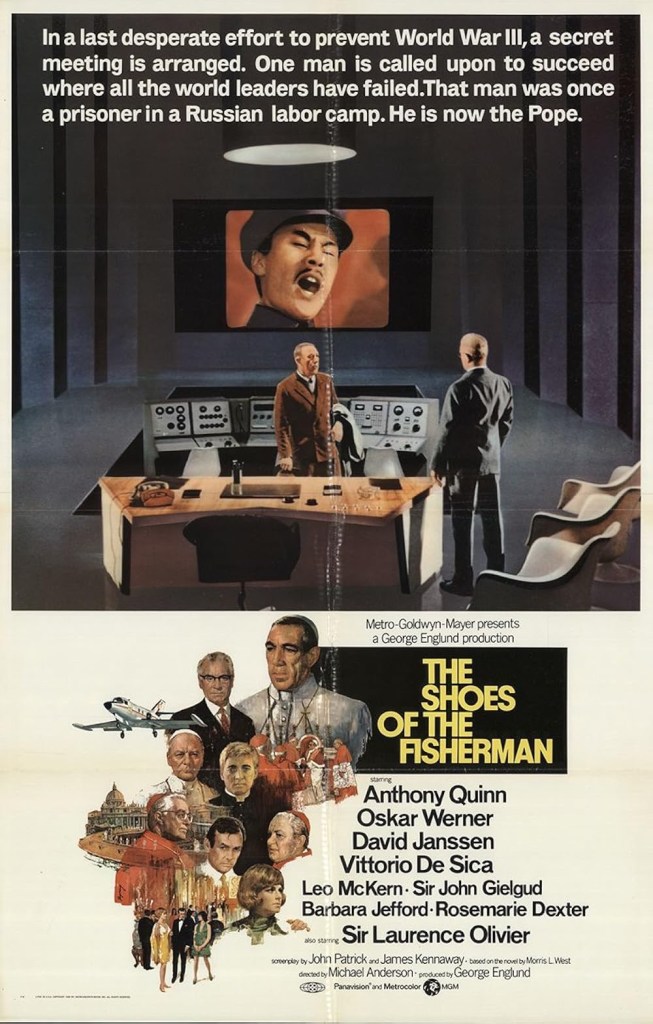
The Shoes of the Fisherman (1968)
“By stepping into their metaphorical shoes, Pope Francis continues their legacy and carries forward their vision for social justice and compassion in a changing world.”
Anthony Quinn, Laurence Olivier, John Geolgud, Oskar Werner, Vitorio De Sica, Leo McKern, David Janssen. Directed by Michael Anderson. Based on the novel by Morris L. West.
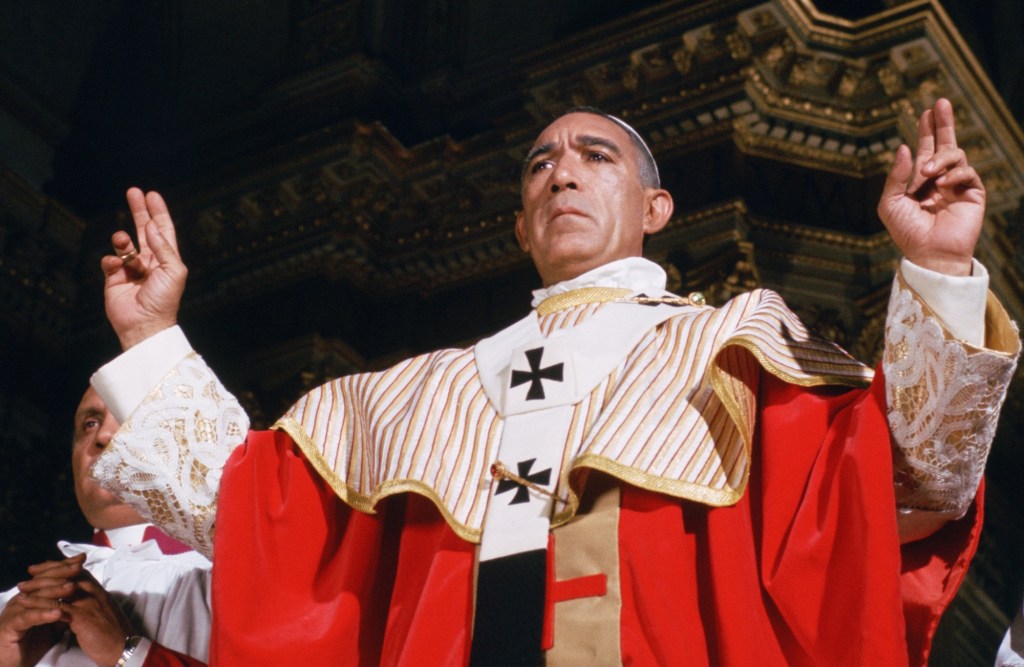
Big production values, a grand scale of history, politics, faith, big stars, grand locations, big concept.
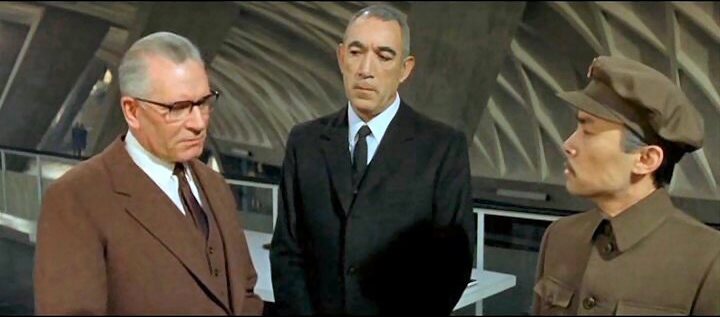
If you’re seen the recent Ralph Fiennes film, Conclave, you have a good idea about the selection process for Pope. It’s portrayed here too, as Quinn’s character, Ukrainian Archbishop Kiril Lakota imprisoned in a Soviet gulag for 20 years, is suddenly released by the Soviet government and sent to Rome where he can be selected as the next Pope. Incidentally, Communist China is on the verge of sending troops into neighboring countries to extract food to feed their starving people, setting off alarm bells in Moscow and Washington. The new Pope will be tasked with mediating a solution to prevent what could another world war.

Presented as a roadshow, with an intermission. Filmed in Super Panavision to give it a rich, spectacular widescreen appearance. The color pops on the screen, in fact, all of the production values are evident.
In its day, there was an audience for these big budget religious spectacles. I found myself drawn into the story, as improbable as it seemed. The cast was first rate, though Lord Olivier’s Russian accent stretched believability.
—
The Comedians (1967)
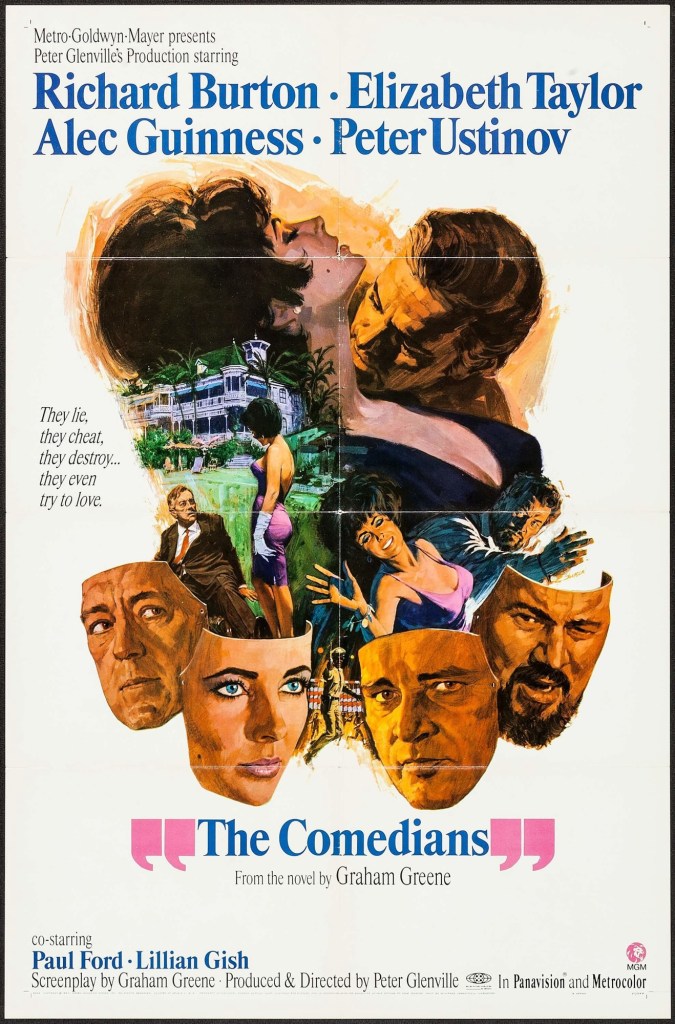
Graham Green adapted his book of the same name about Papa “Doc” Duvalier‘s repressive regime in Haiti. An unusual film for MGM and the duo of Richard Burton and Elizabeth Taylor. Is it a clandestine love affair (Burton and Taylor, naturally) or an expose of a corrupt and violent dictatorship? It tries to be both. The supporting cast is outstanding, including Peter Ustinov, Alec Guinness, Paul Ford, Lillian Gish, James Earl Jones, Georg Stanford Brown, Raymond St. Jacques, Roscoe Lee Browne and Cicely Tyson.
Produced and directed by Peter Glenville, who directed Burton in Becket, has his hands full, turning in a 160 minute film that should have been trimmed and tightened by at least 30 minutes. Imagine sitting down to a 14-course meal and getting full before the main course but slogging on until the sight of pastries makes you sick. It’s slow, talky and fails to build the drama. Could this have been more compelling? Absolutely. Green’s screenplay should have been edited and tightened, or at least in the film editing room.
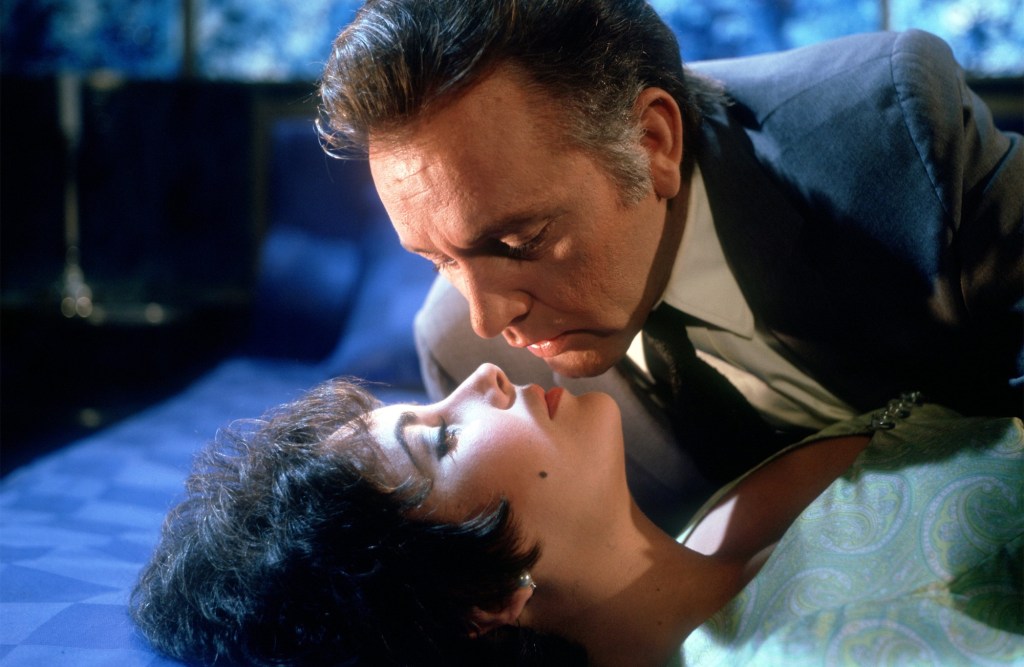
Haiti has been a failed state for decades. Not only is innkeeper Burton in short supply of tourists, it’s ridiculous that Haiti could attract development or even tourism. Haiti’s leading industry is government corruption and eliminating political opposition.
Duvalier’s ‘Tonton Macoute’ was a private paramilitary group of thugs whose job was to terrorize and murder…thus keeping the unpopular Papa Doc in power.
I’m surprised that MGM chose to bankroll this film, even with the star power attached it to. This film was a tough sell, not even the Burton-Taylor-Ustinov love triangle did much for the film, actually it hurt the film. Taylor played a lot of tarts in this period of her career, but she couldn’t quite dial-in the right slut factor.
Burton was well-cast, as were James Earl Jones, Georg Stanford Brown, Roscoe Lee Browne, Paul Ford and Raymond St. Jacques. Alec Guinness never quite found his character and Peter Ustinov slept walked through his role, but in fairness, his talent was too big for this character.
If you can make it through this very long film of oppression and hopelessness, you get a gold star. The book and film title are misleading, there’s obviously nothing funny about this film or these characters, who make jokes about what themselves and what they’re up against. That’s Greene’s point.
If you run across this film and have the time, it’s not great, but some of the performances are outstanding.
—

The Prize (1963)
Paul Newman plays a Nobel laureate who gets mixed up in international intrigue. Tagged as a romantic comedy/spy thriller, it struggles to either. Costarring Edward G. Robinson, Diane Baker, Kevin McCarthy and Leo G. Carroll.
A big MGM production, directed by Mark Robson, produced by Pandro S. Berman and adapted for the screen by Ernest Lehman from the novel The Prize by Irving Wallace. Lehman co-wrote Hitchcock’s North By Northwest, and seems to have borrowed greatly from that film, everything except the suspense.
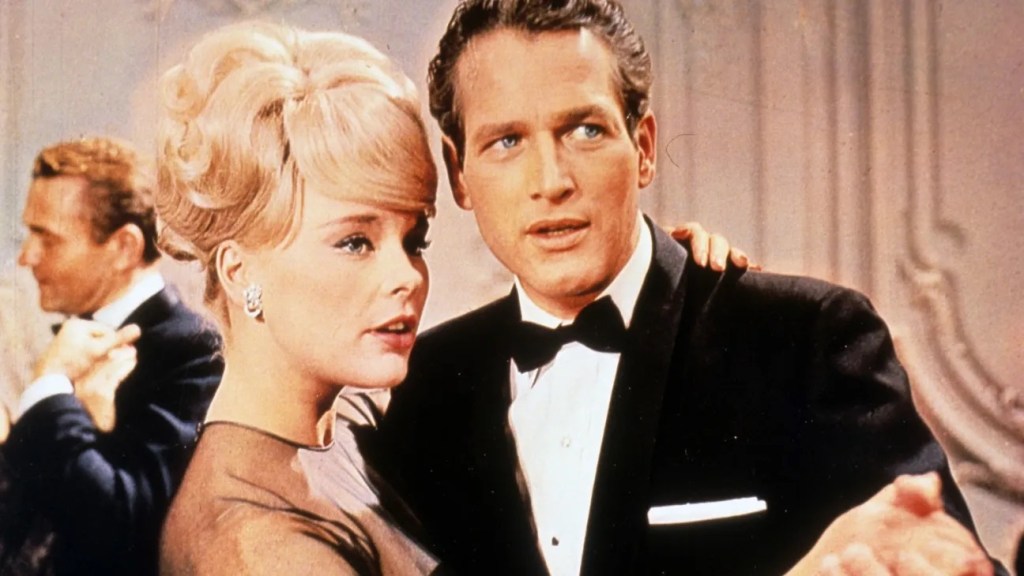
Newman’s Andrew Craig drinks, makes passes at women and tries to get the authorities to investigate his claim that Dr. Stratman has been replaced by a lookalike. No one believes Craig’s claim as he tries to unravel this mystery.
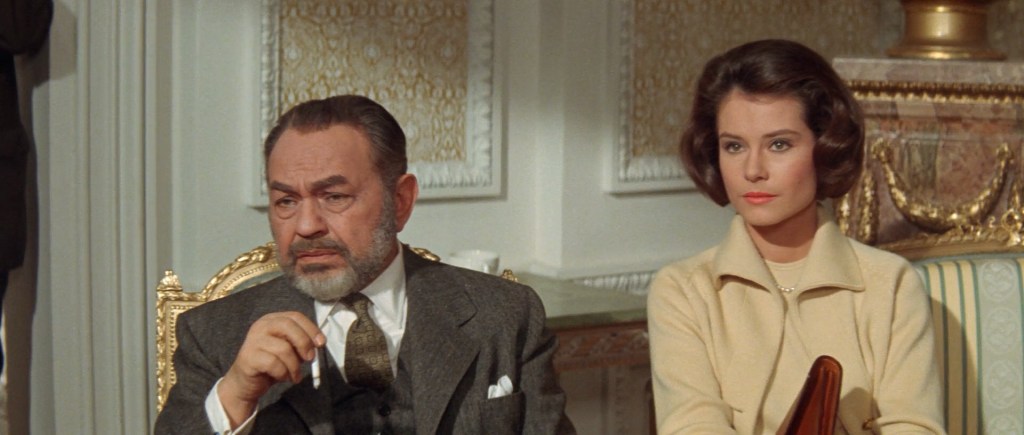
The film lacks originality, despite some charming performances. Wallace’s book, a bestseller, had to be more captivating than this film.
—

Behold a Pale Horse (1964)
Fred Zinneman (High Noon, From Here to Eternity) directed, starring Gregory Peck, Anthony Quinn and Omar Sharif. Based on Killing a Mouse on Sunday, a 1961 thriller novel by Emeric Pressburger, the film was by Zinneman and Peck. Peck and Quinn also starred in the Guns of Navarome.
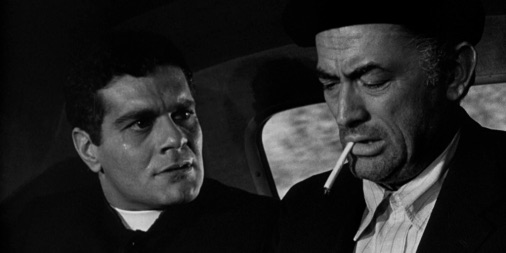
After the Spanish Civil War, the legendary guerrilla Artiguez, played by Peck, is convinced by a boy Paco, to return from France to kill Captain Viñolas (Quinn) a Guardia Civil officer, as revenge for killing Paco’s father. Artiguez’s mother is gravely ill and Viñolas lays a trap for him. Artiguez has periodically returned to Spain to harass Viñolas and conduct raids.

The film was shot in black & white, on location, in a neorealism style. The photography is beautiful, and the depth of field is amazing given the dark shades. Even the music is realistic to the culture.
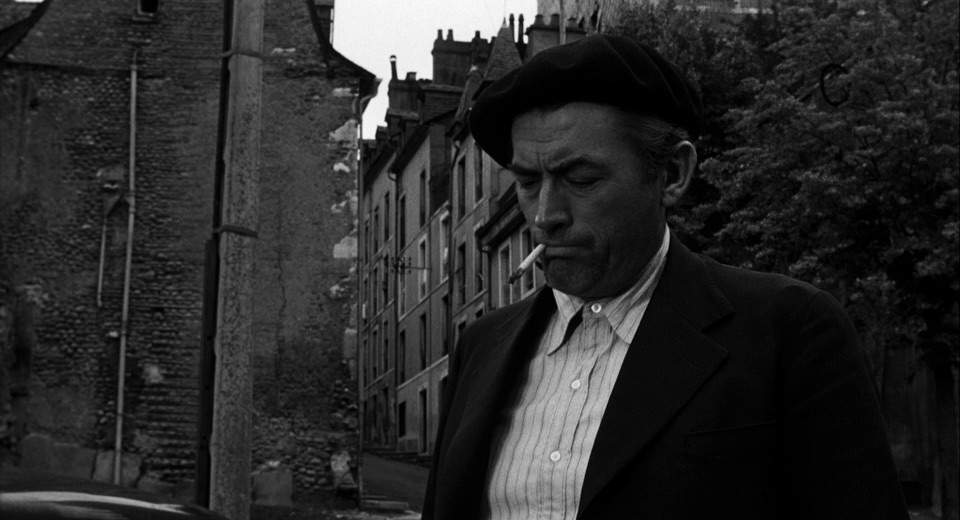
I’m not surprised this film failed to be a hit, its somber tone, dark and gritty appearance, and characters not very likable. Behold a Pale Horse is very much a “European” looking film, a tough sell for an American audience. We don’t learn much about the War or the lives of these two warriors, we might have engaged them more if we knew there stories.
Overlook the shortcomings and find this film.
—
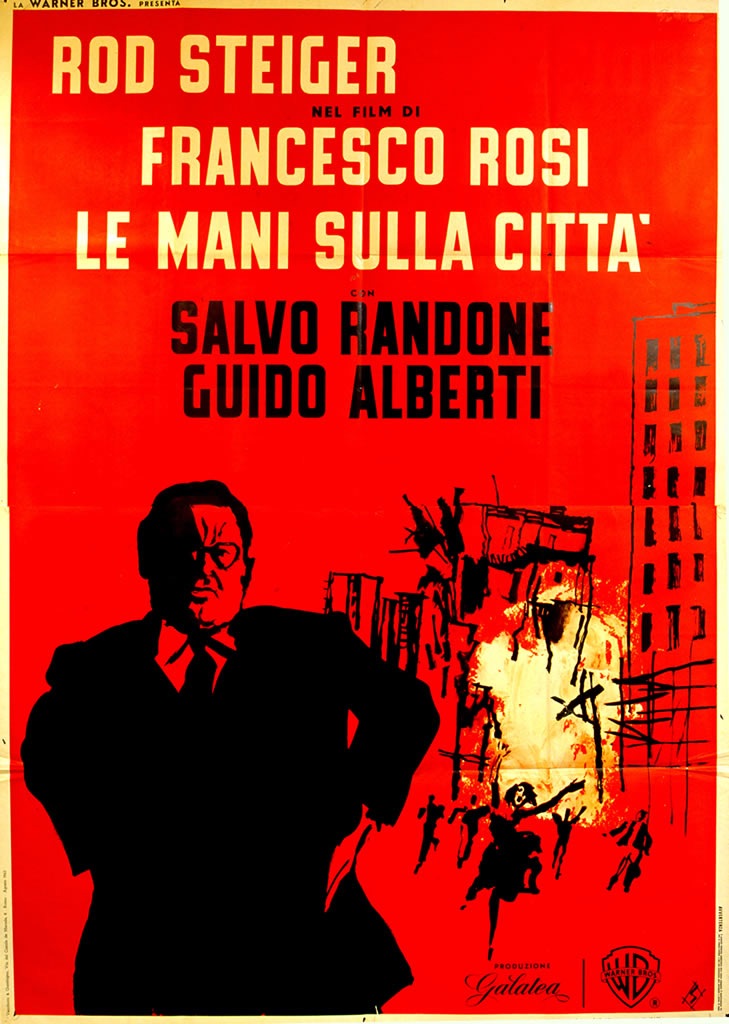
Hands over the City (1963)
A powerful Italian film starring Rod Steiger as a developer and member of the city’s governing body. One of his buildings under construction causes the adjoining apartment building to collapse, killing several residents and crippling a young boy.
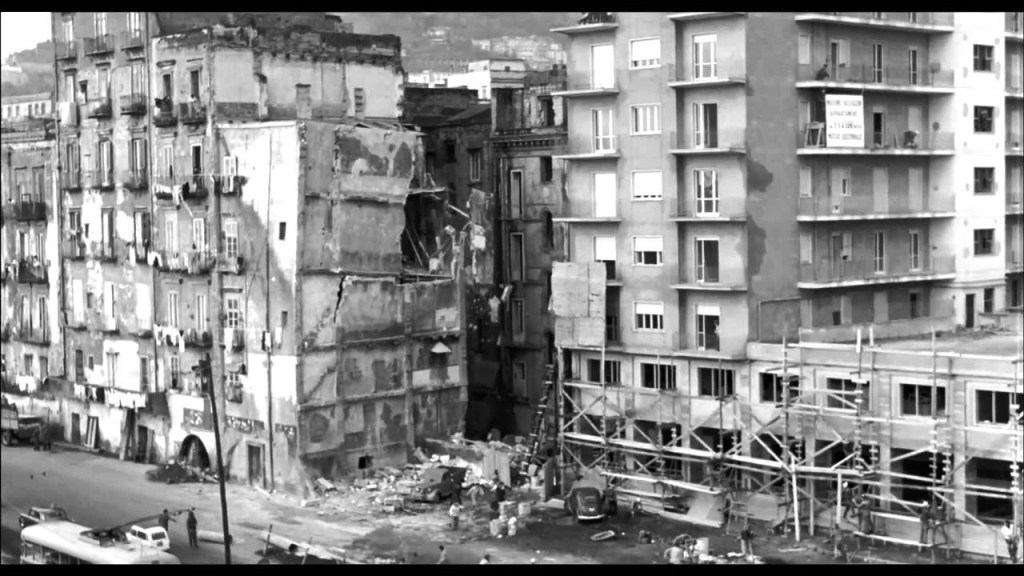
This tragedy unfurls a political firestorm of accusations, investigation and backroom dealings. An upcoming election threatens change, causing officials to scramble, responsibility for the building collapse is pushed back and forth, alliances and power relationships are threatened, and naturally millions of lire.
The story is based on a real building collapse, but the events and characters are fictional. Writer/director Francesco Rosi based the land speculation and politics on his own city of Naples.
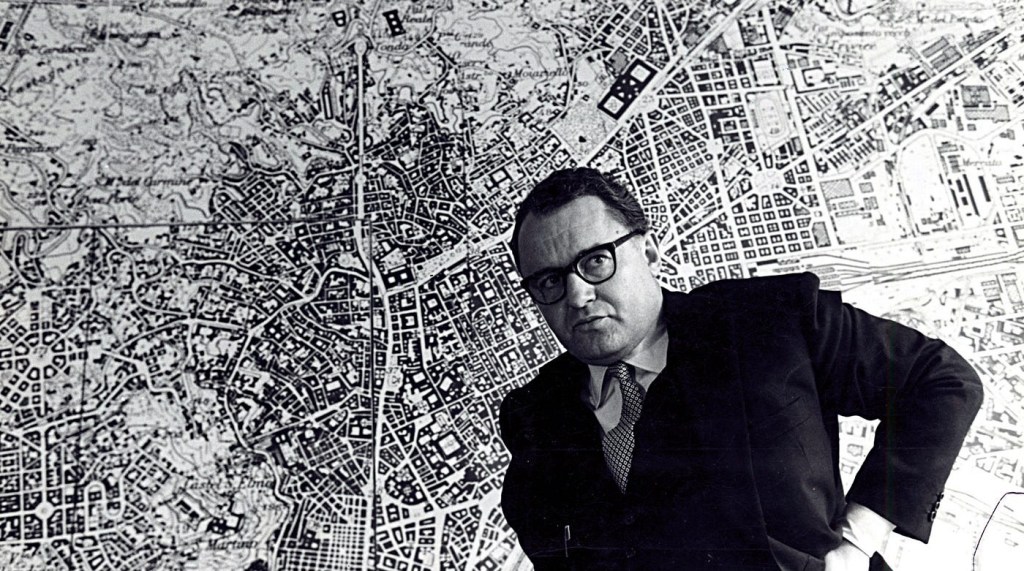
This is a fascinating film of the internal politics of an Italian city, fictionalized, but researched by Rosi and co-writer Raffaele La Capria. There was money to be made, lots of it, to construct large buildings and mansions for the growing population and the favorable economic growth in the 1960s. With the boom, and the value of land, the notion of favorable deals, inside dealing and payoffs made for bigs deals, but put lives at risk. If codes were ignored, corners cut, and the impact of heavy construction on weak, old adjoining structures, accidents were waiting.

In the end, after the election, most of the same players returning, a new ruling coalition that seemed to embrace the status quo, the film ends with nothing really changing.
I highly recommend this film.
—

The Looking Glass War (1970)
A very good adaptation of John le Carre’s book by writer/director Frank Pierson. A bit slow, but methodical in getting the story on sound footing. Written in 1965, the film was released in 1970, so it sneaks in because of its origin.
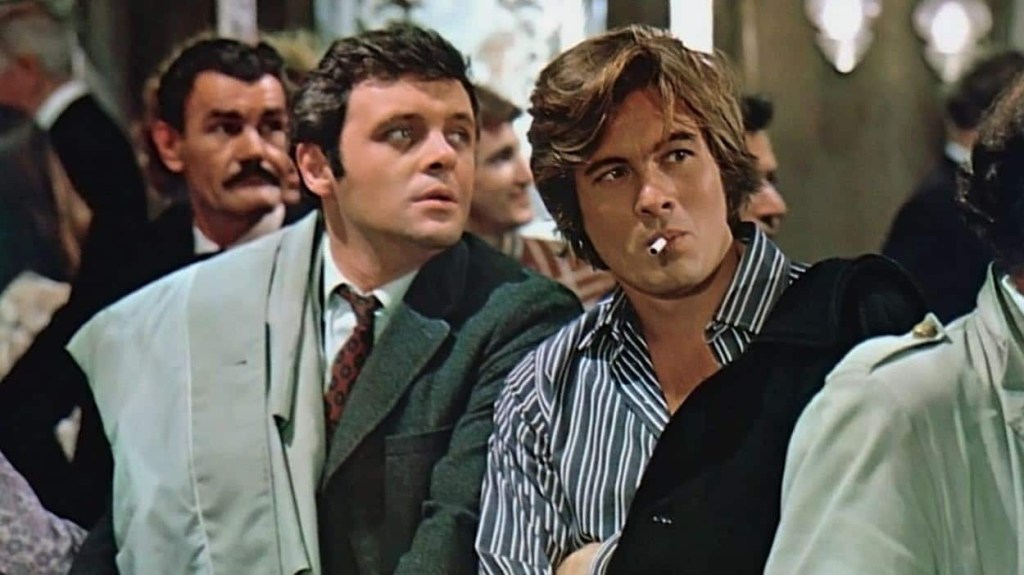
Christopher Jones is a young Pole recruited to help the British confirm the existence of Soviet missiles in East Germany. Costarring are Ralph Richardson, Anthony Hopkins, Susan George and Anna Massey.

This film wanders and loses focus during the middle, and Jones isn’t a strong enough actor to lead the audience through this slow and aimless sections of the film. Richardson and Hopkins are quite interesting in their roles, although at times it feels like they walked in from a different film. That makes me question the level of command the Pierson had over bringing this story to the screen.
Nothing is quite what it seems in this story, and the film diverts greatly from the subtext of the novel. The times are a-changing, which the film struggles to effectively convey, even the British intelligence agents feel the earth shifting under their feet in the ever changing Cold War. The film tries, but le Carre’s book is very complex, and some of the key observations were left out.
Still, a compelling film.
—
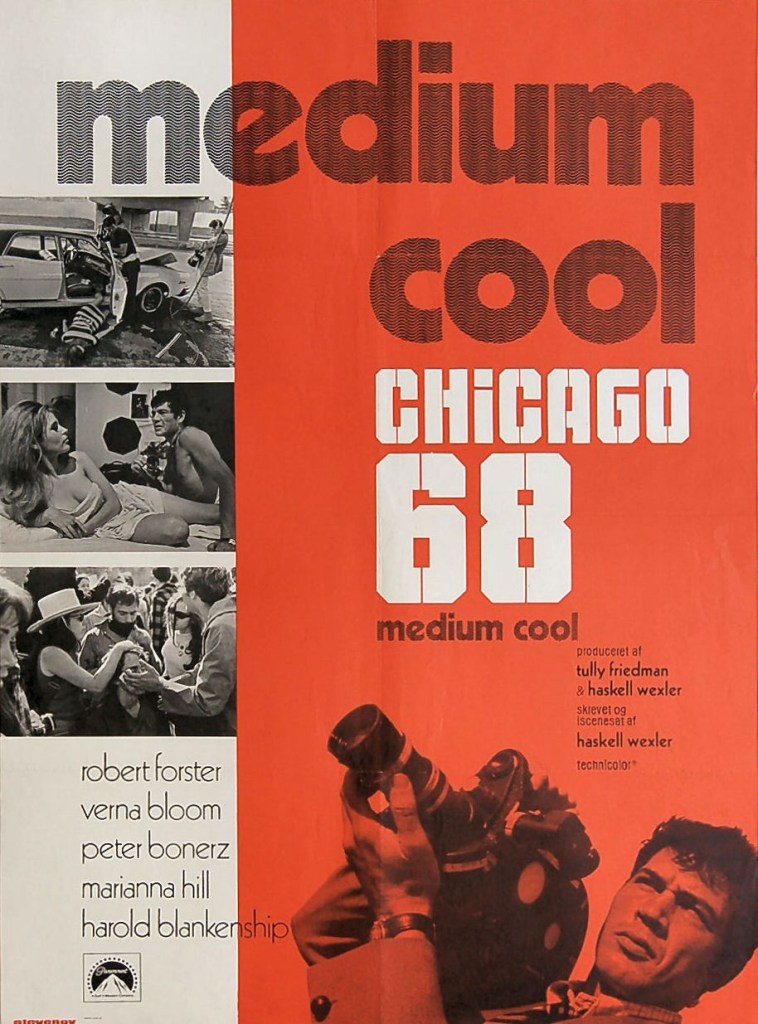
Medium Cool
Is it a documentary or a fictional feature film? It feels like both. The lives of news cameramen set against events of 1968. Haskell Wexler’s first studio feature film was not what the studio expected. Wexler developed a story about was happening in 1968. His script was influenced by events as they happened: resurrection city in Washington DC, the assassinations of Bobby Kennedy and Martin Luther King, the Democratic National Convention
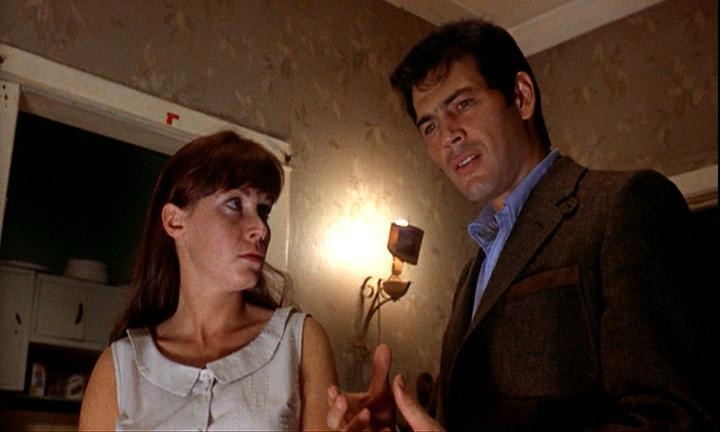
Handheld cameras, wild editing, nudity, it’s a visual kaleidoscope and unconventional storytelling. The film doesn’t unfold in a traditional sense, but events bring people together, lives intersect against the background of crime, poverty, elections and violence.
Wexler was a documentary filmmaker and director of photography on features. A two-time Academy Award winner (Who’s Afraid of Virginia Woolf?, Bound for Glory)

The action shot on the streets outside of the Democratic Convention are quite engrossing as Bloom’s character searches for her son. There’s a lot going on in this film that some viewers may feel to grasp, Wexler tries to convey several stories at the same time.
Robert Forster, Verna Bloom, Peter Bonerz, Marianna Hill and Harold Blankenship are all superb in this film. Forster and Bloom in particular are outstanding, and Blankenship plays the boy and is not an actor.
This film is not uplifting at all, that’s the sad part. It is expertly made and defies description. It’s best to see it for yourself.
—
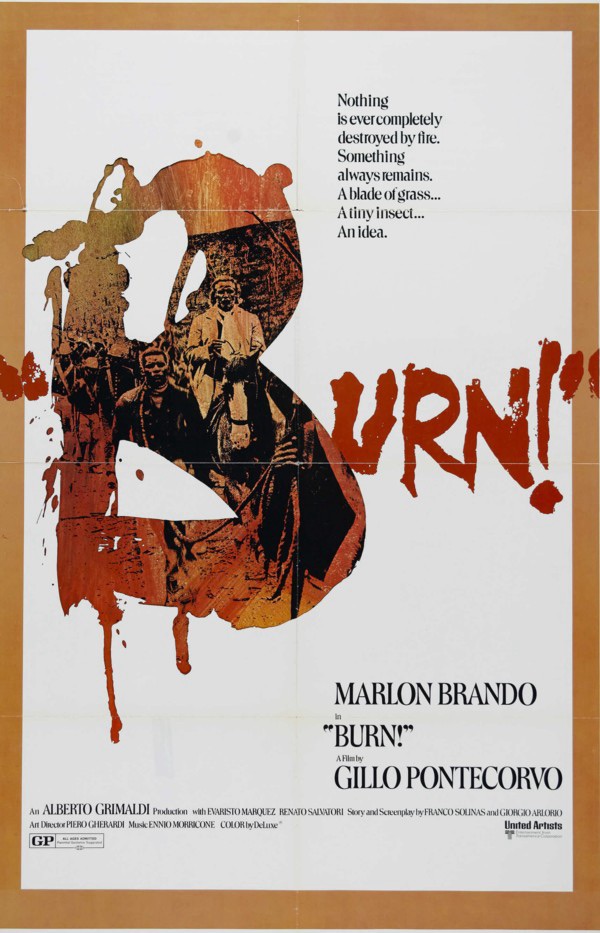
Burn! (1969)
The Portuguese control an island in the Caribbean and the sugar trade. Britain wants it, so they send William Walker to start a slave revolt which drives the Portuguese out. Years later, the British are in danger of losing the island. Directed by Gillo Pontecorvo, just three years after directing The Battle of Algiers. Set in the mid-19th century, the Burn! stars Marlon Brando as Walker. Brando was in career slump at the time. By no means is Burn! a bad film, but not the A list films of Brando’s prime.
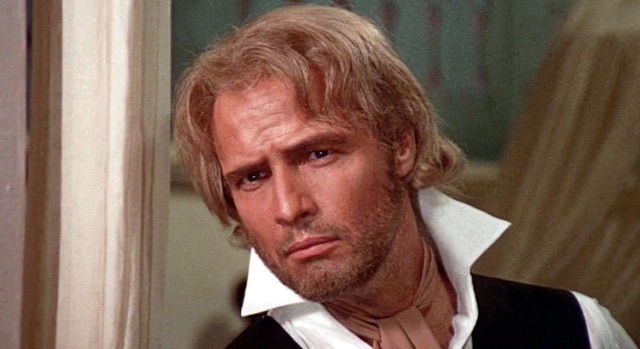
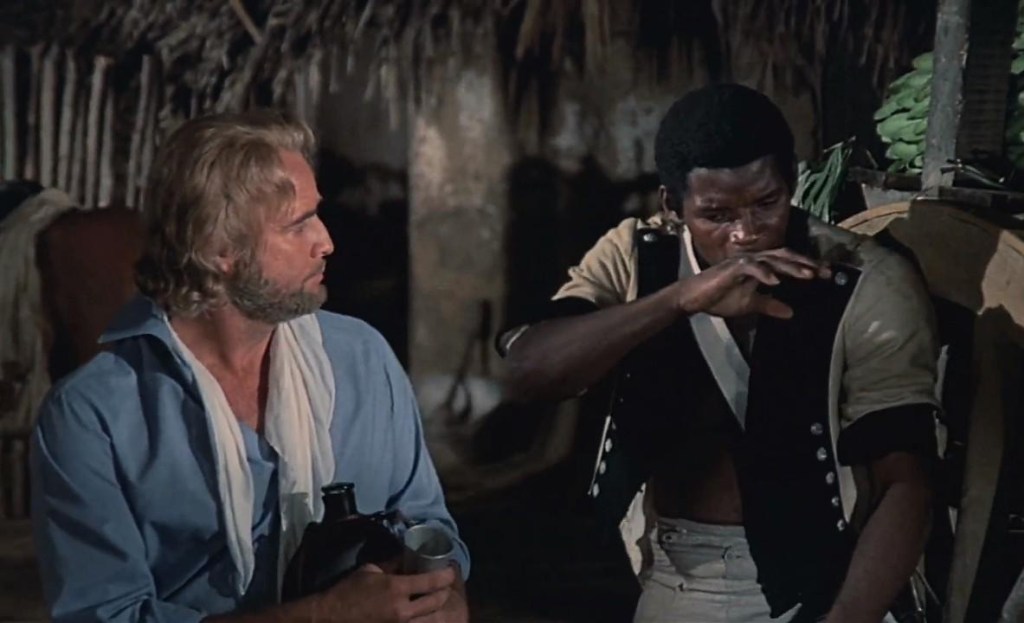
Burn! is a brutal look at European colonialism. The slave revolt serves its purpose, unfortunately, ten years later, Walker is paid to return to the island and fix the very situation he had set up. The slave who Walker had helped lead the island’s government, José Dolores, needed to be removed. During the ten year period, Walker’s star had fallen, so he could be talked into going against his friend.
The film takes place on a fictitious island in the Caribbean, where they speak Spanish, we are told it is a Portuguese colony. United Artists took pains to not associate the film with Spain, a much larger film audience, so the film was edited and some scenes reshot as to not irritate Generalissimo Franco.
Forty years ago, while watching films at a university film theater, Burn! was advertised as a coming attraction. I saw the same film trailer three or four times, and vowed to never see this film. Apparently there are a couple of versions of this film, the English version and the Spanish version that was recut by Pontecorvo, which restored some of the story. This film isn’t nearly as good as the Battle of Algiers, but it’s far from awful. I am told there is more backstory to Brando’s character than we see in the English version. Brando’s Walker reminds me of his Lee Clayton portrayal in The Missouri Breaks (1976). Walker doesn’t wear a dress like Clayton, but he’s a bit foppish and theatrical.
Anyway, Burn! is a good, but not great film.





 Ticket 2 Ride
Leave a reply to greenpete58 Cancel reply