
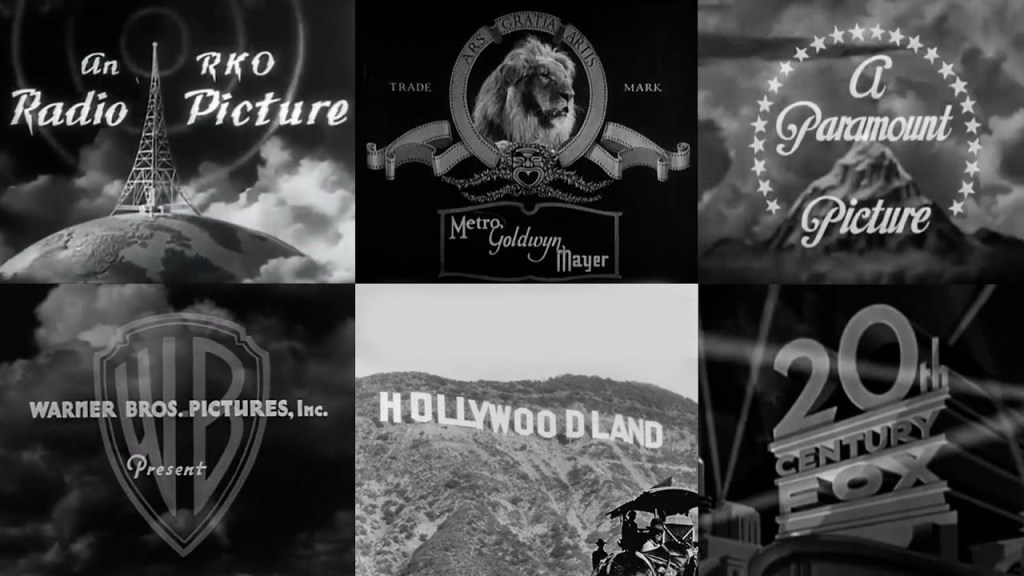
The origins of the original movie studios reach back to the early 1900s. Of course, there were many film production companies then; some folded and others were absorbed into some the companies below.
For many of us, we don’t stretch back as far as the Golden Age of Hollywood, when movie studios primarily made films and were run by moguls. They had backlots, soundstages and actors under seven-year contracts. A lot has changed.
Movie studios were ripe for takeovers in the 1960s as most were struggling either creatively, financially, marketability, or all three. Eventually, each studio was gobbled up by corporations or corporate raiders. Movie studios were always about the bottom line if they wanted to survive, but now it’s about hitting a homerun every time at bat.
Today’s movie studios are part of media conglomerates, with film being just one profit center. Federal law prohibited vertical market integration, but that changed, as every studio is now part of media empires of content creation, intellectual property rights, and content distribution across various platforms.
So, what happened? Here’s a condensed history of the major Hollywood film studios.

MGM
Metro-Goldwyn-Mayer (MGM) was the brightest movie studio of the Golden Age of Hollywood. More stars than there were in the heavens, and yet, the most dramatic decline.

MGM was formed by merging Metro Pictures, Goldwyn Pictures and Louis B. Mayer Pictures into one company. When studio profitability declined, and debt mounted, in the 1960s, Kirk Kerkorian bought 40 percent of MGM, sold the lot, auctioned memorabilia, and downshifted production, channeling money into building developed casino-hotels. MGM became more of a brand than a serious film production entity. In 2021, Amazon acquired MGM and its film assets. James Bond continues to be the tentpole for the studio, now Amazon calls all the shots on the character and films.
Paramount
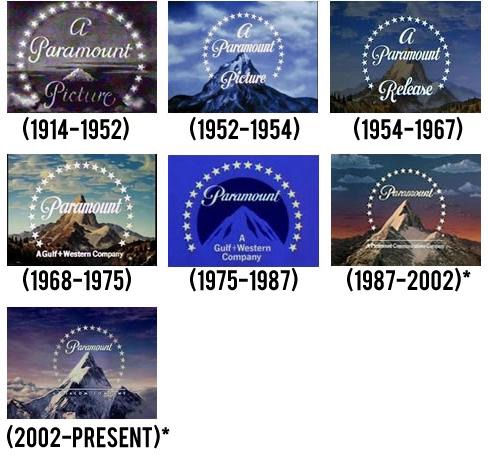
Famous Players Film Company, Jesse L. Lasky’s Lasky Feature Play Company, and Paramount Pictures merged in 1916. In the 1960s, it was acquired by Gulf+Western, later by Viacom, which became Viacom/CBS. Was known as Paramount Global, now Paramount Skydance Corporation.

Paramount built a strong company in the 1930s, but faced some major setbacks in the 1940s with several court rulings. The Supreme Court forced Paramount to divest of their chain of 1,500 theaters, a major profit center, putting a major financial drain on the company. Paramount was also ordered to stop pre-selling films before release, and was limited in their efforts to build a television network, as having invested in television technology early on. By the 1960s, Paramount was struggling and was scooped up by Charles Bluhdorn’s Gulf + Western Corporation. In the 1970s, Paramount would make The Godfather films, Grease, Saturday Night Fever and Star Trek under Barry Diller and Michael Eisner. Then came the Indiana Jones and a string of Eddie Murphy films. Paramount continued to evolved in the international entertainment market, and began a series of corporate mergers.
Warner Bros.
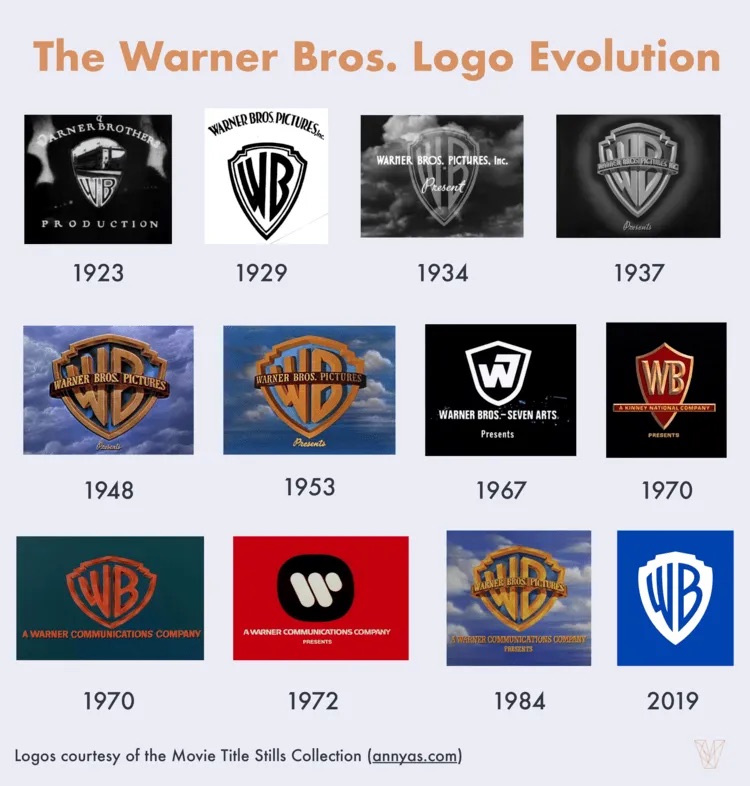
The brothers Warner’s company started passing through the corporate mill during the 1960s after it merged with Seven Arts, then Kinney, then with Time, and later disastrously with AOL. Warner was big into TV production and music too.
Warner Bros. invested in the early sound technology that became a wise business decision and allowed studio expansion. In the 1930s, film production was about 100 films a years, and the studio controlled about 300 theaters. Warner Bros. was known for gangster and swashbuckling action films, along with many film noir classics. Warner Bros. recognized the importance of investing in television production, and developing a steady stream of product. While TV competed with films for viewership and profits, a studio was start to do both. Clint Eastwood set up his Malpaso Pictures home at Warners, providing a steady stream of films for than five decades. Batman and DC Comics, Harry Potter, Lord of the Rings and Barbie have pleased shareholders.
Ted Turner’s media assets were merged into the company. The Warner company was acquired by AT&T, then spun-off and merged with Discovery to form Warner Bros. Discovery, Inc. Assets include: Discovery Channel, HBO Max, discovery+, CNN, DC, Eurosport, HBO, HGTV, Food Network, OWN, Investigation Discovery, TLC, Magnolia Network, TNT, TBS, truTV, Travel Channel, Animal Planet, Science Channel, Warner Bros. Motion Picture Group, Warner Bros. Television Group, Warner Bros. Pictures Animation, Warner Bros. Games, New Line Cinema, Cartoon Network, Adult Swim, Turner Classic Movies, Discovery en Español, Hogar de HGTV and others.
The Vanguard Group, BlackRock Inc., and State Street Corp are major shareholders. Discovery and Warner will now divide into separate media companies. So much for a happy marriage in Hollywood.


20th Century-Fox
Formed as 20th Century-Fox Film Corporation, Inc. by merging of William Fox’s Fox Film Corporation and Twentieth Century Pictures. Acquired by Rupert Murdoch in 1985, the television and film assets now a part of The Walt Disney Company.
The golden days of 20th were under the watchful eye of mogul Darryl Zanuck who merged 20th Century Pictures with Fox in 1935. It wasn’t until after WWII that Zanuck established the film studio as the maker of trendy, socially conscious films and to change new technology when television became a threat to movies. The company’s fortunes teetered on ruin, the back-lot was sold, management changed, the company diversified. Star Wars provided a massive financial infusion, as the company found new investors, and in 1985, Rupert Murdoch bought controlling interest. Video games, home video and other media products, along with the distribution rights for a number of other film companies, and the Star Wars franchise, bolstered the company financial standing in addition to Avatar, Die Hard, Alien, Planet of the Apes, Home Alone, X-Men, Ice Age and Titanic.
Murdoch eventually sold his film assets, 21th Century Fox, to Disney, who renamed the company 20th Century Studios.


Universal
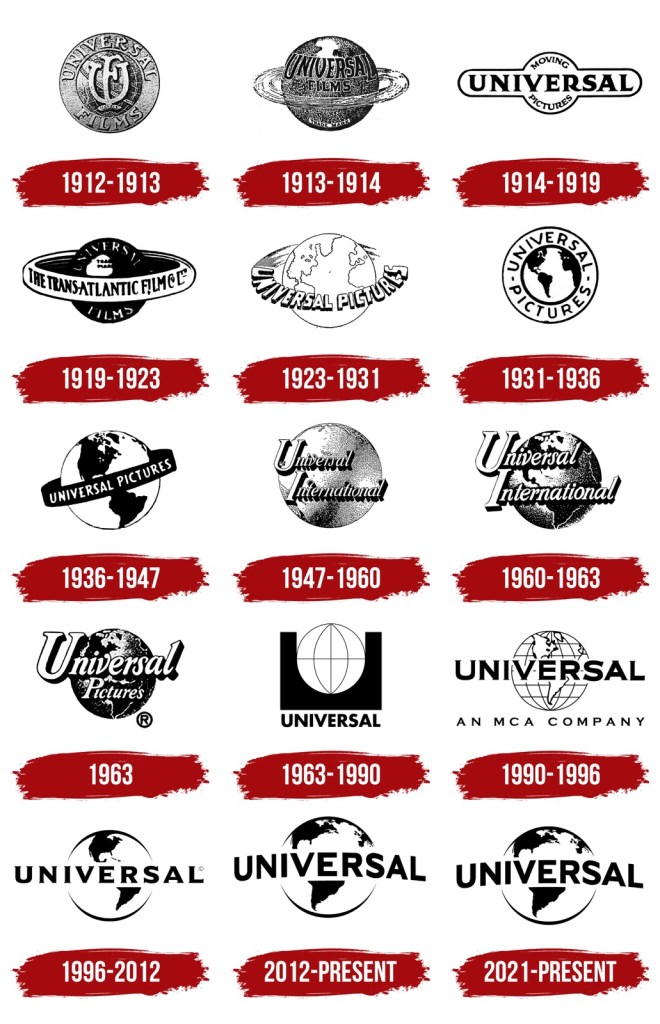
Back in the day, Carl Laemmle’s moving picture business was known for B-films, but those people grossly underestimated what would become a dominant media company a century later. After numerous mergers, Universal became the largest studio, even building Universal City Studios. Universal merged with International Pictures in the mid-1940s, then controlling interest was acquired by Decca Records. The large talent agency, MCA bought the production lot, then merged with Decca to take control of the studio. Universal didn’t hesitate to get into television as a production operation and as a distributor of films and other syndicated programming. Matsushita (Panasonic) bought controlling interest, and later Seagrams became the controlling stockholder. Universal acquired the NBC television network, then was bought by Comcast (cable television and streaming). Universal is now part of a conglomerate that owns television stations, cable networks, a television network, the largest recording label in the world, cable television delivery and streaming, a variety of film production and distribution companies, and huge film, television and music libraries.
Jaws, Jurassic Park, American Pie, Bourne, Fast & Furious have been successful franchises for Universal.


RKO Radio Pictures
A merger of Keith-Albee-Orpheum theater chain and Joseph P. Kennedy’s Film Booking Offices of America studio and the Radio Corporation of America (RCA), then Pathé film studio. RKO owned the famous Forty Acres backlot, later acquired by Desilu Productions (Lucille Ball, Desi Arnez), where many films and classic TV shows were filmed.
At one point, RKO was a major film studio. It was the home for screwball comedies and the first films of Orson Welles. Enter Howard Hughes, who owned the studio for a few years before it ended up with General Tire, who sold off its film library. The studio ceased production in 1958. The brand and film remake rights passed to RKO Pictures, LLC who made films under the RKO banner. In 2005, RKO was sold to Concord Originals, which was acquired by Alchemy Rights LLC, which is majority owned by the Michigan State Retirement System.
Columbia
Harry Cohn ruled the studio when it was formed as Cohn-Brandt-Cohn (CBC) Film Sales Corporation. In the 1980s, the studio was owned by Coca-Cola. Later, Columbia was absorbed by Sony Corporation.
In its heyday, Columbia had Frank Capra making films there, the Three Stooges under contract, distributed Hanna-Barbera cartoons, and embraced television production and distributed of English and independent films and television series. Screen Gems, their television arm, produced numerous hit programs (Dennis the Menace, The Donna Reed Show, Hazel, Gidget, Bewitched, I Dream of Jeannie, The Flying Nun, The Monkees and The Partridge Family). To diversify, Columbia bought music publishing and recording labels. Spider-Man, Angry Birds, Bad Boys, Charlie’s Angels, Superman, Ghostbusters are successful franchises for the studio.
Today, Columbia is part of the Sony film group alongside TriStar Pictures, Screen Gems, Sony Pictures Classics, and 3000 Pictures.


United Artists:
United Artists was formed in 1919 by Charlie Chaplin, D.W. Griffith, Mary Pickford and Douglas Fairbanks. UA went public in the 1950s, then was acquired by Transamerica Corporation which sold the company in 1980 to Kirk Kerkorian who merged it with his MGM Studios. MGM/UA Entertainment existed until Ted Turner bought it, then sold UA back to Kerkorian. MGM operated UA under various arrangements in both production and distribution, but its film and television libraries were owned by other entities. Tom Cruise became involved in the ownership and management of UA, but left after a few years and the company went dormant at various times. After the acquisition of MGM by Amazon, the UA brand is back in more specialty productions. United Artists was an independent film company, never owning a physical studio, it came to prominence in the 1950s and 1960s thru a distribution and marketing relationship with the Mirisch Corp. (Blake Edwards films, Billy Wilder films).


Walt Disney Pictures
The studio created by Walt Disney no longer resembles what he built. Walt died in 1966 and management of the company was mainly through the board, with Walt’s son-in-law Ron Miller handling film production duties. Michael Eisner, with the help of Roy Disney, took over at CEO in the 1980s, implementing new film divisions aimed at more adult fare, and modernizing the animation unit.


After Eisner came aboard, Touchstone Pictures was created for more adult themed films, the Hollywood Films was added. Later, Disney acquired LucasFilm (Star Wars), Marvel, Pixar, ESPN and other brands.
The Walt Disney Company is the umbrella over a diverse suite of companies, brands, media assets and intellectual properties. Walt started out in animated films, then expanded into live-action film and television. Then came the theme parks. Today, Disney is into network television (ABC), cable television, travel and parks, music, streaming services and other profitable businesses.





 Ticket 2 Ride
Leave a reply to greenpete58 Cancel reply