
I first learned of Robert Redford in 1969, when he co-starred with Paul Newman in some small, insignificant Western called Butch Cassidy and the Sundance Kid. It was in fact, not small, or insignificant. After a decade of television, stage and co-starring film jobs, Redford was now a big star, and he made the most of it.
It seemed to me that Redford had an uncomfortable relationship with stardom. He didn’t enjoy the loss of privacy and the requirements that came with promoting films; however, Redford made many films that were very personal and those films needed his star power. Redford was a huge supporter of environmental protection and programs that promoted clean energy, water quality and tackling climate change. He gave money and lent his support for things he believed in.
Redford was careful about his image, but that didn’t stop him from playing flawed characters. It really didn’t seem difficult for him to play against type, he could inject qualities into those characters that made them more human.
Ten Films That Shaped Redford’s Onscreen and Behind the Scenes Career

Ordinary People (1980) The story of a family coping, not very well with the death of a child. Redford’s first time directing and it won him an Academy Award, best picture, best screenplay and supporting actor.
Redford lost an infant child, his first child, and later his other children would spend time in therapy, so he had some real experience with loss, and with recovery.
“It’s not Brando where we watched what he was doing from afar. We ran along with Redford and his movies and his ideas. He’s one of the guys who was carrying us through interest in the movies he did. Nobody got up and played trumpets when he walked in the room. He allowed us to run alongside him” Judd Hirsch, Ordinary People

Butch Cassidy and the Sundance Kid (1969) Newman and Redford in what was perhaps the first buddy film. A huge success for everyone involved. Redford had stepped up to co-starring status in films, but this made him bankable and a leading man. There’s a lot to love in this film.
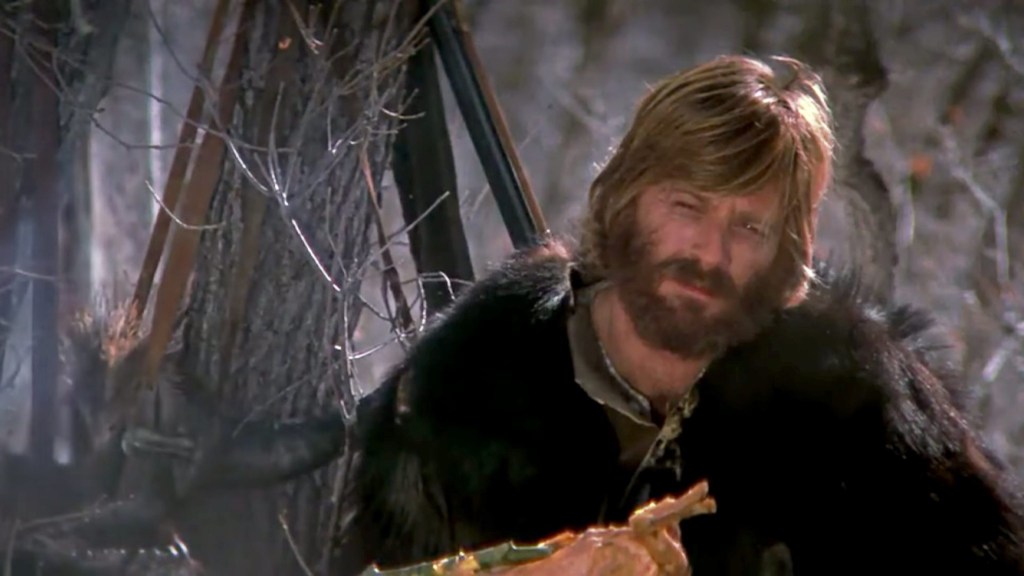
Jeremiah Johnson (1972) Eventually, the script passed to Redford after several other A listers declined. The production reunited Redford and director Sidney Pollack, who would make seven films together. Westerns in the early 1970s looked a whole lot different than in the 1960s. Gritty, dirty, unsavory characters, downbeat stories. Redford had been in a couple of action films, but that’s not what he was known for, and why the script went to other actors first. Redford grew a beard and let his hair grow longer, plus the film was shot in Utah where he lived and pursued the outdoors. Redford also brought a quiet introspection to the character, which helped his civilized character ease into becoming a mountain man, and learning to read the his new environment and those he was attempting to live amongst. The film had a quiet, authenticity, a Western with not much sound, but a lot to look at.

Barefoot in the Park (1967) Reprising his Broadway role in Neil Simon’s comedy of newlyweds in New York City. Not the best Neil Simon work, but a great pairing of Redford and Jane Fonda. Redford proved that he could play light comedy.

The Candidate (1972) One of the best political films ever. Redford plays an idealistic candidate for U.S. Senate who must adapt his message and image for big time politics. Directed by Michael Ritchie, written by Jeremy Larner, who won an Academy Award for his original screenplay. Redford’s character grows into a viable candidate who is an underdog to defeat the savvy incumbent. The deer in the headlights look when he wins, and asks, now what? This is a damn fine film and Redford is perfect casting.

All the President’s Men (1976) Redford bought the source material, produced and co-starred in this political thriller, directed by Alan J. Pakula. We already know how the story ends, but the film provides context, suspense and is a great detective story. Redford played the muted Bob Woodward and Dustin Hoffman was the flashy Carl Bernstein. It wasn’t Redford’s onscreen work, but his producer role that deserves the credit here. This was a huge project, telling the story of Watergate, while making it interesting and compelling, and managing a large and talented group of professionals and large egos.

Spy Game (2001) Redford is paired with Brad Pitt in Tony Scott’s bittersweet story of friendship, betrayal, loyalty and sacrifice. Redford is Muir, a veteran CIA handler who is being pushed out to pasture. Unknowingly, one last mission awaits, a clandestine rescue of someone he recruited and used, who himself tried to rescue his lover, both now held in a Chinese prison. The clock ticks as their lives hang in the balance on Muir’s last day, as he calls in favors, arranges and uses his own retirement savings to stage as rescue, as he trades his own career to right a wrong. Redford gives a gutsy, vulnerable performance as his character is dismantled by CIA management, but he has one last trick in this game.

Indecent Proposal (1993) The only film on the list I despise. Although, it was a big hit at the box office, it was slammed by critics. Sleazy subject matter, Redford took the role as a supporting player, a new turn in his career. Offered $4M for his services, Redford held out for a chunk of the film’s gross, a very smart move since it was reported that he earned $20M from the film’s success. Redford was now in his 50s, was at juncture in his career when the leading man roles would change. Up Close and Personal 1996) started out as a completely different and tragic film, was reconstructed as a love story. Redford plays the older man lover-mentor. The Horse Whisperer (1998), which Redford also produced and directed, is an ensemble story, though he has a key part as the title character. A love affair develops between his character and the owner of the horse, a mature and complicated relationship. These two films are the last big film romances of Redford’s acting career, although he would have one last go with Fonda in a small film.
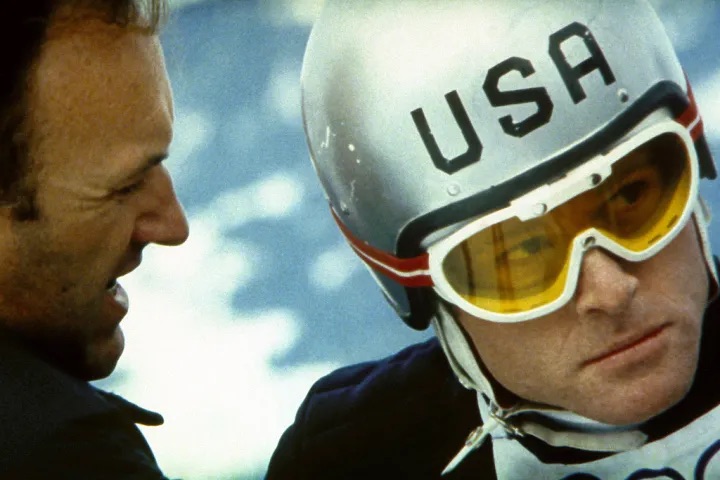
Downhill Racer (1969) Redford plays a skier on the American team competing for the World Cup. He’s a selfish, egotistical, loner, out for his own goals and not interested in serving the needs of his sport, his team, or anyone else. Gene Hackman plays his coach and the two of them clash. Redford could, and did, effectively play these characters, who relished in how easy things came to them, whether it was women, sports, climbing the ladder of success, or escaping problems. Little Fauss and Big Halsy (1970), The Way We Were (1973) and The Great Gatsby (1974) had versions of character, flawed and lacking in responsibility.

All is Lost (2013) His sailboat has collided with a large ship and his boat is sinking. Redford’s character must try and survive against the odds as his raft is savaged by the waves, he has no working communications, water and food are running out, and the man is exhausted and losing hope. Redford has only about 20 words of dialogue and he’s the only actor in the film. There are no flashbacks or background on who he is or why he’s in the Indian Ocean. I’m not certain of the character’s age, but Redford is 77 at the time. It’s a physically demanding film. At this point in his career, Redford was highly selective about his film choices but he was a very active producer and occasional director. He wasn’t afraid to tackle small films that carried meaning, even if the potential audience was small. It was about the work, the craft, the teamwork of a project. Redford would do voice work, small roles in a few Marvel films, and determined older men in a few choice films. In A Walk in the Woods, he teams with Nick Nolte in Bill Bryson’s story about the Appalachian Trail. What Redford proves with his later roles is that he never gives up, even after he claims retirement. Nicholson, Beatty, Hackman – they all walked away from making films. Redford cultivated the impression that, like some of his characters, everything came easy for him. Frankly, I don’t think that was true. Mostly it wasn’t true. By the mid-1960s, Redford was co-staring in some major productions (Inside Daisy Clover, The Chase, This Property is Condemned), but he was not the star of the films, and that was after five years of TV guest starring roles and the occasional stage work. He was considered for Bonnie & Clyde, Rosemary’s Baby and even The Graduate. After Butch Cassidy, Redford found himself being considered for roles in The Godfather, Love Story and Barry Lyndon. I cannot imagine him as Michael Corleon, nor as Clyde Barrow or Benjamin Braddock. I’m surprised that he played Jay Gatsby; huge role, but he didn’t fit, and the movie failed.
Robert Redford, gone at 89.





 Ticket 2 Ride
Leave a reply to greenpete58 Cancel reply